Hurricane Watch vs Warning: What Families Should Do Before the Power Goes Out
- Quick Action Checklist for Hurricane Watch/Warning:
- Quick Decision Tree: Should I Stay or Go?
- When Is Hurricane Season and Why You Must Prepare Early
- Understanding the Difference: Hurricane Watch vs Warning
- What to Do During a Hurricane Watch: The Preparation Stage
- What to Do During a Hurricane Warning: Immediate Action
- Managing Power Outages During and After the Storm
- Updating Your Family Emergency Plan Annually
- Stay Ready When A Hurricane Watch Turns Into A Warning
- FAQs
Quick Action Checklist for Hurricane Watch/Warning:
Verify Zone: Check your evacuation zone using local emergency management tools.
Power Up: Fully charge EVs, phones, and portable power stations.
Lock Down: Secure loose outdoor items and reinforce windows.
Pack Up: Prepare a 72-hour emergency kit (food, water, cash, medications).
Route Plan: Identify primary and alternative evacuation routes.
Quick Decision Tree: Should I Stay or Go?
Has a mandatory evacuation been ordered for your zone?
YES → Evacuate immediately. Grab your 72-hour kit and follow marked escape routes.
NO → Proceed to shelter in place. Move to an interior, windowless room and finalize your backup power setup.

Understanding the difference between a hurricane watch and warning helps families act at the right time. The National Weather Service defines a hurricane watch as hurricane conditions being possible and a hurricane warning as hurricane conditions being expected within the specified area. Always follow NWS alerts and local emergency instructions first. If you wonder when is hurricane season, it runs from June through November, making early preparation critical.
A reliable family emergency plan ensures you know exactly what to do during a hurricane warning before the grid fails. This guide covers actionable steps for storm preparation, evacuation readiness, and securing backup power to keep your home running safely during severe weather outages.

When Is Hurricane Season and Why You Must Prepare Early
Understanding the timeline of coastal storms is the first step in protecting your household. Preparing early prevents the panic of rushing to empty grocery stores or sitting in hours of gridlocked evacuation traffic.
People often ask, when is hurricane season? In the Atlantic Ocean, the Gulf of Mexico, and the Caribbean Sea, the season officially begins on June 1 and ends on November 30. However, the most dangerous and highly active months are typically August, September, and October. During this peak time, ocean temperatures are at their warmest, providing the necessary fuel for massive, destructive storms to form rapidly.
If you wait until a storm is right off the coast to buy supplies, you will face massive regional shortages. Bottled water, flashlights, batteries, and plywood usually sell out within hours of an official storm announcement. Building your emergency kits and testing your backup power systems during the off-season guarantees you have exactly what you need without the stress of last-minute scrambling.
Understanding the Difference: Hurricane Watch vs Warning
Meteorologists use specific terms to communicate the threat level of an approaching storm. Misunderstanding these terms can lead to dangerous delays in your response and jeopardize your safety.
What Is a Hurricane Watch?
A hurricane watch means that hurricane conditions—specifically sustained winds of 74 mph or higher—are possible within your specified area. The National Weather Service typically issues this alert 48 hours before the anticipated onset of tropical-storm-force winds. This timeframe gives you a safe window to execute your family emergency plan. When a watch is declared, it is your immediate signal to start gathering supplies and securing your property.
What Is a Hurricane Warning?
A hurricane warning means that hurricane conditions are expected in your area. This alert is issued 36 hours before tropical-storm-force winds arrive. At this stage, the danger is imminent. Knowing what to do during a hurricane warning involves taking immediate, life-saving action. This is the time to finalize your indoor shelter, complete your boarding-up process, or evacuate immediately if local authorities issue a mandatory order.
What to Do During a Hurricane Watch: The Preparation Stage
When a watch is issued, you have roughly two days to secure your physical property and finalize your essential resources. This is the time to act calmly but quickly.
Fueling Up and Gathering Cash
Gas stations will run out of fuel quickly as the entire county prepares simultaneously. Fill up all your vehicles and any approved heavy-duty gas cans immediately. Additionally, stop by the bank and withdraw cash in small denominations ($1, $5, and $10 bills). If the storm destroys local cell towers and power lines, credit card machines at grocery stores and pharmacies will not function.
Securing the Exterior of Your Home
High winds turn common outdoor items into lethal projectiles. Bring in all patio furniture, garbage cans, bicycles, and potted plants. If you have hurricane shutters, lock them into place. If you rely on plywood, securely board up all outward-facing windows to protect against flying debris and shattering glass. Ensure your gutters are entirely clear of leaves to help heavy rain drain away from your roof.
Charging Essential Backup Power
Charge your smartphones, laptops, and all portable battery banks. For backup planning, EcoFlow DELTA Pro Ultra Whole-Home Backup Power offers expandable capacity and high output based on manufacturer specifications, helping support essential loads when properly installed and used.
What to Do During a Hurricane Warning: Immediate Action
When the alert upgrades to a warning, your safe preparation window is closing rapidly. You must immediately transition from gathering supplies to securing your physical safety.
Following Evacuation Orders
If local officials issue a mandatory evacuation for your specific zone, leave immediately. Do not stay behind to protect property. Part of knowing what to do during a hurricane warning is grabbing your pre-packed go-bags, securing your pets, and driving to your designated inland safe location before the coastal highways flood and become completely impassable.
Sheltering in Place Safely
If local officials do not order evacuation and your home is suitable for sheltering, move to a small, windowless interior room on the lowest level. Follow your local NWS office, county emergency management, and law enforcement guidance because safe sheltering options vary by storm surge risk, flood zone, building type, and local conditions. Keep your emergency supplies, heavy-duty flashlights, and a battery-powered NOAA weather radio with you to monitor continuous storm updates.
Finalizing Utility Shut-Offs
Turn off your main propane or natural gas valves to prevent catastrophic leaks and fires if your home sustains structural damage. Safety Warning: According to FEMA guidelines, once you turn off your natural gas, only a qualified, licensed professional should turn it back on. Never attempt to restart the gas flow yourself. Turn your refrigerator to its absolute coldest setting. Do not open the refrigerator or freezer doors unless absolutely necessary; this keeps your perishable food safely chilled for a longer period if the neighborhood grid shuts down.
Managing Power Outages During and After the Storm
Widespread grid failures can occur during severe hurricanes, depending on storm intensity and local infrastructure. Once the storm passes, you might rely on your independent backup systems to survive the blackout comfortably.
Prioritizing Critical Energy Loads
When the lights go out, identify your absolute daily necessities. You must prioritize keeping your refrigerator running to prevent food spoilage. Next, ensure critical medical devices like CPAP machines or oxygen concentrators have continuous power. Finally, keep your Wi-Fi router active (if the provider is still online) and your smartphones fully charged to communicate with emergency services and family members.
Safe Indoor Lighting and Climate Control
Use battery-powered LED lanterns and headlamps instead of candles whenever possible. After hurricanes, fire risk can increase because of damaged wiring, gas leaks, or unstable surroundings, so open flames are a poor choice during outages. Additionally, extreme, humid heat often follows hurricanes once the clouds clear. Having enough power to run a portable air conditioning unit or multiple high-velocity fans is vital to prevent heat exhaustion in a sealed, unventilated house.
Utilizing Portable Power Stations and Solar Generators
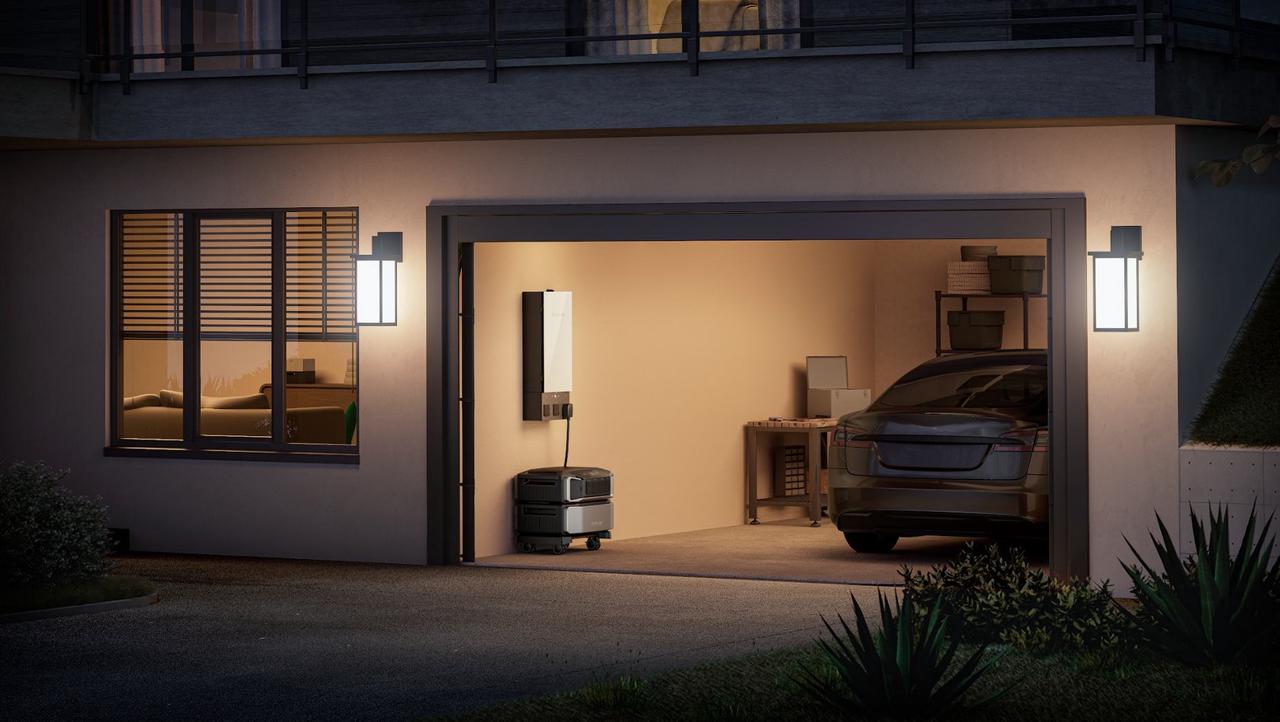
According to the CDC and EPA, using gas generators indoors or inside garages causes deadly carbon monoxide poisoning; always operate them at least 20 feet away from windows and doors. Instead, a heavy-duty portable power station or a comprehensive solar home backup system is the safest indoor choice. (Please note: Any permanent integration to your home’s electrical grid, such as transfer switches or smart panels, must be installed by a licensed electrician to meet local safety codes.) These large battery units operate completely silently inside your living room, keeping your fridge cold, your lights on, and your medical equipment active for days without any toxic fumes.
Updating Your Family Emergency Plan Annually
A static strategy quickly becomes outdated and dangerous. As your household changes, your severe weather protocols must adapt to ensure everyone remains protected.
Cellular networks often fail or become overwhelmed during landfalling storms. Your family emergency plan must include a designated out-of-town contact person. Instruct everyone in the household to send text messages to this person if separated, as texts require far less network bandwidth than voice calls. Update these phone numbers yearly and ensure young children know them by heart.
Go through your 72-hour survival kits at the start of every spring. Replace expired canned food, refresh your bottled water supplies, and ensure your first-aid kit is fully stocked with bandages and antiseptics. Update any necessary prescriptions to ensure you have a 14-day supply on hand for every family member, including specific dietary needs and infant formula.
Stay Ready When A Hurricane Watch Turns Into A Warning
Understanding a hurricane watch vs warning ensures your family reacts safely and efficiently. By establishing a solid strategy, you can face severe weather with confidence. Stay prepared with the EcoFlow DELTA Pro Ultra Whole-Home Backup Power. Featuring an expandable 6kWh-90kWh capacity, 5 charging options, and an auto-switchover Smart Home Panel 2, it delivers reliable prolonged backup. (Note: Running a home for "weeks" requires the maximum 90kWh battery configuration and strict energy management, such as solely powering a refrigerator and Wi-Fi router. Actual runtime depends entirely on your connected appliances.)
FAQs
Q1: What is the difference between a hurricane watch vs warning?
A watch means hurricane conditions are possible within 48 hours, signaling you to start your preparations. A warning means hurricane conditions are expected within 36 hours, indicating you must take immediate action, such as sheltering in an interior room or evacuating your area.
Q2: When is hurricane season in the United States?
The Atlantic hurricane season runs from June 1 to November 30 every year. The most active and dangerous period typically occurs between mid-August and late October, requiring coastal residents to remain on high alert during these months.
Q3: What to do during a hurricane warning?
You should immediately finish boarding up your windows, bring all outdoor items inside, and follow any mandatory evacuation orders from local authorities. If staying home, move to a windowless interior room with your emergency supplies and stay away from glass.
Q4: What should a family emergency plan include?
It should include pre-planned evacuation routes, an out-of-town emergency communication contact, a designated indoor safe room, and a 72-hour survival kit containing water, non-perishable food, flashlights, cash, and essential daily medications.
Q5: How long does food stay safe in the fridge during a power outage?
According to the FDA, a refrigerator can keep food cold for about 4 hours if the door stays closed, while a full freezer can hold temperature for about 48 hours. Use a food thermometer and discard perishable food if safety is uncertain.
Safety Disclaimer: This article provides general hurricane preparedness information for families and homeowners. It does not replace official evacuation orders, National Weather Service alerts, FEMA guidance, local emergency management instructions, medical advice, electrician guidance, or manufacturer instructions. During any storm, follow your local officials first.
For press requests or interview opportunities, reach out to our media team
media.na@ecoflow.com