Boondocking Power: How to Stay Off-Grid Longer in Your RV
- Why Has Boondocking Become the Ultimate Form of RV Freedom?
- What Power Challenges Do RVers Face Off-Grid?
- How Do You Calculate Your RV's Daily Power Needs?
- What Battery Setup Works Best for Boondocking?
- How Do Portable Power Stations Simplify Off-Grid Power?
- How Can Solar Panels Extend Your Off-Grid Stay?
- How Do You Plan Power for Multi-Day Boondocking Trips?
- Frequently Asked Questions
- Smart Power Planning Lets You Boondock Longer without Sacrificing Comfort
Boondocking, or off-grid camping, is a growing trend for RVers. Instead of plugging into facilities at a campground, you rely entirely on yourself for electricity, water, and sewage. The major challenge is knowing how to prepare for extended stays off-grid, while still having electricity.
Keep reading to learn the common challenges for boondockers, what battery is needed for your setup, and how to maximize your stay through solar energy.
Why Has Boondocking Become the Ultimate Form of RV Freedom?
Staying at crowded, busy campgrounds and RV parks is an extremely different experience than boondocking. Many RVers enjoy the sense of freedom and adventure going off-grid offers.
When your RV is self-sufficient, you can set up camp anywhere. There are no facility connection limitations. Campground spots also cost money. RVers can boondock for free or in very low-cost locations for cost savings.
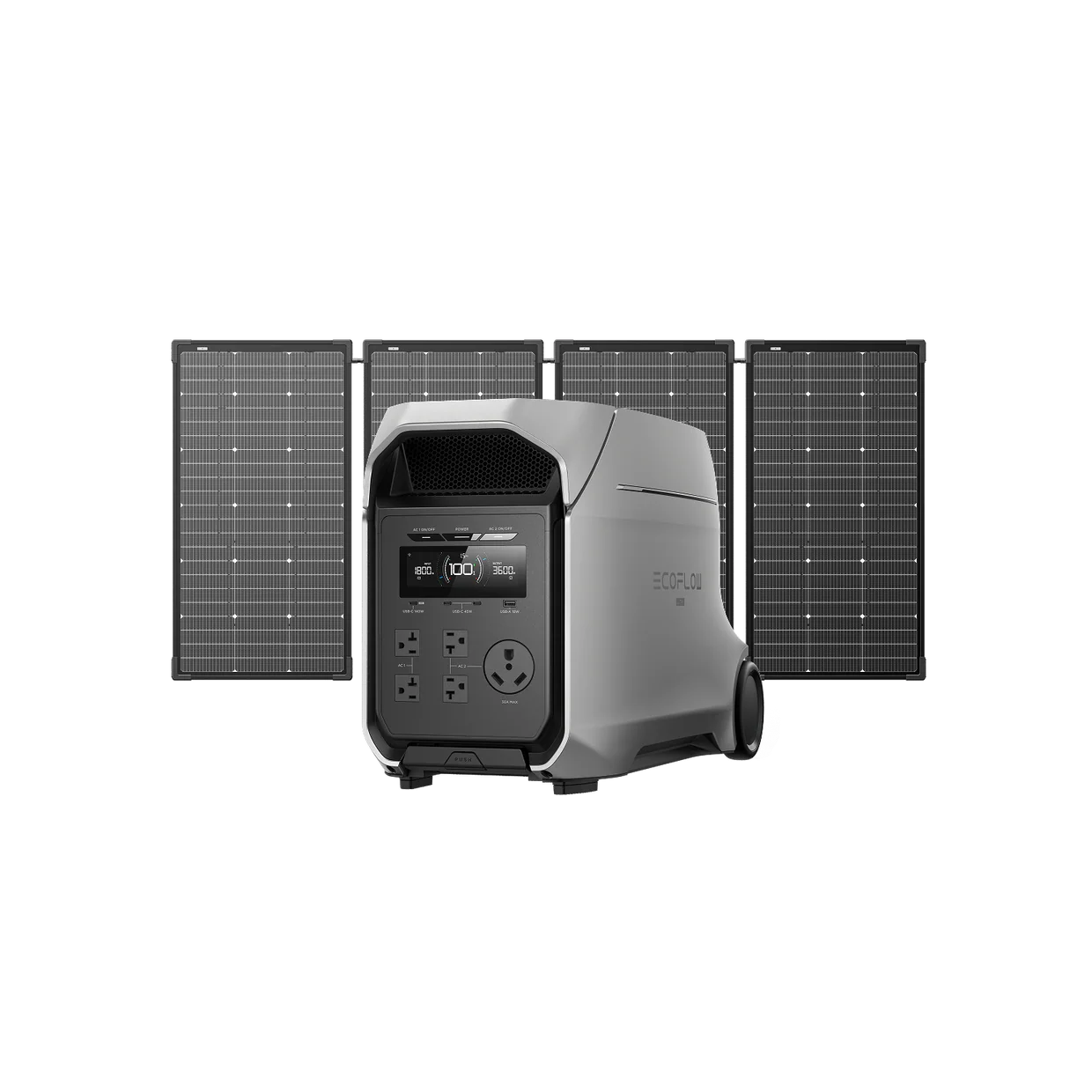
Advances in battery technology and solar panels have enabled more and more RVers to install self-reliant electrical systems at low costs, making boondocking more accessible. An EcoFlow DELTA 3 Ultra Plus + 500W Solar Panel is a good example of that shift, as it lets you build a reliable off-grid power system without the cost or complexity of a full solar installation.
What Power Challenges Do RVers Face Off-Grid?
High-Draw Appliances: air conditioners, microwaves, induction cooktops, coffee makers, electric heaters, and hair dryers use large amounts of power in a short time. Running multiple of these can quickly drain the battery.
Battery Chemistry: Not all banks are created the same. Some are cheaper but charge slower. More expensive ones charge faster, weigh less, and provide more usable energy.
Environment: Weather and location impact battery performance and solar panel efficiency. Cloud coverage, trees, and dust can cover panels, lowering efficiency and charging speeds.
Phantom Loads: Even when appliances are off, they can still draw electricity, slowly draining the battery. Be aware of appliances that are off but plugged in.
How Do You Calculate Your RV's Daily Power Needs?
Various electrical loads in your RV determine the size of the power station you need. Decide which appliances and electronics you need for the trip. Then, to calculate your RV's daily electrical needs, list every appliance, multiply each appliance's wattage by the number of hours it's used per day, then add the totals.
This gives you your daily energy consumption in watt-hours (Wh). Use this metric to size your battery bank and solar generator.
The EcoFlow DELTA 3 Ultra Plus + 500W Solar Panel is built to scale with that math, starting at 3 kWh and expanding up to 11 kWh as your needs grow. Build in a little extra Wh on top of your total to account for emergencies and unplanned power draws.
What Battery Setup Works Best for Boondocking?
Lithium vs. Lead-Acid Batteries
Lithium batteries last longer, charge faster, and weigh less than lead-acid types. They are more expensive, but provide more usable capacity, making them a top choice for frequent boondocking. Lead-acid batteries are a budget-friendly option for infrequent off-grid camping.
Sizing Your Battery Bank
Calculate your RV’s daily power needs. Look for a battery that offers one to two days of power, plus some extra. Build in some additional buffer capacity to cover emergencies, cloudy days, and high-draw appliances.
How Do Portable Power Stations Simplify Off-Grid Power?
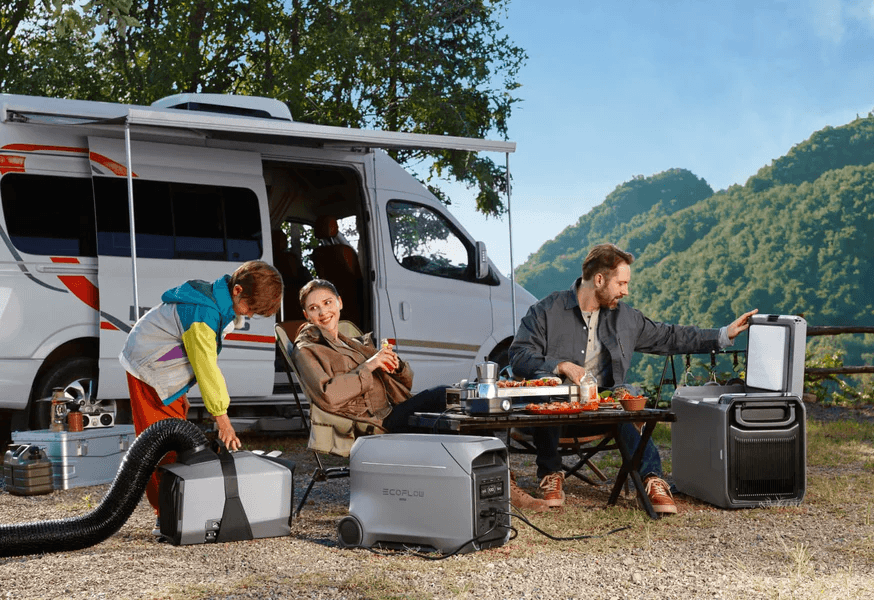
Portable power stations act as a giant power bank. They deliver both AC and DC power, letting you run appliances, electronics, and camping gear throughout the RV, tying directly into how your RV’s electrical system works to distribute power to outlets and 12V circuits. The power stations can be charged from solar panels during the day, then used to run appliances, electronics, and camping gear later.
Power stations are also quieter and less messy than traditional gas generators. You won’t need to worry about noise ordinances.
How Can Solar Panels Extend Your Off-Grid Stay?
Your battery's capacity limits your off-grid stay. The best way to extend your trip is by recharging power stations. Solar panels will recharge your batteries onsite during the day, reducing reliance on gas generators or hookups. Properly sized systems can offset daily electrical use, especially when paired with energy-efficient appliances.
How Do You Plan Power for Multi-Day Boondocking Trips?
For multi-day trips, you need to estimate your daily power consumption, then multiply that by the length of the trip. Account for expected solar production based on weather reports for cloud coverage.
Getting comfortable with boondocking at this scale means developing a strategic plan to conserve electricity by limiting high-wattage appliance use, unplugging unused electronics, and monitoring battery levels.
Frequently Asked Questions
How Many Days Can You Boondock on Battery Power Alone?
The exact run time depends on battery type and size. As a general guideline, many RVs use a 100 Ah deep-cycle battery, which runs for roughly 1 to 3 days depending on load. Lead-Acid batteries last for 1 day with light electricity needs. LiFePO4 can last from 2 to 3 days with the same electrical load.
Do You Need Solar Panels to Boondock Successfully?
You don’t need solar panels to boondock successfully, but they do make it easier. For multiple boondocking days, you need some way to recharge the battery. Solar panels connected to a portable power station can replenish it quickly. Vehicle alternators and gas generators are alternatives.
Can You Run RV Air Conditioning While Boondocking?
You can run RV air conditioning while off-grid if you're equipped with a massive power station or generator. If running AC off batteries, you’ll need an inverter, a soft-start device to reduce surge current, and a battery with high capacity. The size depends on how much draw the AC requires per hour.
What Size Portable Power Station Do You Need for Boondocking?
The size of the best portable power station for boondocking depends entirely on your needs. For weekend use, a 500 Wh to 1,000 Wh size is best. It can handle lights, electronic charging, and a water pump. For extended use, a 3,000 Wh to 6,000 Wh is needed.
Smart Power Planning Lets You Boondock Longer without Sacrificing Comfort
The freedom of boondocking starts with strategic power planning. You need to understand your daily electrical needs, choose the right battery setup, and develop a way to replenish battery power, especially if it’s an extended stay.
Portable power stations paired with solar panels are an easy way to build self-sustainability, enabling you to park your RV wherever.
The EcoFlow DELTA 3 Ultra Plus + 500W Solar Panel is a reliable, high-capacity, lithium-ion option for your next boondocking excursion.
For press requests or interview opportunities, reach out to our media team
media.na@ecoflow.com