The Ultimate Guide to RV Boondocking: How to Live Off-Grid in 2026
- What Is RV Boondocking? (Beginner-Friendly Explanation)
- How to Prepare Your RV for Boondocking in 2026
- How to Find the Best Boondocking Spots in the U.S.
- How to Live Off-Grid in an RV (Step-by-Step Guide)
- How to Power Your RV Off-Grid Efficiently in 2026
- Staying Connected and Comfortable While Boondocking
- Common Boondocking Mistakes to Avoid
- How to Boondock Sustainably and Save Money
- Conclusion
- FAQ
It’s a great feeling to wake up to a desert sunrise in Moab or a secluded forest in the Pacific Northwest, without another soul around. This is boondocking, the ultimate way to experience the American wilderness. You can avoid the noise of crowded RV parks and the high prices of RV campgrounds. In 2026, off-grid living will be more accessible than ever. This is because of better technologies and a growing community of nomads. This guide covers everything from finding the perfect spot to managing your power and wat
What Is RV Boondocking? (Beginner-Friendly Explanation)
If you’re new to the RV world, you might hear a lot of terms thrown around that sound like they mean the same thing. They all have one common characteristic, and that’s they involve staying outside a traditional campground. But there are some subtle differences to take note of.
Boondocking vs. Dry Camping vs. Dispersed Camping
Boondocking specifically refers to camping in remote areas without any utility hookups, i.e. no water, power, or sewer. Dry camping is a broader term. Dry camping could mean staying in a Walmart parking lot or a developed National Park site that lacks hookups. Dispersed camping is the official term used by government agencies for camping on public lands outside of designated campsites, also with no hookups.
Is Boondocking Legal in the U.S.? (BLM & Public Lands Explained)
Yes, boondocking is perfectly legal on millions of acres of public land. Most of this is managed by the Bureau of Land Management (BLM) and the U.S. Forest Service (USFS). Generally, you can stay in one spot for up to 14 days before you have to move. However, note that rules can vary by state and specific district. Always check what’s posted and use official resources like the BLM website and apps to confirm.
Pros and Cons of Off-Grid RV Living
The pros are easy to see, namely, no camping fees, absolute privacy, and front-row seats to nature. However, the downside is that you are on your own and need to practice resource management. You are your own utility company, meaning you have to monitor every gallon of water and every watt of power.
How to Prepare Your RV for Boondocking in 2026
You can’t just pull off the highway with your RV and expect to survive a week on your own without some preparation. In 2026, the best preparations combine basic wilderness camping habits with today’s modern technology.
Essential Systems You Need (Power, Water, Waste)
Before you start your adventure, you need to make sure your three basic systems are ready. This means a full fresh water tank, empty waste tanks, and a reliable way to keep the lights on and the fridge running. Understanding how to equip your RV for off-grid living is the first step to ensuring your safety and comfort in the wild.
RV Battery Basics: Capacity, Types, and Limitations
Your backup power batteries are the heart of your off-grid setup. Lead-acid batteries, like car batteries, are the old standard. Today, serious boondockers use lithium (LiFePO4) batteries because they have longer lifespans and longer discharge.
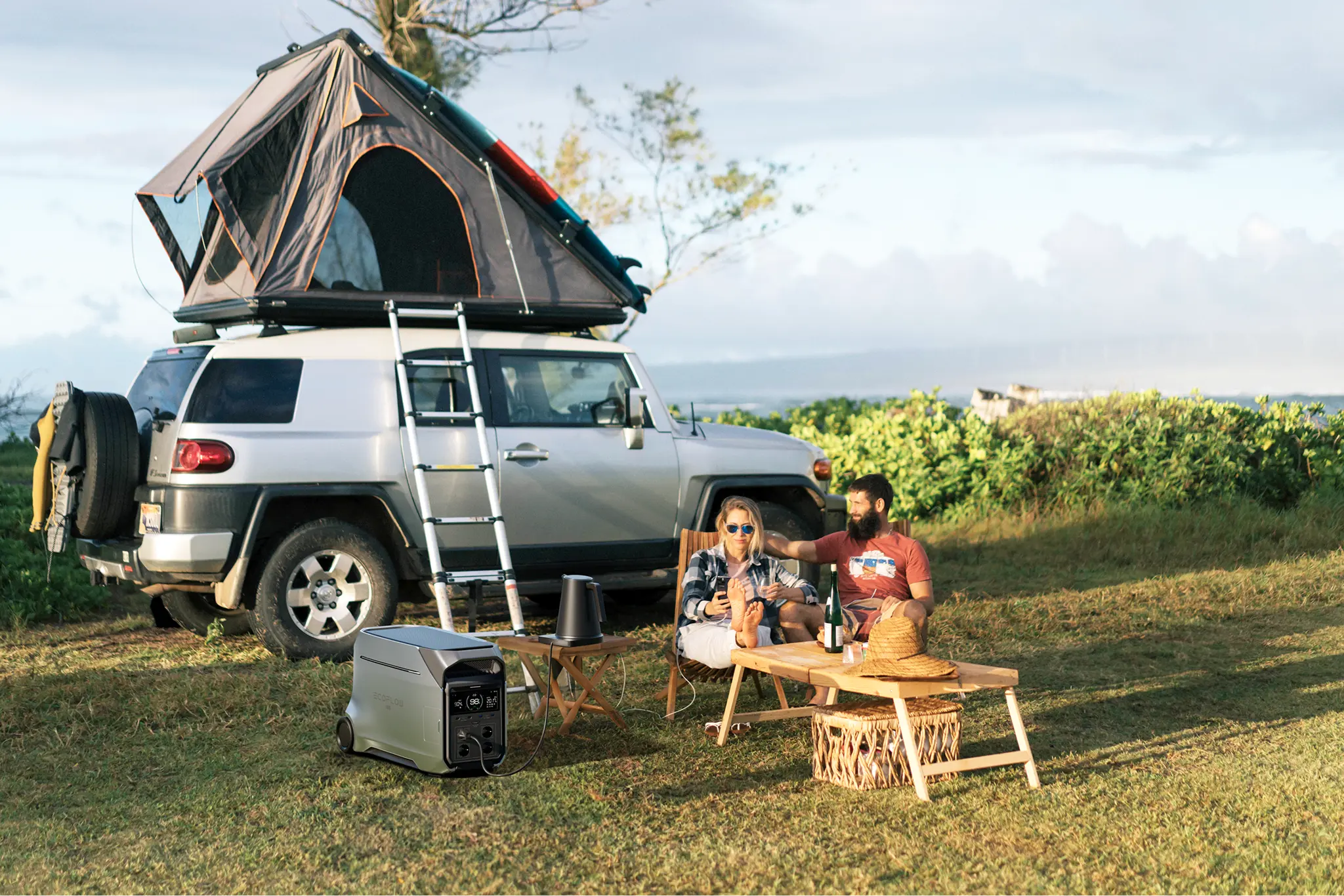
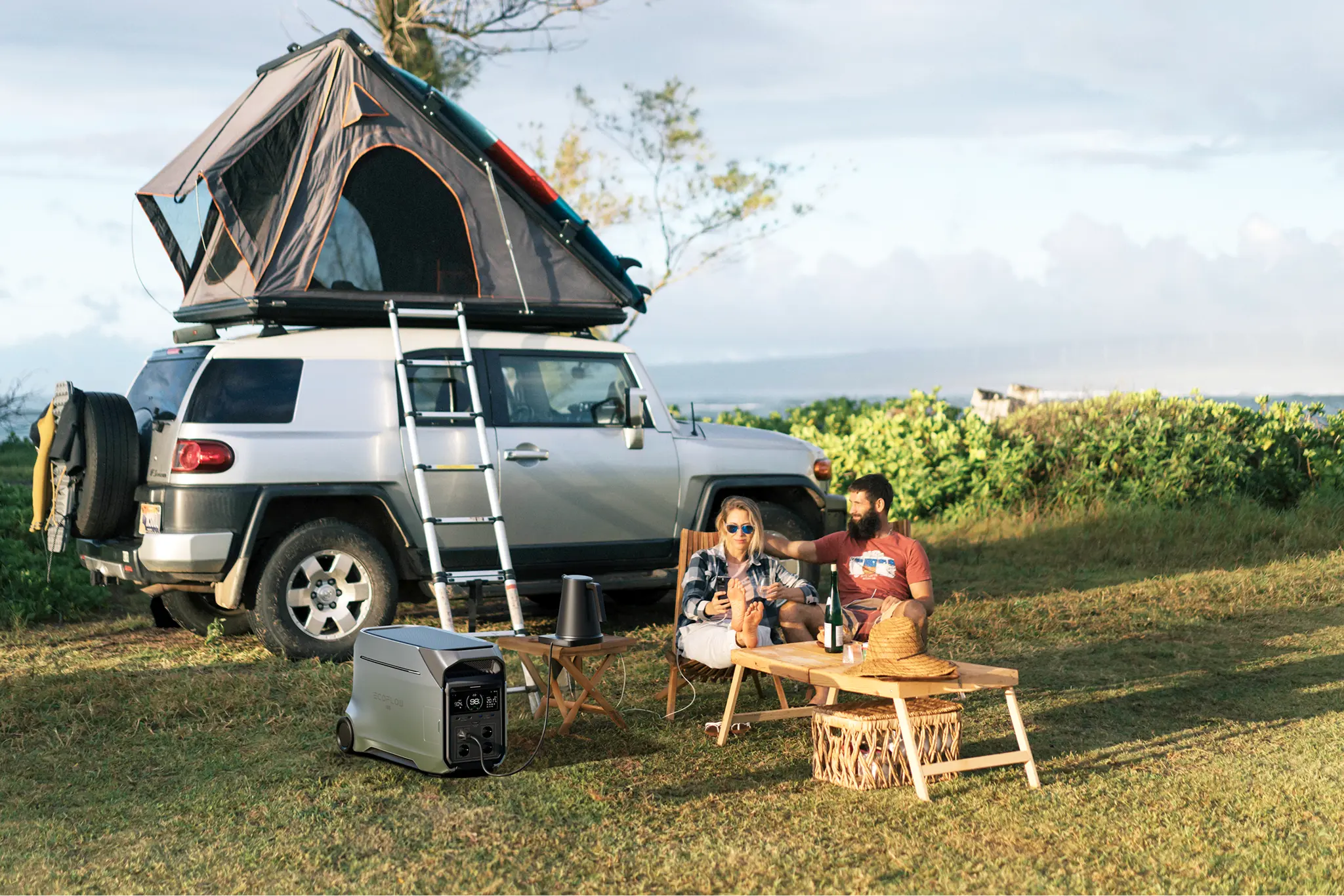
If you’re just taking up boondocking or heading out for a short trip, you don’t necessarily need a large, built-in battery bank. For many American campers, a simple plug-and-play solution is the perfect entry point. A portable power station like the EcoFlow DELTA 3 Classic Portable Power Station (1024Wh) is ideal for beginners. It’s compact, lightweight, and incredibly easy to operate. The DELTA 3 Classic can handle the essentials like phones, laptops, or a 12V portable fridge, all without any complicated wiring
Solar Panels vs. Generators: Which Is Better for Off-Grid Power?
Generators provide instant power but are loud and require fuel. Solar panels are silent and easy to set up for charging, but they depend on the weather. Most modern boondockers prefer a hybrid approach, often incorporating a high-quality portable power station to act as a silent, reliable bridge between solar intake and appliance output. They will use solar as the primary power source and a generator as a backup.
Must-Have Boondocking Gear Checklist
Besides backup power, you will need a quality water filtration system, a cellular signal booster, leveling blocks for the RV, and a sturdy shovel (just in case).
How to Find the Best Boondocking Spots in the U.S.
Finding that million-dollar view for zero dollars is the reward for the boondocking experience. Luckily, the U.S. is a treasure chest of free camping locations; you just need to know where to look.
Top Rated Free Camping Locations (BLM Land, National Forests, Desert Areas)
The western U.S. has almost unlimited locations for boondocking. Quartzsite, Arizona, is a legendary winter hangout for boondocking nomads. For dispersed camping, stay near Grand Teton National Park for some of the best mountain views in the country.
Best Apps & Websites for Finding Boondocking Sites
To find locations, use popular apps like Campendium, The Dyrt, and iOverlander… Here you can check recent reviews, cellular signal strength, and road conditions so you know if your RV can navigate them.
Rules and Etiquette for Public Land Camping
Don’t cause problems and be respectful. Follow the 14-day limit, keep your footprint small, and never park right next to someone else. Sound travels much further in the quiet of the desert. Ask yourself, do I want to listen to someone’s conversation all night
Safety Considerations When Camping Off-Grid
Always let someone know your location or coordinates. You can easily find yourself out of cellular range, so you must download the area maps and bring a basic first-aid kit.
How to Live Off-Grid in an RV (Step-by-Step Guide)
Living off-grid is where you can create your own environment. It’s about shifting your mindset from continuous consumption to living based on necessities.
Managing Power Consumption Off-Grid
Keep an eye on your battery monitor. Turn off lights when not in use and try to do your heavy power tasks, like vacuuming and charging batteries, during the middle of the day. This is when your solar panels are at peak charging capacity.
Water Conservation Tips for Long Stays
Water is usually the first thing to run out. Practice the navy style showers, and turn off the water while scrubbing. Consider using paper plates to save on dishwashing, and keep a few gallons of drinking water in separate containers to save your main tank.
Waste Management (Black Tank & Gray Tank Tips)
You need to manage all your waste, too. Use biodegradable soaps if your location allows the discharge of your gray water. For example, some National Forests (USFS) allow gray water discharge 200ft from water sources. But most BLM lands, especially in the Southwest, strictly prohibit it. To stay legal and protect the land, it’s best to contain your gray water and only use authorized dump stations. The same goes for your black tank, which must always be dumped in a professional facility.
Cooking, Heating, and Cooling Off-Grid
Propane is very common and useful for cooking and heating. But the exhaust is warm and contains water vapor that can condense. For this, many boondockers rely on high-powered roof fans like a MaxxAir. Using the fan saves power compared to running the A/C, which can drain batteries fast unless you have a high-end power setup.
How to Power Your RV Off-Grid Efficiently in 2026
As we move through 2026, the dream of enjoying a fully powered home in the middle of nowhere has finally become a reality.
How Much Power Do You Actually Need?
A typical day might include running a fridge, lights, water pump, and charging electronics. This usually uses around 150-200Ah of 12V power. However, if you want to work remotely or use luxury appliances, that number climbs quickly.
Why Solar + Battery Storage Is the Best Long-Term Solution
Long-term boondockers in the U.S. are increasingly moving away from noisy, gas-guzzling generators. This is especially true since agencies like the BLM have strict noise ordinances at night. The modern gold standard is a high-capacity solar and battery ecosystem.
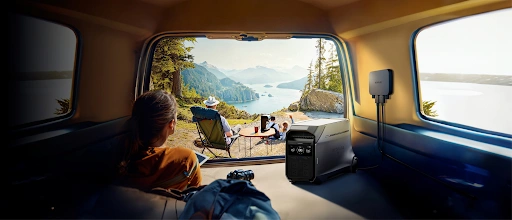
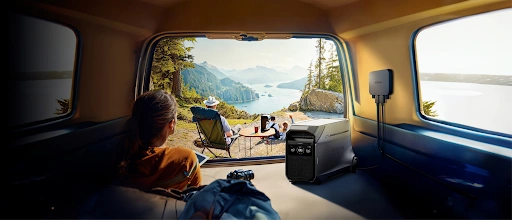
If you’ll be camping in the Nevada desert or on the Texas plains, a system like the EcoFlow DELTA Pro 3 Portable Power Station will be a perfect fit. It’s not just a battery; it’s a full-fledged energy hub. The DELTA Pro 3 has an expandable capacity of 4–48 kWh and a massive 4000W output. It can easily run heavy-duty appliances like air conditioners, induction cooktops, and even your Starlink connection simultaneously. It supports 120V/240V output and can be charged via solar, your vehicle, or even an EV charging station. It’s the difference between just surviving off-grid and actually living there with all the comforts of home.
Smart Energy Management Systems for RVs
A Bluetooth-enabled energy management system with smart plugs allows you to see exactly how much power each circuit is using in real-time. Knowing usage and conserving will help you avoid running out of power in the middle of the night.
Staying Connected and Comfortable While Boondocking
Just because you’re off the grid doesn’t mean you have to be out of touch. Whether you’re a digital nomad or just want to stream a movie, connectivity is easier than ever.
Internet Options for Remote RV Living (Starlink, Hotspots)
Starlink Mini has become a favorite of the RV world in 2026. It provides high-speed internet in the most remote corners of the country. For backup, a reliable cellular hotspot on a different carrier (like Verizon or AT&T) is always a smart move.
Climate Control Without Hookups
Insulation is important in both summer and winter. Use Reflectix on your windows to keep the sun and heat out during summer and the heat in during winter. When planning your energy budget, it is crucial to research how many watts RV air conditioners use to avoid overloading your battery bank. If you have the battery capacity, a 12V DC air conditioner is a much more efficient way to stay cool than a traditional 120V unit.
Wildlife Awareness and Personal Safety Tips
From bears in the Rockies to rattlesnakes in the Southwest, you need to know how to protect yourself. Keep your food locked up in fully sealed containers. Remember to carry bear spray in active areas, and always trust your instincts. If a spot doesn’t feel right, just move on.
Common Boondocking Mistakes to Avoid
Even seasoned pros make mistakes, but most boondocking failures are preventable with a little foresight.
Running Out of Power Too Quickly: This usually happens when you underestimate the draw of things like hair dryers or electric heaters.
Poor Water Planning: You must check your water tank levels before settling in for a week, or it’s a sure way to shorten your trip.
Choosing Unsafe or Illegal Campsites: Always check for “No Camping” signs, whether posted or online, and make sure the ground can support your RV’s weight.
How to Boondock Sustainably and Save Money
One of the biggest attractions for boondocking is the financial freedom it offers. That freedom is great, but it comes with a responsibility to the land.
Leave No Trace Principles
This is the golden rule of the outdoors. No trace means pack out what you pack in, stay on existing roads to protect fragile environments, and leave your campsite cleaner than you found it.
How Much Money Can You Save by Boondocking
Campground fees in popular areas can easily top $60–$100 per night. By boondocking, a full-time RVer can save over $1,500 a month. That’s money better spent to upgrade your gear or paying off the loan if there is one.
Conclusion
Boondocking in 2026 is the ultimate way to reconnect with the American landscape. It requires a bit more planning and the right gear, like a solid power system to keep things comfortable and your technology running. The reward is a level of freedom and beauty that you just can’t find at a paved RV resort. Pack your water, charge your batteries, and head out to find your own slice of wilderness.
FAQ
1. How long can you boondock in one place?
Most BLM and National Forest lands allow you to stay for 14 days within any 28 days. After that, you must move at least 25 miles away.
2. Do you need solar panels for boondocking?
No, they’re not required, but solar panels are highly recommended and can be a lifesaver. They can keep your batteries charged without needing to run a loud generator that needs fuel.
3. Is boondocking safe in the U.S.?
Yes, boondocking is generally very safe, provided you use common sense. Always let others know your location, and stay aware of your surroundings and local wildlife.
4. Can beginners try boondocking?
Absolutely! Beginners should start with a trial stay on the driveway, or a one-night “dry camp” at a location in town. This will give you a feel for how much power and water you use before heading deep into the woods.
For press requests or interview opportunities, reach out to our media team
media.na@ecoflow.com