Boondocking vs. Campgrounds: How to Pick the Right Night Stop for Your RV Travel Style
Two valid options sit in front of every RV traveler each night: pull into a campground with hookups, or find a quiet patch of public land and park for free. Boondocking, camping off-grid with no hookups and no fees, is not the right call every time. The better option depends on your gear, your budget, and how much inconvenience you are willing to manage.
What Boondocking Really Means for RV Travelers
Before weighing one option against the other, it helps to be clear on what boondocking actually involves day to day. Many RVers picture a scenic desert sunset, but the practical reality involves water math, battery monitoring, and knowing exactly where you are legally allowed to stop.
Where You Can Camp
Most legal free camping sits on land managed by the Bureau of Land Management or the U.S. Forest Service. These agencies allow dispersed camping on millions of acres across the western United States. Some state trust lands also permit it, though rules vary by state.
The standard stay limit on BLM land is 14 consecutive days at a single location. After that, you are required to move. RV boondocking in urban settings, such as overnight stops in store or casino parking lots, follows a completely different set of informal rules and permissions, and it is a separate category from public land camping.
What You Give Up
No shore power means no convenient overnight charging. No water hookup means every drop comes from your fresh tank. No dump station means holding tanks fill up and eventually force you to move. There is no camp host to call, no maintained restroom, and often no cell signal.
These are not minor inconveniences. Each one requires a system to replace it, and running out of water or power mid-stay is not a minor problem.
What You Gain
Free nights add up fast. A week of boondocking on public land can save $200 or more compared to full-hookup campgrounds. Beyond cost, the experience itself is different: fewer neighbors, quieter nights, and scenic landscapes where developed campgrounds are rarely found.
The flexibility is real, too. You can arrive without a reservation, stay two days or two weeks, and leave whenever you want.
Boondocking trades convenience for freedom and cost savings. That trade-off is worth it for some travelers and impractical for others, which is what the next section examines.
The Real Costs and Logistics of Campground Stays
Campgrounds vary enormously in what they offer and what they charge. Placing the two options side by side makes the financial and logistical differences concrete.
Factor | Boondocking | Campground |
|---|---|---|
Nightly cost | $0 on public land | $20 to $80+ depending on hookups and location |
Water supply | Tank only; must pre-fill and conserve | Full hookup or fill station on site |
Power source | Solar, generator, or battery bank required | Shore power available at most sites |
Dump station | Must drive to find one; plan timing carefully | On-site or within the park |
Reservations | None needed on most public land | Often required weeks or months ahead |
Crowd level | Typically isolated or small groups | Ranges from quiet to very crowded |
Cell signal | Often weak or absent | Stronger in most developed areas |
Amenities | None | Showers, laundry, playgrounds, camp store |
The numbers above reflect common ranges, not guarantees. Prices at popular national park campgrounds can run higher, and some primitive campgrounds charge a small fee.
The cost gap is real, but campgrounds offer infrastructure that genuinely matters when your tanks are full or your battery is low. The right choice often comes down to how self-sufficient your rig actually is.
Gear and Preparation That Make or Break a Boondocking Trip
Many RVers underestimate what boondocking demands from their setup. Arriving without the right gear turns a peaceful off-grid stay into a stressful scramble. These are the items that matter most.
Solar panels and a battery bank large enough for multiple cloudy days are the core of a functional boondocking power system; lithium batteries hold capacity longer and handle deep discharge better than lead-acid options.
Water conservation habits matter as much as tank size; a 40-gallon fresh tank can last two people four to five days with disciplined use of low-flow fixtures and short showers.
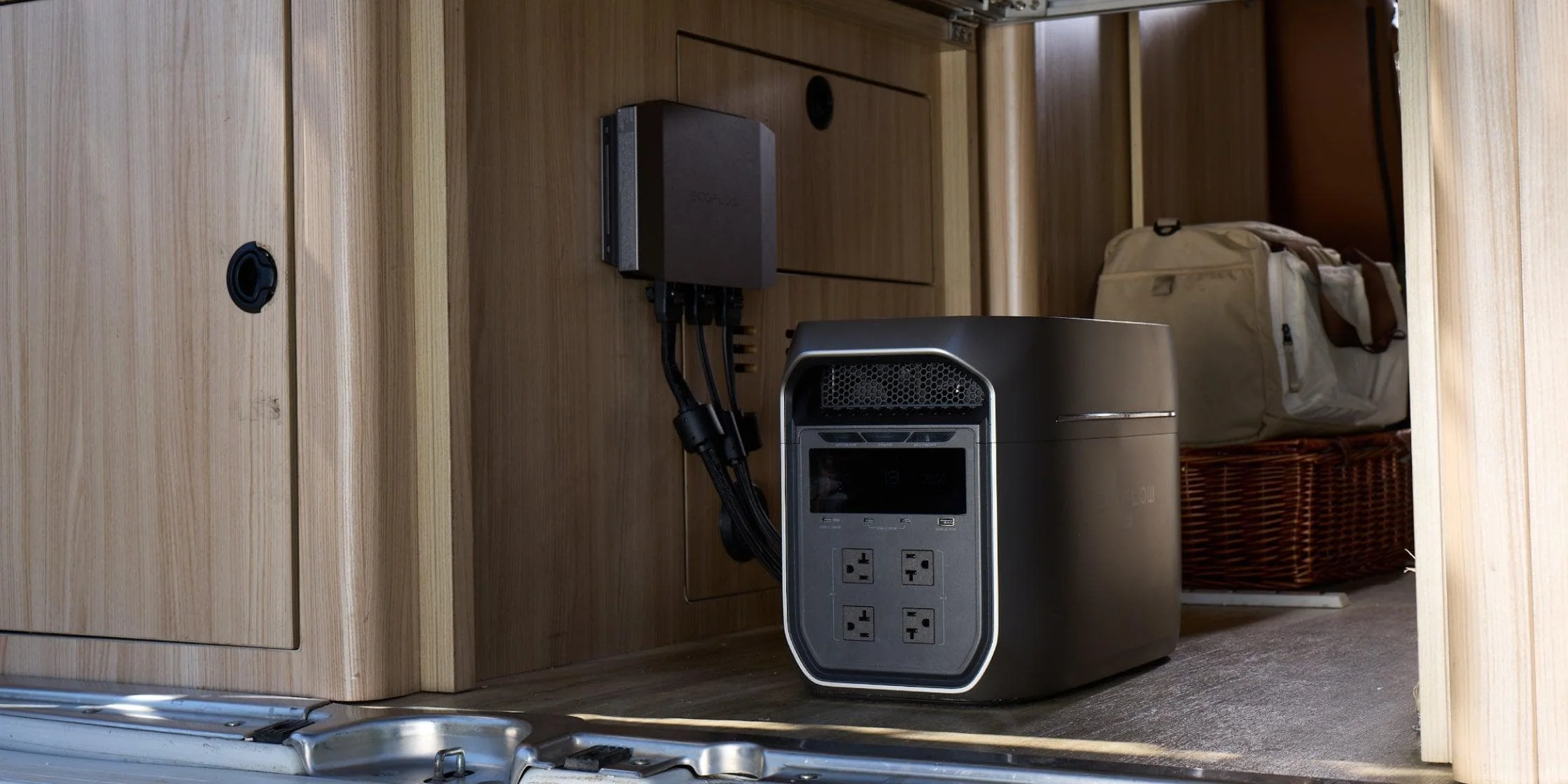
A portable power station can supplement solar during consecutive overcast days and run appliances a basic battery bank cannot handle. The EcoFlow DELTA 3 Max, paired with a 400W solar panel, is one option worth considering here: it delivers 2400W of AC rated output, with pure sine wave output that is safe for sensitive electronics.
A generator is a reliable backup but requires fuel storage, creates noise, and is restricted in some areas; check local rules before relying on one as your primary power source.
Cell signal boosters extend usable coverage in areas with marginal signal, which matters for navigation, weather updates, and remote work.
A quality composting or cassette toilet removes dependence on nearby dump stations and extends how long you can stay in one place without moving.
The right gear does not guarantee a perfect trip, but missing key items almost guarantees a short one. Investing in power and water systems before a long boondocking run pays off quickly.
How to Decide Which Option Fits Your Current Trip
With the differences clear, the practical question is how to make the call for a specific trip. The answer is rarely the same every time, even for experienced RVers.
When Campgrounds Make More Sense
Campgrounds are the stronger call when your fresh tank is running low, your holding tanks are nearly full, or you need to do laundry. Families traveling with young children often prefer the stability of maintained restrooms and a camp host nearby. Campgrounds also make sense in high-traffic regions where free dispersed sites either fill fast or simply do not exist.
After a string of cloudy days, pulling into a campground with shore power can fully recharge your system overnight and reset your options for the next stretch.
When Boondocking Is the Better Call
Off-grid camping works well when your tanks are full, your batteries are charged, and your route passes through BLM or national forest land. If you have two to three days before needing any services, boondocking is often the easier choice logistically.
It is also the practical option when campgrounds in the area are booked months out. During peak summer season, popular national park sites can be gone before spring begins.
Mixing Both on One Route
Most experienced RVers do not commit to one option permanently. A common pattern is two to four nights boondocking, then one night at a campground to dump tanks, refill water, and top off batteries. Planning a route with this rhythm keeps nightly costs low without forcing you to rough it when your systems are tapped out.
Some travelers map campground locations in advance specifically as reset points, then fill the gaps between them with free sites.
Flexibility is the real advantage here. Treating boondocking and campgrounds as complementary rather than competing options lets you adapt to terrain, season, and your own energy levels.
Plan Your Next RV Night Stop With Confidence
Boondocking saves money and offers solitude, but it demands a self-sufficient setup. Campgrounds cost more and handle logistics you may not want to manage yourself. Both belong in a well-planned RV trip. Before your next outing, audit your rig's water and power capacity. Knowing what your setup can realistically handle tells you which option is actually available to you, and that is the most useful place to start.
Frequently Asked Questions
Q1: How Much Power Do You Need for Extended RV Boondocking?
Most boondocking setups need at least 200 watts of solar and 100 amp-hours of usable lithium battery capacity for moderate daily use. A refrigerator, lights, fans, and phone charging typically draw 50 to 80 amp-hours daily. Add more capacity if you run a coffee maker, air conditioner, or work remotely from your rig.
Q2: What Is the 14-Day Rule on BLM Land?
BLM land limits stays to 14 consecutive days at one location. After that, you must move at least 25 miles and generally cannot return to the same area for 28 consecutive days. Some areas post shorter limits on-site. Always check with the local field office before arriving, since rules vary by district and can change seasonally.
Q3: Can You Boondock Without Solar Panels?
Yes, but your stay length will be limited. Without solar, you rely on your engine alternator, a generator, or batteries charged before you leave. A generator works but is noisy and fuel-dependent. Most full-time boondockers add at least a basic solar setup within their first season because the convenience gain is immediate and ongoing.
Q4: Why Do Some Campgrounds Require Reservations Months in Advance?
National park and popular state park campgrounds fill fast because site numbers are fixed and demand has grown sharply in recent years. Summer weekends at high-traffic parks can book out four to six months ahead. Targeting weekday arrivals or shoulder-season dates gives you more availability without paying premium rates.
Q5: How Do You Find Legal Free Campsites for RV Travel?
Public land managed by the Bureau of Land Management and the U.S. Forest Service offers the most legal free camping options in the country. Offline-capable mapping apps with land-status layers help locate open dispersed areas. Calling the local ranger district or field office confirms current access, fire restrictions, and any seasonal closures before you commit to a route.
Disclaimer: The camping regulations, stay limits, and guidelines mentioned in this article—particularly regarding Bureau of Land Management (BLM) and U.S. Forest Service lands—are subject to change based on local district policies, seasonal conditions, and fire restrictions. The information provided is for general planning purposes only. Always verify current rules, road conditions, and area closures directly with the managing agency before your trip. For the most official and up-to-date information on dispersed camping and public land regulations, please visit the Bureau of Land Management's Official Camping Guide.
For press requests or interview opportunities, reach out to our media team
media.na@ecoflow.com