How to Plan a 4-Hour RV Getaway Close to Home
- 1. Treat Four Hours as the Maximum, Not the Target
- 2. Pick One Reason to Go
- 3. Choose the Site for Your Rig, Not the View
- 4. Check an RV-Safe Route in Both Directions
- 5. Build a Weekend Schedule with Empty Space
- 6. Plan Campsite Power Before You Pack Appliances
- 7. Pack for Two Days, but Prepare for One Delay
- 8. Use a 30-Minute Departure Check
- Make the First Local Getaway Easy to Repeat
- Frequently Asked Questions
The easiest short RV getaway starts with one rule: choose a campground no more than four hours from home, stay in one place, and plan one main activity per day. You will get a genuine change of scenery without losing half the weekend to driving and setup.
A close-to-home RV trip is also an ideal “shakedown” outing. Test the water, electrical, propane, and leveling systems, then fix small problems before a longer vacation. This plan works for a two- or three-night escape in any RV.
1. Treat Four Hours as the Maximum, Not the Target
Map a destination about three hours from home in normal traffic. The remaining hour covers slower RV speeds, fuel, rest breaks, and congestion. Measure the entire door-to-site journey and arrive with enough daylight to level the rig and connect utilities safely.
Use time rather than mileage to draw the search area: a flat interstate is easier than mountain grades or small towns. For the season’s first outing, stay even closer. Go RVing recommends nearby shakedown trips for practicing setup, testing systems, and recovering forgotten essentials.
2. Pick One Reason to Go
Choose the experience before the campground: a lake, hiking base, small town, beach, dark sky, or family amenities. One priority quickly removes unsuitable options.
Stay at one campground. Moving sites creates another round of packing, hitching, leveling, and hookups. For a short RV road trip, one base delivers more vacation time. Save nearby options, but schedule only one fixed activity each day.
3. Choose the Site for Your Rig, Not the View
A beautiful campground is useless if the RV cannot reach or fit the site. Confirm maximum RV and trailer lengths, whether the tow vehicle is included, road clearance, pad width, surface, slope, and whether the site is back-in or pull-through.
“Electric” may mean 30-amp or 50-amp service, while “standard” may mean none. Verify potable water, sewer or dump station, bathrooms, generator hours, pet rules, cell coverage, check-in, and cancellations. Recreation.gov provides federal equipment limits and site-level details; read the individual listing, not only the campground overview.
4. Check an RV-Safe Route in Both Directions
Standard navigation may send a rig under a low bridge, onto a weight-restricted road, or through a trailer-unfriendly turn. Enter the RV’s height, length, width, and weight in an RV-aware routing tool, then compare its route with the campground’s directions.
Mark fuel stations with wide approaches, download the map, and identify an alternate route. Check the state transportation department for construction, closures, wind, or chain requirements; the Federal Highway Administration links to real-time road information. This is the core of planning RV trip details safely.
5. Build a Weekend Schedule with Empty Space
Leave space in the schedule instead of filling every hour.
Time | Simple plan |
|---|---|
Friday afternoon | Leave before peak traffic, stop once if needed, and arrive before dark |
Friday evening | Level, connect, eat a prepared dinner, and confirm Saturday’s weather |
Saturday morning | Complete one main activity while energy and temperatures are favorable |
Saturday afternoon | Return to camp for lunch, reading, games, or a short local walk |
Sunday morning | Eat breakfast, clean gradually, and take a final walk |
Sunday midday | Allow 60–90 minutes for breakdown, tanks, and the departure check |
For a three-night trip, leave the extra day open. Weather, campground staff, or another RVer may reveal the best local activity.
6. Plan Campsite Power Before You Pack Appliances
List what must run, its wattage, and expected runtime. Separate essentials from optional appliances. Confirm the campsite outlet, then bring the correct shore-power adapter and surge protection.
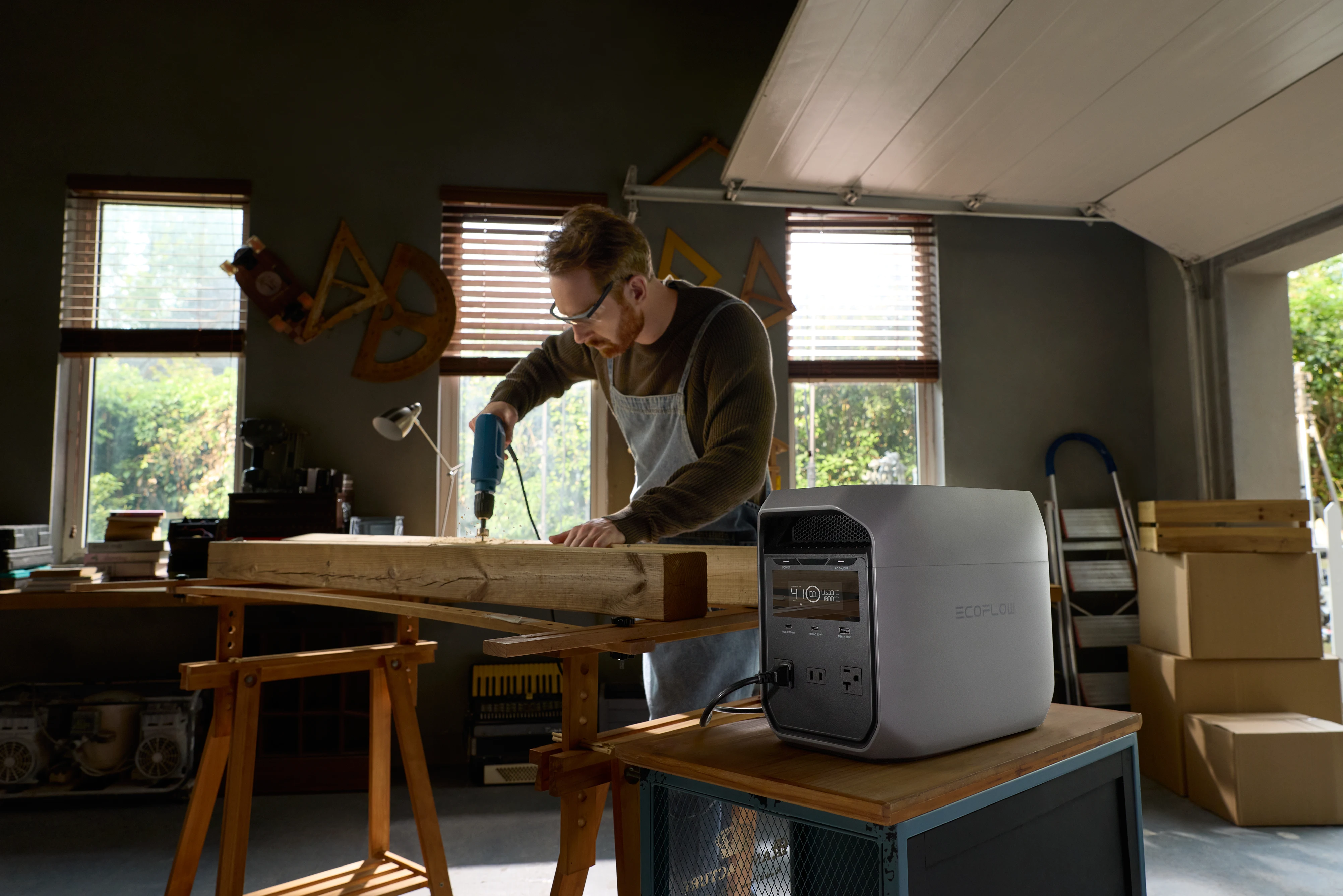
Short trips reward a simple power setup. The EcoFlow DELTA 3 Classic stores 1,024Wh and supplies 1,800W AC output with a 3,600W surge for common campsite needs such as a refrigerator, coffee maker, lights, laptops, and device charging. Before departure, AC charging can take it from 0–80% in 45 minutes. At no more than 30dB under a 600W load, it also helps keep a quiet campsite quiet. Actual runtime varies by load and conditions.
7. Pack for Two Days, but Prepare for One Delay
Shorter should mean lighter. Keep a fixed RV kit onboard: wheel chocks, leveling blocks, drinking-water hose, pressure regulator, sewer hose, electrical adapters, surge protector, basic tools, gloves, and a flashlight.
Add simple meals, water bottles, layers, bedding, medication, chargers, and one activity bin. Carry emergency food, water, and medication for a delayed return. EcoFlow’s RV essentials checklist covers the permanent kit, while its road-trip gear guide covers personal and safety items.
8. Use a 30-Minute Departure Check
Check tire pressure when the tires are cold, including the spare, using the pressures specified by the vehicle or RV manufacturer—not the maximum molded into the tire sidewall. The National Highway Traffic Safety Administration notes that RV tires deserve special attention because long storage periods can make aging a concern even when tread looks usable.
Inspect the hitch, safety chains, breakaway cable, lights, mirrors, brakes, fluids, and leaks. Close vents and windows, retract awnings and slides, disconnect utilities, secure cargo, remove chocks last, and walk around the rig. Check the National Weather Service, postponing if wind, flooding, storms, or fire conditions exceed your experience.
Make the First Local Getaway Easy to Repeat
The goal is a weekend worth repeating. At home, record what you used, forgot, travel time, fuel, campsite fit, and battery use, then restock immediately. Each local outing makes the next trip easier.
Frequently Asked Questions
Q1. Is dispersed camping a good choice for a short RV getaway?
It can be, but a developed campground is usually simpler for a first shakedown trip. Dispersed sites may have no water, trash service, toilets, hookups, or reliable road access. If you choose public land, confirm that camping is allowed, check fire restrictions, stay on designated roads, and bring a backup location. The Bureau of Land Management advises checking local field-office rules because restrictions vary by area.
Q2. How much fresh water should I carry for a weekend?
Start with at least one gallon per person per day for drinking, cooking, and basic emergency use, which follows CDC emergency-water guidance. Add more for pets, hot weather, dishwashing, and a campground without potable water. Because water weighs about 8.3 pounds per gallon, do not fill the entire freshwater tank automatically; balance likely use against the RV’s cargo capacity.
Q3. Can food and coolers stay outside the RV overnight?
Do not assume they can. Campground rules may require food, coolers, trash, cookware, pet food, and scented toiletries to be locked in a hard-sided vehicle or provided storage locker. Animals can enter a campsite even when bears are not common. Review the destination’s rules before arrival and follow National Park Service food-storage guidance to protect both visitors and wildlife.
Q4. Where should I empty gray and black water tanks?
Use the sewer connection at your site or an approved RV dump station, and follow the facility’s posted procedure. Never release black water—and do not assume gray water may be discharged—onto the ground, into a storm drain, or near a waterway. Local rules differ, so ask the campground if uncertain. The EPA’s RV wastewater guidance explains why sanitary disposal protects groundwater and septic systems.
Q5. How do I make a short RV trip comfortable for a pet?
Confirm the campground’s species, number, vaccination, and leash rules before booking. Pack identification, medical records, medication, familiar bedding, waste bags, food, and more water than normal. Locate the nearest emergency veterinarian and never leave an animal in an unconditioned RV; interior temperatures can become dangerous quickly. Choose one pet-friendly activity and plan quiet campsite time so the getaway does not overwhelm an anxious traveler.
For press requests or interview opportunities, reach out to our media team
media.na@ecoflow.com