Backup Power Generator for Home: How to Choose the Right One
- What Is a Home Backup Power Generator?
- Standby vs Portable vs Battery Backup: Which Type Fits Your Home?
- How Much Generator Power Does Your Home Need?
- Which Fuel Type Is Best for a Home Backup Generator?
- How Does a Standby Generator Power Your Home During an Outage?
- Generator vs. Battery Backup for Home Power
- What Should a Home Backup Generator Keep Running?
- What to Check Before Buying a Backup Generator for Home
- Home Generator Installation and Safety
- How to Prepare Your Backup Power System Before an Outage
- How Much Does Home Backup Power Cost?
- Which Backup Power Setup Is Right for Your Home?
- Conclusion
- Frequently Asked Questions
Storms knock down power lines, ice weighs on infrastructure, and grid failures can happen without warning. The Government of Canada identifies extreme weather, including freezing rain and high winds, as common outage causes. When an outage lasts hours, a backup power generator for the home can keep food cold, heating systems running, and essential basement equipment powered.
Choosing the right setup is less about brands and more about your household. Start with the things you cannot afford to lose during an outage. Then weigh local fuel access, space around the property, and what you can spend.
The options fall into three groups: standby generators, portable units, and battery systems. EcoFlow DELTA Pro Ultra represents the battery route here. Your expected outage length will help narrow down which setup makes sense.
Choose Quiet, Expandable Home Backup with EcoFlow DELTA Pro Ultra
What Is a Home Backup Power Generator?
Grid power can fail without warning, leaving a home without electricity for hours. For a smaller setup, the priority might be keeping food cold, lights on and Wi-Fi available. More capable backup power generators for homes may also cover pumps, heating equipment or extra circuits.
Standby units are permanently positioned outdoors and can respond automatically when utility service fails. Portable models need to be brought out and set up before they can run. Our home backup generator options guide explains both setups in more detail.
.JPEG)
.JPEG)
Standby vs Portable vs Battery Backup: Which Type Fits Your Home?
Household power needs and local outage patterns help narrow down backup power generators for homes. Canada’s official advice for preparing for power outages also covers generator safety during an emergency. Here is how standby, portable, and battery options compare in practical terms:
Factor | Standby Generator | Portable Generator | Battery Backup |
Power Source | Burns natural gas or propane | Burns gasoline or propane | Stored electricity |
Startup | Automatic within seconds | Manual every time | Automatic, near-instant |
Installation | Permanent, professionally fitted | Portable; connection method varies | Varies by system and configuration |
Fuel | Continuous or stored supply | Refueled by hand | Recharged from grid or solar |
Noise | Loud, audible outdoors | Loud | Very quiet |
Operation | Outdoors only | Outdoors only | Safe indoors |
Maintenance | Scheduled servicing | Oil, filters, fuel care | Minimal |
Best Suited To | Long outages with fuel access | Occasional short outages | Quiet, fuel-free backup |
Battery backup works differently from fuel-burning generators because it stores electricity for later use. The EcoFlow DELTA Pro Ultra is one example designed for home backup, providing stored power without burning fuel during operation.
How Much Generator Power Does Your Home Need?
The right backup power generator for home capacity depends on essential appliances and their wattage. The table below provides a practical starting point for estimating your household power needs:
Appliance | Typical Running Watts | Typical Starting Surge |
Refrigerator or Freezer | 150 to 800W | Two to three times running |
Lighting | 60 to 100W per fixture | None |
Internet and Router | Around 10 to 20W | None |
Sump Pump | 800 to 1,000W | 2,000 to 2,500W |
Furnace Blower | 500 to 800W | Around 2,500W |
Central Air Conditioner | Around 3,500W | Two to three times running |
Well Pump | 700 to 2,000W | 2,000W and upward |
Kitchen Appliances | 1,000 to 1,500W | Usually none |
These figures offer a starting point because actual wattage varies by appliance and model. Natural Resources Canada’s energy-efficiency guidance provides additional information about household energy use. Always check each appliance label before calculating your total power requirement.
For accurate sizing, consider both an appliance’s running watts and starting watts. Once running, an appliance draws its regular wattage. Some appliances need an extra burst of power when they first switch on.
Which Fuel Type Is Best for a Home Backup Generator?
Fuel choice for backup power generators for home depends largely on local availability. Each option below brings different trade-offs in storage, runtime, cost, and convenience:
Factor | Natural Gas | Propane | Gasoline | Dual-Fuel |
Availability | Piped supply only | Delivered and stored | Widely sold | Either source |
Storage | None needed | On-site tank | Cans, limited shelf life | Depends on fuel used |
Runtime | Effectively unlimited | Limited by tank size | Limited by cans on hand | Extended by switching |
Long Outages | Strongest option | Good with a large tank | Weak, needs refueling trips | Flexible |
Maintenance | Cleanest burning | Clean, stable in storage | Fuel degrades, needs care | Mixed requirements |
No single fuel wins in every situation. Natural gas is the obvious choice on a serviced street, while propane suits rural properties without a gas line. Gasoline remains the default for portable units. Our comparison of gas vs solar backup generator covers the non-combustion alternative.
How Does a Standby Generator Power Your Home During an Outage?
The entire sequence happens automatically without anyone needing to operate the equipment. Once the utility supply drops out, the standby unit comes on automatically. The selected circuits keep receiving generator power until the utility supply comes back.
An automatic transfer switch controls this handoff without manual operation. It also isolates generator power from utility lines, helping protect crews restoring service. The Consumer Reports generator buying guide can help homeowners evaluate the best generator for home backup power.
Permanent standby installation requires electrical and fuel-system work that should follow local codes and manufacturer requirements.
Generator vs. Battery Backup for Home Power
This is the comparison most homeowners are actually weighing. Our detailed battery backup vs generator breakdown goes further than the summary below:
Factor | Generator | Battery Backup |
Electricity | Generated on demand | Stored ahead of time |
Fuel | Required continuously | None |
Noise | Audible across the property | Near-silent |
Exhaust | Carbon monoxide, outdoors only | None, safe indoors |
Automatic Backup | With a transfer switch | Usually built in |
Solar Integration | Not applicable | Charges directly from panels |
Long Outages | Continues while fuel lasts | Limited by capacity and recharging |
Maintenance | Regular servicing needed | Minimal |
Expandability | Fixed at purchase | Capacity often modular |
EcoFlow DELTA Pro Ultra as a Whole-Home Battery Alternative
Homeowners who prefer battery backup can consider the EcoFlow DELTA Pro Ultra. It stores electricity instead of burning fuel, avoiding combustion exhaust during normal operation. Power comes from stored electricity, so there is no fuel burning during use. That makes it a quieter option than a combustion backup power generator for home.
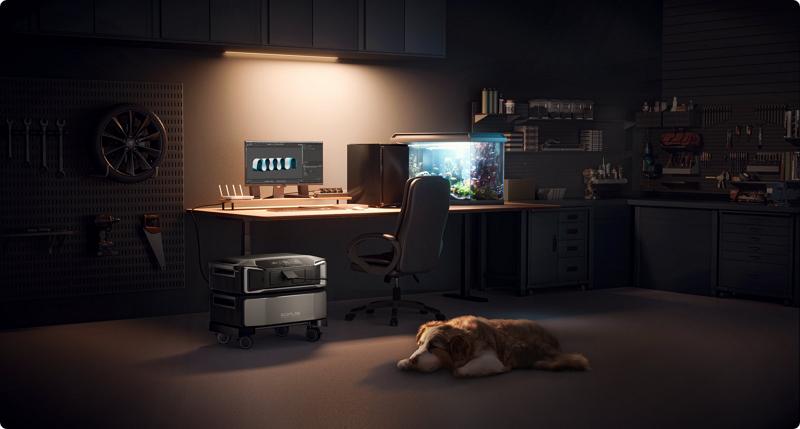
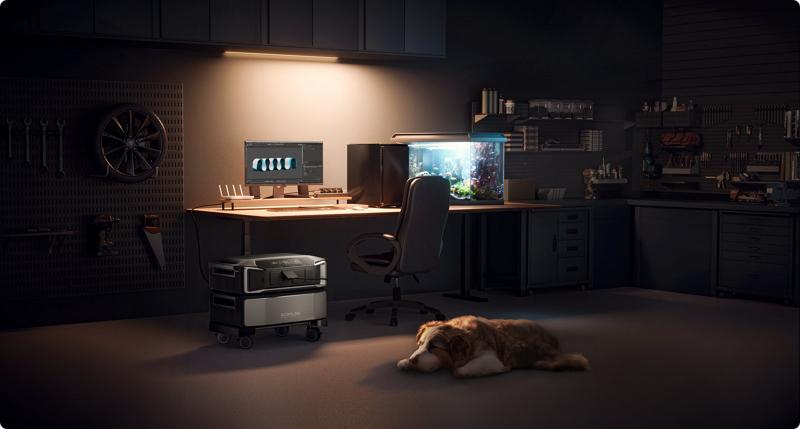
Storage starts at 6 kWh and can grow to 90 kWh with added capacity. Supported configurations deliver between 7.2 and 21.6 kW of output for home appliances. EcoFlow also supports several charging methods, including solar, grid, EV chargers, and generators.
Key Specs
EcoFlow specifies near-silent operation (0 dB claimed) below 2,000 W output.
Designed for indoor installation, with IP54 protection.
Accepts 5.6 to 16.8 kW of solar input.
Neither technology suits every outage. Fuel can extend a generator’s runtime, but batteries must recharge once their stored power runs low.
What Should a Home Backup Generator Keep Running?
Before sizing anything, work out what you would miss most when the power goes out:
Refrigerator and freezer, protecting stored food during extended outages.
Essential lighting throughout the main living areas.
Internet, router, and phone charging for essential communications.
Heating equipment compatible with your backup power system.
Sump or well pumps, especially on rural properties.
Medical equipment that cannot tolerate extended interruptions.
Comfort loads can increase power requirements considerably. Air conditioning, water heating, cooking, dryers, and EV charging add substantial demand. Generac’s home standby generator options distinguish between selected-circuit and whole-home backup. The best generator for home backup power should cover essentials before optional comfort loads.
What to Check Before Buying a Backup Generator for Home
The best generator for home backup power should match today’s loads without limiting practical future needs. Check these 8 factors before choosing a system:
Continuous and starting power against your calculated load.
Fuel availability at your address, not just regionally.
How long typical outages last where you live.
Whether you need essential circuits or whole-home coverage.
Transfer-switch requirements and their installation costs.
Where the unit can legally and practically operate.
Noise, particularly on smaller lots and in dense neighborhoods.
Warranty terms and availability of local service.
Your needs may change after the initial purchase. Solar or extra storage could matter later, making a system that accepts upgrades useful. Our home backup generator checklist covers what else to look at before buying.
Home Generator Installation and Safety
A backup power generator for home use requires careful placement, connection, and ventilation. Follow these essential safety practices:
Never run a fuel-burning generator indoors, in a garage or in any enclosed space.
Position portable units according to the manufacturer's clearance and ventilation requirements.
Connect backup power to household circuits only through approved transfer equipment.
Install carbon monoxide alarms inside the home and test them regularly.
Shelter the generator from weather without restricting its airflow.
Store fuel in approved containers, following applicable safety requirements.
Use a qualified professional for permanent electrical or fuel connections. Never plug a generator into a wall outlet because dangerous back-feeding can occur. Canada’s official generator and power outage safety guidance provides additional installation and operating precautions.
How to Prepare Your Backup Power System Before an Outage
Even the best generator for home backup power needs routine preparation before an outage occurs:
Run the system periodically rather than waiting for an outage.
Keep the required fuel on hand and safely stored.
Check oil and work through the scheduled maintenance items.
Confirm the transfer equipment operates as intended.
Review which household circuits actually receive backup power.
Keep the manufacturer's instructions somewhere you can find them.
Battery systems require a different routine. Check charge levels, review backup settings, and test any solar charging you rely on.
How Much Does Home Backup Power Cost?
The cost of a backup power generator for home involves more than the equipment itself. The table below breaks down the main expenses for generator and battery setups:
Cost Element | Generator Setup | Battery Setup |
Capacity | Rated output in kilowatts | Storage in kilowatt-hours |
Equipment Type | Standby costs far more than portable | Scales with the number of units |
Home Integration | Transfer switch required | Panel integration where fitted |
Electrical Work | Wiring and panel connection | Wiring and panel connection |
Fuel | Gas line or propane tank | None |
Installation | Professional for permanent units | Professional for integrated systems |
Permits | Electrical and often gas | Electrical |
Ongoing Maintenance | Servicing, oil and fuel | Minimal |
Expansion | Replace the unit | Add batteries or solar |
A permanent standby installation costs well beyond the generator itself, once the transfer switch, electrical work, fuel connection and permits are added. Our comparison of home battery backup vs generator cost shows how the totals differ over time rather than at purchase.
Which Backup Power Setup Is Right for Your Home?
The best generator for home backup power depends on the loads and outage conditions you expect. Match your household needs to the most suitable setup below:
What You Need | Setup That Fits |
Basic Emergency Essentials Only | Smaller portable generator or battery system |
Frequent Short Outages | Automatic standby or integrated battery backup |
Long Outages with Reliable Fuel Access | Standby generator |
Quiet Backup Without Combustion | Home battery system |
Existing or Planned Solar Panels | Compatible battery storage |
Whole-Home Coverage | Sized standby generator or expandable battery |
Some households want whole-home backup, later expansion, solar charging and automatic operation together. A system such as the DELTA Pro Ultra covers those requirements in one piece of equipment.
Conclusion
The best generator for home backup power should match essential loads, outage duration, fuel access, and installation needs. Work out how much power your essentials actually draw before choosing a system. Once you know the required wattage, the choice becomes easier to narrow down. Standby, portable, and battery setups each suit different homes. For quieter backup with capacity that can grow, EcoFlow is one option to consider.
Frequently Asked Questions
1. Can a home generator run continuously for several days?
Standby units on natural gas can run for days, though manufacturers specify rest periods and oil checks during extended operation. Portable generators are limited by the fuel you can store and safely refill. Follow the manufacturer's guidance on continuous runtime rather than assuming indefinite operation.
2. How often should you exercise or test a standby generator?
Most standby systems run a self-test weekly or monthly on a set schedule. Beyond that cycle, an annual professional service covering oil, filters, and the transfer switch is usual. Portable units benefit from being started every few months, so fuel and components stay in order.
3. Can you install a home backup generator yourself?
Portable units need no permanent installation, but connecting a backup power generator for home to household circuits requires approved transfer equipment. Permanent standby systems involve electrical and fuel connections that generally require qualified professionals, permits, and inspections. Always check local requirements and warranty terms before attempting installation yourself.
4. Does a backup generator increase home value?
A permanently installed standby system is generally viewed as a desirable feature, particularly in areas with frequent outages. How much value it adds varies with the local market and buyer expectations. Portable generators are treated as equipment rather than as part of the property.
5. Can a generator damage sensitive electronics?
Conventional generators can produce fluctuating output that computers and other sensitive devices tolerate poorly. Inverter generators deliver cleaner power and are the safer choice for electronics. Battery systems supply consistent output by design, which is one reason households running medical or computing equipment often prefer them.