Solar Energy Battery Storage and Solar Storage Efficiency
Power outages are becoming increasingly common due to extreme weather, rising demand, and aging infrastructure, making solar energy storage a vital backup power source. Battery storage allows you to capture excess energy during the day and use it when the grid fails or when panels aren’t producing. Learn how these energy storage systems work, the differences between on-grid and off-grid setups, and factors that influence efficiency so that you can choose the right system for your home.
Why Solar Storage Matters in the Era of Unstable Grids
With severe weather, rising energy demand, and aging infrastructure causing power outages nationwide, an increasing number of homeowners are turning to whole-home solar backup to achieve energy security. With energy storage, you can still run your home even when the grid goes down. Not only that, but the more people using solar, the more resilient and stable the grid, since they draw less energy from it. Often, they can sell excess energy back to the grid, earning credits and providing further stability for the grid.
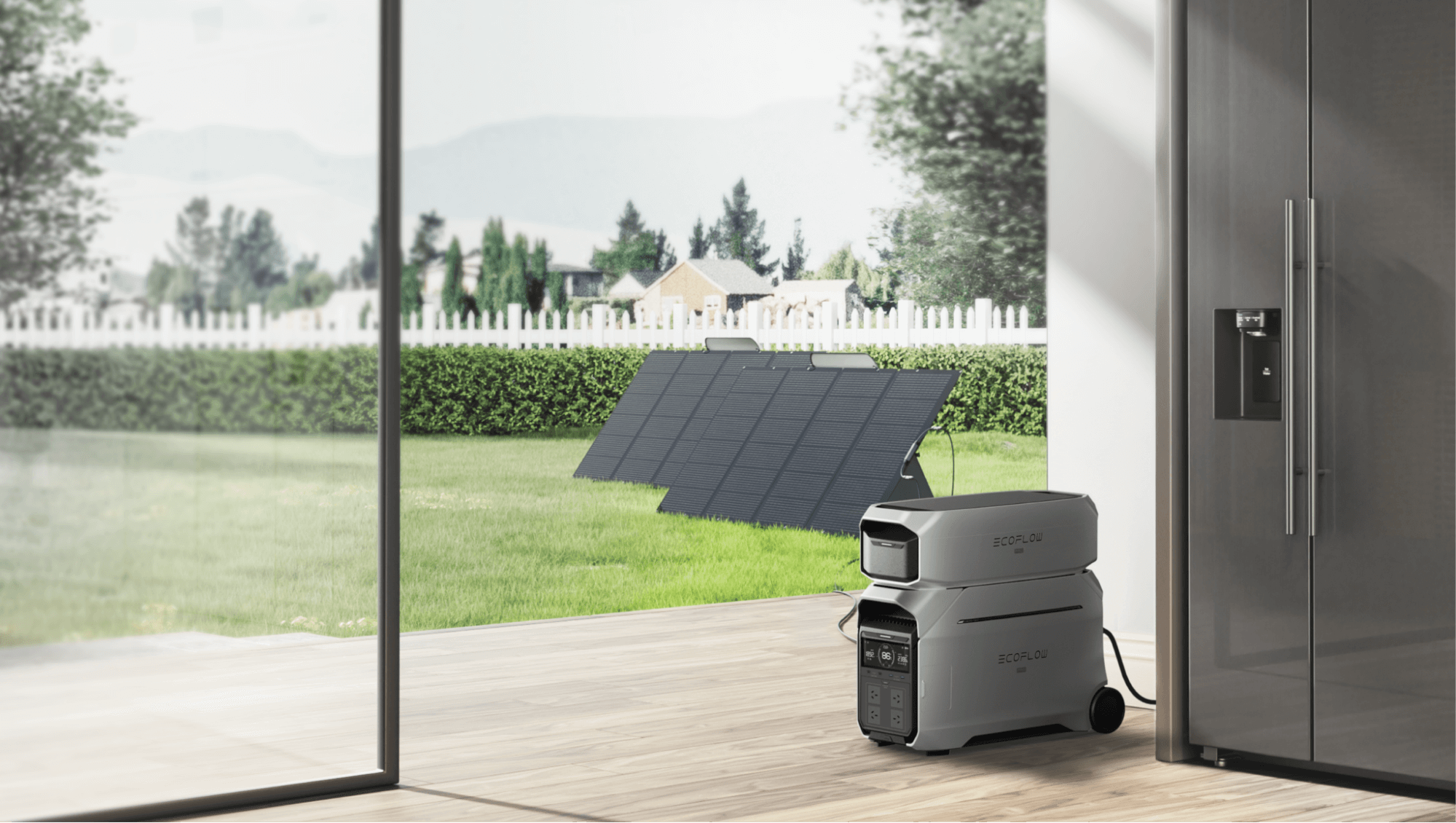
The EcoFlow DELTA 3 Plus Solar Generator (PV220W) is an excellent choice for homeowners looking to invest in energy storage. Starting at 1kWh of capacity and expandable to 5kWh with additional LiFePO4 batteries, it’ll power your essential appliances during any blackout. You can also use it to recharge batteries and run appliances even when the grid is working, saving money and reducing your environmental impact.
What Is Solar Battery Storage?
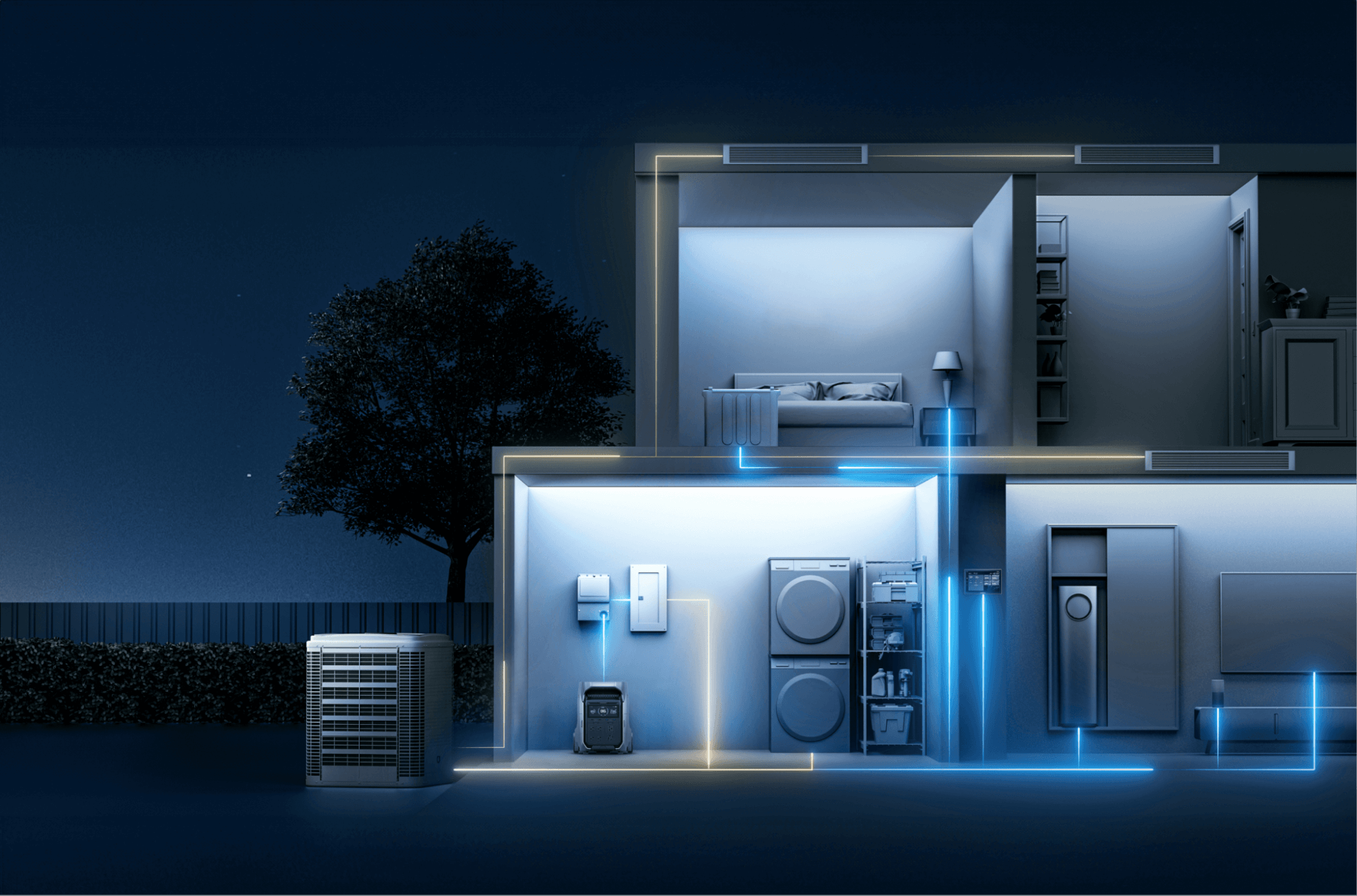
Solar battery storage refers to the use of batteries to store solar energy. In a home solar system, any excess energy produced by your photovoltaic panels during the day is stored in your batteries as direct current (DC). Then, at night, when the grid goes down, or your panels aren’t producing enough energy, it draws energy from your battery storage, runs it through an inverter to create alternating current (AC), and sends it into your home.
Off-Grid vs Grid-Tied Solar Storage: What’s the Difference?
Grid-tied systems are those that are connected to the electrical grid. This allows homeowners to use smaller systems, as they still rely on the grid for some of their power. Alternatively, those with larger whole-home generator systems can sell their excess energy back to the grid for credits on their bill. Another difference is that on-grid systems do not technically require battery storage, though it’s highly recommended to provide backup power during outages.
Off-grid systems, on the other hand, aren’t connected to the grid at all. They can be used as a backup for essential appliances or as a whole-home system for off-grid living. Either way, these systems require battery storage so you can still have power at night, during blackouts, or when your panels aren't producing enough.
The EcoFlow DELTA Pro 3 Solar Generator (PV400W) is ideal for both on-grid and off-grid use, featuring 4000W of output, dual photovoltaic charging ports for rapid solar recharging, and expandable storage capacity of up to 12kWh.
How Solar Storage Works: Charging, Discharging, and Cycling
Your home solar system produces energy during the day with photovoltaic panels that use sunlight to create electricity via the photovoltaic effect. Any excess power your panels generate that your home doesn’t use flows into the batteries, where it’s stored as DC electricity.
Then your batteries start to discharge at night, during power outages, or during peak demand, when you use more energy than you produce. During these times, DC electricity is drawn from the batteries and fed to an inverter, which converts it to AC electricity that your home uses.
Cycling refers to the charging and discharging of your battery, where 1 cycle = 1 full discharge and recharge. Batteries are typically rated by the number of cycles they can undergo before they noticeably decline in capacity. Lead-acid batteries typically have 300-500 cycles, with some models lasting up to 1,200 cycles. Lithium-ion phosphate (LiFePO4) batteries used in EcoFlow’s whole-home generators typically have over 5,000 cycles, making them significantly more efficient and cost-effective in the long run.
What Affects Solar Battery Storage Efficiency?
Several factors affect battery storage efficiency. First of all, solar batteries are not all the same. Chemistry strongly affects their efficiency and lifespan, with LiFePO4 batteries typically performing best for home use. Lithium and LiFePO4 models have high round-trip efficiencies of 85-97%. This means less energy is lost as heat during charging and discharging compared to other chemistries.
Another factor also determined by battery chemistry is the depth of discharge (DoD), or how much of your battery can be discharged before it’s damaged. Lead-acid models typically have a DoD of about 50%. This means you can only use 50% of their capacity without damaging them. Older Lithium-ion models typically have a DoD of 80%, while newer LiFePO4 models have a DoD of 90-100%.
Other factors that affect efficiency include environmental temperature and battery age. Also, heavy loads and rapid discharging can reduce efficiency, as can recharging without a battery management system to optimize charging.
Frequently Asked Questions
What Is the Most Efficient Type of Solar Battery?
Lithium-ion phosphate or LiFePO4 batteries are the most efficient battery since they have the most charging cycles, the highest depth-of-discharge, a high round-trip efficiency (little energy is lost as heat), a high energy density (more power in a smaller size), and require little maintenance.
Can You Add Battery Storage to an Existing Solar Setup?
Yes, you can easily add battery storage to an existing solar array. However, you may need to replace your inverter unless your array was designed with a hybrid inverter for adding battery storage later. There are also products available that are designed to integrate batteries without changing your existing setup.
Expandable Storage Ensures Resilient Home Power
Solar battery storage gives homeowners greater resilience, lower energy costs, and true independence from an unreliable grid. Understanding how solar storage works and what affects efficiency will help you decide the right products for your home. Whether you choose an on-grid or off-grid setup, a reliable storage system like the EcoFlow DELTA Pro 3 Solar Generator (PV400W) with its LiFePO4 batteries ensures consistent power when it matters most.
For press requests or interview opportunities, reach out to our media team
media.na@ecoflow.com