10 Renewable Energy Facts That Might Surprise You
Renewable energy already supplies more than 20% of the electricity used in the US, and that share continues to grow. For many Americans, that shift is showing up at home through rooftop solar, lower electric bills, and battery storage. But the bigger picture is even more interesting. From the amount of renewable power the US could produce to the jobs the industry supports and the role batteries play after the sun goes down, these renewable energy facts show how quickly clean power has moved into everyday life.
How Big Renewable Energy Has Actually Gotten
Renewable energy is already a major part of the global power system, and the numbers are bigger than many people realize. The U.S. has enough renewable resources to produce more than 100 times the electricity Americans use in a year, according to the Department of Energy. That potential still depends on transmission, storage, land, and other infrastructure, but it shows how much room renewable power has to grow.
Fact 1: The US has far more renewable potential than it needs
The Department of Energy estimates that U.S. renewable resources could generate more than 100 times the electricity Americans consume in a year. The figure doesn't mean all of that energy can be captured and delivered today. It does show that the country has a huge resource base for expanding solar, wind, hydropower, and other renewable sources.
Fact 2: Most new electricity capacity worldwide is now renewable
Renewable sources accounted for 92.5% of all new electricity-generating capacity installed worldwide in 2024, the International Renewable Energy Agency said. Much of that growth came from solar and wind as countries added new generation to meet growing demand. Renewable power is now a major part of how the world is building new electricity capacity.
Fact 3: Solar and wind are among the cheapest power sources
Cost has helped push renewable energy forward. Onshore wind, solar, and new hydropower now cost less than fossil-fuel generation in many markets. Falling costs have also made smaller systems more accessible to homeowners. For those looking to generate and store their own electricity, solar generators offer one way to put renewable power to work at home.
The Job and Economic Facts Behind the Growth
The growth of renewable energy shows up beyond power plants and utility projects. It’s also creating jobs and affecting local economies, while solar can add value for homeowners. These effects give a clearer picture of how renewable energy is changing everyday life in the U.S.
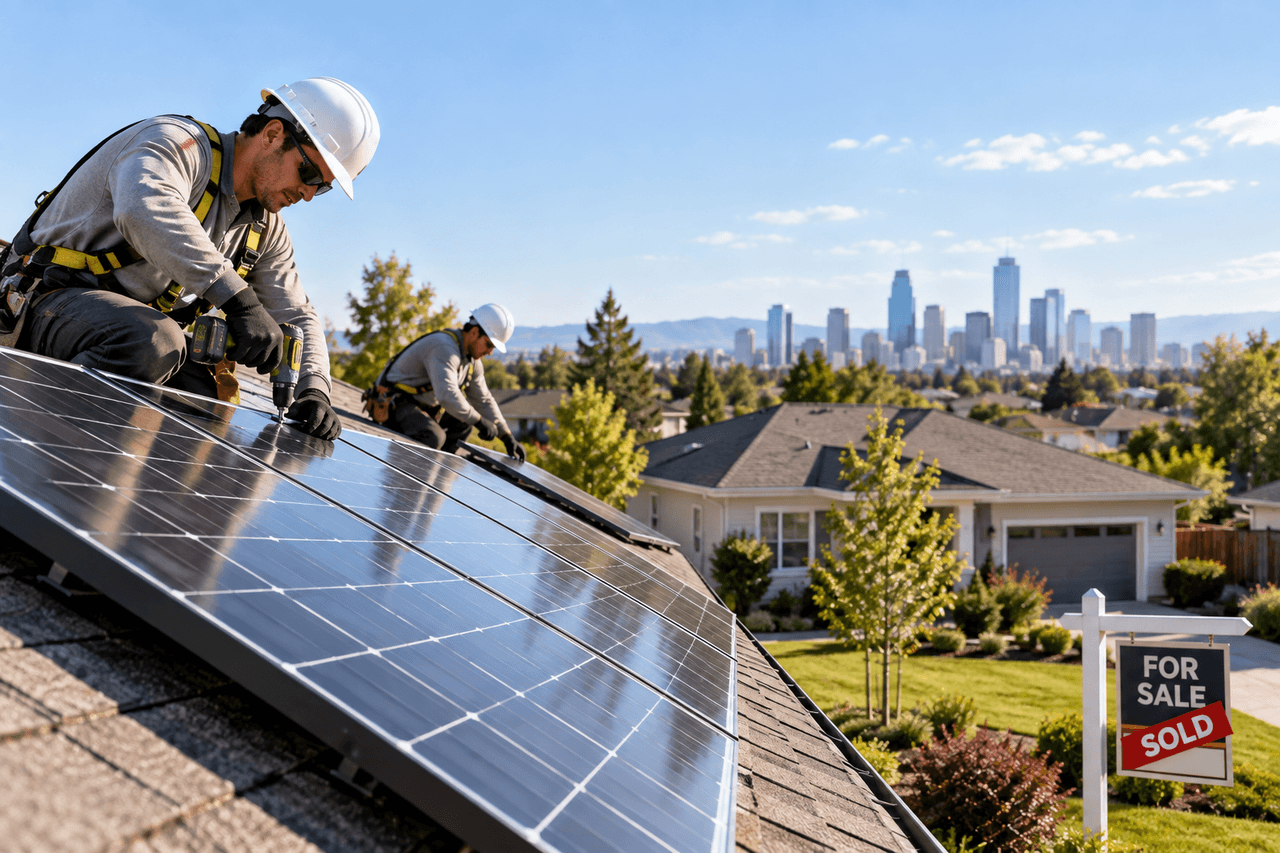

Fact 4: Solar employs more Americans than fossil fuel power generation
The Interstate Renewable Energy Council counted 263,883 U.S. solar workers in December 2022. That was more than the roughly 187,000 combined jobs in coal, gas, and oil electric power generation reported by the Department of Energy. Solar has become a sizable source of employment as installations expand across the country.
Fact 5: Clean energy jobs are growing faster than the broader economy
Clean energy employment has also been growing faster than overall U.S. employment in recent years. Rising investment and lower equipment costs have helped drive that growth, creating more demand for workers across manufacturing, installation, maintenance, and related fields.
Fact 6: Solar homes can sell faster and for more
Solar can affect home value, too. According to the National Renewable Energy Laboratory, homes with solar sell at a premium and about 20% faster than comparable non-solar homes. For homeowners considering solar panels, that potential resale value can be part of the bigger financial picture.
What Renewable Energy Actually Saves Homeowners
For homeowners, renewable energy can show up as real savings over time. The exact amount depends on electricity rates, location, system size, and how much power a home uses, but the potential adds up over years rather than weeks.
Fact | Source | The Number |
Solar panel savings | Department of Energy | Homeowners can save around $100 a month in many states |
Long-term California savings | Department of Energy / NREL | An estimated $78,500 saved over two decades in high cost electricity markets |
Home value increase | NREL | Homes with solar sell faster and at a premium versus comparable homes without it |
Grid share growth | Department of Energy | Renewables supply more than 20% of US electricity, a share still rising |
Fact 7: A single utility scale wind turbine can power roughly 1,500 average U.S. homes for an entire year.
A single 2.75-megawatt utility-scale wind turbine can generate around 6 million kilowatt-hours of electricity per year, according to the U.S. Geological Survey and Department of Energy. That’s enough to cover the annual electricity use of roughly 1,500 average U.S. homes. The number varies with wind conditions and turbine performance, but it gives a useful sense of how much electricity one large turbine can produce.
Producing that much renewable power is impressive, but generation is only part of the equation. Solar and wind output changes with weather and time of day, while homes need electricity around the clock. That makes storage an important part of the renewable energy industry. Batteries can save excess power when generation is high and make it available later, including during peak-rate periods or a grid outage. For homeowners, solar batteries can make renewable power available when they actually need it.
Why Storage Is the Fact Most People Overlook
Solar and wind only generate power when the sun is shining or the wind is blowing. Without storage, that electricity may not be available when demand is highest, such as during an evening rate spike or a storm-driven outage. Battery storage helps bridge that gap by keeping excess renewable power available for later use. The two EcoFlow systems below show how that approach can work at different scales, from portable backup power to whole-home energy storage.
For whole-home backup, the DELTA Pro Ultra X is built to handle much larger energy needs and keep essential circuits running during an outage. But not every household needs that much capacity. For smaller power needs, occasional backup, or a system you can take with you, the DELTA 3 Max offers a more compact option with enough output for many everyday appliances.
Renewable energy is already changing how electricity is produced, stored, and used. The next question is how quickly that shift will continue. The final facts look at where investment is going, how major companies are using renewable power, and how fast solar capacity is expected to grow.
Where This Trend Is Headed
Renewable energy investment is still accelerating, with more money flowing into clean power than fossil fuels. At the same time, major companies are buying renewable electricity, while solar capacity continues to expand worldwide.


Fact 8: Clean energy investment is approaching $2 trillion a year
A United Nations report says global investment in clean energy hit about $2 trillion in 2024, some $800 billion more than investment in fossil fuels. That gap shows where much of the energy industry's capital is going as governments, utilities, and businesses add more renewable generation.
Fact 9: Major U.S. companies are using renewable power
Renewable electricity has also become part of how major U.S. companies power their operations. Big companies are buying renewable power and signing deals with clean energy producers to lessen their reliance on traditional power sources. That demand gives renewable developers another reason to keep building new projects.
Fact 10: Global solar capacity could reach new heights
Global solar capacity jumped 33% in one year, and forecasts say the world could be installing as much as 1 terawatt of new solar capacity each year by 2030. If that pace holds, solar will take an even larger role in global electricity generation, creating greater demand for the storage systems needed to use that power when the sun isn't shining.
Conclusion
Renewable energy is already changing the way the U.S. produces and uses electricity, with growing solar and wind generation capacity, more clean-energy jobs and savings for homeowners. Battery storage will become an increasingly important way to keep that renewable generation available when the sun isn’t shining or the grid is down. If you want renewable energy for your home, check out local solar incentives, electricity savings and storage options. Whole-home backup solutions can also help you store energy and keep essential appliances running when you need backup power.
FAQs
What percentage of US electricity currently comes from renewable energy?
Renewable energy supplies more than 20% of U.S. electricity, according to the Department of Energy. Solar, wind, hydropower, biomass, and geothermal power all contribute to that total, and the share has continued to grow as more renewable generation comes online.
Do homes with solar panels really sell for more?
Yes. Research from the National Renewable Energy Laboratory found that homes with solar panels can sell at a premium compared with similar homes without solar. The same research found that solar-equipped homes can also sell faster, giving homeowners another potential financial benefit beyond lower electricity costs.
Does renewable energy create more jobs than fossil fuels?
Yes, in some parts of the energy sector. The Interstate Renewable Energy Council counted 263,883 U.S. solar workers in December 2022, compared with about 187,000 combined jobs in coal, gas and oil electric power generation, according to the Department of Energy. Renewable energy also supports jobs in manufacturing, installation, maintenance, and related services.
Why does renewable energy need battery storage?
Battery storage keeps renewable electricity on tap when generation drops. Solar panels produce less or no power after dark and wind generation fluctuates with the weather. A battery can store excess electricity and make it available later, including during periods of high electricity demand or a power outage.
Is renewable energy actually cheaper than fossil fuels now?
In many markets, yes. Onshore wind, solar, and new hydropower can produce electricity at a lower cost than fossil-fuel generation. Falling equipment and installation costs have helped renewable energy become more competitive, which has supported its rapid growth around the world.
For press requests or interview opportunities, reach out to our media team
media.na@ecoflow.com