RV Generator Size Guide: How Much Power Do You Really Need?
- What Types of RV Generators Are Available?
- How Much Power Does Your RV Need?
- How Do You Calculate the Right Generator Size?
- What Size Generator Do You Need by RV Type?
- What Should You Look for in an RV Generator?
- Frequently Asked Questions
- Choosing the Right Generator Size Ensures Reliable RV Power Anywhere
Having a generator in your RV can dramatically improve your camping experience, giving you all the luxuries of home, even when you’re out in the wilderness. But to truly get the most out of your generator, you want to make sure it’s the right size for your needs.
This guide is going to help you learn how much power your RV needs, the size of generator you should get, the types of generators that are available, and what to look for when shopping for an RV generator.
What Types of RV Generators Are Available?
There are many different types of RV generators, and they’re broken down in a few ways.
By power source:
Gas, propane, or diesel generators are powerful but require regular maintenance, produce fumes, and tend to run loud.
Inverter generators run on similar fuel sources but are more fuel-efficient and significantly quieter.
Battery-powered generators use electricity as their fuel source, delivering emission-free, silent power. You can recharge them from an outlet or connect solar panels to keep them topped up on the road.
By portability:
Built-in (onboard) generators are permanently installed in your camper and connected to the fuel tank or electrical system. They’re convenient, save storage space, and are typically high-capacity.
Portable generators give you flexibility to take power wherever you go. Most are compact and lightweight, and many feature a handle or wheels for easy transport.
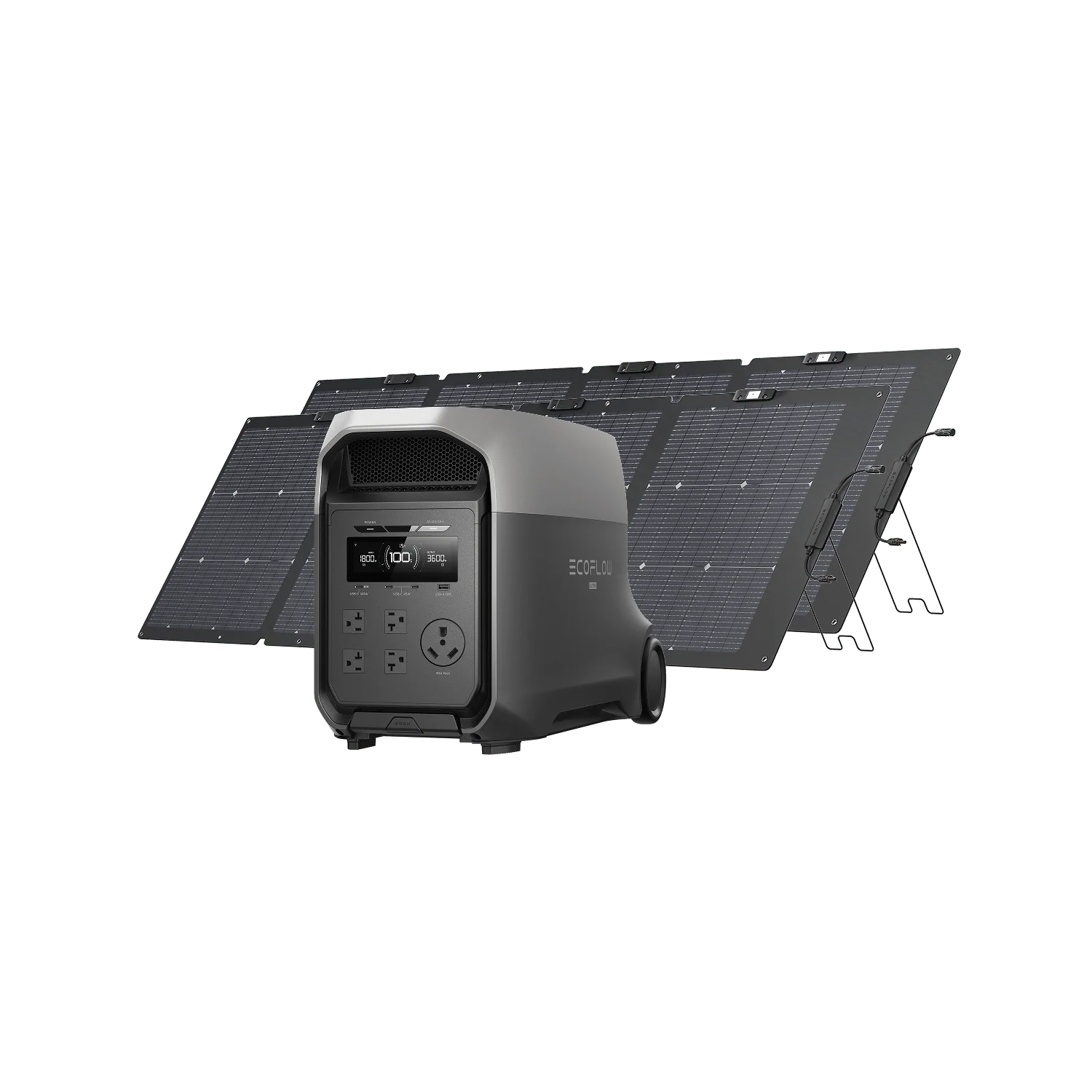
The EcoFlow DELTA 3 Ultra Solar Generator + 2 x 220W Solar Panel set is a good example — compact enough to take anywhere, with built-in solar charging so you're not dependent on hookups at the campsite.
How Much Power Does Your RV Need?
Before you choose which onboard RV generator to go with, make sure you know how much power your RV needs to operate.
There are a few main factors to consider when deciding your power needs, which are the size of your RV, the electrical system it uses, and appliance/device usage.
RV Size and Electrical System (30-Amp vs 50-Amp)
Generally, the larger the RV, the more appliances, lights, and other amenities it has. This leads to most larger campers needing much more power to operate than smaller ones.
Similarly, the electrical system in your RV plays a major role in determining your power needs. An RV with a 50-amp system offers considerably more output capacity than a 30-amp system, and can power many more devices and appliances at once.
As a result, if you want to be able to run all of the utilities and amenities in a 50-amp RV, you’ll need a generator capable of delivering plenty of power.
Appliance Usage and Daily Power Needs
Your usage and daily power requirements also help you learn how much power your RV needs. For example, someone who hardly uses any electronics, even in a large RV, may need less power than someone in a small RV or trailer that uses a variety of devices and appliances at once.
How Do You Calculate the Right Generator Size?
When deciding which generator to get, ensure you calculate your needs so you end up with the right size.
The process is as follows:
Add up the running wattage of all devices you’ll want to run at one time.
Add the highest starting wattage of all the devices (usually around three times the running wattage).
Consider adding another 10–20% just to be safe.
Once you add up all the numbers, you’ll be able to determine the right generator size to get.
For example, imagine you want to power a fridge with 600W running wattage, a microwave with 400W running wattage, and a TV with 200W running wattage in your camper.
First, you’ll add the running wattage for each, which gives a total of 1200W. Then, add the fridge’s starting wattage (around 1800W, three times the 600W running wattage), which brings you to 3000W. Finally, if you want to be safe, add another 20%, bringing you up to 3600W.
As a result, you should look for a generator that’s at least 3600W to ensure you can safely run everything you want.
What Size Generator Do You Need by RV Type?
The size and type of your RV often help you quickly figure out the size of the generator you need.
Small Campers and Vans (Under 3000W)
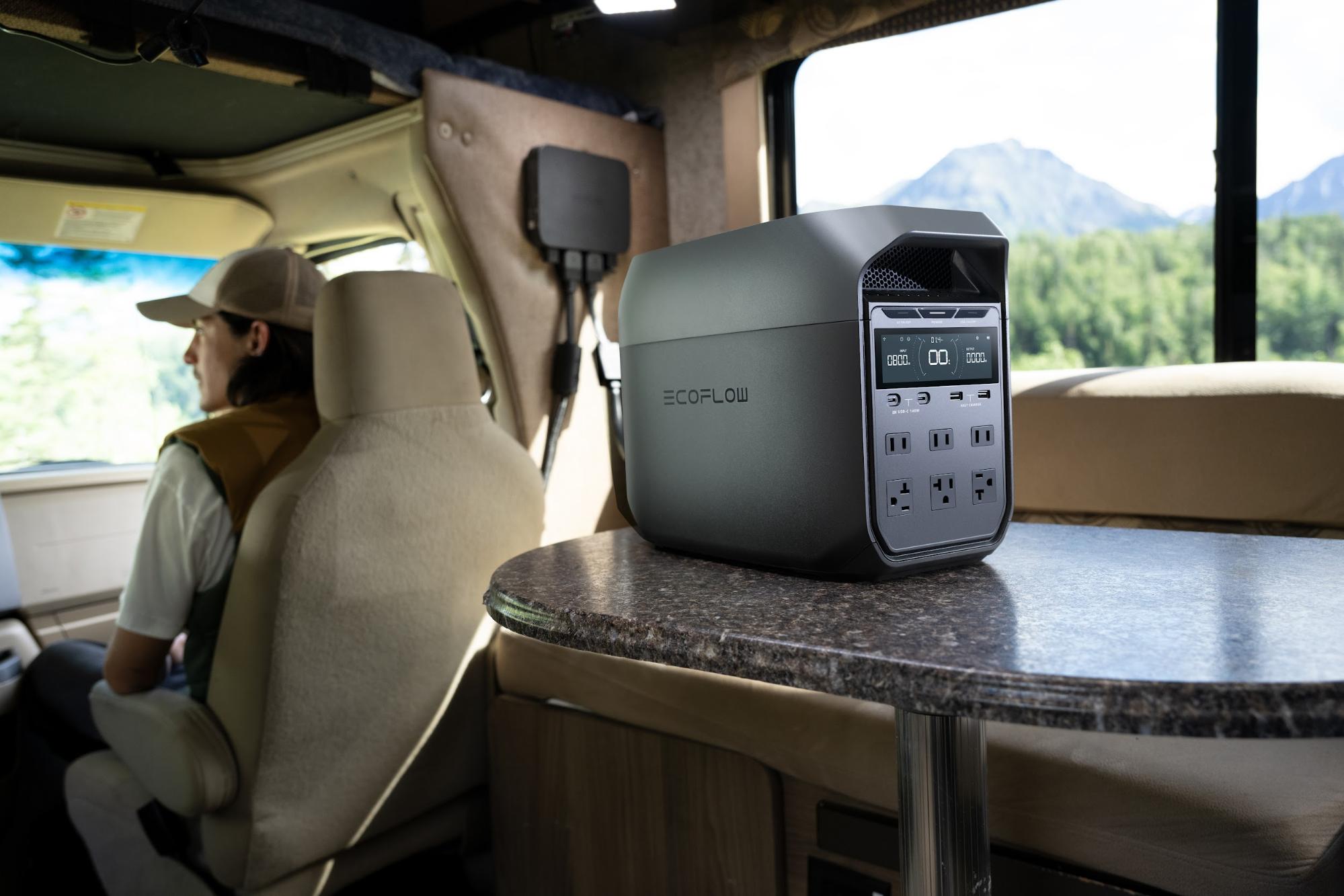
Small campers and vans may be able to get by with a generator that’s 3000W or less, like the EcoFlow DELTA 3 Classic. A compact option like this covers the essentials without taking up much space.
If you need a bit more capacity for small appliances like a mini fridge alongside your devices, the EcoFlow DELTA 2 Max is a strong step up while still staying portable and RV-friendly.
Mid-Size RVs (3000–4000W)
If you have a mid-size RV, you may need to graduate to a slightly larger generator, somewhere between 3000 and 4000W. These are capable of still charging the basics like a smaller generator, but also may be able to power a few more things, like a microwave, air fryer, and potentially an AC unit or furnace.
The EcoFlow DELTA 3 Max Solar Generator + 220W Solar Panel bundle is well-suited to this range, offering expandable capacity and built-in solar charging so you can top up between campsites.
Large RVs and Motorhomes (5000W+)
Finally, if you own a motorhome or a large camper, you’ll likely need a high-capacity generator over 5000W. This size of generator may be capable of powering multiple AC units, several appliances, multiple TVs, and more, all at once.
While you may not need one quite as powerful as the EcoFlow DELTA Pro Ultra X + Smart Home Panel 3, it never hurts to have more output capacity than you think you need, just to be safe.
What Should You Look for in an RV Generator?
When on the hunt for the best generator for an RV, there are a few things to look for:
Enough power output and storage capacity to handle all of your appliances and devices.
A compact size for better mobility and portability.
Safety features, such as overload protection and/or automatic shutdown, to keep you, your family, and your RV safe.
Silent operation, as you’ll want a quiet RV generator to stay respectful of other campers and ensure you can still get a good sleep while it runs.
Convenience features, like electric start, a digital display, an eco mode, and dedicated RV outlets.
Frequently Asked Questions
What Size Generator Do I Need To Run My RV?
This depends on your usage and how much power your devices and appliances take to power and charge. For many small campers, 2000–3000W is likely enough, while large RVs and motorhomes may require 5000W or more.
Can You Run an RV Generator While Sleeping?
It depends. If you use a fuel generator, the loud noise and emissions may disrupt your sleep, and you may not want to run it all night. But if you’re using a battery-powered generator, many are very quiet and produce no emissions, making them safe and easy to use while you sleep.
Choosing the Right Generator Size Ensures Reliable RV Power Anywhere
Choosing the right generator for your RV ensures you can have reliable power wherever your camping adventures take you. Make sure to calculate how much power your RV needs to find the right size, and prioritize things like convenience, safety, capacity, and noise when deciding which generator to buy.
Whether you’re looking for an RV generator or a whole-home backup power solution, consider checking out the many sustainable power solutions that EcoFlow offers.
For press requests or interview opportunities, reach out to our media team
media.na@ecoflow.com