Off-Grid Camping Power: How to Keep Everything Charged on Multi-Day Trips
- Why Off-Grid Camping Power Gets Hard on Multi-Day Trips
- Choose Your Charging Sources: Solar, Vehicle, and On-the-Move Options
- Plan Your Battery Capacity So You Don’t Run Out Mid-Trip
- Make Your Power Last Longer With Simple Energy-Saving Habits
- Build a Reliable Off-Grid Setup With Portable Power Stations and Solar Panels
- Frequently Asked Questions
- Stay Charged, Stay Safer, and Enjoy More of the Outdoors
Multi-day camping trips can be glorious, but they’ll always put pressure on your battery reserves, because every device (phones, cameras, lights) competes for the same limited charge. Bringing just one power bank can mean depleted reserves by day 2, leaving all of your critical gear offline.
Here’s how to align your mix of charging source capacity and habits before you leave home to ensure a smooth trip.
Why Off-Grid Camping Power Gets Hard on Multi-Day Trips
Day 1 of a multi-day summer camping trip usually feels fine. Your devices start the trip with a full charge and may only draw modest power throughout the day.
But the problems start on day 2 when phones get drained from GPS and hotspot use, your camera batteries die, and lights are running on fumes. Without a wall charger, you can't use catch-up charging to refill your battery. Every watt you spend is gone until your next recharge opportunity.
A single power bank can rarely bridge the gap past day 2, especially if you're camping with a group.
When considering your power setup, size it for peak demand, not average demand, for the right starting point.
Choose Your Charging Sources: Solar, Vehicle, and On-the-Move Options
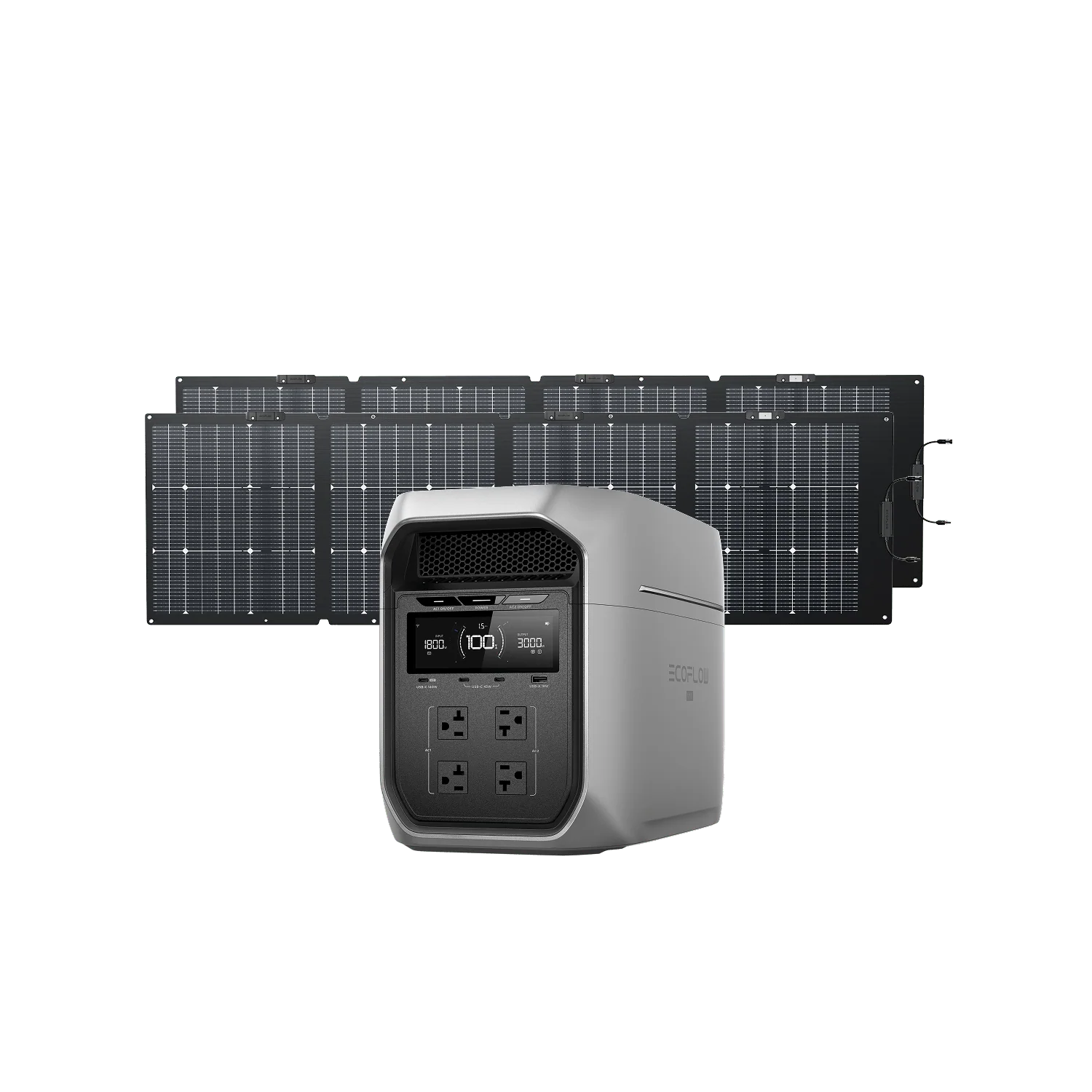
Portable solar panels are your best primary source when you're camping in a fixed location with access to sunlight. Pair them with a portable power station, like the EcoFlow DELTA 3 Max Plus + 2 × 220W Solar Panels — one central battery that everything charges from, with daily solar recharging built in.
On overcast days, panels produce roughly 10-25% of their rated output, so you should consider pairing them with 12V vehicle charging while driving to keep reserves topped up.
For day hikes away from base camp, a small power bank handles short-trip device needs without drawing from your main station.
Plan Your Battery Capacity So You Don’t Run Out Mid-Trip
The best way to avoid an empty battery mid-trip is to plan your capacity carefully before you leave.
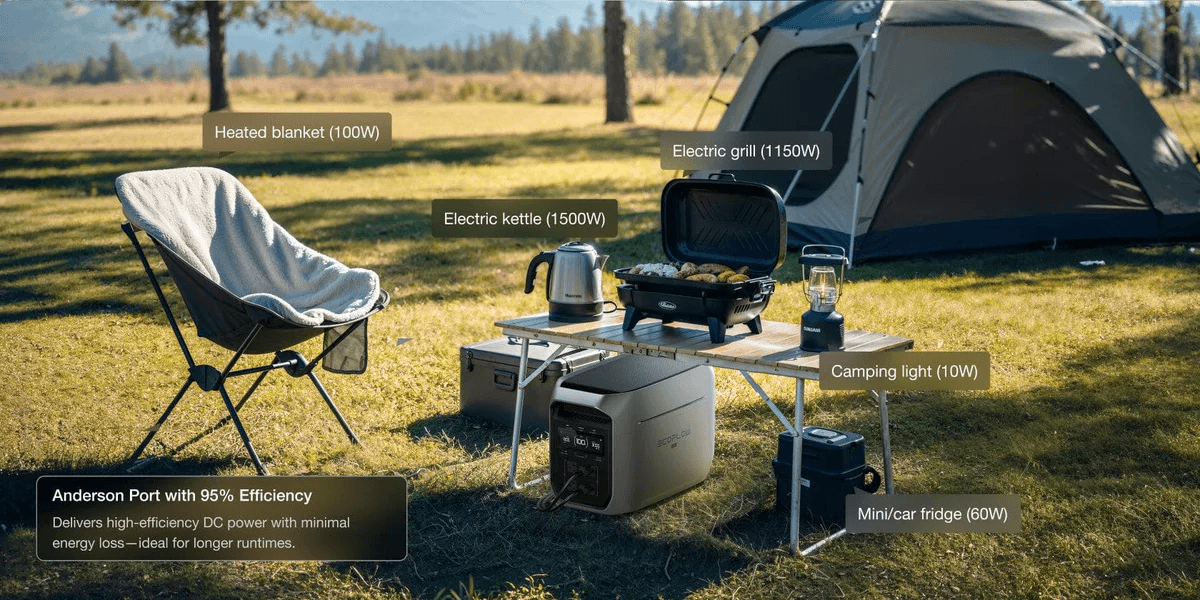
List all the devices you're bringing and their wattage. Camping essentials like a portable camp light might run 4–6 hours nightly, drawing 20–60Wh per night alone.
Then multiply each device's wattage by the estimated daily hours of use to get the watt-hours per device per day.
Add all of these daily device totals together to get your total daily Wh draw, then multiply that number by the number of days on your trip.
A common daily device draw for two people with basic supplies will draw roughly 200 to 400 Wh, depending on usage habits. Size your capacity to your actual daily draw — always overestimate.
Make Your Power Last Longer With Simple Energy-Saving Habits
Adjust your habits slightly to become more efficient and make your power last longer:
Use airplane mode when not actively navigating or communicating.
Dim your screen's brightness as low as you can.
Close background apps that can ping networks and drain your battery.
Charge devices during peak solar hours to align your draw with the strongest recharge window.
Prioritize multi-use gear, like a headlamp that also serves as a camp light, a GPS watch that replaces a separate GPS unit, to minimize the Wh drawn.
Don't leave devices on the charger after they reach 100%.
Turn off electronics completely rather than leaving them in standby mode when not in use.
Plan group charging sessions with 2 or 3 devices at once, rather than staggering them across the day.
Build a Reliable Off-Grid Setup With Portable Power Stations and Solar Panels
When choosing a portable power station for multi-day camping, prioritise three things:
Capacity relative to your daily Wh draw.
Maximum solar input (higher input = faster daily recharge).
Modularity — the ability to add battery capacity if your needs grow or a cloudy stretch cuts into your solar yield.
The EcoFlow DELTA 3 Max Plus + 2 × 220W Solar Panels covers all three. Its 2048Wh base capacity handles most two-person trip loads, its 1000W solar input ceiling means faster recharge windows, and its modular design lets you expand if your power needs change.
It works equally well for base camps, wild camping, RV trips, and van life, and the same modular approach scales up to whole-home backup if your power needs grow beyond the outdoors.
Frequently Asked Questions
What Are the Best Ways to Keep Electronics Charged While Camping for 3–7 Days?
The best way to keep your electronics charged on a three-to-seven-day camping trip is to use a portable power station as your central hub and pair it with portable solar panels for daily recharging at camp. You could also supplement with 12V vehicle charging.
How Do I Calculate What Battery Size I Need for Off-Grid Camping?
Start by listing all of your devices and their wattage, and then multiply each device's wattage by the daily hours it's used. Then you can add together all the device totals for your daily Wh draw. Multiply it by your trip length in days for a total calculation.
Can I Rely on Solar Panels Alone on a Multi-day Trip?
Solar alone works in ideal conditions, but overcast days can significantly reduce output. You should pair solar with at least one backup source, like storage capacity, to cover low-sun days.
How Do I Protect Batteries and Devices From Extreme Heat or Cold While Camping?
If you're camping in the heat, store your power stations and devices in the shade, and avoid leaving them in a hot vehicle or the direct sun. In cold weather, keep the batteries insulated overnight inside a sleeping bag or a tent to maintain capacity.
Stay Charged, Stay Safer, and Enjoy More of the Outdoors
Keeping consistent access to power on multi-day camping trips reduces your risk if navigation devices and emergency communication fail. The core strategy is simple: size your capacity to your actual daily draw, not a best-case estimate. Always overestimate rather than underestimate.
Pair a portable power station with solar and layer in vehicle charging when it's available.
For groups, base camps, RV trips, and van life, use the EcoFlow DELTA 3 Max Plus + 2 × 220W Solar Panels for reliable central charging, built for sustained off-grid use.
For press requests or interview opportunities, reach out to our media team
media.na@ecoflow.com