How to Power Starlink Off-Grid for Remote Internet
- What Is Starlink, and Why Do Off-Grid Users Need It?
- How Much Power Does Starlink Use?
- What Are the Best Ways to Power Starlink Off-Grid?
- How Do You Calculate the Right Battery and Solar Size for Starlink?
- Where Should You Position Starlink for the Best Signal and Power Efficiency?
- How Can You Extend Starlink's Runtime in Remote Locations?
- Frequently Asked Questions
- Reliable Off-Grid Power Keeps Your Starlink Internet Connected Anywhere You Roam
Reliable internet in a remote cabin, campsite, or overlanding rig depends on more than a good satellite dish. Starlink still needs a steady power source, and off-grid locations rarely offer a wall outlet. This guide breaks down how much power Starlink draws, the best ways to run it off-grid, and how to size a setup that won't leave you disconnected.
What Is Starlink, and Why Do Off-Grid Users Need It?
Starlink is a satellite internet service that delivers broadband-speed connectivity far outside the reach of cable or fiber lines. For remote workers, van lifers, hunters, and rural property owners, it's often the only realistic way to get dependable internet without a phone line or cell tower nearby.
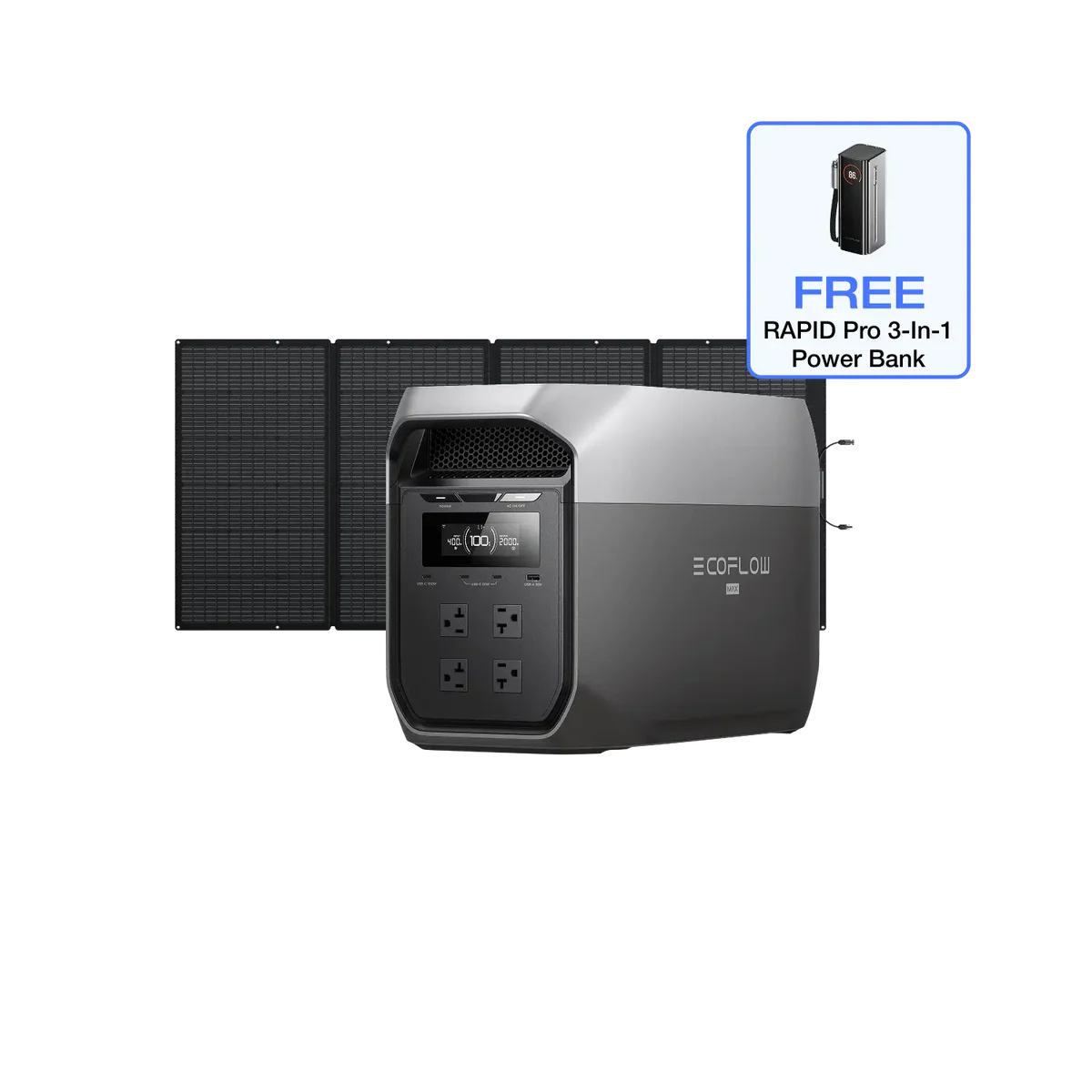
The catch is that Starlink's dish and router need continuous power, and most off-grid locations don't have an outlet built in. Pairing your dish with a portable power solution like the EcoFlow DELTA 3 Max + 400W Solar Panel solves that, giving you enough stored and renewable energy to stay connected through a full day of use.
How Much Power Does Starlink Use?
Power draw varies by hardware generation.
Starlink Mini
The compact Starlink Mini is the most power-efficient option in the lineup, typically drawing 20 to 40 watts during normal operation, with brief startup spikes higher than that. Its lower draw makes it a practical choice for smaller battery setups.
Starlink Standard
The Starlink Standard dish generally uses 50 to 75 watts under normal conditions, with consumption climbing during heavy rain, snow melt, or cold-weather heating of the dish surface.
Starlink High Performance
Built for demanding environments like RVs, boats, and commercial sites, the Starlink High Performance kit draws the most power of the three, often reaching up to 150 watts. However, consumption fluctuates with temperature and weather, since the dish uses extra energy to melt snow and ice off its surface.
What Are the Best Ways to Power Starlink Off-Grid?
Portable Power Stations
A portable power station is the simplest way to keep Starlink running without a grid connection. These battery units store energy and deliver stable AC power through a standard outlet, so you can plug in your router the same way you would at home.
Look for a unit with enough capacity for several hours of runtime, plus a solar input for recharging onsite. The EcoFlow DELTA 3 Classic (1024Wh) is a good fit for this, with enough capacity to run a Starlink dish for a full day alongside a laptop or phone.
Solar Generators and Solar Panels
Pairing a power station with solar panels turns it into a self-sustaining system. During daylight hours, panels recharge the battery while Starlink draws power, so you're not depleting stored energy as quickly.
This is especially useful for extended stays without regular access to grid power. Matching panel wattage to your dish's draw is the core of solar integration for Starlink, with enough buffer for overcast days.
Vehicle and RV Battery Systems
If you're traveling by vehicle, your RV or truck's battery bank can power Starlink directly through a 12V outlet or inverter. This works well for shorter stops, but running Starlink continuously draws down your battery faster than typical accessories, so it's worth monitoring charge level or supplementing with solar.
Backup Generators
Fuel-powered generators can run Starlink indefinitely as long as the fuel holds out, making them dependable for extended stays or emergencies. They're noisier and need more upkeep than battery setups, so many off-grid users treat them as a backup.
For a fixed remote property, a whole home generator can cover Starlink alongside your other essential devices.

How Do You Calculate the Right Battery and Solar Size for Starlink?
Sizing your setup starts with your kit's wattage and how many hours a day you'll run it. Multiply watts by hours of daily use to get your watt-hour requirement, then choose a battery with enough capacity to cover that, plus a buffer for cloudy days.
For example, a Standard dish running at 60 watts for 10 hours needs about 600 watt-hours daily. A power station with roughly 1,000Wh of capacity comfortably covers that load with room to spare for your laptop and phone. For longer stretches, pairing your power station with solar panels offsets consumption instead of relying solely on stored capacity.
A proper off-grid internet setup entails sizing your battery around your router, laptop, and any other devices sharing the same power source, not just the dish itself.
Where Should You Position Starlink for the Best Signal and Power Efficiency?
Starlink needs a clear, unobstructed view of the sky, so keep the dish away from trees, buildings, and steep terrain. A dish that's constantly reconnecting burns more power searching for satellites than one with a clean line of sight.
Mounting it on a pole or elevated tripod, rather than the ground, reduces interference and cuts power lost to retries.
How Can You Extend Starlink's Runtime in Remote Locations?
A few habits can stretch your available power. Powering down Starlink overnight, or whenever you're not using it, cuts daily consumption, since the dish draws power continuously while active.
Pairing your battery with solar panels lets you recharge during the day instead of depending entirely on stored capacity, and angling panels for maximum sun exposure improves how much you recover.
If you’re running powerful tech for off-grid remote work, you’ll need to budget your battery across a laptop, monitor, and other devices, not just the dish, so nothing runs out mid-task.
Frequently Asked Questions
How Many Watts Does Starlink Use?
Wattage depends on the model. The Starlink Mini typically uses 20 to 40 watts, the Standard dish uses roughly 50 to 75 watts, and the High Performance kit can reach up to 150 watts. Weather conditions, especially snow and freezing temperatures, can temporarily increase consumption as the dish works to clear its surface.
Can a Portable Power Station Run Starlink All Day?
Yes, as long as the battery capacity matches your Starlink model's daily power draw. A mid-sized power station can typically run a Starlink Standard dish for a full day on a single charge, and pairing it with solar panels extends that runtime indefinitely by recharging the battery during daylight hours.
Do You Need Solar Panels to Run Starlink Off-Grid?
Solar panels aren't required, but they make off-grid Starlink use far more sustainable. Without solar, you're limited to your battery's stored capacity and will need to recharge from a vehicle or generator. Solar panels let you recover energy passively each day, reducing how often you need to find another power source.
Reliable Off-Grid Power Keeps Your Starlink Internet Connected Anywhere You Roam
Keeping Starlink running off-grid comes down to understanding your dish's power draw, choosing a battery sized to match it, and positioning your equipment for the clearest signal.
Whether you're working remotely for a few days or living off-grid full-time, a setup built around the EcoFlow DELTA 3 Max + 400W Solar Panel gives you the flexibility to stay connected wherever the road, trail, or property takes you.
For press requests or interview opportunities, reach out to our media team
media.na@ecoflow.com