Power Grid Stability: Causes, Challenges and Ways to Improve Reliability
The electric grid must balance production and use every second. A heat wave can push demand higher just as a power plant or transmission line goes out of service. Voltage and frequency must remain within operating limits as the system adjusts.
Growing demand and a changing resource mix make that work more complicated. Solar, wind, batteries, and other inverter-based resources can all support a reliable grid, but the network and its controls must be designed to accommodate them. This guide explains grid stability, current U.S. challenges, and practical ways to improve reliability.
What Is Power Grid Stability and Why Does It Matter?
Power grid stability is the ability of an electric system to remain in a workable state after a disturbance. A stable system settles into acceptable operating conditions instead of losing synchronism, suffering an uncontrolled voltage decline, or breaking into separate electrical islands.
Stability is one part of dependable service. Utilities and grid operators also need adequate capacity, maintained equipment, and workable restoration plans. Those responsibilities are related but not identical.
The Fundamentals of Power Grid Stability
North American alternating-current systems operate at a nominal 60 hertz. Generators, substations, lines and loads must behave as one coordinated network. Frequency and voltage are the most familiar indicators, although engineers also study rotor angles and oscillations.
Frequency: Frequency reflects the near-instantaneous balance between real-power supply and demand. It tends to fall when demand exceeds generation and rise when supply is greater. Rotational energy in synchronous machines can slow the initial change; governors, batteries, demand response and operating reserves then help correct the imbalance.
Voltage: Voltage depends strongly on local reactive-power conditions and the strength of the surrounding network. Transformers, capacitors, reactors, synchronous machines and capable inverters contribute to voltage control. A sustained problem can reduce power quality, force equipment offline or contribute to voltage collapse.
Protective relays disconnect equipment when conditions could cause damage. One relay operation does not automatically create a cascade. Planners coordinate protection and operating limits so a credible failure can be contained. Wider outages become possible when the first event combines with overloaded facilities or additional failures.
Grid Stability vs. Reliability and Resilience
Stability concerns the physical behavior of the system during and immediately after a disturbance. Reliability is broader, covering both adequate resources and secure operation. Resilience addresses preparation for severe events, limiting their consequences and restoring service afterward.
Concept | Primary Metric | What It Answers | Real-World Scenario |
Stability | Frequency, voltage, angle, and damping behavior | Can the grid remain controlled after a disturbance? | A transmission line trips, and automatic controls keep the remaining system within acceptable limits. |
Reliability | Resource adequacy, operating performance and customer outage measures | Can the system deliver electricity when it is needed? | Available generation and transmission meet a week of unusually high demand. |
Resilience | Event impact, critical-service continuity and recovery | Can the system withstand and recover from a severe event? | A utility isolates damage and restores critical facilities after a hurricane. |
SAIDI and SAIFI are useful distribution-system measures. SAIDI tracks the average duration of non-momentary customer interruptions, while SAIFI tracks their average frequency. Neither metric describes every aspect of bulk-system reliability or stability.
How Grid Stability Affects Daily Life and Essential Services
Customers generally never notice the control actions that keep the grid stable. If a major disturbance is not contained, the effects extend beyond darkened homes. Water plants need pumps and controls; traffic signals, telecommunications, fuel stations and stores need electricity too. Hospitals have emergency systems, but generators still have limits.
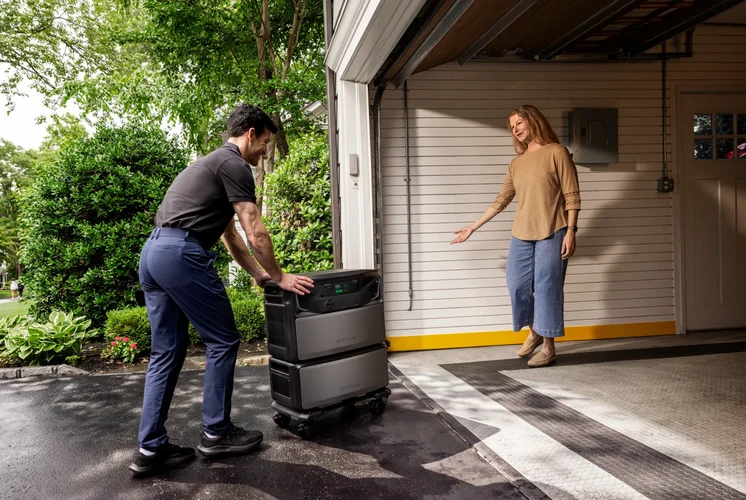
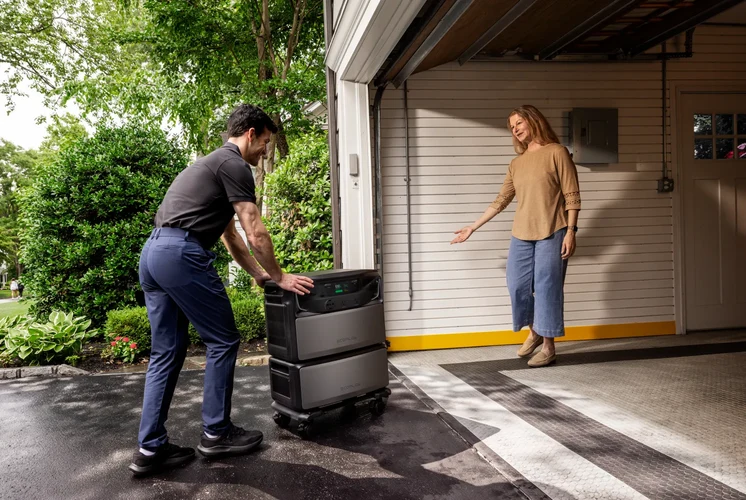
Even a short outage can become dangerous in extreme heat or cold. Indoor temperature, refrigeration, water service, and communications may become urgent concerns. Stable operation helps prevent those interruptions. At the household level, a home battery can support selected compatible circuits during an outage, but it does not stabilize the bulk grid by itself.
What Causes Power Grid Instability?
Instability seldom has one simple cause. A system may handle one outage but struggle when it occurs during high demand, limited power transfers or another equipment failure. Operators plan for defined contingencies, yet real events do not always follow the expected sequence.
Extreme Weather and Demand Spikes
Weather affects both demand and supply. A very hot afternoon can raise air-conditioning use across a region while heat reduces the capability of some lines and power plants. Severe cold may increase electric-heating demand, interrupt fuel delivery or freeze equipment.
Wind, wildfire, flooding and ice create different problems. Trees can fall into local lines, wildfire conditions may require exposed facilities to be de-energized, and flooding can threaten substations. Risk rises when high demand and several equipment limitations occur together. Forecasting helps, but utilities also need appropriate hardening, fuel arrangements, reserves and plans for conditions outside the ordinary forecast.
Unexpected Generation and Transmission Outages
Losing a generating unit creates an immediate supply shortfall. Losing a transmission element changes the paths electricity takes and may load neighboring lines more heavily. Automatic controls respond first, followed by operator action and additional reserves.
The event can escalate if other facilities are already unavailable, flows exceed safe limits or protection does not operate as designed. A large transformer failure may also take far longer to repair than a routine line fault. Spare-equipment programs, vegetation management, protection studies and realistic contingency analysis reduce that exposure.
Fluctuations in Renewable Electricity Generation
Power from wind turbines and solar panels varies with weather and time of day, but variability is not the same as instability. Operators forecast weather-sensitive output, schedule reserves and manage changing demand. Geographic diversity also softens the effect of a local cloud bank or a lull in wind.
The challenge grows when net demand changes quickly or a forecast is wrong. A solar-heavy region may need other resources to increase output as the sun sets and evening use rises. Transmission, storage, demand response and flexible generation can share that work. Virtual power plants can coordinate compatible distributed batteries and flexible loads, but their contribution depends on program rules, communications, available capacity, and customer participation.
Accurate models and suitable inverter settings remain important. Wind, solar and battery plants must ride through specified disturbances and coordinate with surrounding protection. Poorly modeled controls can create risk; variable production alone does not make a cascade inevitable.
Aging Infrastructure and Deferred Maintenance
Many U.S. grid assets have served for decades, although age alone does not show whether equipment is unreliable. Loading, condition, design, and maintenance history matter more. A well-maintained older transformer may remain dependable, while a newer component exposed to heat or moisture can fail early.
Some facilities now carry power flows unlike those anticipated when they were installed. Deteriorated insulation, deferred vegetation work, and obsolete controls raise the odds that a routine fault becomes a long outage. Condition monitoring, planned replacement, and critical spares matter most for equipment with long procurement times.
What Challenges Does the U.S. Power Grid Face Today?
Improving electric grid resilience requires work on several fronts at once. New generation may be far from demand, large loads can arrive faster than infrastructure is built, and increasingly digital equipment must be protected. Technical solutions exist, but planning, permitting, cost allocation, and construction schedules often determine how quickly they are deployed.
Grid Adaptation for Renewable Energy
Synchronous generators naturally contribute rotational inertia and establish an electrical waveform. Solar arrays, batteries and many modern wind plants connect through inverters. Traditional grid-following inverters measure an existing waveform and synchronize to it; they do not have the mechanical inertia of a turbine.
That difference requires engineering, not a blanket limit on inverter-based resources. Grid-forming controls can establish a voltage and frequency reference and respond quickly to a disturbance, within the equipment’s current and stored-energy limits. Properly designed grid-following resources can also provide voltage support and frequency response.
Planners need validated models, effective ride-through settings, sufficient reactive power, and protection that works with the new equipment. Depending on local conditions, the solution may include grid-forming batteries, synchronous condensers, flexible generation or a stronger transmission connection.
Regional Grid Connectivity and Coordination Barriers
Most of the contiguous United States is served by three large asynchronous networks: the Eastern, Western and Texas interconnections. The Texas system is largely operated by ERCOT. Limited direct-current ties move electricity between these networks without requiring their AC waveforms to remain synchronized.
More interregional capacity could allow neighboring areas to share reserves during extreme conditions. Constraints within each interconnection matter too; enough generation may exist, yet congestion can keep it from reaching customers.
Major lines cross utility territories and state, federal, or tribal jurisdictions. Planners must decide who benefits, who pays, and how the project affects nearby systems. HVDC can work well for long-distance delivery and asynchronous connections, but it is one option alongside new AC lines, reconductoring, and substation upgrades.
Cybersecurity and Physical Security Risks
Digital controls give operators better visibility, but connected equipment must be managed as operational technology. Risks include stolen credentials, insecure remote access, compromised vendors, malicious software, and cyber-physical attacks meant to disrupt control or conceal system conditions.
Defenses include network segmentation, access control, secure backups, monitoring, employee training, and practiced incident response. Utilities also need safe procedures for the loss of communications. Physical measures such as barriers, cameras, redundancy and repair plans protect remote substations and other exposed assets. Public reporting should describe the issue without revealing site-specific weaknesses.
Growing Electricity Demand and Grid Capacity Constraints
Electricity forecasts have risen sharply in several regions after years of modest national growth. Large data centers are a major driver, joined in some places by manufacturing, electric vehicles, building electrification and population gains. Where and when those loads operate matters as much as the national total.
A data center may request hundreds of megawatts at one location and seek service sooner than major equipment can be delivered. Planners need credible schedules and electrical models, not an assumption that every request will arrive at full scale.
Constraints can occur at several levels. A region may need more peak generation, a transmission area may be import-limited, or a neighborhood may need a larger feeder. Efficiency and managed charging can reduce some peaks, but sustained growth still requires timely infrastructure.
How Can Power Grid Stability and Reliability Be Improved?
Power grid resilience and reliability improve through sound maintenance, stronger networks, better controls, flexible demand, diverse generation and storage. The right investment addresses the actual constraint.
Upgrade Grid Infrastructure and Expand Transmission Capacity
New transmission gives operators more ways to move power around damaged or congested facilities. Interregional lines can share resources across different weather patterns and demand peaks. HVDC is useful for controllable long-distance transfers and asynchronous connections, while upgraded AC networks remain essential within each region.
Utilities can also make better use of existing corridors. Advanced conductors may carry more power. Dynamic line ratings use current weather and conductor conditions rather than only a fixed seasonal limit. Power-flow controllers direct electricity toward available paths, while topology-optimization software identifies safe network configurations that reduce congestion.
These Grid-Enhancing Technologies do not create unlimited capacity. Dynamic ratings may offer little advantage during hot, still weather, and software cannot replace a line where no alternate path exists. They should be evaluated alongside new construction, reconductoring, substation work, and non-wires alternatives.
Use Home Battery Storage to Support Grid Flexibility
A home battery primarily serves its owner by providing backup, storing rooftop solar or shifting purchases away from expensive hours. It helps the broader grid only when it is compatible with a utility, aggregator or virtual power plant program and the homeowner chooses to participate.
Within a coordinated program, many small batteries can reduce household demand during a peak or export power when program rules and interconnection agreements allow it. Thermostats, water heaters and EV chargers can contribute flexibility too. Results depend on communications, customer consent and controls that respect the backup reserve selected by the owner.
The EcoFlow TITAN 5000 Classic begins with 5 kWh of capacity, accepts up to 3.2 kW of direct solar input and can expand to 30 kWh with compatible batteries. Capacity and charging specifications do not determine which appliances can operate together; voltage, continuous output, starting demand and the approved connection method also matter.
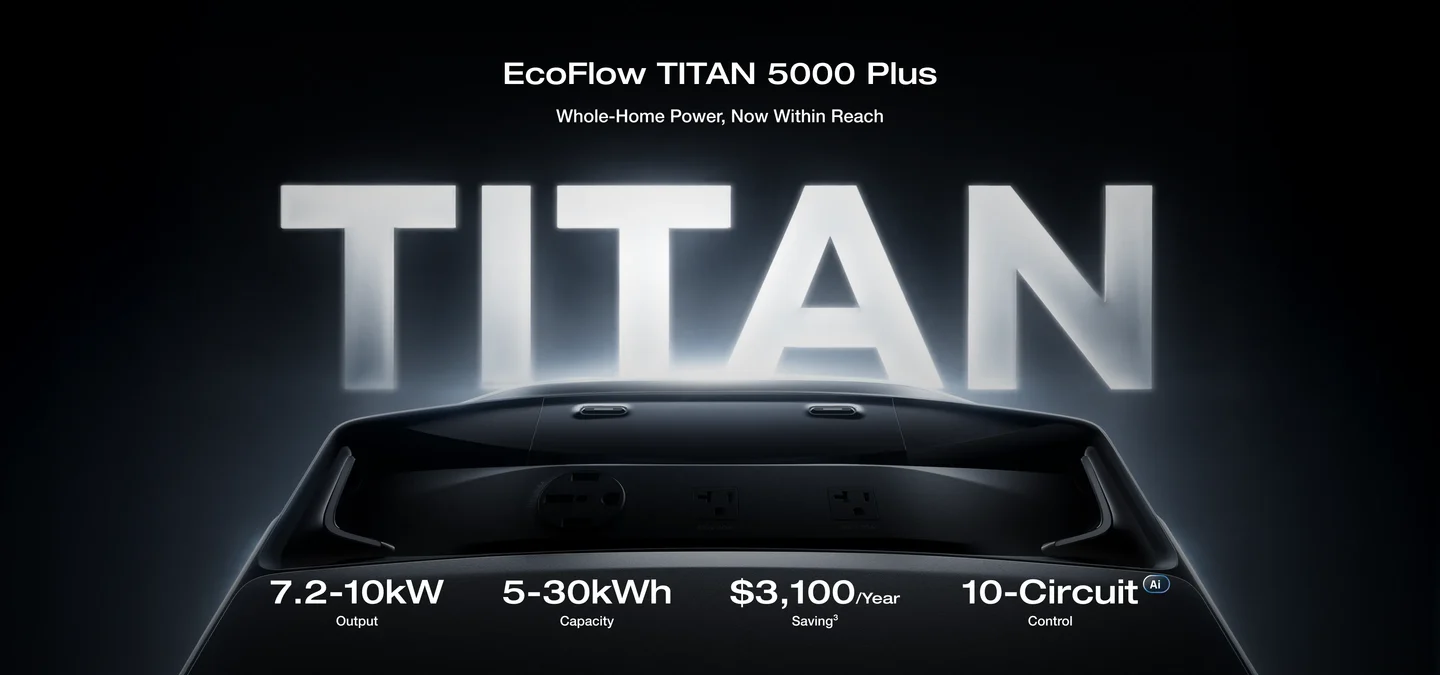
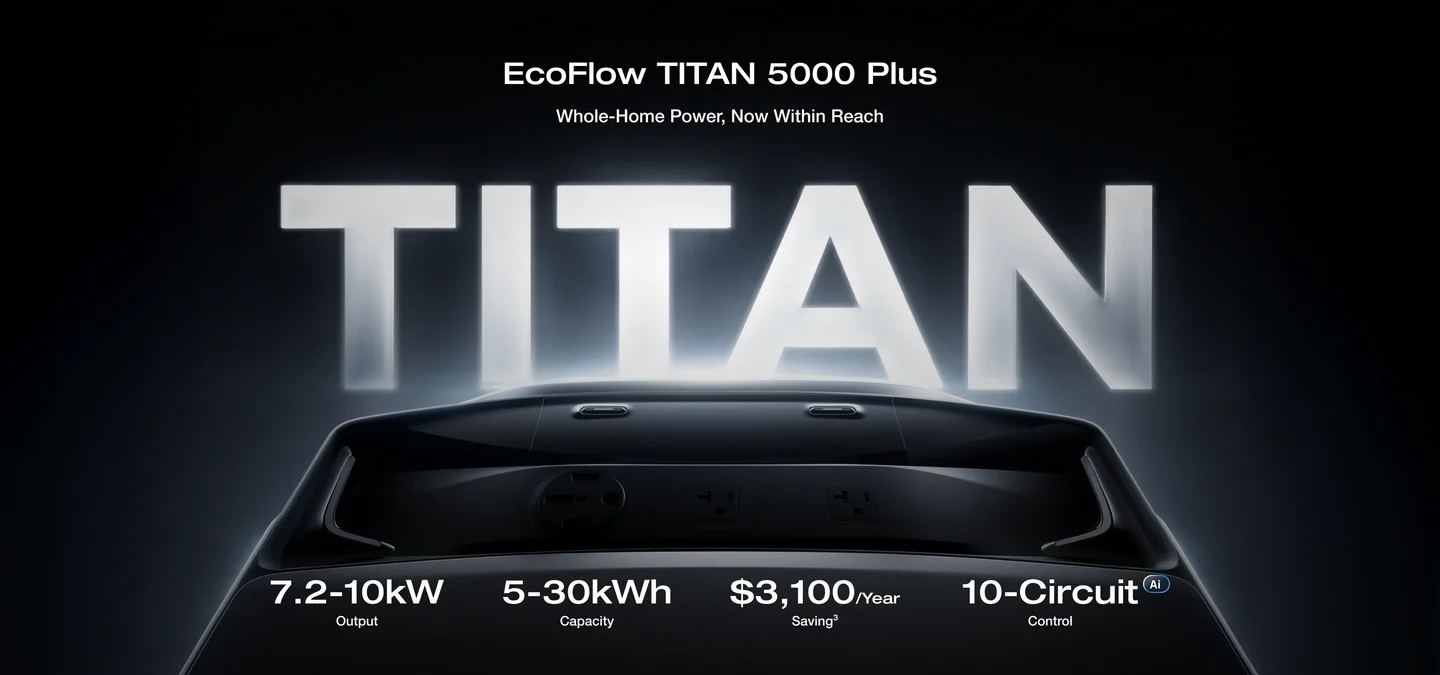
The EcoFlow TITAN 5000 Plus starts at 5 kWh, expands to 30 kWh and supplies up to 7.2 kW of battery output. Its X-Fusion 2.0 design supports AC coupling with compatible third-party rooftop solar equipment, subject to the installation and controls. A qualified installer should confirm equipment compatibility, electrical-code requirements and utility rules. Owning the system does not automatically enroll it in demand response or a virtual power plant.
Improve Grid Monitoring and Automated Controls
Phasor measurement units provide synchronized measurements of voltage and current, commonly reporting 30 or more observations per second. Data from many PMUs can reveal oscillations, changing phase angles and disturbances that slower monitoring may miss.
On distribution networks, line sensors, smart relays and automated switches can locate a fault, isolate the damaged section and sometimes restore unaffected customers from another feeder. The timing depends on communications, protection logic and the capacity of the alternate route.
Useful monitoring still requires accurate data, secure communications, and alarms operators can interpret. Models must be validated, automation must fail safely, and crews need practice operating when a sensor or communications link is unavailable.
Diversify Power Sources and Expand Flexible Generation
A varied portfolio reduces reliance on one fuel, weather pattern, or technology. What matters is whether those resources provide the needed capability at the right place and time: frequency response, voltage support, ramping, long-duration energy, or dependable output through a severe event.
Advanced Geothermal & Small Modular Reactors (SMRs): Advanced geothermal could provide firm power in more locations, while SMRs are being developed as a smaller form of nuclear generation. Cost, licensing, construction schedules, local resources, and commercial maturity vary, so neither is an immediate solution for every region.
Grid-Scale Long-Duration Energy Storage (LDES): The Department of Energy generally defines LDES as storage that can deliver electricity for 10 hours or more. Flow batteries, pumped storage, compressed air, and thermal systems address different durations and siting needs. Efficiency and cost remain important.
Fast-Start Clean Peakers: Fast-ramping supply can cover forecast errors and sharp changes in net demand. Batteries, responsive hydropower, demand response, and some combustion turbines can fill that role. Describing a fuel-burning plant as clean requires caution because emissions depend on the fuel, efficiency, operating pattern, and upstream supply.
Flexible demand belongs in the same discussion. Managed EV charging, building controls and some commercial or industrial processes can move consumption away from tight hours without eliminating the service customers need.
Conclusion
Grid stability starts with a physical requirement: supply and demand must remain balanced while voltage, frequency and system angles stay within acceptable limits. Reliability adds adequate resources and secure operation; resilience adds preparation and recovery.
The United States can strengthen all three through maintenance, targeted transmission, modern controls, flexible demand and a resource mix suited to regional conditions. Renewable generation can be integrated reliably when inverter behavior, reserves, storage and network capability are planned together. Home batteries can contribute through a compatible program. There is no nationwide fix. Models and local investment matter more than expecting one technology to solve the problem.
FAQ
What Is Grid Inertia And Why Does It Matter?
Grid inertia is the kinetic energy stored within the heavy, spinning steel rotors of traditional power plant turbines that naturally resists sudden changes in system frequency. It matters because it buys automated safety systems valuable seconds to adjust output whenever a generator trips or a transmission line fails, preventing catastrophic wide-area blackouts.
What Will No Longer Work If The Grid Goes Down?
Most modern residential systems stop operating during an outage, including municipal water delivery pumps, home Wi-Fi networks, gas furnaces that require electric blowers, and standard credit card terminals at grocery stores and gas stations. Even grid-tied rooftop solar systems automatically shut down during a blackout unless paired with an isolating battery system to prevent dangerous backfeeding onto neighborhood lines.
What Happens If The Grid Frequency Is Too High?
Grid frequency spikes above 60 Hz when total electricity generation outpaces consumer demand, which subjects generator turbines and industrial motors to mechanical overspeed stress, alters rotating equipment speeds, and threatens system stability.
Who Are The Grid Operators In The U.S.?
Much of the US high-voltage grid is coordinated by Regional Transmission Organizations (RTOs) and Independent System Operators (ISOs), including PJM, MISO, CAISO, and ERCOT. These organizations manage regional grid operations and, in many regions, wholesale electricity markets. In areas without an RTO or ISO, utilities often perform more of these functions themselves. The exact division of responsibilities varies by region.
For press requests or interview opportunities, reach out to our media team
media.na@ecoflow.com