Off-Grid and On-Grid Solar System: Pros, Cons, and Best Uses
- What Is the Difference Between On-Grid and Off-Grid Solar Systems?
- What Are the Pros and Cons of On-Grid Solar Systems?
- What Are the Pros and Cons of Off-Grid Solar Systems?
- Off-Grid Solar Case Study: EcoFlow TITAN at Iceland’s Loneliest House
- Should You Choose an On-Grid or Off-Grid Solar System?
- Conclusion
- FAQ
Solar panels are only one part of a home energy system. The larger question is whether the property remains connected to the electric grid. An on-grid system imports electricity when the home needs more than its panels produce and may export surplus generation. An off-grid system must cover every load with power generated and stored on-site, often with a secondary source for long periods of poor weather.
That choice affects system size, batteries, permitting, maintenance, and cost. Grid-tied solar is usually the practical option for a suburban home with dependable service. At a cabin miles from the nearest line, a self-contained system may cost less than a utility extension. This guide explains how both arrangements work and where each makes sense.
What Is the Difference Between On-Grid and Off-Grid Solar Systems?
The clearest difference between off-grid and on-grid solar systems appears after sunset. A grid-connected home buys electricity from the utility when solar production ends. An off-grid home draws from batteries and must preserve enough energy to last until the array can recharge them. The terms describe the electrical architecture, not the quality of the panels; the surrounding equipment and the response to low production are what change.
How On-Grid Solar Systems Work
Solar panels produce direct-current electricity, and an inverter converts it to the alternating current used by household appliances and the grid. In a common configuration, the home uses available solar first. If its loads require more power, the utility supplies the difference automatically.
When production exceeds household demand, a properly interconnected system may send the excess through a bidirectional meter. The value of that export depends on the utility tariff. Some programs credit it near the retail rate; others use a lower net-billing rate. Fixed charges and minimum bills may remain even when annual production is close to annual use.
A conventional grid-tied solar system normally stops supplying the house during an outage so it cannot energize utility lines. Outage operation requires equipment that can isolate the home safely and manage local power, commonly including a compatible battery, inverter, and transfer or control equipment.
How Off-Grid Solar Systems Work
An off-grid solar system operates independently of utility lines. Its array supplies household loads and charges batteries through compatible power electronics. The inverter serves the home’s circuits, while the controls may prioritize loads, manage charging, start a generator, or disconnect nonessential circuits as battery energy runs low.
Sizing begins with a load inventory, not roof area alone. The designer needs daily energy use, simultaneous demand, and motor-starting requirements. A well pump may use little energy over a day yet have a substantial startup surge. Resistance heat, water heating, cooking, and vehicle charging are especially demanding.
Seasonal production matters as much as an average day. A system with surplus power in July may struggle through a cloudy December. The design must account for the local solar resource, battery autonomy, conversion losses, temperature, snow, and future loads. Many full-time off-grid homes also retain a properly installed generator for prolonged poor weather or maintenance emergencies.
On-Grid vs. Off-Grid Solar Systems: Key Differences
The practical differences extend well beyond whether a utility meter is present:
Feature | On-Grid Solar Systems | Off-Grid Solar Systems |
Grid Connection | Operates in parallel with the utility under an approved interconnection agreement | Has no operating connection to utility distribution lines |
Battery Storage | Optional for ordinary bill reduction; required for most forms of outage backup | Normally essential for nighttime use and periods of low solar production |
Power Outage Resilience | Standard solar shuts down; backup requires compatible islanding and storage equipment | Utility outages do not affect it, but equipment failures or depleted batteries still can |
Upfront Equipment Cost | Usually lower when no battery is included | Usually higher because storage, controls, and often secondary generation are part of the design |
Permitting & Interconnection | Requires local permits, inspection, and utility approval before parallel operation | Requires applicable building and electrical permits, even without utility interconnection |
Ongoing Maintenance | Generally limited, though inverters, wiring, roof penetrations, and panels still need periodic attention | Includes the solar equipment plus battery monitoring and service for any generator or other backup source |
Grid connection provides additional energy but brings utility interconnection and rate rules. Going off-grid avoids those rules while making the owner responsible for generation, storage, and reliability.
What Are the Pros and Cons of On-Grid Solar Systems?
For a house with dependable utility service, grid-connected solar is usually the direct route to reducing purchased electricity. The financial result is local: identical arrays can earn different export credits under different utility tariffs. Review current rates, fixed charges, and interconnection terms before relying on a savings estimate.
Advantages of Grid-Connected Solar
Maximized ROI through Net Metering: Favorable export credits can offset electricity purchased at other times. The benefit is strongest under retail-rate net metering and smaller under net billing. Confirm the credit rate, rollover and settlement rules, size limits, and grandfathering terms with the serving utility.
Lower Upfront Equipment Expense: A solar-only installation avoids the cost of a large battery bank and its controls. If storage may be added later, discuss inverter and service-panel compatibility before installation.
Utility Support When Solar Falls Short: The grid is neither infinite nor available during an outage. During normal service, however, it supplies energy whenever solar falls short. The home can accommodate occasional large loads without an array and battery bank sized for its most demanding day.
Limitations of On-Grid Solar Systems
Anti-Islanding Blackout Vulnerability: A standard grid-following inverter disconnects when utility conditions move outside permitted limits, protecting workers and equipment from unintended power. Backup requires a system specifically designed to isolate from the grid and serve selected circuits.
Evolving Utility Tariff Structures: Net-billing rates, time-of-use periods, demand charges, fixed fees, and program caps can all affect savings. Rules also change, so current utility documents matter more than a general statement about statewide policy.
What Are the Pros and Cons of Off-Grid Solar Systems?
Off-grid solar power systems primarily serve properties without a practical utility connection. It can make a remote home fully functional, but the owner is operating a small power system. Efficient appliances, LED lighting, sensible pump selection, and load scheduling can reduce the array and storage required; eliminating unnecessary demand is often cheaper than producing it year-round.
Advantages of Off-Grid Solar in Remote Locations
Exemption from Utility Trenching Costs: A distant property may need poles, easements, transformers, or a long underground run. Because those costs are site-specific, compare a written extension estimate with a complete off-grid proposal instead of relying on a national per-mile figure.
Independence from Utility Rolling Blackouts: A utility shutoff cannot interrupt a property that is not connected to the grid. The system is not immune to a failed inverter, damaged array, empty fuel tank, or depleted battery, so backup plans still matter.
No Monthly Utility Bill: There may be no utility account, but the electricity is not free. Battery and inverter replacement, generator fuel and service, insurance, and inspections belong in the long-term budget.
Limitations of Off-Grid Solar Systems
Strict Daily Energy Budgets: Stored energy is finite. Several cloudy days may require the household to postpone vehicle charging, laundry, shop work, or other flexible loads. Monitoring battery charge and weather becomes routine in the least productive season.
High Battery Replacement Capital: Lithium iron phosphate batteries can provide long service within their operating limits, but capacity declines with age and cycling. Review the warranty’s retained-capacity threshold, cycle conditions, labor coverage, and replacement-module terms.
Need for Redundant Backup Generators: Many full-time off-grid homes benefit from a generator during prolonged cloud cover, unusual demand, or equipment service. Plan for fuel, maintenance, cold-weather starting, noise, and a code-compliant connection. A combustion generator belongs outdoors, well away from doors, windows, and vents.
Off-Grid Solar Case Study: EcoFlow TITAN at Iceland’s Loneliest House
Elliðaey, in Iceland’s Vestmannaeyjar archipelago, is known for the solitary lodge on its grassy slope. The building has no utility connection or permanent residents, making it an unusual example of remote-site power. The details below come from EcoFlow’s account of its installation; this is a product case study, not an independent engineering review or a sizing model for a U.S. home.
The Power Challenges of a Remote Island Home
Reaching the lodge requires a boat, so equipment cannot arrive on a service truck. Wind, rain, cold, salt-laden air, and large seasonal changes in daylight complicate the work. Transport weight, weather protection, spare parts, and remote monitoring all matter when same-day service is impossible.
EcoFlow lists heating and a sauna, refrigeration, lighting, water pumps, and communications equipment among the loads. Lights and electronics use relatively little power; heaters and pump motors impose much larger sustained or starting demands. The system therefore has to satisfy both energy use in kilowatt-hours and peak demand in kilowatts.
Long summer days offer extended charging, but winter production is a different matter. Any year-round plan must address the lowest-sunlight period and explain what happens when the array cannot replenish the batteries.
How the EcoFlow TITAN 5000 Plus Supports the Lodge’s Off-Grid Power System
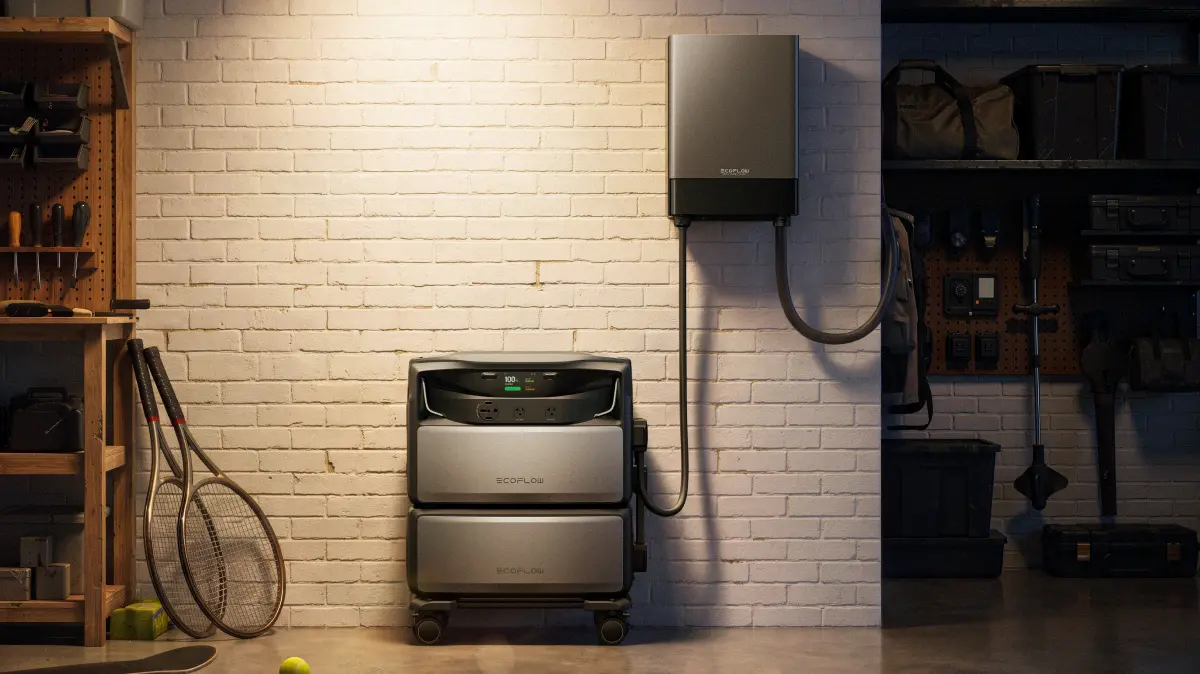
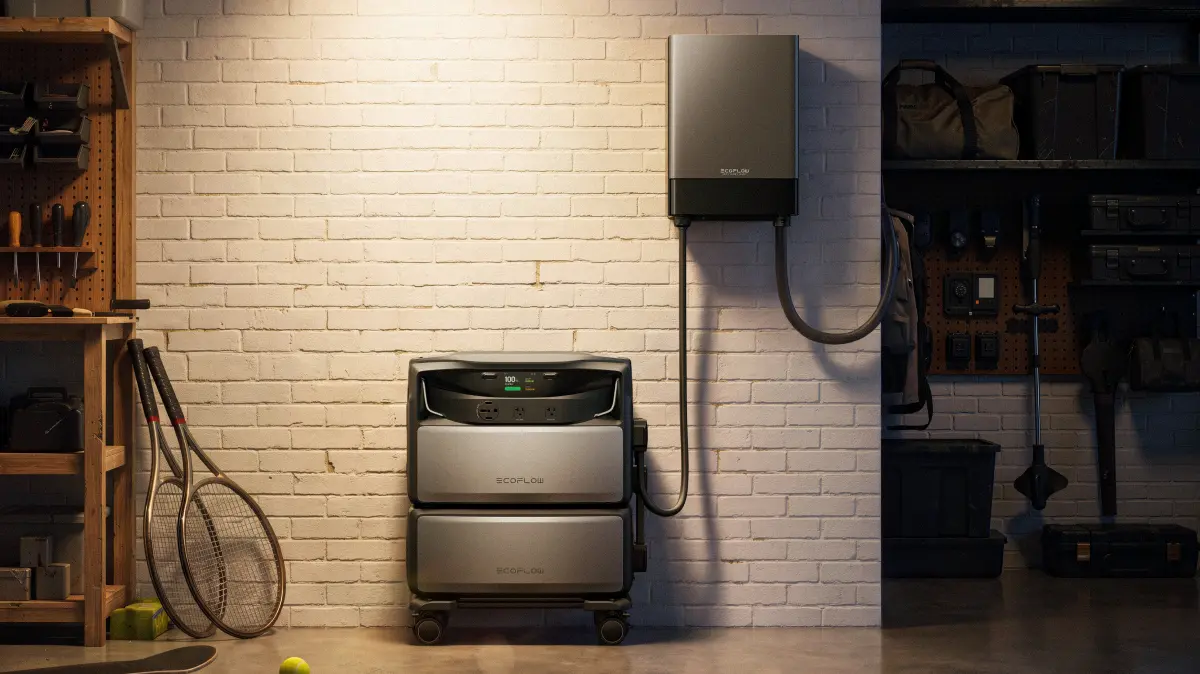
According to EcoFlow, the installation combines photovoltaic panels, an EcoFlow TITAN 5000 Plus, and a Smart Home Panel 10. The TITAN starts with 5 kWh of battery capacity and can expand to 30 kWh with compatible modules. It provides 7.2 kW of battery AC output; when compatible solar is available and works together with the battery, total system output can reach up to 10kW. Runtime depends on the configuration, sunlight, state of charge, and loads.
The Smart Home Panel 10 can manage up to 10 selected circuits in a compatible installation. This separates essential loads from discretionary ones, allowing refrigeration, water, lighting, and communications to take priority when stored energy is limited.
Capacity and output are different. A 5 kWh rating describes stored energy; a 7.2 kW rating describes power available at one time. Added batteries extend runtime but do not necessarily raise inverter output. Loads must still meet voltage, continuous-power, surge, and circuit limits.
How Modular Design Simplifies Installation in a Remote Location
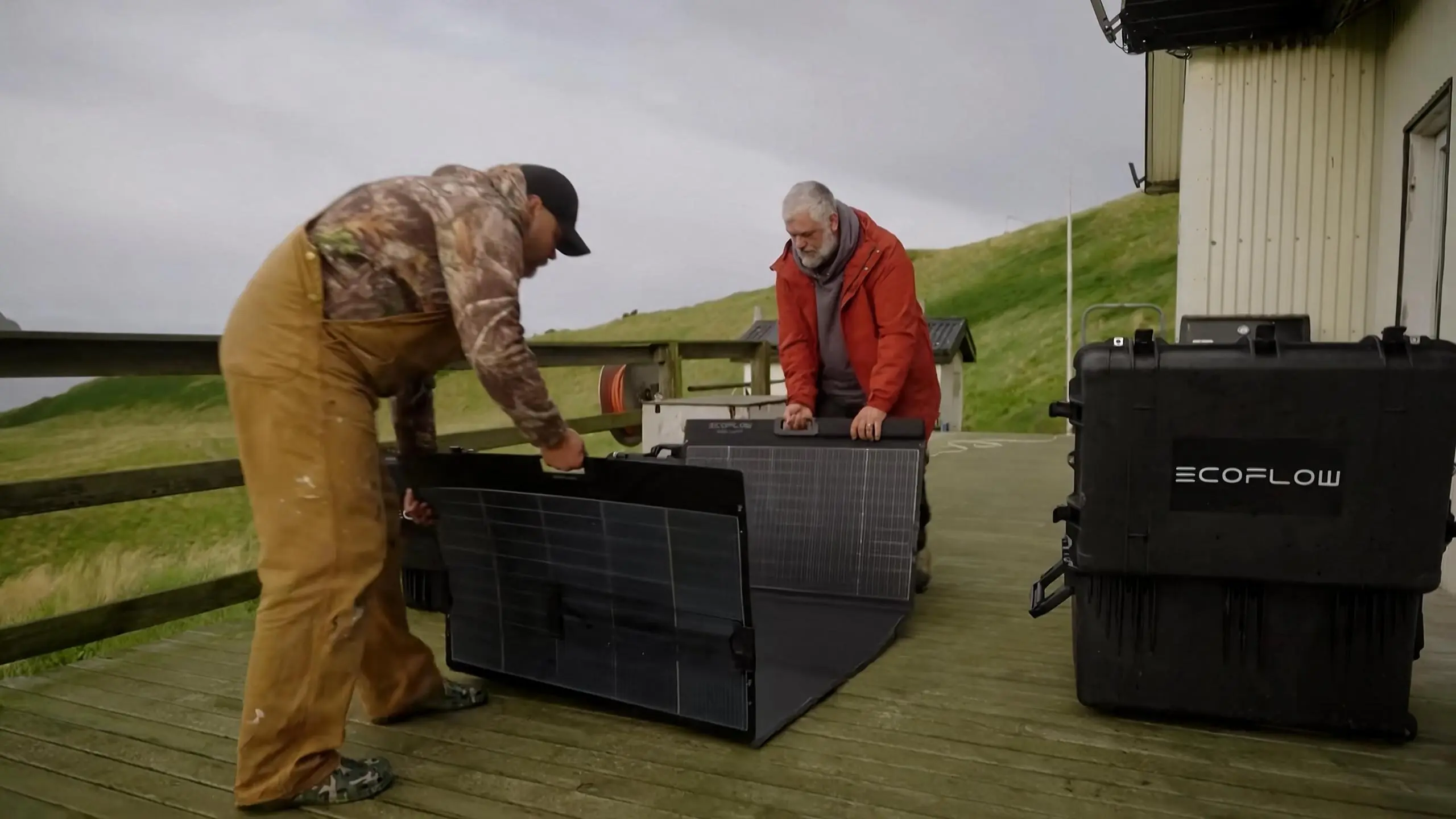
A modular system can be transported in separate pieces and assembled at the destination. EcoFlow reports that the Elliðaey connection was completed in hours, but that manufacturer-reported result is not a universal timetable. Array mounting, wiring, weatherproofing, permitting, and inspection can add considerable time.
Modularity may also simplify expansion when added batteries are approved for the system. It does not remove the need for sound design. In the United States, equipment connected to household circuits must follow applicable codes, permits, and installation requirements.

Should You Choose an On-Grid or Off-Grid Solar System?
There is no single best off-grid solar system for every property. Begin with utility access. If service exists, review current bills and outage history. If it does not, request a written extension estimate covering trenching, poles, transformers, easements, and recurring charges. Compare it with an off-grid proposal designed for the same loads and reliability. For a full-time home, include appliance data, motor surges, heating, water pumping, winter occupancy, and the number of low-production days the system must cover.
On-Grid Solar for Homes With Reliable Utility Access
For most homes in established neighborhoods, on-grid solar is the simplest path to lower grid purchases. It serves daytime loads, draws utility power when production falls, and may export surplus energy. Omitting a battery lowers initial cost but generally leaves the home without solar power during a blackout.
Use the utility’s current rules, not a generic promise of net metering. Ask the installer to separate self-consumption, exports, and grid purchases in the estimate. The proposal should also address roof age, shading, inverter replacement, monitoring, warranties, and future panel removal for roof work.
Off-Grid Solar for Remote Homes and Cabins
Off-grid solar is most persuasive when a utility extension is difficult or disproportionately expensive. A seasonal cabin may need only a modest system; a full-time home with a well, electric cooking, laundry, refrigeration, and winter heat requires far closer analysis.
For properties with 120/240-volt loads, the EcoFlow TITAN 5000 is one current modular option. EcoFlow specifies 7.2 kW of split-phase AC output, 5 kWh of starting capacity, expansion to 30 kWh, and up to 4 kW of compatible solar input. These ratings do not establish that it will run a particular home; every major load still must be checked for voltage, running power, startup demand, energy use, and required runtime.
The proposal should use the worst solar month, not only an annual average. It should explain generator integration, cold-weather battery operation, service access, replacement parts, grounding, surge protection, and the response to several poor-production days.
Grid-Tied Solar With Battery Backup for Power Outages
A grid-tied solar-and-storage system occupies the middle ground. A solar battery can reduce grid purchases by storing solar energy for evening use and may also respond to time-of-use rates. During an outage, approved controls isolate backed-up circuits from utility lines so a compatible inverter and battery can serve them safely.
Backup scope matters. A system for a refrigerator, lights, internet equipment, and a few outlets is very different from one expected to run central air, electric water heating, a well pump, and a range. List essential circuits, estimate their daily consumption and surges, and decide how long they must run without useful solar input.
Confirm that the array can recharge the battery during an outage; some retrofits do not let an existing grid-tied array operate when the grid is down. Permanent connections require listed isolation equipment and code-compliant installation.
Conclusion
On-grid and off-grid systems may use similar panels, but they solve different problems. Grid-tied solar is usually practical when utility service exists and the goal is to reduce purchases. Off-grid solar suits properties where a connection is unavailable or too costly to extend.
Either choice should rest on real loads, current rates, local solar production, and long-term costs. A sound proposal states its assumptions, explains how the home will operate during poor weather or an outage, and accounts for maintenance—not merely the number of panels on the roof.
FAQ
How Many Solar Panels Do I Need to Run off the Grid?
Most off-grid homes require between 15 and 30 solar panels (rated at 400W each), totaling an array size of 6kW to 12kW. Your exact panel count depends heavily on your region’s average daily peak sun hours and whether you rely on electricity for high-draw heating, air conditioning, and well pumps.
How Many Batteries Do I Need for Off-Grid Solar?
A typical off-grid home requires 20kWh to 30kWh of usable battery storage to maintain uninterrupted power across two to three consecutive overcast days. For light seasonal cabins running only basic lighting and a small refrigerator, a modular 5kWh to 10kWh battery setup is often sufficient.
Do Solar Panels Work on Cloudy Days?
Yes, solar panels still generate electricity on cloudy days, but their output drops to roughly 10% to 25% of their rated capacity. Modern monocrystalline solar panels capture diffuse sunlight through thin cloud cover, though heavy rain or thick storm clouds will reduce real-time generation significantly.
What Happens When an Off-Grid Solar Battery Runs Out?
Your household circuits will lose power completely and shut down until a charging source is restored. To prevent this, well-designed off-grid setups incorporate an automatic transfer switch (ATS) that signals a backup dual-fuel generator to start up, power household loads, and recharge the battery bank safely.
For press requests or interview opportunities, reach out to our media team
media.na@ecoflow.com