How to Go Off Grid: What You Need to Power Your Home
Going off grid starts with a practical question: can your home generate and store enough electricity to cover everyday life? The refrigerator still needs to run after sunset. A well pump has to start when you turn on the faucet. Several cloudy days should be part of the plan from the beginning.
Before buying equipment, calculate how much electricity you use, when you use it, and how production changes throughout the year. This guide covers the equipment, sizing, installation, and maintenance involved in powering your home without a utility connection.
What Do You Need to Know Before Going Off Grid?
Your home still needs reliable electricity on cloudy days, so begin with the way your household actually uses power. Note which appliances are essential, when they run, and how much sun the property receives throughout the year. Those details will shape the system you need.
How Off-Grid Living Differs from Grid-Tied Living
A grid-tied home can draw electricity from the utility whenever its solar panels fall short. In some areas, it can also send unused electricity back to the grid. An off-grid home has to generate and store all of the power it uses on the property.
That changes when you use electricity. A load of laundry is easier on the battery bank at midday, while the panels are producing power, than it is after dark. You also need a plan for longer stretches of bad weather. Batteries and a backup power source can cover the gap, but only if they are sized for the appliances you intend to keep running. If you’re researching how to go off the grid, start by planning how your home will generate, store, and manage electricity without relying on utility power.
Calculate Your Home's Daily Electricity Consumption
U.S. Energy Information Administration figures for 2022 put average residential electricity purchases at roughly 30 kilowatt-hours (kWh) per day. That is a useful point of reference, though your household may use considerably more or less. An efficient off-grid home may have a smaller daily load.
Review a full year of utility bills to see how consumption changes with the seasons. Divide each billing period’s kWh total by the number of days in that period. Pay attention to the highest-use months as well as the annual average. A system sized only around mild weather may fall short when heating or cooling needs increase.
If past bills are unavailable, estimate each appliance’s daily consumption by multiplying its wattage by the hours it operates, then dividing by 1,000. For equipment that cycles on and off, such as a refrigerator, use measured consumption or the manufacturer’s energy-use information when available. Its running wattage alone will not tell you how much electricity it uses over a full day.
For beginners exploring off-grid solar systems, calculating daily electricity consumption is a useful first step before choosing equipment.
Determine Essential Appliances and Peak Power Requirements
Daily consumption tells you how much energy the system needs to supply. Peak demand tells you how much power it must deliver at one time. Both figures matter when selecting an inverter and battery system.
Motors and compressors can briefly require much more power at startup than they draw while running. A well pump’s starting demand, for example, can be several times its operating demand. List essential appliances with their running watts, startup requirements, and voltage. Then consider which ones may operate or start together.
The figures below are rough planning examples. Actual loads vary by model and operating conditions, so confirm equipment ratings before using them to size a system. For a microwave, check electrical input rather than the advertised cooking wattage.
Typical Home Load | Running Watts | Starting Surge Watts | Priority Level |
Energy Star Refrigerator | 150W–200W | 800W–1,200W; varies by model | Critical |
Deep Well Water Pump (1/2 HP) | 800W–1,000W | Verify the pump's startup rating | Critical |
Wi-Fi Router & Modem | 15W–25W | Check equipment ratings | High |
LED Lighting (Whole Home) | 60W–120W | Depends on the installed lighting | High |
Laptop & Phone Charging | 60W–100W | Check charger ratings | Medium |
Microwave Oven | 1,000W–1,200W | Check the manufacturer's input requirements | Convenience |
Central Air Conditioning (3-Ton) | 3,000W–3,500W | Verify the compressor's startup requirements | Heavy Load |
Adjust these priorities to your household’s needs. Knowing which tasks can wait helps you manage demand without planning for every appliance to run at once.
Assess Local Renewable Energy Resources
Solar production depends on your location, the season, shading, and the placement of the panels. Strong summer output does not tell you how the same array will perform during shorter winter days.
Use the PVWatts calculator to estimate solar production for your location. Review the monthly results rather than relying only on an annual total. PVWatts estimates grid-connected solar production, so it is a starting point for assessing sunlight, not a complete off-grid system design.
Compare lower-production months with your expected use. If winter generation is limited, you may need a larger array, additional storage, or a backup generator. Wind power may also be an option where local conditions support it.
What Equipment Do You Need to Power an Off-Grid Home?
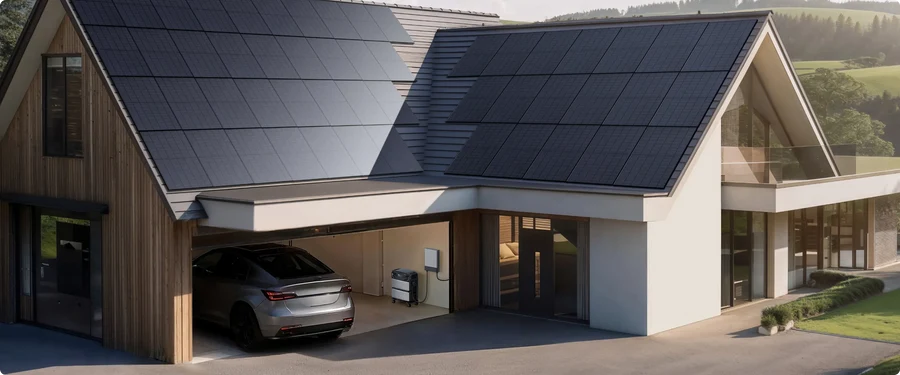
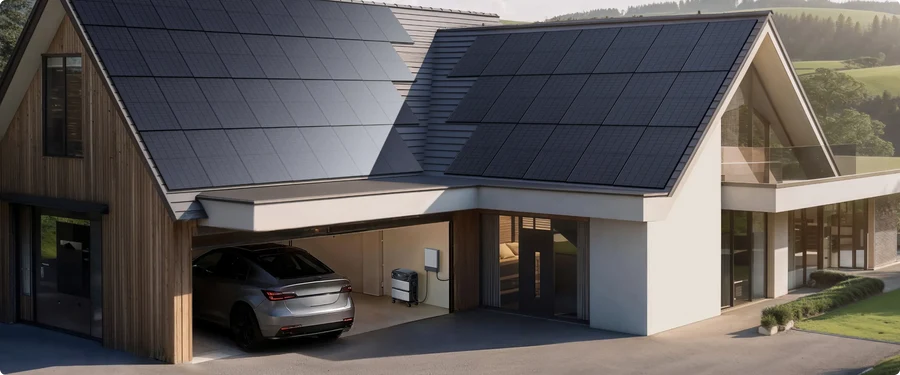
Every off-grid setup has four basic jobs: produce electricity, charge the batteries, store energy, and deliver usable power to the house. Controllers and protective equipment keep the system working as intended. A generator supplies backup during longer periods with too little sun.
Solar Panels and Charge Controllers
Solar panels are the main source of electricity in most off-grid home systems. Monocrystalline photovoltaic (PV) panels are widely used because they can produce more power within a limited roof or ground area. Still, the wattage printed on a panel tells only part of the story. Shade, high temperatures, and short winter days can all reduce production at your property.
Between the solar array and the battery bank, a charge controller manages the incoming electricity. A maximum power point tracking (MPPT) controller continually adjusts the panels’ operating point to draw the available power and deliver an appropriate charge to the batteries.
Match the controller to the solar array’s voltage and current as well as the battery bank. Correct settings matter because batteries require an appropriate charging profile. Connecting panels directly to batteries without suitable charging control can damage the batteries. Some systems include these controls, so check what is already built into the equipment. Understanding how to go off grid with solar power also involves matching the solar array and charge controller to the battery bank.
Backup Generators
Several cloudy days can leave even a carefully planned solar system short on energy. A backup generator gives you another source of electricity when the panels and batteries cannot cover essential loads.
Dual-fuel and tri-fuel models offer flexibility, depending on the fuels the particular generator supports. Common options include gasoline, propane, and natural gas. Propane stores well over long periods, while gasoline requires more attention during storage. Natural gas is an option only where a suitable supply is available.
Choose a generator around your priority loads and the fuel you can reliably keep available. Portable generators must operate outdoors, well away from doors, windows, and vents. Follow the manufacturer’s placement and operating instructions.
Inverters
Solar panels produce direct current (DC), and batteries store energy that is supplied as DC. Household appliances generally use alternating current (AC). An inverter converts the battery’s DC power into AC power the home can use.
Most U.S. homes use 120V circuits for everyday outlets and 240V circuits for certain larger appliances. Your inverter must support the voltage required by the equipment you plan to run. A 120V-only unit cannot directly supply a 240V appliance.
Pure sine wave inverters provide an AC waveform suitable for sensitive electronics and many household appliances. Check continuous output and startup capability as separate ratings. The inverter needs enough capacity for appliances operating together, including the brief demand from motors starting while other equipment is already running.
Battery Storage Systems
Battery storage carries an off-grid home through the hours when solar production is low or unavailable. Choose capacity around daily electricity use and the amount of time essential equipment must keep running without a recharge. Refrigeration, lighting, internet equipment, and work laptops are useful starting points for that calculation.
Keep stored energy and power output separate when comparing systems. Capacity determines how much energy is available; output determines which appliances can run together. Actual runtime depends on the load and the energy the system can deliver. For anyone researching how to go off grid with solar, battery capacity and power output are key factors when choosing a system for essential appliances.
The EcoFlow TITAN 5000 Classic suits households whose main needs are standard 120V appliances. It starts with 5kWh of storage and can expand to 30kWh with compatible expansion batteries as household needs grow. Paired with compatible solar panels, it can store daytime solar energy for evening use. How long that energy lasts depends on the appliances you run and their combined consumption.
How Do You Set Up an Off-Grid Power System?
With the load estimate finished, you can work out how much solar capacity, battery storage, and inverter output the house needs. Recheck the numbers for winter and for times when several appliances run together. Before installation, make sure every component works with the others and meets local electrical requirements.
Size Your Solar Array and Battery Storage
For an initial solar estimate, divide daily electricity use by the site’s peak sun hours during the season you are planning around. Peak sun hours express the day’s solar energy as equivalent hours of full-strength sunlight; they are not simply the hours between sunrise and sunset.
A home using 12kWh per day with 3.5 peak sun hours would need about 3.4kW of solar capacity before accounting for losses. If you assume an illustrative 20% total loss, divide by 0.8 as well. That brings the estimate to about 4.3kW. The actual allowance should reflect the equipment and conditions in the proposed system.
Battery sizing requires a separate calculation. At 12kWh of daily use, 24 to 48 hours without generation requires 12 to 24kWh delivered to household loads. The battery bank’s rated capacity must also account for conversion losses and the manufacturer’s usable discharge limits. When choosing a solar battery, account for usable capacity, conversion losses, and the time your home may need to run without solar generation.
These calculations establish a starting point. The final design must allow the array to meet household demand while replenishing storage after poor weather. Additional batteries also need sufficient charging energy.
A beginner’s guide to off-grid solar systems should account for seasonal production, system losses, and the energy needed to recharge batteries after cloudy weather.
Plan Essential Loads and Electrical Circuits
Begin with the circuits you cannot do without. For most homes, that means the refrigerator, well pump, basic lighting, and internet equipment. Put those loads ahead of equipment that can be switched off when the battery gets low.
For central air conditioning and other demanding 240V equipment, confirm operating voltage, running power, and startup demand. An appliance may fit within the system’s running limit while still exceeding its startup capability. Review the combination of loads on the system, including equipment that cycles automatically.
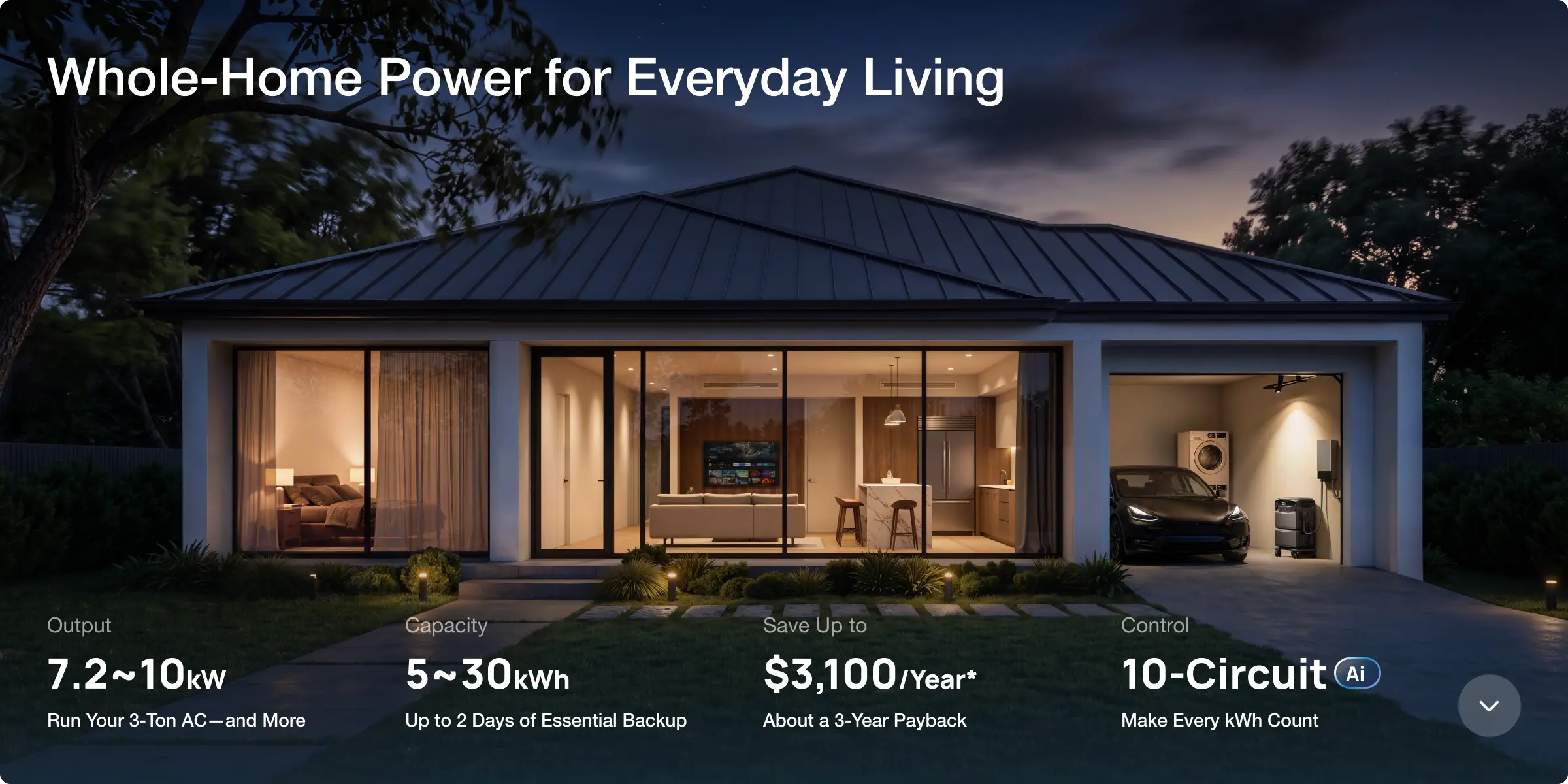
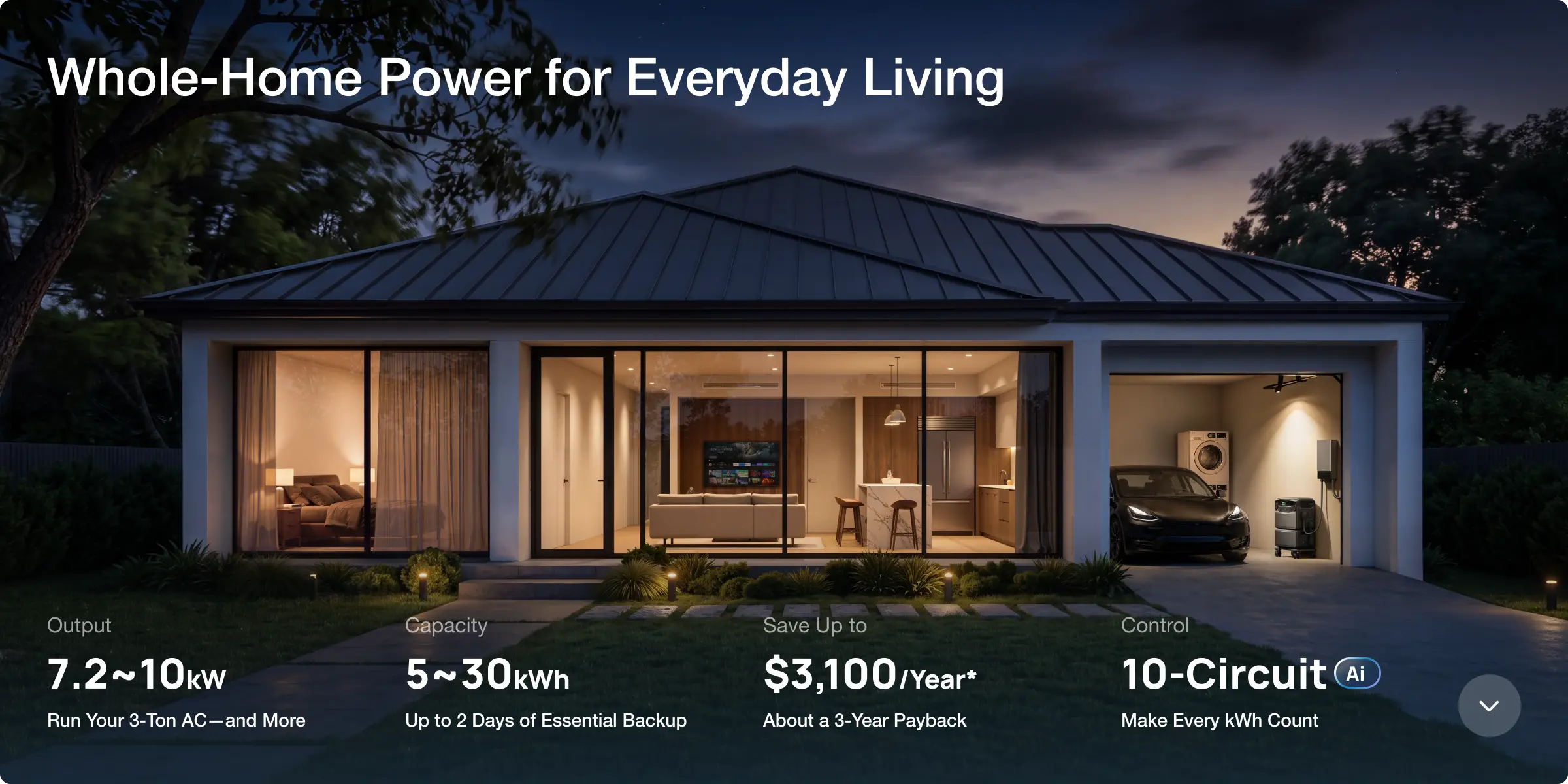
The EcoFlow TITAN 5000 Plus provides up to 7.2kW of battery output. Under compatible operating conditions with sufficient solar input, its X-Fusion 2.0 technology combines solar and battery power for total output of up to 10kW. With a compatible Smart Home Panel 10, the system can supply and manage as many as 10 selected circuits. Those circuits can be arranged so essential loads take priority. Any connection to a home’s permanent wiring should be completed by a qualified electrician in accordance with local code and the National Electrical Code (NEC).
Install and Test the System Safely
A safe installation involves more than connecting panels, batteries, and an inverter. It also requires the right protective devices and a careful startup check. A qualified installer should choose that equipment, make the connections, and test the finished system under the rules that apply locally.
Disconnects and Breakers: The design and applicable code determine where disconnects and overcurrent protection are required. DC equipment must be rated for the solar array or battery circuit it serves. These devices allow parts of the system to be isolated for service and help protect wiring from excessive current.
Proper Grounding: Grounding and bonding must be designed for the complete installation, including the inverter, panels, batteries, and distribution equipment. Correct bonding helps provide a path for fault current so protective devices can operate. A ground rod by itself does not eliminate shock hazards.
Commissioning: Before the system enters service, the installer should verify solar-string open-circuit voltage (Voc), DC polarity, protective devices, and the configured AC output. Testing should also confirm that intended household loads operate within the system’s limits. Checks at energized panels belong to a qualified professional.
How Do You Keep Your Off-Grid Power System Reliable?
Because there is no utility backup, minor problems deserve attention before they become outages. Check the batteries, watch the system’s normal output, and keep the generator ready. Use the maintenance intervals in each owner’s manual and adjust your routine as you learn how the system behaves in different seasons.
Maintain Battery Health
Lithium iron phosphate (LiFePO4) batteries can handle many charge and discharge cycles, but the way they are used still affects their lifespan. Temperature, charging settings, and depth of discharge all matter. A published cycle count applies to specific test conditions, so it should not be read as a promise that the battery will hold its original capacity for that many cycles.
Avoid Freezing Temperatures: Many LiFePO4 batteries cannot be charged safely below 32°F (0°C) unless an approved heating system brings the cells within their charging range. Follow the model’s temperature limits, which may be more restrictive. Keep the batteries in a space that stays within the manufacturer’s allowed temperature range.
Regular Full Charges for Cell Balancing: Charging needs are not identical across LiFePO4 systems. Some models call for occasional full charges so the battery management system can balance the cells or recalibrate its charge reading. Use the schedule in the owner’s manual, including its directions for long-term storage and hot-weather conditions.
Monitor System Performance and Fault Alerts
Check the app or display often enough to learn what a normal day looks like. Watch how much solar power comes in, how quickly the battery fills or drains, and how demand changes through the day. That baseline makes unusual behavior easier to spot. Compare output on days with similar weather and check the readings around the same time.
If solar output drops, first look at recent weather, new shade, dirt on the panels, and any alerts on the system. A single low reading does not prove that a component has failed. If the lower output continues, or the same warning keeps returning, arrange an inspection instead of repeatedly resetting a breaker or clearing the alert.
Prepare for Extended Periods of Low Solar Production
When several low-sun days are coming, start cutting back before the battery is nearly empty. Laundry, dishwashing, and power tools can usually wait. Reserve stored energy for refrigeration, water, communications, and any other load your household cannot go without.
If heating or air conditioning runs on electricity, a small thermostat change can save energy, provided the home remains at a safe temperature. If your home already has a properly installed wood-heating system, it may reduce reliance on electric heat. Portable LED lanterns can provide light without using the home’s main circuits.
Watch the battery level alongside the weather forecast. Those readings help you decide when to reduce nonessential use or turn to the backup generator, before stored energy becomes too low to support the loads you need.
Inspect and Maintain Backup Generators
Exercise the generator according to its owner’s manual, including the recommended interval, runtime, and load. There is no single schedule that suits every portable or standby model. Keep oil and filter service on the manufacturer’s schedule as well.
For gasoline-powered equipment, follow the generator and fuel-stabilizer instructions for storage and fuel replacement. Stabilizer does not make gasoline suitable for indefinite storage. For propane systems, check the tank gauge and have fuel lines and regulators inspected or serviced as directed. Complete these checks before winter or another season when poor solar production is likely, so the backup source is ready when needed.
Conclusion
Going off-grid takes a power system built around your home’s actual use and the conditions at your property. Begin with the amount of electricity the home uses each day and the highest load the system may have to carry at once. Size the panels and batteries for the least productive season, then put essential circuits first. Professional installation and a dependable backup source will help carry the home through long cloudy stretches. When the design fits the property and the equipment is maintained, off-grid power can support day-to-day life with fewer surprises.
FAQ
Is It Legal To Live Off-Grid In The United States?
Yes, living off-grid is generally legal across the United States, though local municipal building codes, zoning laws, and minimum sanitation requirements (such as approved septic and potable water access) vary significantly by county. Certain rural areas in states like Texas, Missouri, Arizona, and Alaska offer very permissive zoning, whereas denser suburban jurisdictions often require a permanent connection to municipal utilities for a certificate of occupancy.
How Much Does A 20kW Off-Grid Solar System Cost?
A complete 20kW off-grid solar installation typically costs between $35,000 and $65,000 before federal tax credits, depending heavily on the size and chemistry of the battery bank selected. While a 20kW grid-tied array needs no battery storage, an off-grid 20kW system requires significant lithium capacity and dual inverters to handle large 240V whole-home loads.
How Long Can Off-Grid Battery Storage Power a Home Without Sun?
Solar power lasts between one and four days without direct sun, depending entirely on the capacity of your connected battery bank and your daily conservation efforts. When cloud cover or rain strikes, panels still generate roughly 10% to 25% of their rated output from diffused light, which gently supplements battery reserves until the skies clear.
Can An Off-Grid Solar System Be Connected To The Grid?
Not for exporting power, but yes for backup charging. A true off-grid system cannot backfeed electricity into the grid like a grid-tied setup. However, modern off-grid inverters and all-in-one power stations feature dedicated AC inputs that let you pull power from the grid (or a generator) strictly one-way to charge the battery bank or bypass directly to household loads during emergencies, without violating anti-islanding or interconnection rules.
For press requests or interview opportunities, reach out to our media team
media.na@ecoflow.com