What Is a Grid-Tied Solar System? How It Works and Why It Matters for Your Home in 2026
- What Is a Grid-Tied Solar System, and How Does It Work?
- What Happens to Your Power During a Blackout?
- Grid-Tied vs. Off-Grid vs. Hybrid Solar Systems: What's the Difference?
- Benefits of a Grid-Tied Solar System
- Why Does Battery Backup Matter for Grid-Tied Homes in 2026?
- How Much Does a Grid-Tied Solar System Cost?
- Frequently Asked Questions
- Battery Backup Turns a Grid-Tied Solar System Into a Reliable Year-Round Power Source
A grid-tied solar system connects your rooftop panels to the utility grid, drawing power when your panels underproduce and sending surplus back when they overproduce. It's the most common residential solar setup in the US, thanks to net metering and comparatively low upfront costs.
Here's how it works, what it costs in 2026, and why pairing it with battery backup (or a simpler plug-and-play option) matters for your home's reliability.
What Is a Grid-Tied Solar System, and How Does It Work?
A grid-tied solar system pairs your rooftop panels with the existing utility infrastructure instead of operating independently of it. Rather than storing every kilowatt-hour you generate, the system uses the grid as a backstop — pulling power when your panels underproduce, pushing it out when they overproduce.
If you're comparing options, the EcoFlow home solar system can be configured as grid-tied, hybrid, or off-grid depending on how much independence from the utility you want.
Solar Panels and the Inverter
Your panels generate direct current (DC) electricity, but your home's outlets and appliances run on alternating current (AC). The inverter sits between the two, converting DC to AC in real time, so your panels' power is usable immediately. In a grid-tied system, the inverter also has to sync its output with the grid's voltage and frequency.
Net Metering and the Utility Meter
Net metering is the billing arrangement that can make grid-tied solar financially worthwhile. Your utility meter tracks what you pull from the grid and what you send back.
In many states, at the end of the billing cycle, you're only charged for the net difference, though the exact credit structure varies significantly depending on your state and utility.
What Happens to Your Power During a Blackout?
This is the part most homeowners get wrong. A standard grid-tied system shuts down automatically during a grid outage.
It's a safety requirement, not a malfunction: your inverter has to stop feeding electricity into lines utility crews might be working on. Without a battery, your panels simply go idle until the grid comes back, no matter how sunny it is outside.
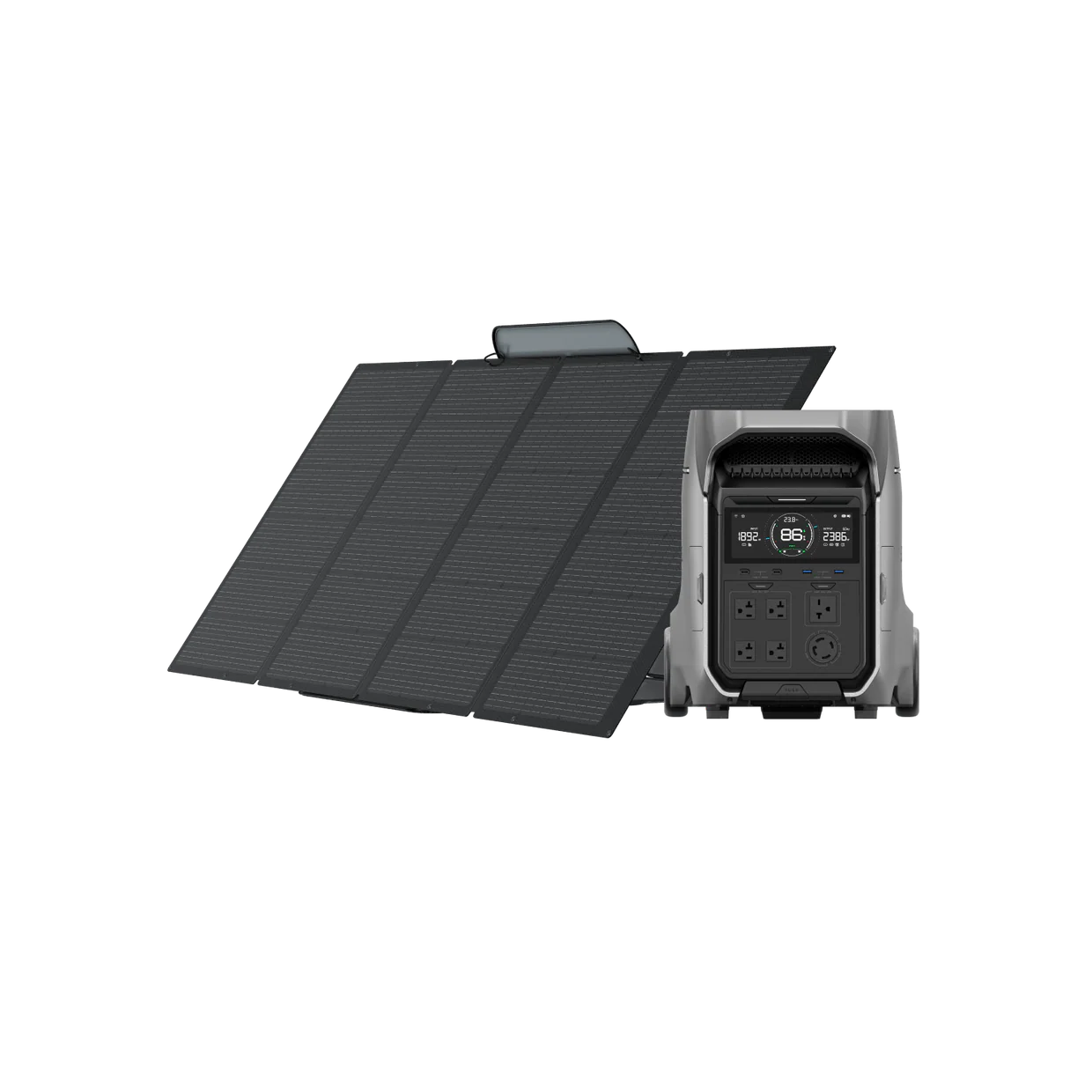
Whether a battery keeps your panels producing during an outage depends on your system's configuration, not just the battery itself. A hybrid setup built around something like the EcoFlow DELTA Pro 3 + 400W Solar Panel can be configured with backup functionality, using an inverter that isolates your home from the grid so your panels can keep charging the battery and powering essential circuits safely. That requires the right inverter and installation, not just adding storage to an existing grid-tied system.
Grid-Tied vs. Off-Grid vs. Hybrid Solar Systems: What's the Difference?
A grid-tied system has no battery and relies entirely on the utility as backup. An off-grid system disconnects from the utility completely and depends on battery storage and panel output alone.
A hybrid system takes the middle path: it stays connected to the grid for net metering credits but adds a battery, so you keep producing usable power even when the grid goes down. Sizing your grid-tied system correctly is what determines how much backup you actually get.
Benefits of a Grid-Tied Solar System
Grid-tied solar offers a few clear advantages. It's the least expensive way to go solar since you're not paying for battery capacity.
Net metering credits reduce your monthly bill, often substantially. And the system pays down over time: it keeps producing savings for years once it's installed and covers its upfront cost.
For homeowners who'd rather skip a full rooftop installation, the EcoFlow STREAM Ultra offers a simpler entry point: an all-in-one solar battery with a built-in grid-tied microinverter that connects to your home's existing wiring without a professional installer. It's not a substitute for a whole-home system — it's supplemental generation, not whole-home replacement — but it's a practical option for renters or homeowners easing into solar.
The EcoFlow STREAM Ultra is currently available only in Utah and Maryland at the time of writing, and plug-in solar regulations vary by state. Be sure to check the EcoFlow website as availability expands, and check your local rules before installing.
Why Does Battery Backup Matter for Grid-Tied Homes in 2026?
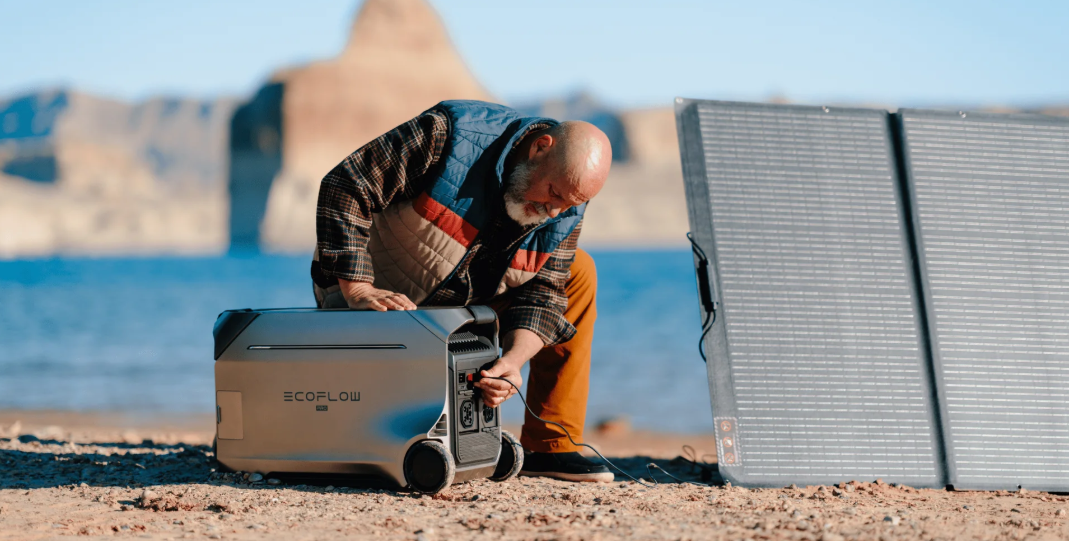
A growing number of homeowners are adding storage to keep essentials running when the power drops. Pairing your panels with a battery, like the EcoFlow DELTA Pro 3 + 400W Solar Panel, keeps essentials like your refrigerator or medical equipment running through an outage.
It also lets you store midday solar production for use in the evening, when your household is drawing the most power and the sun isn't cooperating.
If you're weighing whole-home coverage instead of a handful of circuits, a whole-home backup power solution is worth comparing.
How Much Does a Grid-Tied Solar System Cost?
Installed solar costs for a typical 8 kW residential system run $2.74 to $3.15 per watt, roughly $21,900 to $25,200 (based on the calculation 8 kW × $2.74–$3.15) before any state or utility incentives, according to the U.S. Department of Energy's most recent cost benchmark data.
Adding battery storage nearly doubles that per-watt cost, to $4.50–$5.19, but can shorten the payback time through outage-related savings
Frequently Asked Questions
Does a Grid-Tied Solar System Work During a Power Outage?
No, not without added battery storage. A standard grid-tied system automatically shuts off during an outage as a safety measure, since the inverter can't safely feed power into de-energized utility lines. Your panels stop producing usable electricity until the grid is restored, unless you've added a battery.
Is a Grid-Tied Solar System Worth It?
For most homeowners, yes. It's the lowest-cost way to go solar and qualifies for net metering, which can offset a large share of your electric bill. The tradeoff is no backup power during outages. It depends on your local rates, net metering policy, and how much outage protection matters to you.
What Is the Difference Between Grid-Tied and Off-Grid Solar?
A grid-tied system stays connected to the utility and uses it as backup, with no battery required. An off-grid system disconnects entirely and relies on battery storage and panel capacity alone to meet all of your household's power needs, which requires more careful sizing and a larger upfront investment.
Do You Need a Battery With a Grid-Tied Solar System?
Not to operate the system, but a battery is the only way to keep power flowing during a grid outage. Without one, your panels shut down along with the grid. Homeowners who want both net metering savings and outage protection typically add a battery, turning the setup into a hybrid system.
Battery Backup Turns a Grid-Tied Solar System Into a Reliable Year-Round Power Source
A grid-tied system lowers your bills through net metering, but it leaves you without power the moment the grid does.
Closing that gap comes down to storage: pairing your setup with a battery keeps your fridge running, your lights on, and your home office online through an outage, while the EcoFlow STREAM Ultra offers a simpler, no-installer option if you're in Utah or Maryland and want to ease into solar.
Whichever path fits your home, an EcoFlow home solar system sized around the circuits you can't afford to lose is what turns a grid-tied setup into a reliable, year-round source of power.
For press requests or interview opportunities, reach out to our media team
media.na@ecoflow.com