Glamping Off-Grid Power Guide: What You Actually Need to Run a Luxury Camp
Glamping combines the outdoor experience of camping with comforts you normally expect at home. That can mean a comfortable bed, climate control, a mini-fridge, Wi-Fi, lighting, and even an espresso machine. Once you take those comforts off-grid, however, electricity becomes a key part of the setup. This guide explains what uses the most power, how gas generators compare with battery power stations, and how to size a solar-powered system for your trip.
What Actually Draws Power at a Glamping Site
Powering an off-grid glamping site comes down to managing three load categories: high-draw climate control (AC, heaters), moderate kitchen gear (cooktops, mini-fridges), and low-draw essentials (Wi-Fi, lighting).
Heavy 120V AC appliances require continuous wattage with high startup surges, while 12V and USB devices barely affect your daily total. This balance determines your inverter size, battery capacity, and solar setup.
If you are setting up a backyard glamping spot or taking appliances off-grid, knowing your load profile is the first step toward picking the right power source—whether gas, battery, or campground hookups.
.JPEG)
.JPEG)
Gas Generators vs. Battery Power Stations vs. Grid Hookups
Three power sources cover most glamping setups. Here's how they stack up on noise, fumes, refueling, cost, and whether they'll survive a resort's quiet-hours policy.
Feature / Criteria | Gas Generators | Battery Power Stations | Grid Hookups (Pedestals) |
|---|---|---|---|
Noise Level | High (50–75+ dB) | Silent (0 dB) | Silent (0 dB) |
Fumes & Ventilation | High exhaust fumes; outdoor setup only | Zero emissions; safe indoors | None |
Refuel / Recharge | Gasoline/Propane refills | Solar panels, AC wall plug, 12V car outlet | Continuous grid supply |
Quiet-Hours Compliance | Frequently violates strict campground quiet hours | 100% compliant at all times | 100% compliant at all times |
Upfront Cost | Low to moderate initial cost | Moderate to high initial investment | Included in site booking fee |
Portability | Heavy; requires fuel storage containers | Modular to heavy; no extra fuel containers needed | Fixed location; zero portability |
Grid hookups make sense only at developed campgrounds that have power pedestals. You plug in, pay the site fee, and stop thinking about it. No battery management, no solar positioning, no noise restrictions. If the campground lists 30-amp or 50-amp service, this is the lowest-friction choice.
Gas generators work for true off-grid or dispersed sites when you need high continuous power and do not mind the noise and fuel logistics. They are useful for short stays where quiet-hours rules are loose or nonexistent. They become a liability at most glamping resorts and many private sites that enforce quiet hours after 8 or 10 p.m. Fumes and the need for ventilation also limit where you can place them relative to tents and sleeping areas.
Battery power stations (especially with solar) fit the middle ground that covers most modern glamping: multi-day dispersed stays, yurt/dome/safari-tent sites without hookups, and any location with quiet-hours policies. They run silently, produce no fumes, and recharge from panels during the day. For a weekend with moderate loads, they can operate on a single charge. For longer stays, the solar input becomes the difference between rationing power and running the setup normally.
When deciding between fuel and solar, choosing the right generator size depends on your runtime needs and power draw. Once you determine your load, you can properly size a battery or solar setup for your trip.
Sizing Your Battery + Solar Setup by Trip Type
The right setup depends less on the word "glamping" and more on how many appliances you plan to use and for how long.
Weekend/short tent stay: A lighter appliance load, such as phones, lights, laptops, and a small fridge, can work well with a smaller-capacity power station. Solar panels can provide additional charging during the day.
Multi-day yurt, dome, or safari tent stay: Longer stays with climate control, refrigeration, cooking appliances, and entertainment require more battery capacity. Pairing a larger power station with solar panels helps replenish energy throughout the trip.
RV/camper van glamping: These setups often combine portable power with the vehicle's existing electrical system. A higher-output power station can better handle appliances with larger continuous loads.
For a dome, yurt, or safari tent with several higher-draw appliances, a larger power station such as the EcoFlow DELTA 3 Ultra Plus + 220W Solar Panel Bundle can provide more output and battery capacity. The right size still depends on the appliances you plan to run and how long you use them.
How Much Power Does Your Setup Actually Need? (Wattage Breakdown)
To size a system accurately, calculate both running watts and startup (surge) watts for every item in your setup
Appliance | Running Watts | Surge (Startup) Watts | Typical Daily Usage |
|---|---|---|---|
Espresso Machine | 1,200W–1,500W | 1,500W–1,800W | 15 mins (0.3 kWh) |
Induction Cooktop (Single Burner) | 1,200W–1,800W | 1,800W | 1 hour (1.5 kWh) |
Portable Air Conditioner | 900W–1,400W | 2,000W–2,500W | 6 hours (7.2 kWh) |
Electric Space Heater | 750W–1,500W | 1,500W | 5 hours (5.0 kWh) |
Mini-Fridge (Compressor) | 50W–100W | 400W–600W | 24 hours continuous (~1.2 kWh) |
LED String Lights / Lanterns | 15W–30W | 30W | 6 hours (0.15 kWh) |
Wi-Fi Router & Starlink | 40W–75W | 100W | 12 hours (0.6 kWh) |
Estimating daily energy consumption
Calculate total energy consumption in kilowatt-hours (kWh) using the formula:
$$\text{Daily kWh} = \frac{\text{Running Watts} \times \text{Hours of Daily Use}}{1,000}$$
For a weekend with light use, daily demand often lands between 1–2 kWh. A 3–7 day stay with climate control and kitchen gear can push 3–6 kWh or more per day before solar input.
When sizing your power station, account for surge wattage—appliances like mini-fridges or coffee makers briefly spike well above their running watts on startup. Matching your station's surge rating to these initial jolts prevents system trips during multi-day stays.
Sample Setup: A 4-Day Glamping Weekend Power Budget
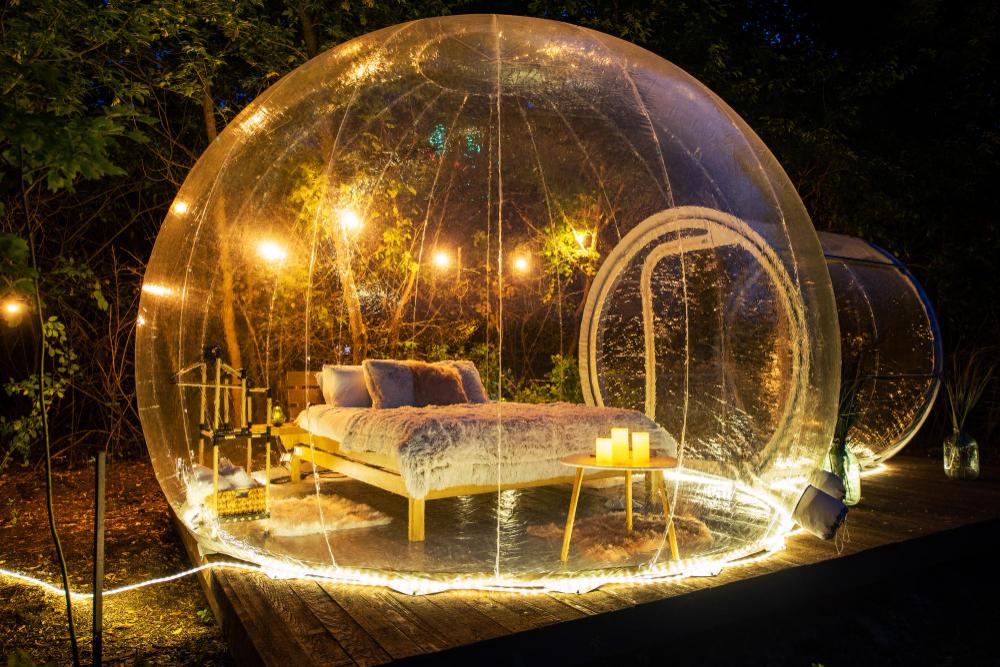
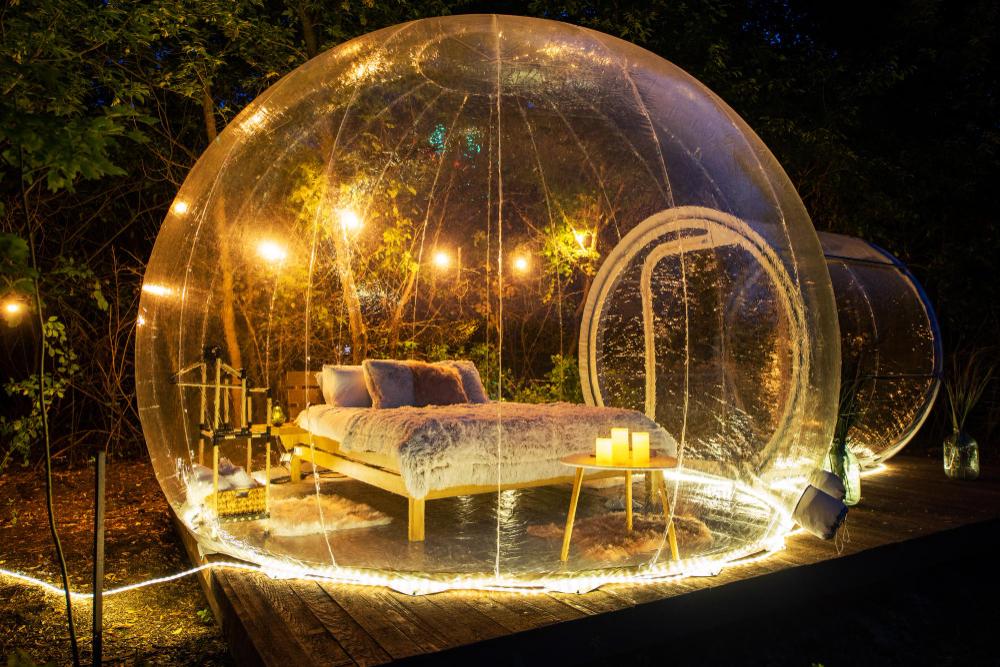
Consider a four-day dome stay for two people. The goal is to keep the experience comfortable without running every appliance continuously.
Daily consumption breakdown
Mini-fridge: 60W continuous × 24 hrs = 1,440 Wh
Espresso machine: 1,300W × 0.25 hrs (15 mins) = 325 Wh
Induction cooking: 1,400W × 0.75 hrs (45 mins) = 1,050 Wh
Lighting & devices: 50W combined × 6 hrs = 300 Wh
Starlink / Router: 50W × 8 hrs = 400 Wh
Total Daily Energy Need: ~3,515 Wh (3.51 kWh / day)
This example illustrates an important point: climate control can dominate your energy budget.
Meeting a 3.5kWh daily consumption budget requires active energy management, as a standalone 3,072Wh battery like the EcoFlow DELTA 3 Ultra Plus needs supplementary power. Utilizing solar input during daylight helps replenish depleted capacity, while learning essential habits from an off-grid camping and boondocking guide ensures high-draw appliances and AC usage stay well within your target threshold.
For example, if you reduce AC use, avoid running the induction cooktop and espresso machine at the same time, and use solar charging during the day, the battery can cover more of the essential load.
Actual solar production depends on sunlight, panel orientation, weather, shading, temperature, and charging losses. Treat solar estimates as planning figures rather than guaranteed energy production.
The practical approach is to identify must-have loads and nice-to-have loads. Keep refrigeration, connectivity, lighting, and essential climate control at the top of the list. Schedule high-draw cooking appliances around your available battery and solar capacity.
Conclusion
Powering a glamping setup off-grid comes down to matching your appliance load to battery capacity, then pairing that with solar if you're staying longer than a weekend. Skip the guesswork. Tally your appliance wattage first, running and surge, before picking a tier. A setup sized for lights and a mini-fridge won't cover AC and an espresso machine, and finding that out on day two of a dome stay isn't a fun surprise.
Compare tiers against your own trip on the EcoFlow DELTA 3 Ultra Plus for multi-day, high-draw stays, the DELTA 3 Max for shorter or lighter setups, and the DELTA Pro for RV and camper van glamping.
FAQs
How many watts do I need to run a portable AC while glamping?
Most portable AC units draw 500-1,200W running, with surge spikes up to 2,500W on startup. Check your unit's nameplate rating and size your power station's surge output around that spike, not just the running watts, before you buy.
Can a battery power station run an espresso machine or induction cooktop off-grid?
Yes, provided the power station's continuous and surge output ratings exceed the appliance requirements. Since espresso machines and induction cooktops can draw 1,000W or more, check their specifications before connecting them.
How long does a glamping power station last on a single charge?
It depends entirely on what's running. A 3,072Wh battery powering just a mini-fridge and lights can last several days. Running AC or a cooktop for hours at a time can drain that same battery in under a day, so plan around your heaviest draw.
Do solar panels actually recharge a power station fast enough during a multi-day stay?
A single 220W panel adds roughly 1,000-1,300Wh per sunny day. That extends runway on light-to-moderate draw, but won't fully offset heavy AC or cooktop use on its own. Multiple panels or a lower daily draw close the gap.
Are gas generators allowed at most glamping sites?
Rules vary by property. Some campgrounds and glamping resorts restrict generator use because of noise, fumes, or quiet hours. Always check the site's rules before bringing a gas generator. A battery power station avoids those engine-related restrictions.
For press requests or interview opportunities, reach out to our media team
media.na@ecoflow.com