Generator for Apartment: Backup Power Options for Apartment Living
Search for a generator for an apartment, and most of the advice quickly wanders into backyard territory. That advice stops being useful pretty quickly in a fifth-floor apartment. The refrigerator is beginning to warm up, but your only outdoor space may be a balcony barely wide enough for two chairs. Nowhere sensible to put a running engine.
A fuel generator works best when there is a yard and plenty of distance from the house. Most apartments offer neither, and the lease may also prohibit storing gasoline or propane. A portable power station is easier to live with. It will not power every outlet in the apartment, but it can keep food cold, the Wi-Fi connected, a few lights on, and necessary medical equipment running.
Can You Use a Generator in an Apartment?
Having room for a generator is not the same as having a safe place to run one. A small model might fit on the patio, yet still sit directly below a bedroom window or beside a neighbor’s door. That lack of separation rules out fuel generators for most apartment residents.
A backup generator for an apartment must be evaluated by safe operating space, not only by whether it fits.
Check Your Apartment's Generator Rules
Before you start shopping, open the lease and search for words such as “fuel,” “gasoline,” “propane,” and “balcony.” Generator restrictions are sometimes buried in a fire-safety addendum rather than listed in the main rental agreement. Many buildings ban fuel storage inside apartments, garages, storage rooms, and common areas. Others prohibit engines on patios or enforce noise rules that make generator use difficult even during an outage.
If the lease does not give a clear answer, email the property manager. A written reply is useful because a small lawn or patio outside your door may feel like your own space, but the building still controls what can be stored or operated there. Local fire rules and the generator manufacturer’s instructions apply as well.
Consider Ventilation and Carbon Monoxide Risks
Carbon monoxide is the biggest concern. Any engine burning gasoline or propane produces it, and the fumes may drift inside through an open window, bathroom vent, or building air intake. Because the gas has no smell, people may not realize it is collecting indoors.
The CPSC advises placing a portable generator outside, at least 20 feet from doors, windows, and vents, with its exhaust facing away from the building. Finding that much clear space around an apartment is nearly impossible. On many balconies, several windows are within 20 feet, and some of them belong to other residents. An open window or a household fan will not fix the problem. Never run a fuel generator on a balcony or inside an apartment, garage, basement, or hallway.
A solar generator avoids combustion exhaust, but panel placement and charging still have to follow building rules.
Account for Noise and Limited Outdoor Space
Then there is the sound. A fuel generator that may seem manageable in a large yard can become intrusive when neighbors are only a wall or window away. During a nighttime outage, even a quieter model is likely to be heard throughout the building.
Safe placement introduces more complications. The generator must stay dry without being boxed into an enclosure, and its cord cannot create a tripping hazard across a shared walkway. Add fuel storage and building quiet hours, and the list of workable apartment locations becomes very short.
Avoid Connecting a Portable Generator to Wall Outlets
One warning deserves blunt language: never plug a generator into an apartment wall outlet. Doing so is called backfeeding. It can send power through the building’s wiring in an unsafe direction, exposing residents and utility workers to fire or electrocution.
Plug the appliances you need directly into the backup source instead. The same rule applies to a battery power station. Anything designed to energize circuits through the electrical panel requires approved transfer equipment, professional installation, and the property owner’s permission.
What Backup Power Options Work for an Apartment?
In an apartment, backup power usually means choosing between an engine that needs outdoor space and a battery that does not. For most renters, that makes the decision fairly straightforward.
A solar generator for an apartment can also be charged from a wall outlet when balcony sunlight is limited.
| Backup Power Type | Indoor Safe? | Typical Fuel / Source | Best Use Case | Apartment Viability |
|---|---|---|---|---|
| Traditional Gas/Dual-Fuel | No | Gasoline or Propane | Detached homes with suitable outdoor space | Usually prohibited or impractical |
| Compact Power Stations (1–2 kWh) | Yes, when used properly | LFP Battery charged by AC, car, or solar | Phones, laptops, Wi-Fi, lamps, and refrigerators | Well suited to shorter apartment outages |
| High-Capacity Home Batteries (3+ kWh) | Yes, when used properly | Expandable LFP Battery | Refrigerators, medical equipment, heavier loads | Useful when longer runtime is the priority |
Fuel Generators for Outdoor Backup
A private patch of grass outside a ground-floor unit may look promising until you measure it. To use a fuel generator there, you would still need a location at least 20 feet from the building, with the exhaust directed away from doors, windows, vents, and neighboring buildings.
There may be an apartment property somewhere that meets all those conditions, but it is the exception. A courtyard surrounded by windows does not qualify simply because it is outdoors.
Portable Power Stations for Apartment Use
Portable power stations avoid many of those complications. They store electricity in a battery and supply it through regular AC and USB outlets. Despite the common “solar generator” label, a solar panel is optional; the battery can also be charged from a wall outlet or other compatible source.
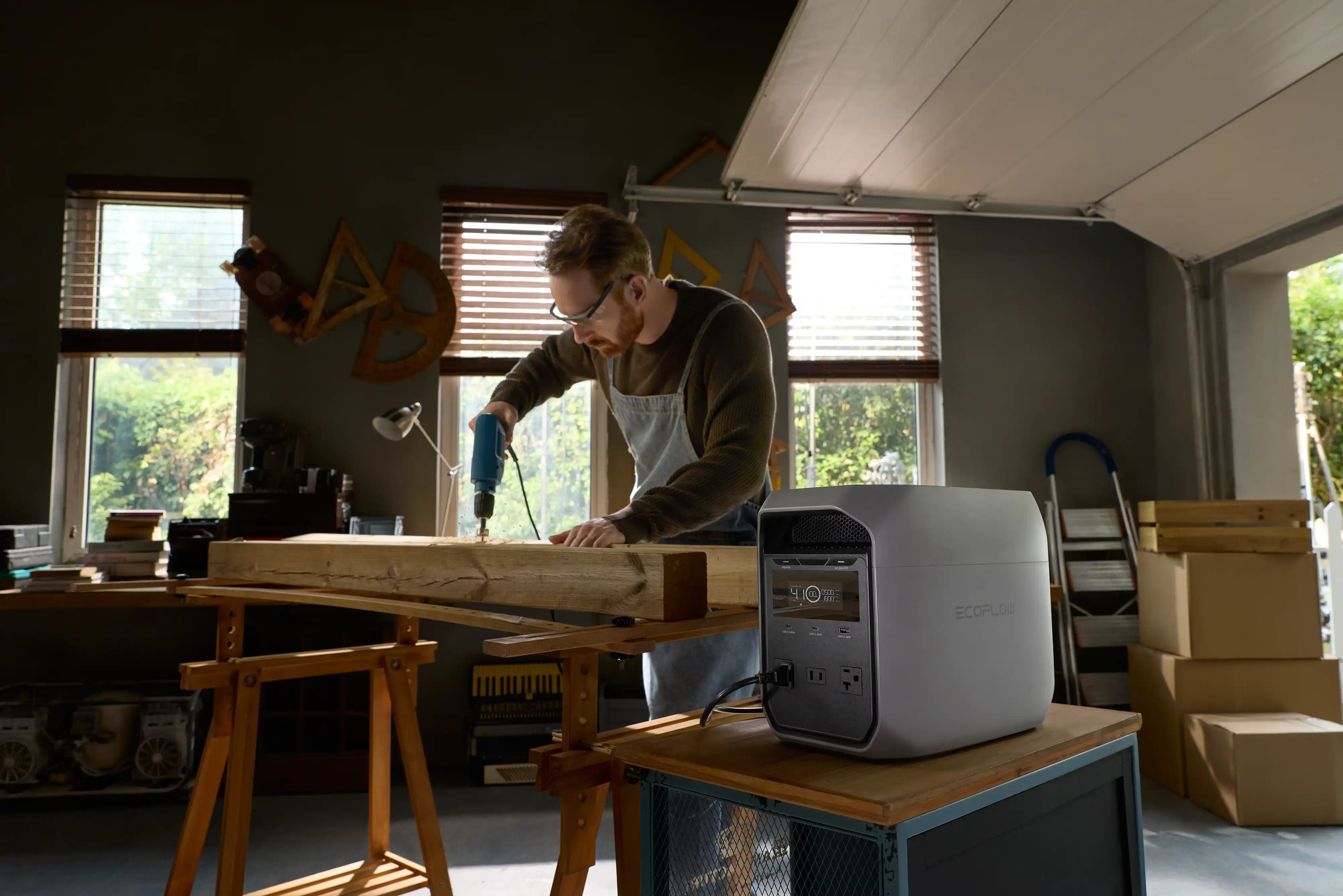
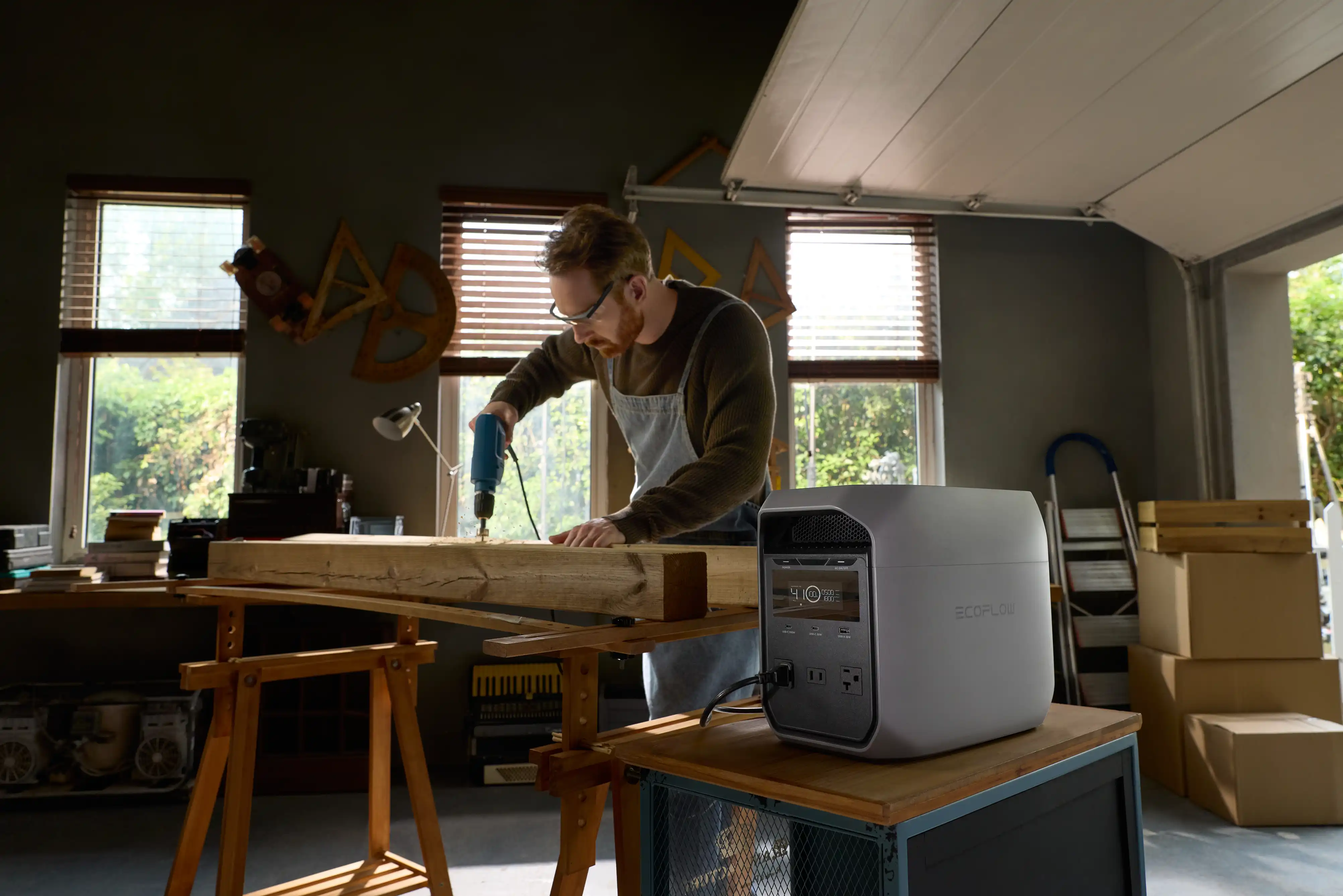
If your outage list consists mainly of a router, laptop, phones, and a lamp, there is little reason to begin with the largest battery available. The EcoFlow DELTA 3 Classic Portable Power Station (1024Wh) is one option for that kind of everyday load. Charge it from a standard 120V outlet before severe weather arrives. When the power fails, treat the available energy as a limited budget: connect what you need, then unplug devices after they finish charging.
Higher-Capacity Battery Backup Options
The difference between a small and large battery becomes clearer during an overnight outage. A phone may need one short charge, while a refrigerator and CPAP machine need power repeatedly. Add the router and a lamp, and a compact station may lose its remaining charge sooner than expected.
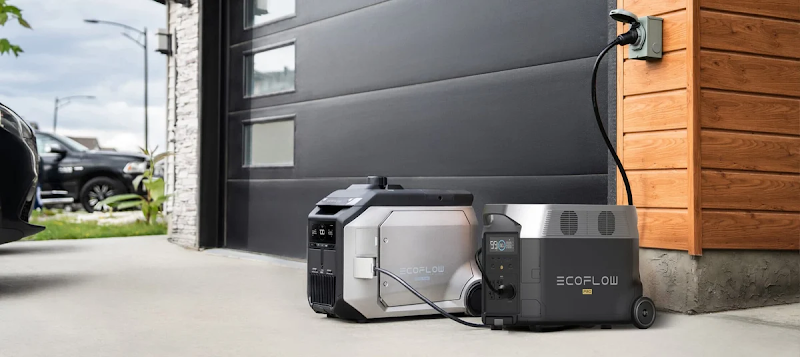
The EcoFlow DELTA Pro Portable Power Station starts with 3.6 kWh of capacity and can be expanded, making it more useful when refrigeration or medical equipment must run for longer. Check the storage area before ordering, not after the box arrives. A larger station also needs a clear path to the kitchen or bedroom; extra capacity is less helpful when the unit is wedged behind furniture or too heavy to move easily.
How Do You Choose Backup Power for an Apartment?
Do not begin with the largest battery in the catalog. Begin with an outlet-by-outlet walk-through of your apartment. Decide what must work, what would be nice to have, and what can stay off until utility power returns.
Identify the Appliances You Need to Run
Most apartment backup lists are shorter than people expect. A reasonable first draft might include the following illustrative power ranges:
Connectivity & Comms: Wi-Fi router (10–20W), smartphone chargers (15–30W), and laptop (60–100W)
Food Preservation: Full-size refrigerator (100–200W while running, with an 800–1,200W startup surge)
Comfort & Health: Box fan (45W), CPAP machine (30–60W), and LED floor lamp (10W)
Use the wattages in the appliance list as a first estimate, not a final answer. The label on the refrigerator, air conditioner, or power adapter will give you a better number for the equipment you own. With a CPAP machine, remember to include any humidifier or heated tubing, since those accessories also draw power.
Estimate Your Power and Runtime Needs
Two numbers matter here. Continuous wattage shows how much power an appliance needs while it is operating. Total energy capacity (watt-hours) shows how much energy the battery has available to keep supplying that power.
Suppose your router, laptop, and lamp use 100 watts together. Ten hours of operation works out to about 1,000Wh. Plan for some additional capacity because conversion losses and the power station’s own electronics also consume energy. A power station runtime test with your actual devices provides a more reliable estimate than wattage alone.
A refrigerator refuses to fit quite so neatly into the calculation. Its compressor switches on, runs for a while, and shuts off again, so the wattage changes throughout the day. Rather than trying to guess the cycling pattern, connect the refrigerator to a plug-in energy meter for 24 hours. That reading will give you a much better basis for estimating battery life.
Consider Storage and Portability
“Portable” is a product category, not a promise that you will enjoy carrying the unit up three flights of stairs. Smaller stations can usually live beneath a desk or on a sturdy utility shelf. An 80-pound model needs a clear patch of floor and, preferably, wheels.
Measure more than the storage spot. Check the path between that spot and the refrigerator, including narrow doorways, rugs, and tight corners. Keep the battery away from water and direct heat, and do not pack clothes or boxes around its cooling vents.
Choose a Practical Device Connection Method
For a simple renter-friendly setup that does not modify apartment wiring, appliances can be connected directly to the power station. Before an outage, place the unit where you expect to use it and make sure the refrigerator cord or extension cord actually reaches.
Keep suitable UL-listed 14-gauge or 12-gauge extension cords with the battery, choosing the gauge and length for the appliance involved. Do not hide cords under rugs or pinch them beneath doors. It also helps to label them. When the apartment is dark, finding the cord marked “fridge” is easier than sorting through three identical bundles.
How Can You Prepare an Apartment for a Power Outage?
A little rehearsal goes a long way. Charge the station, connect your priority appliances once, and watch what happens to the battery level. That simple test will tell you more about your likely runtime than a collection of optimistic estimates.
Prioritize Refrigerators, Lights, and Communications
When the lights first go out, resist the urge to keep checking the refrigerator. If the door remains closed, food will generally stay cold for about four hours. If restoration looks likely within that window, you may not need to power it immediately.
Before relying on backup power, confirm that a portable power station can run your refrigerator and handle its startup surge.
For a longer outage, connect the refrigerator and use the remaining outlets selectively. A router and modem usually draw little power, although your internet provider’s neighborhood equipment may eventually shut down too. LED lamps and battery lanterns are better choices than lighting every room. Many households find it easier to use one central room until power returns.
Keep Backup Batteries and Cables Ready
Charging cables have a habit of disappearing into drawers. Store the power station’s AC cable, USB-C cords, adapters, and extension cords together, preferably in a small bag or container beside the unit. When severe weather is expected, top up the battery rather than assuming it is still full from the last charge.
Run a short test every few months. Use the battery to power the refrigerator, router, or medical equipment you expect to rely on. You will confirm that the connections work and learn how quickly your actual household load consumes the charge.
Prepare for Extended Outages
Balcony solar can help, but expectations should remain modest. A 100W to 400W portable panel may replace some power when it receives direct sun, provided the lease allows it and the panel is secured against wind. Shade from the building above, cloudy weather, window glass, and poor sun angles may cut its output substantially.
A solar power generator for an apartment still depends on direct sunlight and secure, lease-compliant panel placement.
Keep a conventional emergency kit as well. Water, non-perishable food, medication, a manual can opener, first-aid supplies, and a battery-powered NOAA weather radio do not depend on the power station. Plan for at least one gallon of water per person per day for at least three days.

Conclusion
An apartment backup plan does not need to recreate a normal day with every appliance running. It needs to protect the few things that become a problem when they lose power, usually the refrigerator, phones, internet equipment, lights, and any essential medical device.
A fuel generator asks for outdoor space and clearance that most apartment buildings cannot provide. A portable power station is much easier to use within those limits. The best choice is not automatically the largest model. It is the one that covers your actual needs, fits where you live, and is already charged when the building goes dark.
FAQ
How Long Will a 2000 Watt Solar Generator Run a Refrigerator?
The phrase “2,000 watt solar generator” does not give enough information by itself. A 2,000W rating usually describes the inverter’s output, whereas runtime comes from the battery capacity measured in watt-hours.
With 2,000 watt-hours (Wh) of battery capacity, a modern refrigerator may run for roughly 14 to 28 hours. That is a broad estimate because room temperature, refrigerator age, compressor cycling, inverter losses, and door openings all matter. The inverter must also be capable of handling the compressor’s startup surge.
What Is a Good Portable Indoor Power Generator for an Apartment?
For most apartments, a LiFePO4 portable power station is easier to use than a fuel generator. It can operate indoors without producing carbon monoxide or exhaust, and it will not create the same noise problem for nearby residents.
Capacity in the 1,000-to-3,600Wh range covers many common setups involving phones, laptops, Wi-Fi equipment, lights, and refrigeration. Before choosing, compare the battery capacity with your expected runtime and make sure the inverter can start the largest appliance on your list.
Can I Put a Generator on My Balcony?
No. A balcony places a fuel generator too close to doors, windows, vents, and neighboring apartments. Exhaust can travel into another unit even when your own windows are closed.
Most balconies cannot provide the recommended separation from the building, and building or fire rules may separately prohibit generator use and fuel storage there.
Can You Run a Portable AC on a Portable Power Station?
You can, as long as the power station supports the air conditioner’s running wattage and startup demand. An 8,000-to-12,000 BTU portable AC may use around 900 to 1,400W while running, with startup demand reaching 2,000W or more.
For several hours of cooling, a unit with roughly 2,000 to 3,600Wh of battery capacity may be necessary. Even then, air conditioning is a heavy load. Closing blinds, cooling one room, and running the AC intermittently will make the available battery last longer.
For press requests or interview opportunities, reach out to our media team
media.na@ecoflow.com