Water Heater Not Working? Troubleshooting Guide & Backup Power Solutions
A cold shower is usually how a water heater gets your attention. Sometimes the hot water fades over several days. Other times, it disappears between one shower and the next.
Before pricing a replacement, check the basics. A breaker may have tripped, someone may have changed the operating mode, or the household may simply have used more hot water than usual. Leaking tanks, damaged wiring, and gas problems are another matter and should not be treated as weekend repair projects.
This guide covers the checks you can reasonably do at home, the signs that point to professional service, and what backup power can realistically do during an outage.
How Do You Troubleshoot a Water Heater That Is Not Working?
First, identify what kind of heater you own. Electric tanks, gas tanks, tankless units, and heat pump models have different controls and power requirements.
The model and serial number are normally printed on a label attached to the unit. Take a picture while you are there. You will need that information if you look up an error code, order a part, or call for service.
Verify the Power and Fuel Supply
For an electric or heat pump water heater, begin at the breaker panel. The water heater normally has its own breaker, and a tripped handle may be sitting between ON and OFF rather than clearly in either position.
A gas label does not necessarily mean the heater works without electricity. Models with electronic ignition, power vents, displays, and control boards still need power. Check the nearby service switch and outlet if the unit has one.
Also look at the gas control without changing its position. If the gas has been shut off and you do not know why, leave it alone until the cause is clear.
Any smell resembling rotten eggs changes the situation. Leave the building without operating lights, phones, appliances, or valves. Once you are outside and well away from the home, call the gas utility or 911.
A backup source does not fix a heater fault, but during a utility outage, a solar generator may support compatible plug-connected controls or lower-power equipment when its voltage and output match the load.
Read Error Codes and Warning Signs
Modern heaters often tell you where to start. A display may show a number or letter code, while a gas valve may use a repeating flash pattern.
Take a picture before resetting anything. The code may disappear when power is interrupted, and “it flashed a few times” will not give a technician much to work with.
Use the manual for the exact model. Manufacturers do not assign the same meaning to every code. Some faults are meant for homeowners to clear, while others point to ignition, venting, or sensor work that belongs to a technician.
Evaluate Water Temperature and Flow
Try the hot water at two or three fixtures. A single cold shower may have a failed mixing valve even when the water heater is working normally. If the water heater stopped heating throughout the house, notice whether the water is completely cold or merely not as hot as before. An electric tank that produces a small amount of hot water may have one working element and one failed element. Water that starts hot but runs out sooner than usual may also reflect heavy demand, sediment, or an internal dip-tube problem.
Low pressure only on the hot side is another clue. A partly closed valve, mineral deposits, or a restriction in the hot-water piping may be responsible.
During an outage, a water security plan should also account for stored drinking water, well-pump limitations, and safe sanitation if the home’s water supply depends on electricity.
Look for Leaks or Unusual Noises
Water near the heater does not always come from the tank. Dry the floor, then check the pipe joints, drain valve, and relief-valve discharge pipe. A dry paper towel held around a fitting can make a slow drip easier to spot.
Moisture from the top may be repairable. Water coming through the outer jacket or repeatedly appearing beneath the bottom seam usually points to a leaking internal tank.
Do not plug a dripping temperature-and-pressure relief valve. A plumber needs to determine whether the valve has failed or is responding to excessive pressure or temperature.
Rumbling and popping commonly develop when sediment collects at the bottom of a tank. A new boiling sound, sharp hiss, or heavy banging deserves quicker attention, especially if it appears with leaking water.
What Water Heater Problems Can You Fix Yourself?
Basic checks and routine maintenance are within reach for many homeowners. Internal electrical repairs and gas work are not.
Keep the manual nearby. Water heaters that look almost identical from the outside may have different shutdown and restart procedures.
Reset a Tripped Circuit Breaker
Move the water heater breaker all the way to OFF, then switch it back to ON. Do this once. For a water heater not working after power outage conditions, check the display for a fault code or restart delay before assuming the heater itself has failed.
Give a storage tank time to heat. Depending on the model and the amount of cold water in the tank, hot water will not return immediately.
If the breaker opens again, leave it off. Resetting it repeatedly only sends power back into whatever caused it to trip.
Many standard electric tanks have a red high-limit reset behind the upper access panel. Before opening that panel, shut off the breaker. Follow the instructions for your model, press the reset only once, and put the insulation and cover back in place before restoring power.
A high-limit control that trips again is not fixed. The heater may have a thermostat, element, or wiring problem that needs professional testing.
Adjust an Incorrect Thermostat Setting
For many households, 120°F is a common starting point for balancing hot-water needs, energy use, and scald risk. Follow the manufacturer’s instructions and consider household-specific needs before changing the setting.
Check the heater’s mode as well as its temperature. A heat pump model may have been left in Vacation mode, or a schedule in the app may be lowering the temperature during the hours when the household needs hot water.
Do not raise the thermostat sharply to make up for a shortage. A small tank, unusually high demand, or a failed component will not be repaired by hotter water.
Some electric tanks have two thermostats behind metal covers. Turn off the breaker before accessing either one. If you are not comfortable confirming that the unit is de-energized, leave the adjustment to a technician.
Relight a Gas Water Heater Pilot Light
Not every gas heater has a pilot that can be relit by the homeowner. Check the lighting label on the unit before proceeding.
If the instructions allow manual relighting:
Read the entire label first. Stop if there is any gas odor.
Move the control to OFF and wait for the time specified on the heater’s lighting instructions.
Follow the printed directions for selecting PILOT, holding the control, and operating the built-in igniter. Use the viewing window to confirm the flame.
If the pilot does not light or will not remain lit, stop trying and call for service.
Do not take apart the burner area or improvise with a match unless the manufacturer’s instructions specifically call for that method. A pilot that goes out repeatedly may indicate a bad component, poor airflow, or a venting problem.
Address Minor Sediment Buildup
Flushing may help a tank that has begun rumbling or losing efficiency. It is not always a good first DIY job on an older heater. A drain valve that has not moved in years may leak after it is opened.
If the manual permits homeowner flushing, the general process is:
Shut off electricity to an electric heater or place the gas control in the position specified by the manufacturer. Let the water cool when required.
Close the cold-water inlet. Attach a suitable hose to the drain valve and route it where hot water cannot injure anyone or damage the property.
Follow the manual’s instructions for admitting air and draining or flushing the tank. Do not force a stuck or corroded valve.
Close the drain, refill the tank, and run a hot faucet until water flows without air. Do not restore electricity until the tank is completely full.
Turning on an empty electric water heater can ruin its elements. If the tank will not drain, the valve starts leaking, or there is no safe place for the water to go, bring in a plumber.
Persistent water heater issues involving leaks, gas odors, damaged wiring, or repeated shutdowns require professional diagnosis.
When Should You Call a Professional or Replace Your Water Heater?
A repair call is warranted when the same fault returns, the tank itself leaks, or the problem involves gas, venting, or internal wiring.
Replacement depends on more than age. The location and cost of the failure matter just as much.
Persistent Heating Problems
A tank may need an hour or more to recover after a breaker reset. If it remains cold after a reasonable wait, something inside the heater may have failed.
Common possibilities include heating elements, thermostats, ignition parts, sensors, and control boards. A technician can test those parts without exposing the homeowner to a live 240V circuit or gas burner.
Leave the unit off if a breaker keeps tripping, wiring smells hot, or the heater buzzes more loudly than usual.
Leaking Tank or Major Water Damage
A dripping pipe connection and a leaking storage tank are not the same repair. Fittings, valves, and short sections of pipe may be replaceable. A tank that has rusted through is not.
Water seeping through the outer jacket or bottom seam usually means replacement. Shut off the heater’s energy source and close its cold-water inlet if both controls are dry and safe to reach.
Do not wait for a small puddle to become a flooded room. An attic or finished-basement installation makes a slow leak especially urgent.
Gas or Venting Safety Issues
Leave the home if you smell gas. Do not flip a switch, use a phone indoors, light a flame, or search for the leak. Call the utility or 911 from outside.
Soot near the burner, scorching around the vent, a damaged flue connection, or a pilot that repeatedly fails also calls for professional inspection. Poor combustion and blocked venting may allow carbon monoxide to enter the house.
Because carbon monoxide has no smell or color, every home with fuel-burning equipment should have working CO alarms.
Age and Repair Cost Concerns
Traditional storage water heaters often remain in service for roughly a decade or longer, while tankless models can have a longer service life. Actual lifespan varies with water quality, installation, maintenance, and operating conditions.
Age is a guideline, not an expiration date. A quiet 13-year-old tank with no corrosion does not need to be discarded solely because of its age. A 10-year-old tank leaking through the bottom is a different story.
When the installation date is unknown, the serial number may help identify it. Compare the repair estimate with the price of replacement, the heater’s condition, and whether it has needed other work recently.


How Can You Keep a Water Heater Running During a Power Outage?
A tank full of hot water will stay warm for a while after the electricity goes out. Whether the heater can produce more hot water depends on its fuel, voltage, and controls. A portable power station may support some plug-connected controls or lower-power equipment, but compatibility depends on the heater’s voltage, power demand, and connection method.
Check the rating label rather than relying only on the words “gas,” “electric,” or “hybrid.”
Determine Whether Your Heater Needs Electricity
An older gas tank with a standing pilot may keep operating without grid power. Power-vent gas tanks and most gas tankless heaters need electricity for ignition, controls, and exhaust fans.
A conventional electric storage heater is usually a much larger load. Many run on 240V and use heating elements rated between 4,000 and 5,500W.
Heat pump water heaters generally draw less while running in heat-pump-only mode. The same unit may also contain electric resistance elements that use considerably more power. Those elements can switch on automatically in certain modes.
Before choosing backup power, identify the heater’s voltage, connection type, and operating mode.
A tankless heater battery power guide can help confirm whether ignition, controls, pumps, and vent fans fit within a backup system’s voltage and output limits.
Estimate the Required Backup Power
Look for volts, amps, and watts on the heater’s label. If only volts and amps are shown, the manual or an electrician can help determine the expected load.
Allow room for startup demand. Gas tankless and power-vent units may draw modest power once running, but their fans, pumps, controls, or freeze-protection systems can change the total.
Runtime matters too. A power source may be strong enough to start the heater yet have too little stored energy to operate it for the length of the outage.
Include every device that will share the backup source. A refrigerator cycling on at the same time can push the combined load higher than expected.
Choose the Right Backup Power Source
Fuel generators work well for high loads and long outages when fuel is available. They also produce carbon monoxide and must remain outdoors, well away from windows, doors, vents, and attached garages.
Battery power stations do not produce combustion exhaust and may be used indoors when permitted by the manufacturer’s instructions. Keep the unit dry and follow its specified operating and temperature requirements.
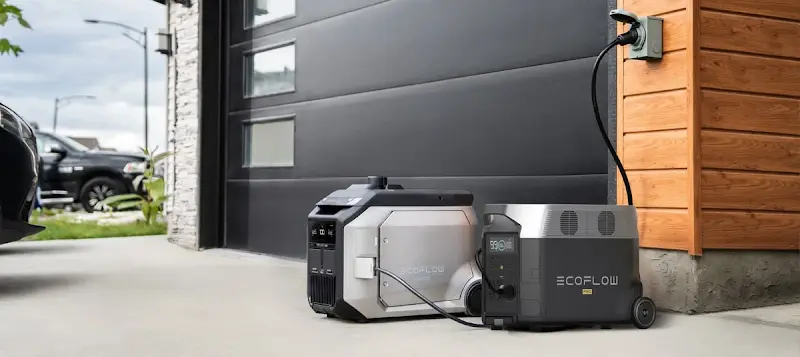
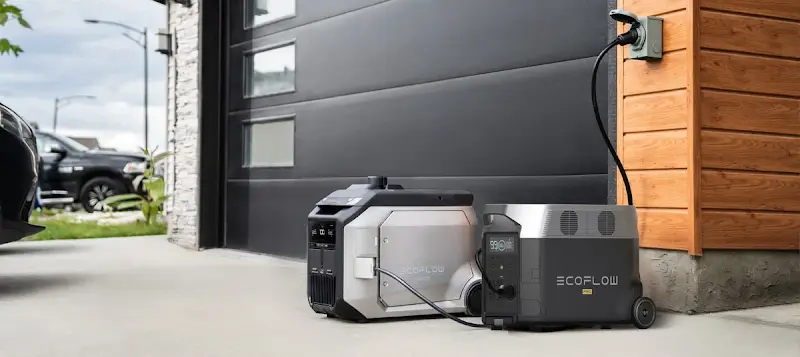
For a compatible power-vent gas heater or gas tankless unit whose voltage and power requirements fall within its specifications, the EcoFlow DELTA 3 Max Portable Power Station provides 2,400W AC output. It may also support a refrigerator, router, or lights if their combined demand stays within the unit’s limit. A typical 240V electric tank should not be assumed to be compatible.
For broader home backup needs, the EcoFlow DELTA Pro Portable Power Station offers 3,600W AC output and expandable capacity of up to 25kWh with the required configuration. That additional capacity can extend runtime, but it does not change the water heater’s voltage requirements. A hardwired 240V unit may need a compatible multi-unit arrangement and approved transfer equipment.
Follow the Manufacturer's Connection Requirements
Never power household wiring through an ordinary wall outlet. This unsafe shortcut, known as backfeeding, may energize utility lines and create a serious fire or electrocution hazard.
A water heater with a factory-installed plug should be connected only to a properly grounded source that matches its electrical requirements. Use an extension cord only when both manufacturers allow it, and the cord is rated for the full load.
Hardwired heaters need an approved transfer switch, interlock, or other code-compliant connection. That work belongs to a licensed electrician. Do not convert a hardwired heater to a temporary plug simply to get through an outage.
Conclusion
When the hot water disappears, check the breaker, operating mode, temperature setting, error display, and fuel supply. Look around the tank for water, but avoid opening gas components or testing live electrical parts.
One breaker reset may solve a simple interruption. A second trip is a warning. The same goes for a pilot that will not stay lit, a tank that leaks through its jacket, or soot near the vent.
Backup power works best with gas heaters that need limited electricity for controls and ventilation. Standard electric tanks are harder to support because many require 240V and several thousand watts. Read the heater’s rating label before choosing any backup system.
FAQ
Where Is the Reset Button on a Water Heater?
On many electric storage tanks, it is a red button behind the upper access panel near the thermostat. Some newer models use different controls, so check the manual before removing anything.
Switch off the breaker first. If the button trips again after one reset, the heater needs service.
Why Is My Water Heater Not Coming on After a Power Outage?
The dedicated breaker may have tripped when power returned. A heater with electronic controls might also be waiting through a restart delay or showing a fault code.
Check the breaker and display, then follow the restart directions in the manual. Repeated tripping is not a normal post-outage problem.
Can You Still Use Water if Your Water Heater Is Broken?
In most cases, cold water remains available. The exception is a leaking tank or another problem that requires the heater’s water supply to be shut off.
A local boil-water notice is separate from a heater failure. Follow that notice for both hot and cold water.
How Do I Test if My Hot Water Heater Is Bad?
See whether the heater has power or fuel, check the settings and error codes, and test more than one faucet. Leaking from the tank body is strong evidence that replacement is needed.
Element, thermostat, and voltage testing require access to electrical components. Unless you have the training and proper equipment, leave those tests to a technician.
What Happens Before a Hot Water Heater Goes Out?
There may be no warning. When signs do appear, they often include less available hot water, uneven temperatures, new rumbling noises, rust-colored water, or moisture around the tank.
One symptom may have a repairable cause. Several appearing on an older heater are a good reason to schedule an inspection.
For press requests or interview opportunities, reach out to our media team
media.na@ecoflow.com