Does Renters Insurance Cover Power Surge Damage?
Most people assume renters insurance covers power surge damage right away. It usually does not work that way at all. Coverage almost always depends on what caused the surge itself. A lightning triggered surge is typically covered up to policy limits. A surge from the utility company or faulty wiring usually is not. This article covers when coverage applies and when it does not. We will look at payout limits for your expensive electronics. We will also cover food spoilage during a bad blackout. Finally, you will learn smart ways to protect your gear.
The Short Answer: It Depends on What Caused the Surge
Renters insurance does not automatically cover power surges as a blanket rule. The true cause of the electrical surge is what matters most. Your claim must tie directly back to an approved covered event. Lightning is a standard covered peril on almost every basic policy. Spikes from the local utility grid are usually excluded from plans.
Your specific policy type makes a very big difference here too. A named-perils policy only covers hazards that appear on its list. An all-perils policy covers everything unless the fine print excludes it. Reading your policy terms helps you spot these important details early.
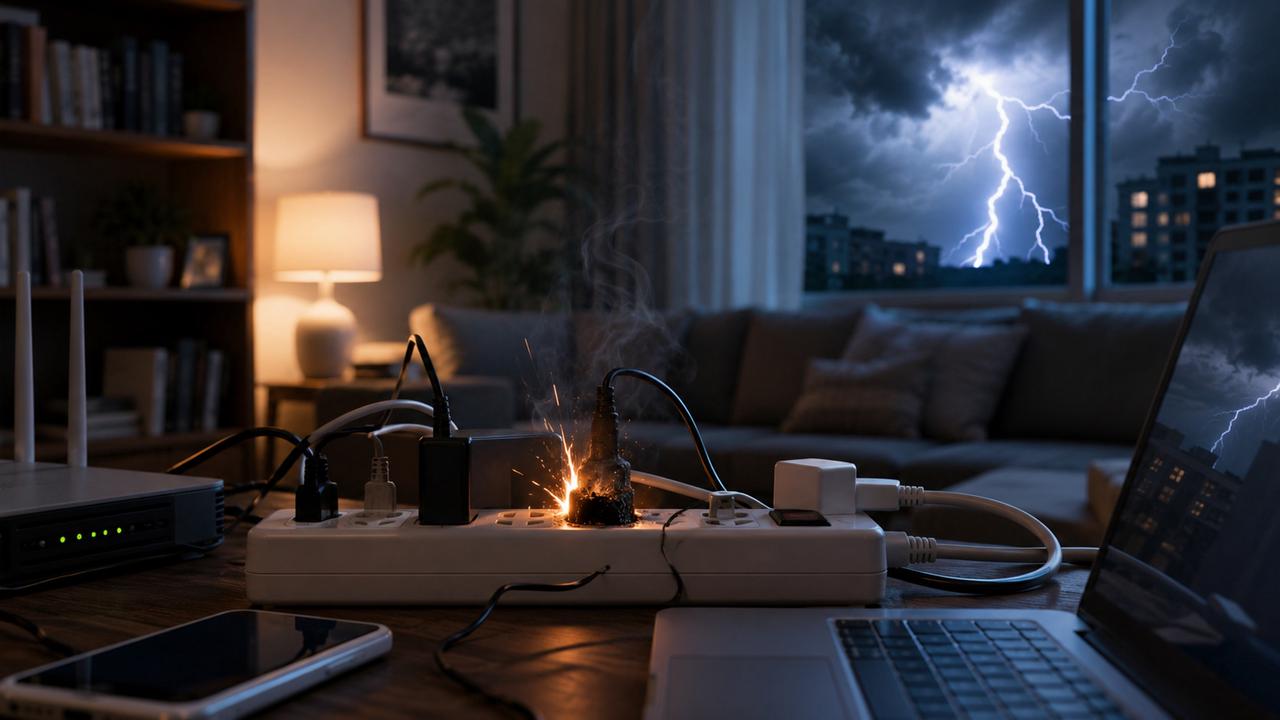
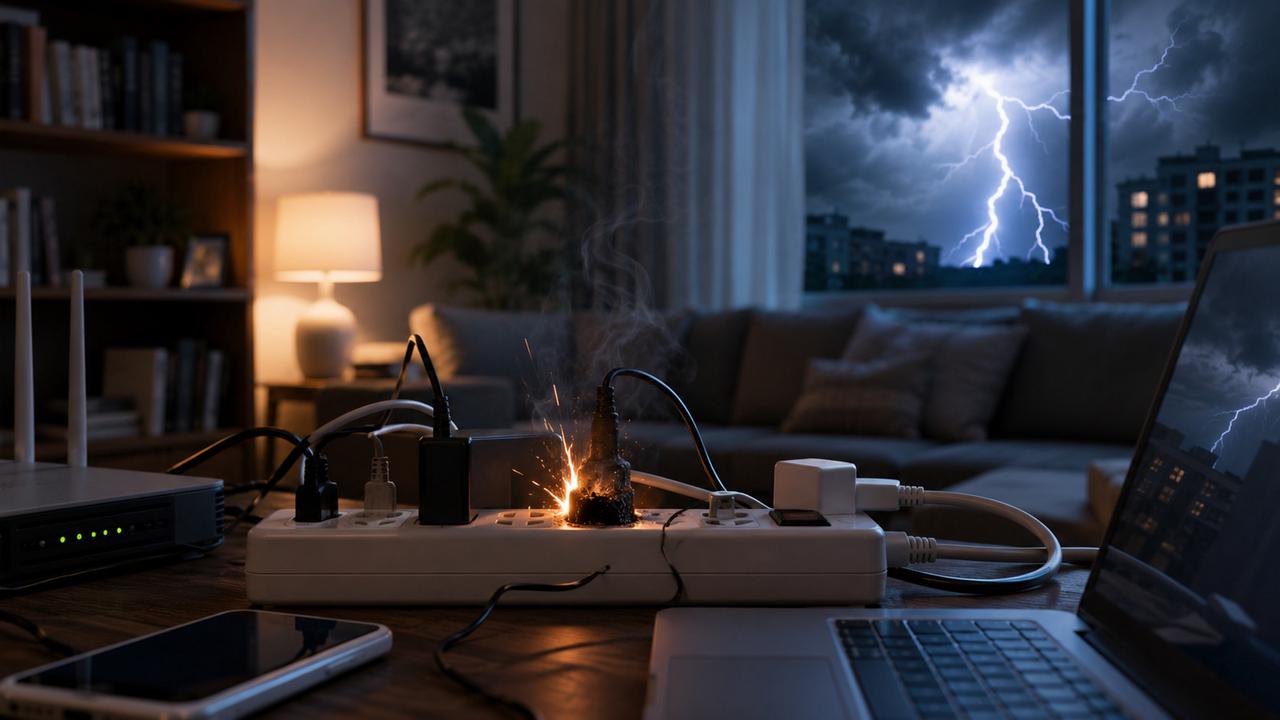
Lightning remains one of the most common covered surge triggers. Severe summer thunderstorms regularly send massive voltage spikes straight into homes. Taking time to prepare your home for electrical storms helps protect gear.
The origin of the spike decides if an adjuster approves claims. If the power company causes the spike, you pay out of pocket. If lightning strikes a nearby transformer, you get paid up to limits.
With that general rule in mind, here is when claims get covered.
When Renters Insurance Does Cover Surge Damage
Coverage kicks in only when a listed peril sets off the surge. Lightning ranks as the clearest example in most policies. Other sudden events can also qualify under the right conditions. Here is how the main scenarios usually play out for renters.
Lightning strikes
Lightning is commonly listed as a covered peril under renters insurance. A resulting surge that fries TVs, computers, or other gear is typically covered up to your personal property limits. You still pay the deductible and must show the lightning connection with weather reports or utility notes. Most claims of this type move forward once the cause is clear.
Short-circuit damage
Short circuit damage coverage hinges on exactly what got hurt in the incident. Standard policies leave out wear and tear mechanical breakdown and the failing appliance itself. They do cover secondary losses such as fire or surge damage to other belongings from a sudden accidental electrical current. Document the sequence carefully so the adjuster can see the secondary harm.
A resulting fire
It changes the picture even if the original surge falls outside coverage. When excess voltage overloads wiring and starts a blaze, the fire damage itself is usually paid under the policy. Personal property and additional living expenses can apply once the fire is confirmed. Keep photos and a detailed list of what burned.
A short circuit and a covered surge can look similar initially. Understanding short-circuit dangers can help you recognize the difference. It can also help you spot electrical warning signs before they become bigger problems.
The exclusions are just as important to know before you assume a claim will be paid.
When It Doesn't
Some surge-related losses fall outside renters insurance coverage. The cause matters, especially when utility problems or faulty equipment create damage.
Utility-caused surges: Voltage spikes generated by your electric company fall outside standard policies. You must file a claim directly with the utility provider instead.
Faulty wiring or appliances: Damage from worn wires or old appliances inside your apartment is excluded. Insurers consider bad in-unit wiring a regular maintenance problem for landlords.
General grid failures: Outages tied to routine utility work or heat wave strain get denied. Equipment failures on the local electrical grid are not covered perils.
Standard policies leave a real gap for common electrical spikes. Pairing a quality surge protector with a safe battery backup setup protects your expensive gear. The right option depends on your home's electrical setup and backup needs.
A surge protector guards against spikes; a battery backup addresses the outage that often comes with them. The EcoFlow TITAN Plus delivers 7.2kW and, through Smart Home Panel 10, backs up to 10 selected circuits. It is an installed system that needs a qualified electrician, so renters need written landlord approval first, and it suits a rented house better than an apartment.
The standard EcoFlow TITAN has the same 7.2kW of 120V/240V output and the same installation requirements. It differs on solar, with one 4kW input where the EcoFlow TITAN Plus has two, which suits a home with little or no solar planned.
For a renter mainly concerned with everyday essentials, the EcoFlow TITAN Classic may be enough. It supplies 4kW of 120V power for essentials such as a refrigerator, lights, and a Wi-Fi router, and it is not designed for 240V appliances.
Even on claims that are covered, it's worth knowing how much a policy actually pays out for electronics.
Coverage Limits for Electronics, and How to Increase Them
Standard renters insurance caps payouts on personal electronics very low. Most basic policies only pay up to around $2,500 total. That amount barely covers a high-end laptop and a television.
Your payout type also changes the actual cash you receive. Replacement cost coverage pays the full price of a new item. Actual cash value subtracts depreciation and pays a smaller check.
You can add an insurance rider to raise those limits. A specific endorsement will cover expensive computers, cameras, and TVs. Upgrading to an all-perils policy gives you much better protection.
Surge damage is only one issue during a major storm.
What About Power Outages and Food Spoilage?


Is the outage itself covered?
Standard renters insurance does not directly cover a basic power outage — the outage itself is never considered an insured event. Your policy only covers damage that comes from a covered peril. If an approved disaster causes the blackout, the resulting losses qualify.
Which events trigger coverage?
Specific storm events can trigger this protection: lightning strikes, severe windstorms that tear down power lines, fires, falling trees, and heavy winter ice storms all count. It's the direct physical damage from these hazards that activates your coverage — not the outage itself.
How much does food spoilage pay?
Food spoilage inside your refrigerator has its own strict limit: most standard policies pay between $250 and $500 per claim, enough to help replace spoiled meat, dairy, and frozen groceries. Some insurers require you to add a separate endorsement first, so always check your policy paperwork for your exact rules.
How do you document a spoilage claim?
Keep receipts and photos when documenting spoiled food. Also record when the outage started and ended. Knowing how long refrigerated and frozen food stays safe can help you document losses and decide what food should be discarded.
How to Actually Protect Your Electronics
Quality surge protectors are a practical defense for your expensive gear. Good hardware helps suppress sudden voltage spikes before they reach electronics. Avoid plugging valuable computers directly into a bare wall outlet. Take clear, time-stamped photos of all your electronics today. Save model numbers, serial numbers, and receipts in the cloud. Good records make filing an insurance claim much smoother later. Following a reliable blackout safety plan keeps your home ready for severe weather.
Conclusion
Renters insurance may cover power surge damage when a covered peril, such as lightning, causes it. Utility-related surges and faulty in-unit wiring generally aren't covered. Electronics may also have separate limits, sometimes around $2,500. Check whether your policy uses named perils or broader open-perils coverage. Review your electronics limits, deductible, and exclusions before filing a claim. A quality surge protector can also help reduce damage risks. For outages, the EcoFlow TITAN and EcoFlow TITAN Plus back up to 10 selected circuits through Smart Home Panel 10, installed by a qualified electrician, and the EcoFlow TITAN Classic covers essential 120V loads. As a renter, get your landlord's written approval before any installation.
FAQs
Does renters insurance cover power surge damage?
Only when a covered peril like lightning actually caused the surge. Utility-caused surges and damage from faulty in-unit wiring usually aren't covered. Check whether your policy is really named-perils or all-perils to know for sure.
Does renters insurance cover power outages?
Not directly, in most cases. Standard renters insurance policies only cover damage caused by a covered peril, like lightning or wind, that leads to the outage. The blackout itself still typically isn't a covered event.
Does homeowners insurance cover power surge damage differently than renters insurance?
Not really. Both types of policies follow the exact same basic rule, since what matters is the cause of the surge, not the surge itself. Lightning is typically covered, and grid-related surges still usually aren't.
How much does renters insurance typically cover for damaged electronics?
Most standard policies cap electronics coverage around $2,500. That can go fast if you own a decent TV, laptop, or gaming setup. Adding a rider or upgrading to an all-perils policy raises that coverage limit.
Does renters insurance cover food that spoiled during a power outage?
Yes, when a covered peril causes the outage and your policy includes the food limit. Typical payouts run $250 to $500. Some insurers require an extra endorsement before they pay the claim.
For press requests or interview opportunities, reach out to our media team
media.na@ecoflow.com