How to Charge an E-Bike While Camping or Off-Grid
- Why Is Charging an E-Bike Off-Grid a Challenge?
- How Much Power Does an E-Bike Battery Need to Recharge?
- What Are Your Options for Charging an E-Bike While Off-Grid?
- Why Are Portable Power Stations the Simplest Way to Charge an E-Bike Off-Grid?
- How Can Solar Panels Keep Your E-Bike Charged on Multi-Day Trips?
- How Can You Plan Ahead for a Multi-Day E-Bike Camping Trip?
- Frequently Asked Questions
- Portable Power Stations Keep Your E-Bike Charged and Ready for Every Off-Grid Adventure
E-bike trips off the beaten path solve one problem and create another: how do you recharge a drained battery miles from an outlet?
Camping and off-grid adventures demand a charging plan that doesn't rely on a wall socket. Understanding your bike's power needs and matching them to the right off-grid method keeps your ride from turning into a long walk back to camp.
Why Is Charging an E-Bike Off-Grid a Challenge?
Away from campgrounds with electrical hookups, your e-bike battery is on its own once it runs low. Most chargers can’t handle fast top-ups, and a fully drained pack can take hours to recover even under ideal conditions. Add cold nights, cloudy skies, or a multi-day itinerary, and you’re left with less charging time and less power to work with.
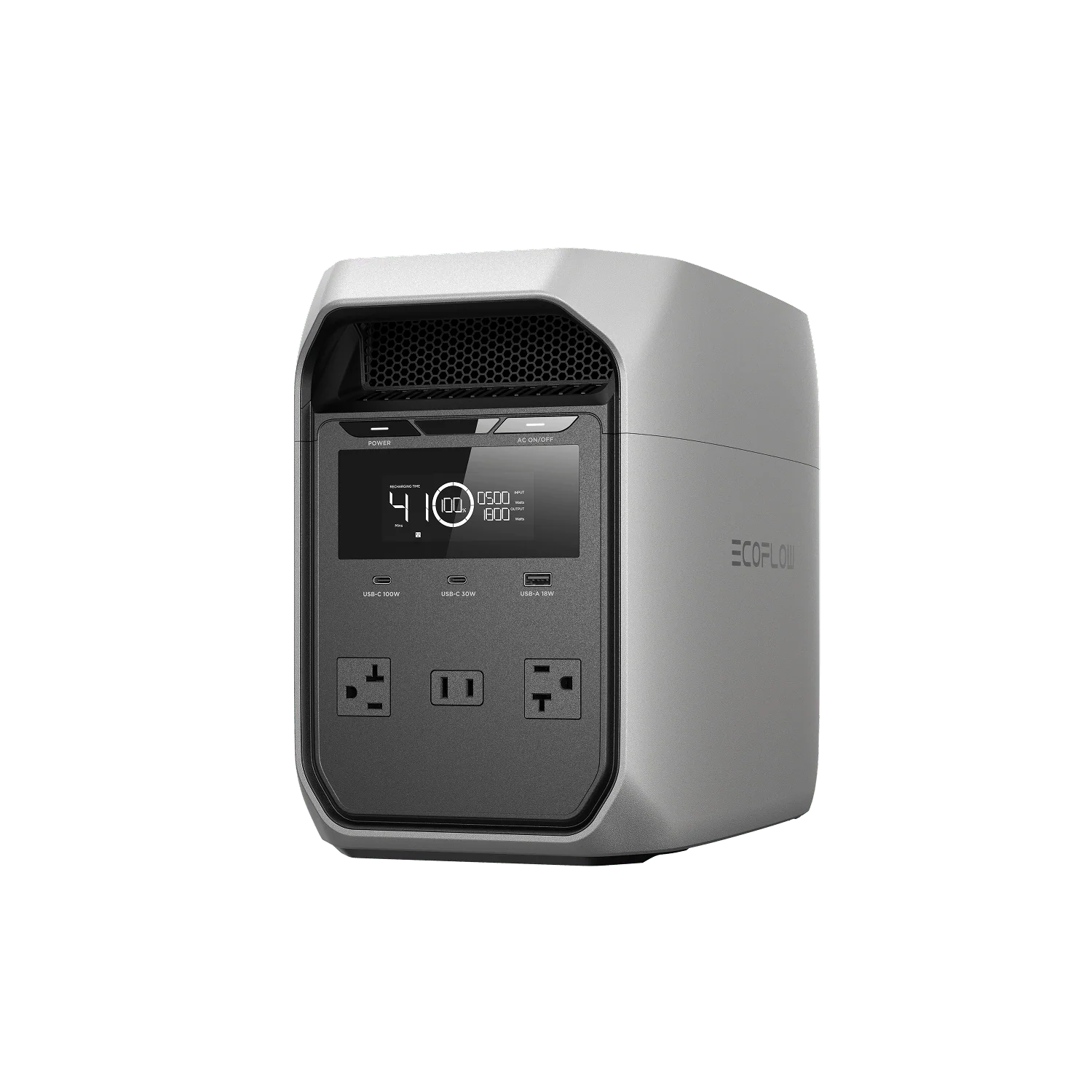
A dependable power source at camp changes that equation. Something like the EcoFlow DELTA 3 Classic (1024Wh) stores enough capacity to top off a bike battery overnight, run camp gear during the day, and still have power left over, without needing an outlet or a route planned around civilization.
How Much Power Does an E-Bike Battery Need to Recharge?
Common e-bike battery sizes run from 250Wh on lightweight models up to 800Wh on higher-capacity setups, with 400 to 625Wh covering most commuter and trail bikes.
A mid-range 500Wh battery that's fully drained needs roughly that much energy back, plus some loss from charging inefficiency, so plan for closer to 550 to 600Wh of output from your power source.
Charging speed also depends on your charger's amperage: a standard charger often takes four to six hours, while a higher-output charger cuts that time noticeably.
What Are Your Options for Charging an E-Bike While Off-Grid?
Several methods can get a drained e-bike battery back to full without a home outlet. Each comes with tradeoffs in weight, cost, and reliability.
Portable Power Stations
A portable power station stores energy ahead of your trip and delivers it through standard outlets or USB ports, so you can plug in your e-bike charger exactly as you would at home. Unlike a gas generator, it runs silently and produces no exhaust or fumes. The EcoFlow DELTA 3 Classic (1024Wh), for example, can recharge an e-bike battery as reliably as a wall outlet.
Solar Panels
Solar panels convert sunlight into usable power throughout the day, either directly into a battery or paired with a power station for storage. Monocrystalline panels, the most common option for portable setups, typically run around 20% efficiency.
Generators
Gas generators produce reliable power regardless of weather, but they're heavy, loud, and require fuel you have to carry and store. Many campgrounds and backcountry sites also restrict or ban their use.
Vehicle Batteries and Inverters
If you're car camping, a 12V inverter can draw power from your vehicle's battery to run a charger. It works in the short-term, but running the engine to avoid draining your car battery isn't practical for a multi-day stay.
Spare Batteries
Carrying a fully charged spare battery sidesteps the charging problem entirely, at least until that one runs out too. It's a heavier, pricier backup rather than a real solution for trips longer than a day or two.
Why Are Portable Power Stations the Simplest Way to Charge an E-Bike Off-Grid?
Portable power stations remove the guesswork. You charge them at home before you leave, they hold their capacity in storage, and they work the same way an outlet does once you're at camp. There's no waiting on sunlight, no fuel runs, and no engine to keep idling.
For off-grid camping power across a full weekend, that consistency matters more than almost any other factor, since a dead battery on day two can end a trip early.
How Can Solar Panels Keep Your E-Bike Charged on Multi-Day Trips?
Solar panels turn a single charge into an ongoing supply. Set the panels up at camp during the day, let them feed a power station while you ride, and you'll have a fresh charge waiting when you get back. This matters most on trips longer than a battery or two can cover, especially when camping in the mountains where afternoon sun is often reliable but outlets never are.
Cloud cover and shorter winter days will slow the process, so pairing panels with a power station's stored capacity gives you a buffer for the days sunlight comes up short.
How Can You Plan Ahead for a Multi-Day E-Bike Camping Trip?
Start by adding up what you'll actually need to charge, not just the e-bike. Between charging drones and laptops, headlamps, and phones, the e-bike battery is often the biggest single draw but rarely the only one.
Size your power station's capacity around a full recharge plus everyday devices, then add a cushion for a day where the weather doesn't cooperate.
Bring the right cables and adapters before you leave. A power station with the wrong output port for your e-bike charger is dead weight, not backup power.
Frequently Asked Questions
Can You Charge an E-Bike Directly from a Solar Panel?
Only if the panel and controller match your charger's voltage and current requirements, which most consumer e-bike chargers aren't designed for. It's simpler and safer to run solar panels into a power station first, then plug your standard e-bike charger into the station's output, the same way you would at home.
How Long Does It Take to Charge an E-Bike Battery Off-Grid?
Charging time off-grid matches what you'd see at home, typically four to six hours for a mid-size battery, since the charger itself controls the speed. What changes off-grid is your power source's ability to sustain that draw. A stored charge or steady solar input keeps the process on schedule without interruption.
What Size Portable Power Station Do You Need to Charge an E-Bike?
Look for at least 500 to 800Wh of capacity if you're only charging an e-bike, and more if you're running other gear too. Larger capacity also means fewer full cycles per trip, which extends the lifespan of the power station itself over years of regular camping use.
Portable Power Stations Keep Your E-Bike Charged and Ready for Every Off-Grid Adventure
Getting an e-bike battery from empty to full without an outlet comes down to matching your power source to your trip length: a power station for consistency, solar panels for longer stretches, and a clear sense of your total wattage needs before you pack.
Skip the fuel runs and the guesswork, and build your next multi-day route around an EcoFlow DELTA 3 Classic (1024Wh) that’s charged and ready to go before you even reach the trailhead.
For press requests or interview opportunities, reach out to our media team
media.na@ecoflow.com