Camping in the Mountains: How to Stay Powered and Comfortable Off-Grid
- Check Mountain Conditions Before You Leave
- Why Power Planning Matters More in the Mountains
- Prioritize Your Camping Power Needs
- Build a Simple Mountain Camping Power Setup
- Stay Comfortable Without Overusing Power
- Prepare for Weather Changes and Emergencies
- Match Your Setup to Your Camping Style
- Make a Mountain Camping Checklist That Fits Real Conditions
- Make Your Next Mountain Camping Trip Safer and More Comfortable
- FAQs
Key Takeaways (Quick Action)
Altitude Drops Temps: Elevation changes everything. Pack insulated gear, as mountain nights are significantly colder and drain batteries faster.
Calculate Before You Go: Never guess your power needs. Use the Watt-Hour (Wh) formula to match your medical devices, fridge, and phones to the right portable power station.
Prioritize Your Power: Divide your devices into three tiers: Safety (GPS/Communication), Health (CPAP/Fridges), and Comfort (Laptops/Speakers). Charge safety devices first.
Camping in the mountains is different from camping at a developed campground near town. Higher elevation, colder nights, weak cell service, rougher roads, and limited hookups can make simple tasks harder. Good planning is not just about packing more gear. It is about knowing what conditions to expect, which devices matter most, and how to keep power available when you are far from supplies.
Check Mountain Conditions Before You Leave
Before camping in the mountains, check more than the general forecast. Mountain weather can change quickly, and a sunny afternoon can turn into a cold, windy night. Look at the elevation of your campsite, overnight lows, wind speed, fire restrictions, and road conditions before you commit to a route.
Check Elevation and Temperature
Temperature usually drops as elevation rises, so a campsite at 8,000 feet may feel very different from a nearby town. For mountain camping, pack layers, insulated bedding, and cold-weather sleep gear even in summer. If you are RV camping, also check whether your water lines, batteries, and fridge setup can handle colder nights.
Check Roads and Access
Many national forest roads are gravel, steep, narrow, or washed out after storms. Before leaving, confirm whether the road is suitable for your vehicle, trailer, or RV. A campsite that looks close on the map can still take much longer to reach if the final miles are unpaved.
Check Cell Service and Hookups
Many mountain campsites have weak or no cell signal. Download offline maps, save campground details, and tell someone your route before you leave. Also confirm whether your campsite has power hookups. If it does not, you need a clear plan for lighting, food storage, communication, and device charging.
For no-hookup campsites, the EcoFlow DELTA 3 Classic Portable Power Station can support essentials like phones, lights, small fridges, and laptops while staying compact and quiet for mountain camping.
Why Power Planning Matters More in the Mountains
Power planning matters because mountain camping puts more pressure on small devices. Phones search harder for signal, cold weather drains batteries faster, and long nights increase the need for lighting. If you are far from town, a dead phone or dead GPS is more than an inconvenience.
Cold Weather Reduces Battery Performance
Batteries often lose usable runtime in cold conditions. Phones, cameras, drones, and small power banks may drain faster overnight if left outside or in an unheated tent. Keep critical devices in an insulated bag or inside your sleeping area when temperatures drop.
Weak Signal Uses More Battery
When your phone struggles to find service, it can drain power faster. One of the most useful mountain camping tips is to switch to airplane mode when you do not need service. Turn cellular back on only when checking messages, weather, or navigation.
Long Nights Require Reliable Lighting
Mountain campsites often get very dark after sunset, especially in forested areas. Headlamps, lanterns, and backup flashlights should be treated as essential gear. Charge them before leaving and avoid relying on a single light source.
Prioritize Your Camping Power Needs
Not every device deserves the same priority. A smart off-grid power plan separates safety, food storage, comfort, and entertainment. That helps you decide what to charge first and what can wait.
First Priority: Safety and Communication
These devices should stay charged first:
Phone
GPS device
Satellite communicator
Headlamp
Weather radio
Emergency beacon
Vehicle jump starter
If you are camping in a remote area, a satellite communicator can be more useful than a phone. Cell service may disappear, but emergency communication still matters.
Second Priority: Food and Health
Food storage and health-related devices come next. A portable fridge, medication cooler, breast pump, CPAP device, or rechargeable fan may be essential depending on your trip. If you carry refrigerated medications like insulin, CDC guidelines state they must typically be kept between 36°F and 46°F (2°C and 8°C). Additionally, if you use a CPAP machine, check the manufacturer's high-altitude specifications, as thinner mountain air can affect pressure settings. If your setup includes a car fridge, calculate its daily power use before the trip instead of guessing.
Thid Priority: Comfort and Recreation
Comfort devices can make the trip better, but they should not drain power before essentials. These may include cameras, drones, heated blankets, laptops, portable speakers, and small fans. Use them intentionally, especially on cloudy days when solar charging may be limited.
Build a Simple Mountain Camping Power Setup
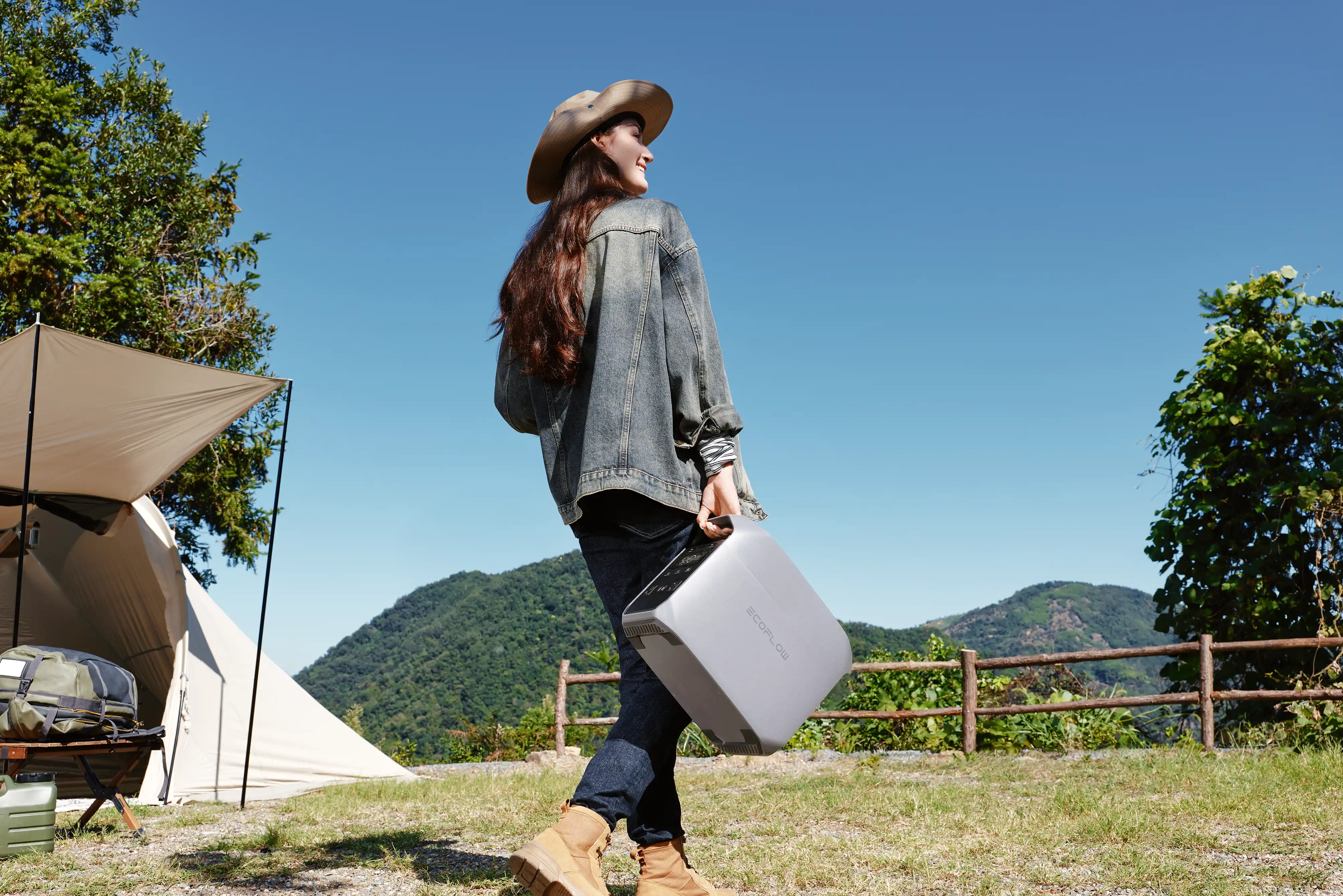
A good setup for camping in the mountains should be quiet, portable, and easy to monitor. Fuel generators may be restricted by campground rules, fire danger, noise limits, or neighbor distance. In many no-hookup areas, a portable power station paired with a solar panel is more practical.
Use Solar During the Day
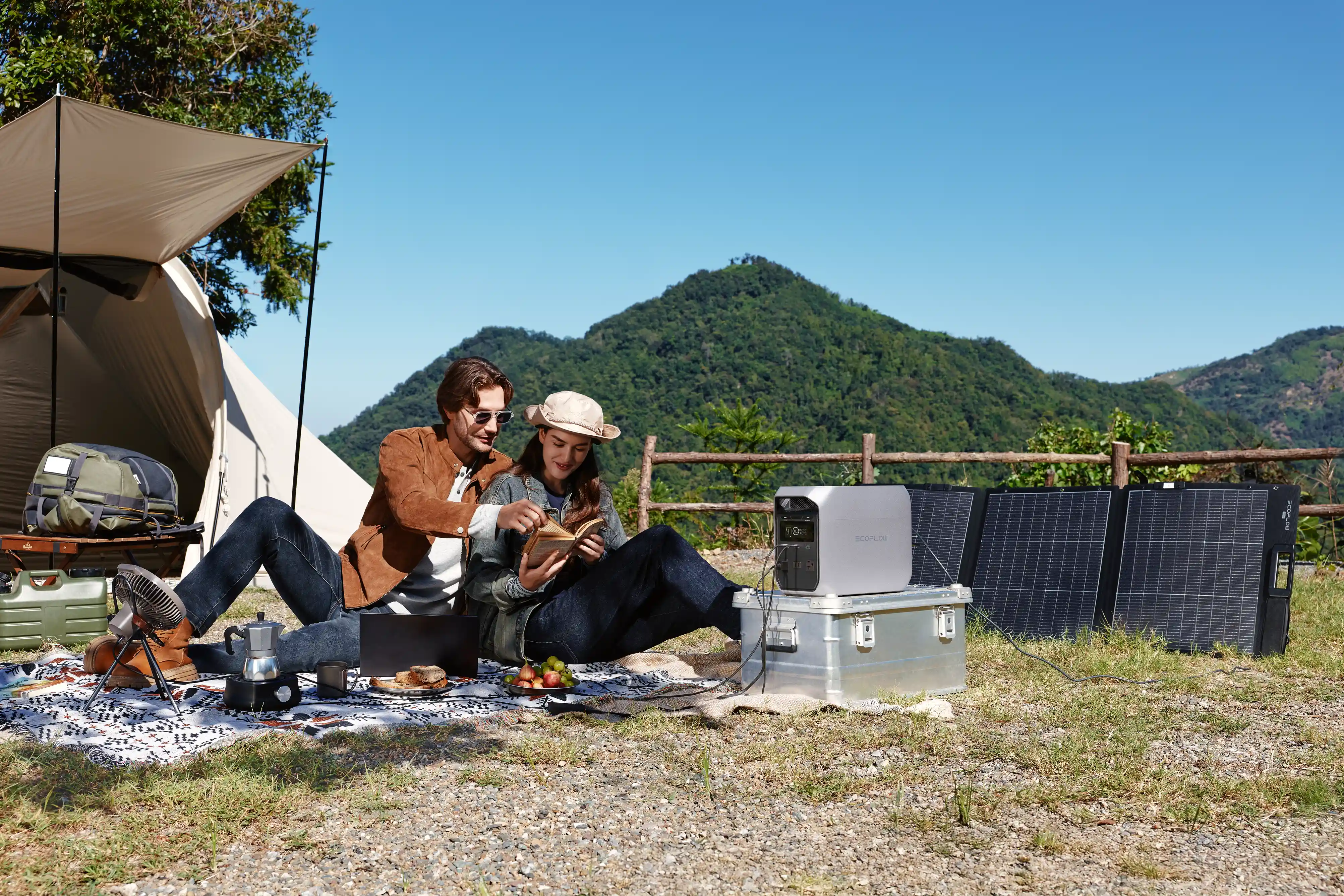
Solar panels can help recover power while you hike, cook, or relax at camp. Place panels where they receive direct sun, then adjust them as the sun moves. Mountain trees, ridges, and afternoon storms can reduce solar output, so do not assume you will get perfect charging all day.
Save Battery at Night
Nighttime is when you need power most for lighting, communication, food storage, and comfort. Charge devices during daylight, then switch to low-power mode at night. Dim lanterns, turn off unused devices, and avoid running high-demand appliances longer than necessary.
Keep Backup Charging Options
A strong power plan should include more than one charging method. AC charging before you leave, vehicle charging on the road, solar charging at camp, and backup power banks all add flexibility. This is especially useful when weather changes or you stay longer than planned.
Stay Comfortable Without Overusing Power
Comfort matters, but mountain camping rewards efficient habits. You can stay warm, cool, and organized without turning every small problem into an electrical load.
Stay Warm Efficiently
Use insulated sleeping pads, warm layers, wool socks, and a temperature-rated sleeping bag before relying on electric heat. Heated blankets can be useful, but they should be used carefully and only when your power capacity supports them. In cold weather, conserving body heat is usually more efficient than heating the whole space.
Keep Food Cold Smarter
A portable fridge can be useful for RV camping or longer mountain trips, but it works best when packed efficiently. Pre-chill food before departure, keep the fridge shaded, avoid frequent opening, and set a reasonable temperature. If you use a cooler, block ice or frozen water bottles usually last longer than loose ice.
Use Light Where You Need It
Instead of lighting the whole campsite, use task lighting. A headlamp for cooking, a small lantern near the table, and a low light inside the tent or RV can reduce power draw while keeping the campsite usable.
Prepare for Weather Changes and Emergencies
Mountain weather can shift fast, so one of the best camping tips is to prepare for conditions slightly worse than expected. That does not mean overpacking. It means packing the right backup items.
Watch for Wind, Rain, and Lightning
Avoid exposed ridges, dry creek beds, and unstable slopes. If thunderstorms are forecast, secure loose gear and avoid open areas. Do not rely on a canopy or tent as protection from lightning.
Protect Electronics From Moisture
Condensation can build up overnight in tents, vehicles, and RV storage areas. Keep electronics in dry bags, cases, or sealed bins when not in use. If you are charging devices outdoors, keep connections off the ground and protected from rain.
Leave a Trip Plan
Tell someone where you are going, when you expect to return, and what route you plan to take. This is especially important when camping in the mountains without reliable service. Include campground name, trailhead, vehicle description, and backup destination if plans change.
Match Your Setup to Your Camping Style
Different mountain trips need different power and comfort plans. A weekend tent trip does not require the same setup as a remote RV stay.
Tent Camping
For tent camping, prioritize small batteries, headlamps, phones, GPS, and compact solar charging. Keep gear lightweight and focus on essentials. A small power station may be useful if you bring a camera, drone, CPAP device, or multiple rechargeable lights.
Car Camping
Car camping allows more flexibility. You can bring a portable fridge, camp lights, coffee gear, inflatable mattress pump, and larger charging setup. Since weight is less of a concern, comfort and power planning can be more balanced.
Mountain RV Camping
Mountain RV camping often has the highest power demand because of fridges, fans, lights, pumps, routers, laptops, and comfort devices. Before choosing a remote campsite, check road grade, turning space, generator rules, hookups, and solar exposure.
Make a Mountain Camping Checklist That Fits Real Conditions
A mountain camping checklist should be built around location, elevation, weather, and distance from help. Generic lists often miss the details that matter most off-grid.
Power and Tech Checklist
Bring charging cables, power banks, a portable power station, solar panel, headlamps, lanterns, spare batteries, offline maps, and emergency communication tools. Label cables before leaving so you are not searching for the right one in the dark.
Food and Water Checklist
Pack enough drinking water, easy meals, snacks, cooking fuel, a cooler or fridge plan, and a backup meal that does not require cooking. Mountain roads, closures, or storms can delay your return.
Comfort and Safety Checklist
Bring warm layers, rain gear, sun protection, first aid, repair tape, tire inflator, jumper cables, fire-safe cooking gear, and a printed map. For longer trips, add extra medication, pet supplies, and a small emergency blanket.
Make Your Next Mountain Camping Trip Safer and More Comfortable
Camping in the mountains is more comfortable when you plan for cold nights, weak signal, no hookups, and longer distances from supplies. Prioritize communication, lighting, food storage, and weather-ready gear before comfort extras. For quiet off-grid power, the EcoFlow DELTA 3 Classic Portable Power Station offers compact support for mountain camping essentials.
FAQs
Q1: What Should I Know Before Camping in the Mountains?
Check elevation, weather, road conditions, cell service, fire restrictions, and campsite power access. Mountain conditions can change quickly, so bring warmer layers, offline maps, backup lighting, and a realistic power plan.
Q2: How Do You Stay Powered While Mountain Camping?
Use a layered setup: charge everything before leaving, bring power banks for small devices, use a portable power station for larger needs, and add solar panels when staying off-grid for multiple days.
Q3: What Devices Should I Prioritize Off-Grid?
Prioritize phones, GPS, emergency communication devices, headlamps, lanterns, medical devices, and food storage. Cameras, drones, laptops, speakers, and comfort appliances should come after safety and essential power needs.
Q4: Are Solar Panels Useful for Camping in the Mountains?
Yes, but performance depends on sun exposure, tree cover, weather, and campsite orientation. Solar panels work best when placed in direct sun and adjusted during the day. Always carry backup power in case clouds or shade reduce charging.
Q5: What Are the Most Important Mountain Camping Tips?
Plan for colder nights, download offline maps, tell someone your route, check road conditions, conserve battery, protect electronics from moisture, and avoid depending on cell service. These camping tips matter most in remote mountain areas.
Disclaimer & Disclosure: This guide provides general off-grid camping advice. For medical devices (such as CPAP machines or medication coolers), always consult your healthcare provider and the device manufacturer for specific power and altitude requirements. Please note that this article includes product recommendations from our brand, EcoFlow, supported by verifiable performance specifications to help you build a reliable off-grid setup.
For press requests or interview opportunities, reach out to our media team
media.na@ecoflow.com