Pop-Up Camper Power Setup: What You Can Run Without Full RV Hookups
- What Makes Pop-Up Camper Power Different From Full RV Hookups?
- What Can a Pop-Up Camper Battery Realistically Run?
- How to Calculate Pop-Up Camper Power Needs Before a Trip
- Which Devices Should You Prioritize in Your Pop-Up Camper Power Setup?
- How Should You Build a Pop-Up Camper Power Setup for Off-Grid Camping?
- How to Keep Your Pop-Up Camper Power Plan Simple and Flexible
- FAQs
A pop-up camper gives you a lighter way to camp, yet power can become the first real limit once shore power is gone. Lights, phones, fans, a portable fridge, and a small water pump all compete for a limited battery. A clear pop-up camper battery plan helps you stay comfortable, protect essentials, and avoid draining energy on devices that should wait for a powered campsite.
What Makes Pop-Up Camper Power Different From Full RV Hookups?
Campground power can make a small camper feel much bigger. A full-hookup RV site normally gives access to electricity, water, and sewer, often with 30-amp or 50-amp electrical service. Without that pedestal connection, every device depends on stored energy, solar input, car charging, or a separate power source. That shift changes what you can run and how long you can run it.
A pop-up camper also relies on two types of electrical power: 120V AC and 12V DC. The 120V AC side supports household-style outlets and larger plug-in devices when the camper has shore power, a generator, or an inverter system. The 12V DC side draws from the battery and commonly supports built-in lights, small fans, water pumps, furnace blowers, and control boards.
That is why outlets can surprise new owners at dry campsites. A phone charger or LED light may be easy to support. A microwave, hair dryer, electric heater, or kettle can drain power quickly or exceed the available output. For off-grid camping, pop-up camper power should be treated as a limited resource and assigned first to essential loads.
What Can a Pop-Up Camper Battery Realistically Run?
The most comfortable off-grid setups usually rely on low-wattage devices. A pop-up camper battery is best saved for essentials that support safety, airflow, communication, and basic camp routines. Interior lighting, a roof vent fan, a small water pump, and low-draw control loads fit that role well.
Loose gear needs its own estimate. Phones, tablets, camera batteries, laptops, small fans, and rechargeable lanterns are usually manageable. A portable fridge deserves extra attention because its use changes with outdoor temperature, ventilation, lid openings, food temperature, and thermostat settings. Hot weather and frequent opening can raise daily energy use.
Use your device label as the final reference. For planning, these common load examples are a helpful starting point:
Device | Planning Wattage | Practical Use in Camp |
|---|---|---|
Camping light | 10W | Evening light with low battery impact |
Laptop | 60W | Work, maps, photo backup |
Mini or car fridge | 60W | Food cooling with a buffer |
Coffee maker | 1000W | Brief use only with enough output |
Electric kettle | 1500W | Heavy load, best used cautiously |
Heat is the biggest battery drain. Space heaters, electric skillets, kettles, microwaves, hair dryers, and air conditioners can pull far higher wattage than lights or electronics. Some larger portable power stations can handle certain high-draw appliances, but capacity will fall quickly under heat loads.
How to Calculate Pop-Up Camper Power Needs Before a Trip
Before packing, list every device you plan to use, check its wattage label, and estimate how many hours it will run each day.
Use this formula:
Watts × Hours Used = Watt-Hours
A 10W light used for five hours needs about 50Wh. A 60W laptop charged for two hours needs about 120Wh. A 20W fan running for six hours needs about 120Wh. Add each item, then include a 15% to 25% buffer for inverter loss, warm weather, extra charging, and battery reserve.
A basic pop-up camper power estimate may look like this:
Load | Example Daily Use | Estimated Energy |
|---|---|---|
Two LED lights | 5 hours | 100Wh |
Two phones | 1 charge each | 30 to 50Wh |
Small fan | 6 hours | 60 to 180Wh |
Portable fridge | Full day with cycling | 300 to 700Wh |
Water pump | Short use | 10 to 30Wh |
Laptop | 2 hours | 120Wh |
After the total is clear, assign loads to the right source. The built-in camper battery can cover basic 12V systems. A portable power station can take pressure off that battery by running phones, laptops, small fans, camp lights, and a compatible fridge.
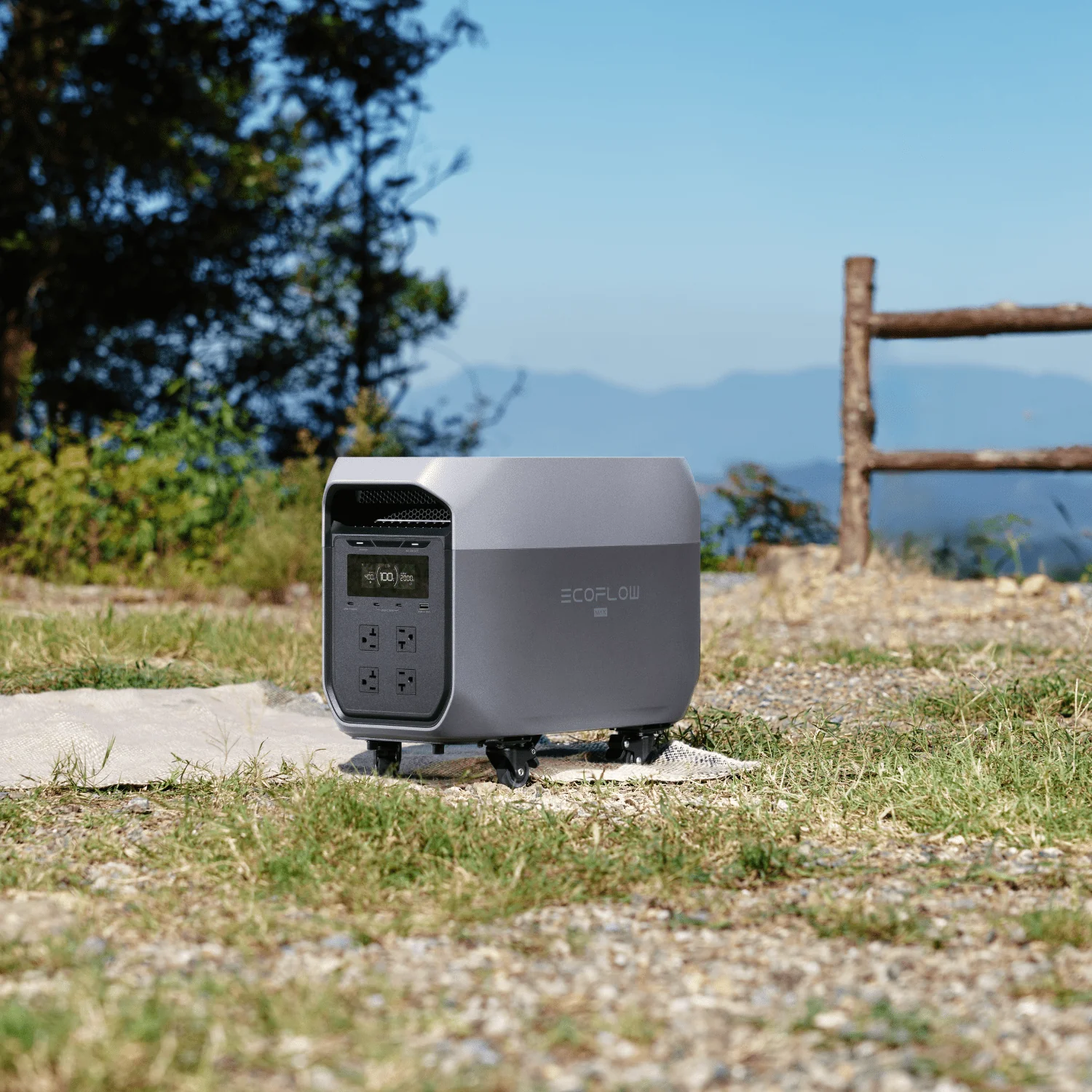
A daily estimate that includes a portable fridge, several device charges, a fan, and occasional AC appliance use usually points beyond a small backup battery. For that kind of pop-up camper power setup, the EcoFlow DELTA 3 Max + 400W Solar Panel is a better fit. Its 2048Wh capacity gives more room for overnight fridge use and repeated charging, while the 2400W rated output supports many common camp appliances when their wattage stays within the unit’s limits. The 400W solar panel also adds daytime recharging for sunny campsites, with a listed full solar charge time of about 6.4 hours under suitable conditions.
Which Devices Should You Prioritize in Your Pop-Up Camper Power Setup?
When battery capacity is limited, give power first to devices that support safety, communication, food storage, ventilation, and basic water use.
Lighting and Visibility: Interior lights, headlamps, lanterns, and flashlights help with cooking, cleanup, bathroom trips, and late arrivals.
Phone and Emergency Charging: Phones support maps, weather alerts, campsite communication, photos, and roadside help.
Food Cooling: A portable fridge can be worth the draw if you carry meat, dairy, baby food, or medicine that needs steady cooling.
Airflow: A small fan can make warm nights inside canvas walls much easier, especially in humid parts of the U.S.
Water Pump Use: Short pump use supports handwashing, dish cleanup, and cooking without becoming a major power drain.
Work and Entertainment: Laptops, speakers, projectors, and camera gear should use leftover capacity after essentials are covered.
This order helps preserve lights, airflow, food storage, and phone charging late into the night. It also prevents a common camp problem: using valuable energy for one short kitchen convenience, then losing the devices that matter for the remaining hours.
How Should You Build a Pop-Up Camper Power Setup for Off-Grid Camping?
Separate built-in camper loads from portable devices so one battery does not have to support everything. Use the camper battery for fixed 12V systems, then use a portable power station for loose gear and comfort loads.
Power Source | Best Used For | Be Careful With |
|---|---|---|
Built-in camper battery | Lights, water pump, roof fan, small controls | Heavy AC appliances |
Portable power station | Phones, laptop, fridge, fan, camera batteries | Long heating or cooking loads |
Solar charging | Daytime recovery during sunny stays | Assuming steady output all day |
Car charging | Topping up between stops | Idling only for power |
Keep the built-in battery focused on core 12V needs. Use portable power for loose gear and comfort loads such as phones, tablets, laptops, cameras, fans, and a portable fridge. This split protects the camper battery from evening device charging and keeps your essentials available.
Solar can extend pop-up camper power during multi-day dry camping, especially at open sites with strong sun. Car charging helps during travel days, but it should be treated as a top-up method, not the main power plan. Size the power station from the load list. Light trips may only need a compact unit. Fridge use, fans, and repeated laptop charging point toward higher capacity. Brief AC appliance use requires checking both watt-hours and output watts before plugging in.
How to Keep Your Pop-Up Camper Power Plan Simple and Flexible
A strong power plan does not chase unlimited electricity. It protects devices that keep camp safe, cool, connected, and easy to manage. Calculate daily watt-hours, save the built-in battery for essentials, limit high-heat appliances, and use portable backup power for electronics, fans, fridge use, and camp convenience. For many dry-camping trips, an EcoFlow DELTA 3 Max adds flexible support without turning a simple pop-up camper into a major electrical project.
FAQs
Q1. Can I Use a Portable Power Station Inside a Pop-Up Camper?
Yes. A battery-based portable power station can usually be used inside a pop-up camper when it sits on a dry, stable surface with clear airflow around its vents. Keep it away from bedding, wet floors, and cooktops. Fuel-powered generators should stay outdoors and far from canvas, doors, windows, and vents.
Q2. Should I Disconnect My Pop-Up Camper Battery During Storage?
Yes, in many cases. Disconnecting the battery during storage can reduce parasitic drain from clocks, detectors, control boards, and small standby loads. Charge the battery before storage, keep it in a cool, dry place, and check the voltage periodically. Follow the battery manufacturer’s storage range, especially for lithium batteries.
Q3. Can a Portable Power Station Run a Pop-Up Camper Water Pump?
Yes, if the water pump’s startup surge and running wattage stay within the portable power station’s output rating. Many small camper pumps run intermittently, so total energy use is usually modest. Check the pump label, confirm voltage compatibility, and avoid wiring the pump directly into a portable unit unless the setup is designed for it.
Q4. Is Energy Storage Better Than Adding a Second Camper Battery?
It depends on your camping style. A second camper battery can support built-in 12V loads, but portable energy storage is easier to move, recharge, and use for phones, laptops, fans, and outdoor camp gear. For renters, occasional campers, or owners avoiding electrical modifications, a portable power station is often the simpler upgrade.
Q5. Do I Need a Surge Protector With Pop-Up Camper Power?
Yes, when plugging the camper into campground shore power, a surge protector or electrical management system is a smart safety layer. It can help detect wiring faults, voltage problems, and power spikes before they reach the camper. For portable power station use, check the unit manual and avoid overloaded extension cords.
Disclaimer: This article is for informational purposes only and does not constitute professional RV electrical, battery installation, solar setup, or safety advice. Pop-up camper power needs can vary by camper model, battery type, wiring design, appliance wattage, campsite conditions, and weather. Always check your camper manual, device labels, product manuals, campground rules, and local electrical requirements before using or modifying any power setup. For official and product-specific information, please refer to KOA RV Camping and Hookup Information, NRVTA Guide to RV Electrical Systems, and Consumer Product Safety Commission.
For press requests or interview opportunities, reach out to our media team
media.na@ecoflow.com