E-bike Conversion Kit Buying Guide: How to Choose Motor Types, Battery Specs, & More
An e-bike conversion kit can turn a regular bicycle into an electric bike for less than buying a new e-bike. The right kit depends on motor type, battery capacity, bike fit, and local laws. This guide covers the key specs, charging needs, installation time, and legal limits to check before you buy.
5 Best E-bike Conversion Kits at a Glance
Five kits come up again and again in current reviews, and each one stands out for a different reason. The table groups them by what they do best, so you can go straight to the type that suits your bike and the way you ride.
Kit | Best for | Kit type | Key maker-listed spec | Road-use note |
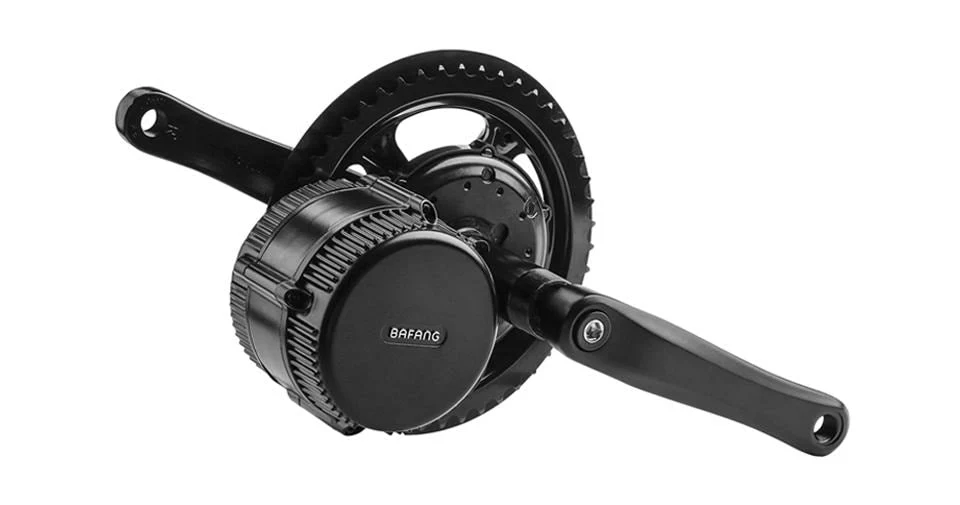
Bafang BBS02B | Best mid-drive for most riders | Mid-drive (bottom bracket) | 48V, 750W (per US seller listings; Bafang's own site doesn't publish it) | Sits at the 750W line; check your state's class rules |
Swytch MAX | Easiest commuter setup | Front hub with handlebar battery | "Up to 60 miles range" (Swytch) | Check wattage on the US listing before calling it street-legal |
eBikeling kits | Budget, US-based support | Front or rear hub | Kits from 500W (36V) to 5000W (48V+); Chicago, IL company | Only the lower-watt kits fit typical ebike rules |
CYC X1 Pro Gen 4 | Maximum power, off-road | Mid-drive | 5,000W rated, 6,000W peak, 280 N·m, 36 to 72V (CYC) | Far above the federal ebike definition; treat as off-road only |
Skarper DiskDrive | Removable, no-tools swap | Drive unit on the disc brake rotor | 76 N·m torque; removal "No tools. No fuss" (Skarper) | Check the US listing for wattage |
Bafang BBS02B: This is the pick for hilly routes, as long as your bike has a standard bottom bracket. It drives through your existing gears, which helps it climb. Riders planning a bike camping trip with loaded bags often choose a mid-drive for that reason. Many listings sell it without a battery, so add the battery to your budget.

Swytch MAX: It suits commuters who want the bike to look almost stock. The motor is built into a replacement front wheel with a quick connection, so the rear drivetrain stays untouched.


eBikeling kits: It works for budget buyers who want a company with a US address (Chicago, Illinois) behind the kit. If you'll ride on streets and bike paths, stick with the lower-wattage options.


CYC X1 Pro Gen 4: It’s built for riders who want serious power on private land or trails that allow it. It doesn’t count as an ebike, so don’t plan on riding it on public roads as one.


Skarper DiskDrive: It fits people who want a regular bike most days and an electric assist on others. The drive unit comes off without tools, and Skarper's partner bike shops handle the installation.


Before you shop on power alone, know where the federal line sits. Under 15 U.S.C. 2085, a low-speed electric bicycle has working pedals and a motor under 750 watts. On motor power alone, its top speed must be under 20 mph. The CYC X1 Pro Gen 4 and eBikeling's 1,200W to 5,000W kits go well past that limit. That can change how your state treats the finished bike, which the legal section below covers.
What to check before buying a kit?
Motor power is one of the first numbers you will see when shopping for a conversion kit. It is measured in watts. Some kits use 250W motors for light assistance, while more powerful options can reach 1,000W or more.
However, higher wattage does not always mean a better fit. Your riding conditions, battery size, bike frame, and local rules all matter.
Battery capacity is another key factor. It is measured in watt-hours (Wh). A larger Wh rating generally means more stored energy and can support longer rides, depending on speed, rider weight, terrain, weather, and assist level.
Fitment is just as important. Mid-drive kits must match the bike's bottom bracket size and available frame clearance. Hub kits need the correct wheel size and dropout width. Check these measurements before ordering.
You should also check how the battery connects to the system. A proprietary battery may limit your replacement options later. A system with a readily available replacement battery can be easier to maintain over time.


Hub motor vs. mid-drive kits
The two main e-bike conversion kits are hub motors and mid-drive systems. They differ in how they deliver power and how much work installation requires:
A hub motor kit fits into the front or rear wheel. It is usually easier to install and works well for flat roads and daily rides. It also tends to offer a simple riding setup with less change to the bike's existing drivetrain.
A mid-drive kit replaces the bike's bottom bracket and places the motor near the pedals. It uses the bike's gears to transfer power to the rear wheel. This can make it a good choice for steep roads and riders who need more control over torque.
Kit Type | Best For |
Hub motor | Simple installation, quiet ride, flat terrain |
Mid-drive | Hill climbing, better torque, more efficient use of gears |
Charging the new setup and powering installation tools
A converted ebike needs compatible battery, controller, and charger voltage and current ratings. Use an e-bike-exclusive compatible AC charger with the EcoFlow power station. Check for UL 2849 (vehicle) or UL 2271 (battery pack) certification, and verify connector and charging specifications before use.
For actual cycling use, the two models serve different roles. The EcoFlow DELTA 3 Classic has a 1,024Wh capacity and supports several charging methods. Its AC charging can take the unit from 0% to 80% in about 45 minutes. It also provides 1,800W of continuous output, with up to 3,600W of surge output. Additionally, the EcoFlow DELTA 3 Classic (1,024Wh, about 12.5 kg) is easier to carry in a vehicle trunk, making it suitable for recharging an e-bike battery once or twice during a day of forest-road riding.
Its X-Boost feature can support devices rated up to 2,600W, which uses intelligent voltage regulation to operate compatible resistive appliances with a higher rated power. However, it does not increase the battery capacity. The EcoFlow DELTA 3 Classic also works as a UPS, with a 10ms automatic transfer time. At 600W output, noise can be as low as 30dB.
For larger power needs, the EcoFlow DELTA 3 Max provides a 2,048Wh capacity and 2,400W of continuous output. Its surge output reaches 4,800W, while X-Boost supports appliances and tools up to 3,400W. Comparatively, the EcoFlow DELTA 3 Max (2,048Wh, expandable with additional batteries) works more like a base-camp power source. Its larger capacity suits long-distance trips with multiple e-bikes, repeated charging, and off-grid camping needs.
The unit can reach 80% charge in about 68 minutes through wall or generator charging. It weighs 20.3kg and can be monitored through the EcoFlow app.
Legal limits and safety
E-bike laws vary by state and can also differ by bike class. In many US states, standard e-bikes are limited to 750W of motor power. Motor-assisted speed limits commonly fall at 20 or 28 mph, depending on the classification.
A conversion that exceeds local limits may not be treated as a standard e-bike. It could fall under different rules for mopeds or motorcycles. Registration, equipment, licensing, and helmet requirements may then change.
Before buying a kit, check the rules in your state and local area. Do not assume that a kit sold online is legal for road use where you live. It is also useful to understand the power needs of the finished bike. Knowing how many watts it takes to charge an e-bike can help you plan charging at home or with a portable power station.


Installation difficulty and cost
The time needed to install an e-bike conversion kit depends on the kit, bike, and your mechanical experience.
Hub motor kits are often simpler. A typical installation can take about two to four hours with basic tools. You may need to remove the existing wheel, install the motor wheel, mount the battery, connect the wiring, and fit the display or controls.
Mid-drive kits can take longer. They replace the bottom bracket and require more precise fitment. A first installation may take around half a day, especially if you need to remove the crankset or make small adjustments.
Before starting, check the kit manual and make sure you have the required tools. A poorly fitted motor or loose electrical connection can affect how the bike operates.
Cost also varies by motor type, battery size, and included components. Complete conversion kits commonly cost about $300 to $900. Higher-powered systems and larger batteries can cost more.
The kit price is not the only cost to consider. You may also need tools, replacement parts, or professional installation. If you plan longer rides, battery capacity becomes even more important. Planning longer e-bike rides with confidence can help you prepare for distance, charging, and other ride needs.
Conclusion
The right e-bike conversion kit depends on how and where you plan to ride. Hub motors offer a simpler installation, while mid-drive systems can provide useful torque on hills. Battery capacity, bike fit, replacement options, and local laws also deserve close attention.
Before buying, check the motor and battery specifications against your riding needs. Confirm that the kit fits your bike and meets local power and speed rules. It is also worth checking whether replacement batteries will remain available.
For charging and installation work, the EcoFlow DELTA 3 Classic and EcoFlow DELTA 3 Max can provide portable power for an e-bike charger and compatible tools.
FAQs
Is a hub motor or mid-drive kit better for hills?
Mid-drive kits can work well on hills because they use the bike's gears. Hub motors can also handle hills, but performance depends on motor power, gearing, rider weight, and the slope.
What wattage e-bike conversion kit is legal on public roads?
Rules vary by location. Many US states use 750W as the maximum motor output for standard e-bikes, but speed and classification rules also apply. Check local regulations before riding.
How long does it take to install an e-bike conversion kit?
A hub motor kit may take about two to four hours for an experienced home installer. A mid-drive kit can take longer because it requires more work around the bottom bracket and drivetrain.
How much does a good e-bike conversion kit cost?
Complete kits often cost about $300 to $900. The final price depends on motor type, battery capacity, included components, and installation needs.
Can I convert any regular bike into an e-bike?
Not every bicycle is suitable for every kit. Check wheel size, dropout width, bottom bracket measurements, frame clearance, brake setup, and battery mounting space before buying.
For press requests or interview opportunities, reach out to our media team
media.na@ecoflow.com