Off-Grid Cabin Power Systems: A Complete Canadian Guide
- What Counts as an Off-Grid Cabin Power System?
- How Do You Calculate Your Cabin's Daily Power Needs?
- What Components Make Up an Off-Grid Cabin Power System?
- What Permits and Electrical Code Rules Apply to Off-Grid Cabins in Canada?
- Should You DIY Your System or Hire a Licensed Installer?
- What Does an Off-Grid Cabin Power System Cost in Canada?
- Frequently Asked Questions
- A Well-Planned Power System Keeps Your Cabin Running Through Every Canadian Season
Building or buying a cabin off the grid means rethinking how you get electricity, from flipping a light switch to running a space heater on a cold night. Canadian winters, remote sites, and unpredictable sunlight all shape what a dependable system looks like.
This guide covers the components, code rules, and costs behind choosing off-grid cabin power systems that fit your cabin and your province.
What Counts as an Off-Grid Cabin Power System?
An off-grid cabin power system generates, stores, and distributes electricity without any connection to a utility line, unlike a grid-tied setup, which draws from and sometimes feeds back into the public grid.
For a weekend cabin, that might be as simple as a portable power station charged by a couple of solar panels. For a four-season retreat with a well pump, fridge, and heat, it usually means a larger battery bank, a proper solar array, and often a backup generator.
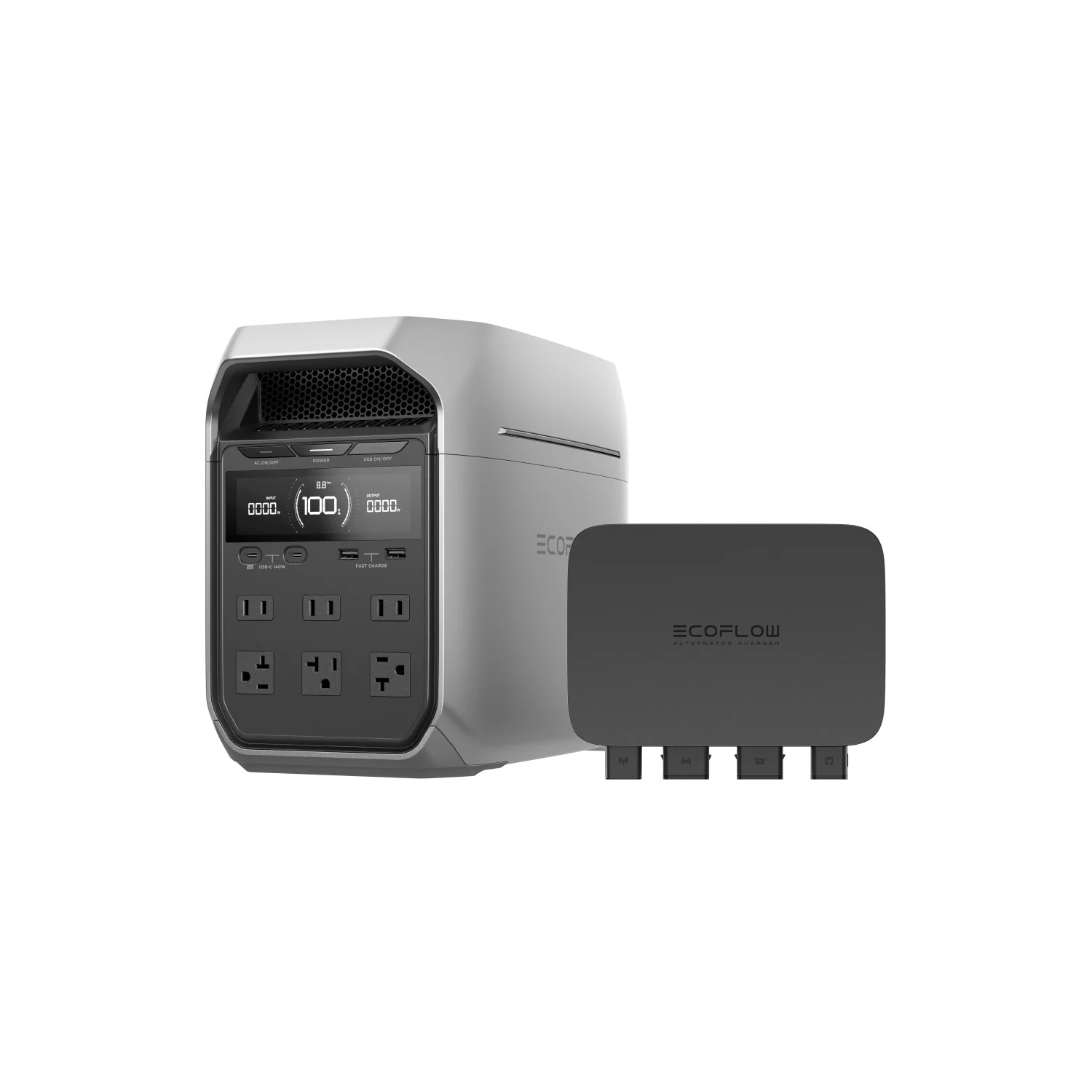
The EcoFlow DELTA 3 Ultra Plus + 800W Alternator Charger sits comfortably in that middle ground, with enough capacity to run cabin essentials for a day or more between charges. It can charge from solar when the sun cooperates, or from your vehicle's alternator on the drive in, which matters most between fall and spring when daylight hours shrink and solar alone may not keep up.
Whether your setup leans toward rustic off-grid cabin living or a more comfortable, four-season build, the underlying question is the same: how much power do you actually need, and for how long?
How Do You Calculate Your Cabin's Daily Power Needs?
Start by listing every device you'll run and its wattage, then multiply by the hours you'll use it each day. A fridge drawing 100W over 8 hours uses 800Wh. Add lighting, a water pump, phone charging, and anything seasonal like a space heater, and total everything into a single daily watt-hour figure.
That number tells you how much storage you need and how large your solar array or generator has to be to replace what you use each day.
Cabins used only for weekend trips or luxury off-grid camping getaways can often get by with a modest daily budget, since the fridge and lights are the main draws. A year-round cabin with a well pump, baseboard heaters, or electric cooking needs several times that capacity, and it's worth building in a buffer for cloudy stretches, which are common across much of Canada in late fall and winter.
What Components Make Up an Off-Grid Cabin Power System?
A complete system is built from a handful of core parts:
Solar panels or another charging source: converts sunlight, generator fuel, or alternator power into usable energy.
Charge controller: regulates power into your battery so it charges safely.
Battery bank or power station: stores energy for use when the sun isn't shining.
Inverter: converts stored DC power into usable AC power.
Wiring and overcurrent protection: the safety infrastructure tying everything together to code.
Backup generator (optional): covers extended low-sun periods without oversizing your battery bank. If your cabin requires a real drive to reach, an alternator charger can cover some of that saem gap without the fuel storage or maintenance a generator needs.
Many cabin owners now consolidate several of these into one unit. A portable solar generator combines the battery, inverter, and charge controller in a single box, simplifying both setup and troubleshooting.
What Permits and Electrical Code Rules Apply to Off-Grid Cabins in Canada?
Electrical work in Canada falls under the Canadian Electrical Code (CSA C22.1), enforced provincially through authorities like Technical Safety BC or Ontario's Electrical Safety Authority.
Permanent wiring into your cabin's panel or fixed circuits generally requires an electrical permit and a post-installation inspection, even for a system that never touches the utility line.
The CSA Group maintains the equipment and installation standards inspectors check against, from battery management systems to solar equipment certification.
Setups you simply plug into an outlet, rather than hardwire into your panel, typically fall outside this process. Rules vary by province and municipality, so confirm specifics with your local authority before starting any fixed installation.
Should You DIY Your System or Hire a Licensed Installer?
A plug-and-play setup, like a power station charged by a portable solar panel, is well within reach for most cabin owners to install themselves, and you can resize or relocate it as your needs change.
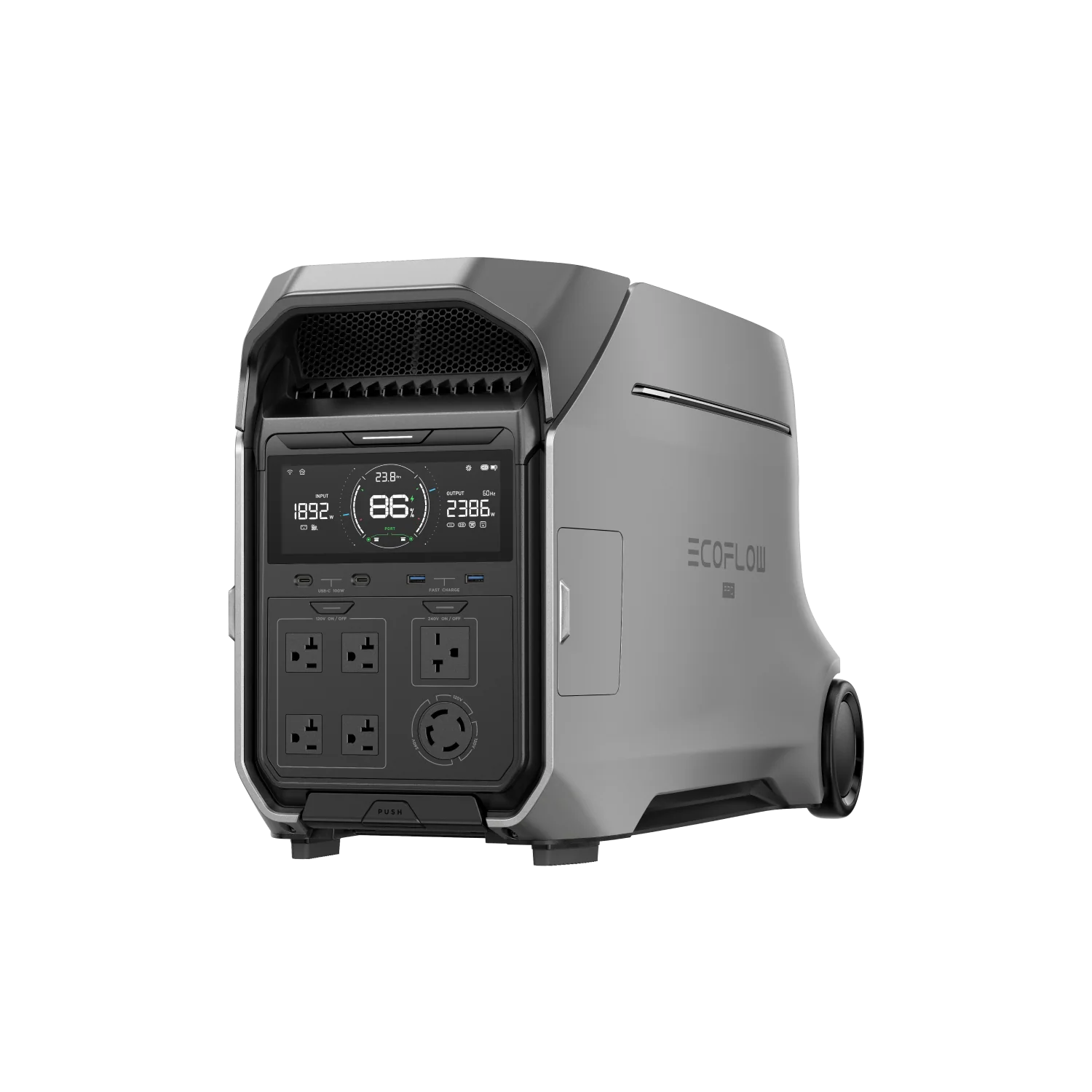
Even a larger unit like the EcoFlow DELTA Pro 3 Portable Power Station stays plug-and-play, since it connects through a standard outlet rather than fixed wiring. It's only once you're running dedicated circuits or tying a system directly into your cabin's electrical panel for permanent backup that a licensed electrician should handle the wiring, to keep you on the right side of the code and your insurance policy.
For cabins that need enough capacity to run most of the building at once, look at whole-home backup power options built for that scale, rather than stretching a smaller portable unit past its limits.
What Does an Off-Grid Cabin Power System Cost in Canada?
Costs scale with the capacity and output you need. A basic portable power station with one or two solar panels can outfit a weekend cabin for a few hundred to around a thousand dollars.
Mid-sized systems, enough to run a fridge, lights, and small appliances through cloudy stretches, typically land in the low thousands.
A full four-season setup with a large battery bank, solar array, wiring, and a licensed installer can run into the higher thousands once permits and labour are factored in.
Modular equipment lets you start small and expand later, adding panels or batteries as your needs grow, rather than paying for capacity you don't need on day one.
Frequently Asked Questions
How Many Solar Panels Does a Small Off-Grid Cabin Need?
It depends on your daily watt-hour needs and how much sun your site gets. A cabin using around 1,000Wh a day might need two to four 200W panels in good sun, but shaded sites or short winter days often require more. Calculate your daily load first, then size your array to replace that energy on an average day, with extra capacity built in for overcast periods.
Is a Backup Generator Necessary for an Off-Grid Cabin in Canada?
Not always. It's useful insurance for low-sun stretches, especially Canadian winters, letting you recharge quickly without oversizing your solar array. If your cabin requires a drive to reach, an alternator charger can bridge some of that gap without fuel storage. Light seasonal use often gets by on battery and panels alone.
A Well-Planned Power System Keeps Your Cabin Running Through Every Canadian Season
Getting your cabin's power system right comes down to knowing your daily load, matching your components to it, and following the code rules that apply to your province.
Next time you're sizing up your cabin's setup, the EcoFlow DELTA Pro 3 Portable Power Station has enough capacity to grow from weekend backup into full whole-cabin power, without forcing a rewire before you're ready for one.