Off-Grid Cabin Living: The EcoFlow Setup That Changes Everything
- Why Are More People Choosing Off-Grid Cabin Living?
- What Are the Power Challenges of Off-Grid Cabin Living?
- What Is the Best Energy Setup for an Off-Grid Cabin?
- How Do You Size Your Solar and Battery System?
- Frequently Asked Questions
- The Right EcoFlow Setup Powers Your Off-Grid Cabin Through Every Season
Embracing off-grid living in Canada offers a path towards energy independence, lower monthly expenses, and a closer connection to nature.
However, trading traditional utility hookups for self-reliance requires building a reliable power system. But when you understand your energy needs and size a battery backup and solar panels to meet those needs, you can easily overcome energy challenges and keep your cabin running smoothly in every Canadian season.
Why Are More People Choosing Off-Grid Cabin Living?
More people are taking their homes off-grid to enhance energy independence in an age of increasingly unreliable power grids. It’s also seen as a way to live more affordably, without monthly utility bills.
Plus, off-grid cabin living is a way for people to reconnect with nature and find comfort in a simpler life than the busy pace of city living.
What Are the Power Challenges of Off-Grid Cabin Living?
For beginners starting their off-grid living journey, the first challenge is generating enough power to run appliances and stay connected. Other difficulties might include shading, snowstorms, and hail damage, which could reduce your output.
But with a properly sized, battery-operated, indoor-safe whole-house generator powered by solar, you can easily power any size cabin.
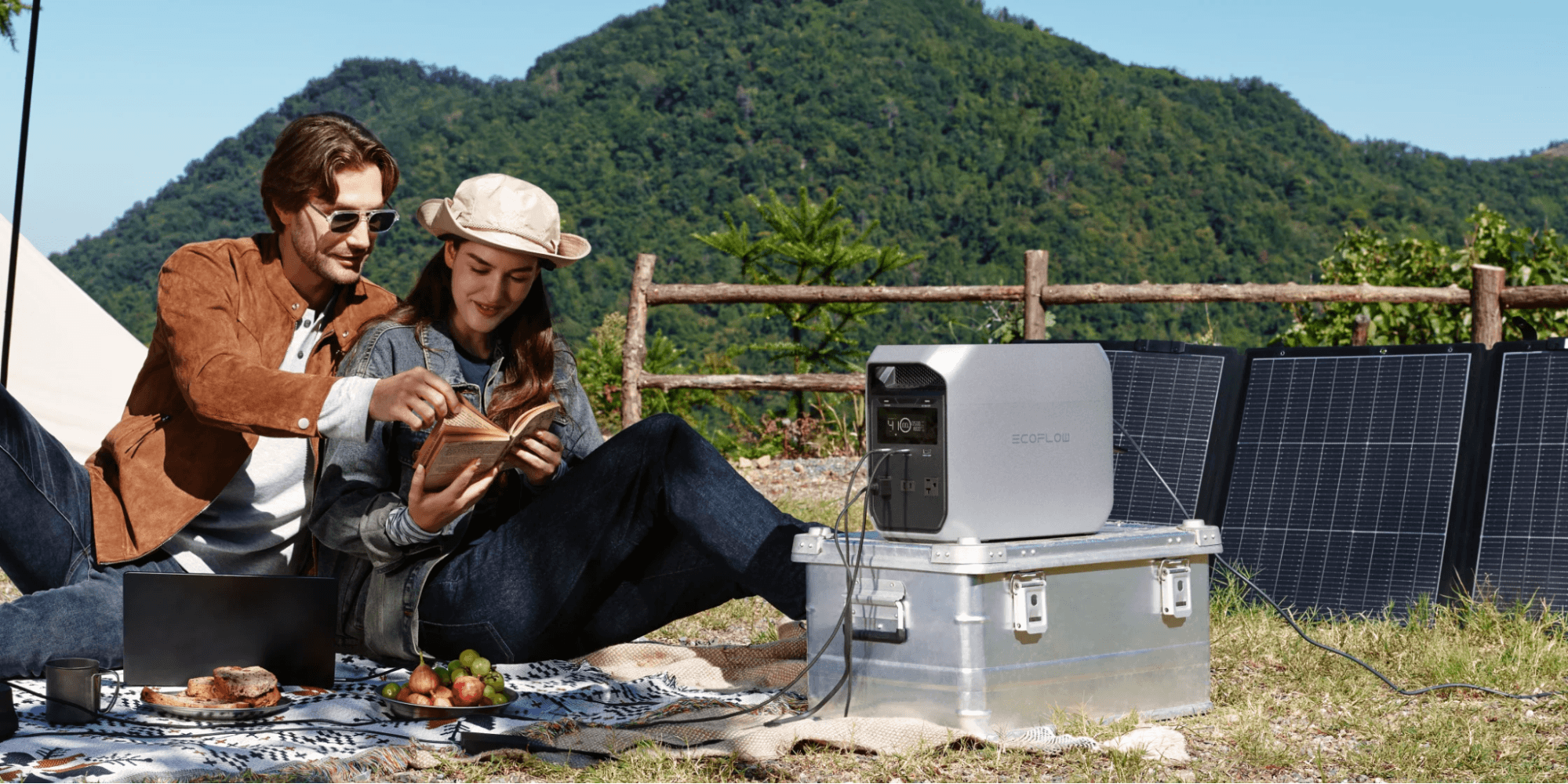
An additional thing to think about is when you need to bring power to sheds, barns, and outbuildings for maintenance or upgrades. Having a more compact but still powerful portable power station like the EcoFlow DELTA 3 Classic (1024Wh) works great for portable needs.
What Is the Best Energy Setup for an Off-Grid Cabin?
The best energy setup for cabins is an off-grid solar power system because it’s one of the most affordable energy sources, costing less than half of what fossil fuel-based electricity costs. It’s also available almost anywhere, unlike other renewables like wind, geothermal, and hydro, which are much more limited geographically and are typically pricier to install.
An ideal solar energy setup contains the following:
Solar panels to generate DC power.
An MPPT charge controller to maximize solar production.
A correctly sized battery system for power at night and in severe weather. It should have a built-in battery management system to optimize charging and extend longevity.
An inverter that converts the DC electricity generated into the AC electricity that most homes and appliances use.
A smart panel to integrate your solar system into your household electrical.
How Do You Size Your Solar and Battery System?
1. Calculate Your Energy Needs
If you’ve been living in your cabin on-grid, check your monthly electricity bill for your highest usage month. Divide the monthly kilowatt-hours (kWh) you used by 30 to estimate your daily energy needs.
Alternatively, calculate your total load:
Make a list of all your appliances, devices, lights, etc., and their running watts.
Multiply each appliance’s running watts by the number of hours it runs each day to get watt-hours (Wh).
Add up all the watt-hours to get your minimum daily capacity in Wh, or convert it to kWh, where 1000Wh = 1kWh
2. Choose Your Battery Capacity
Once you know your energy needs, choose a battery with at least 20% more capacity.
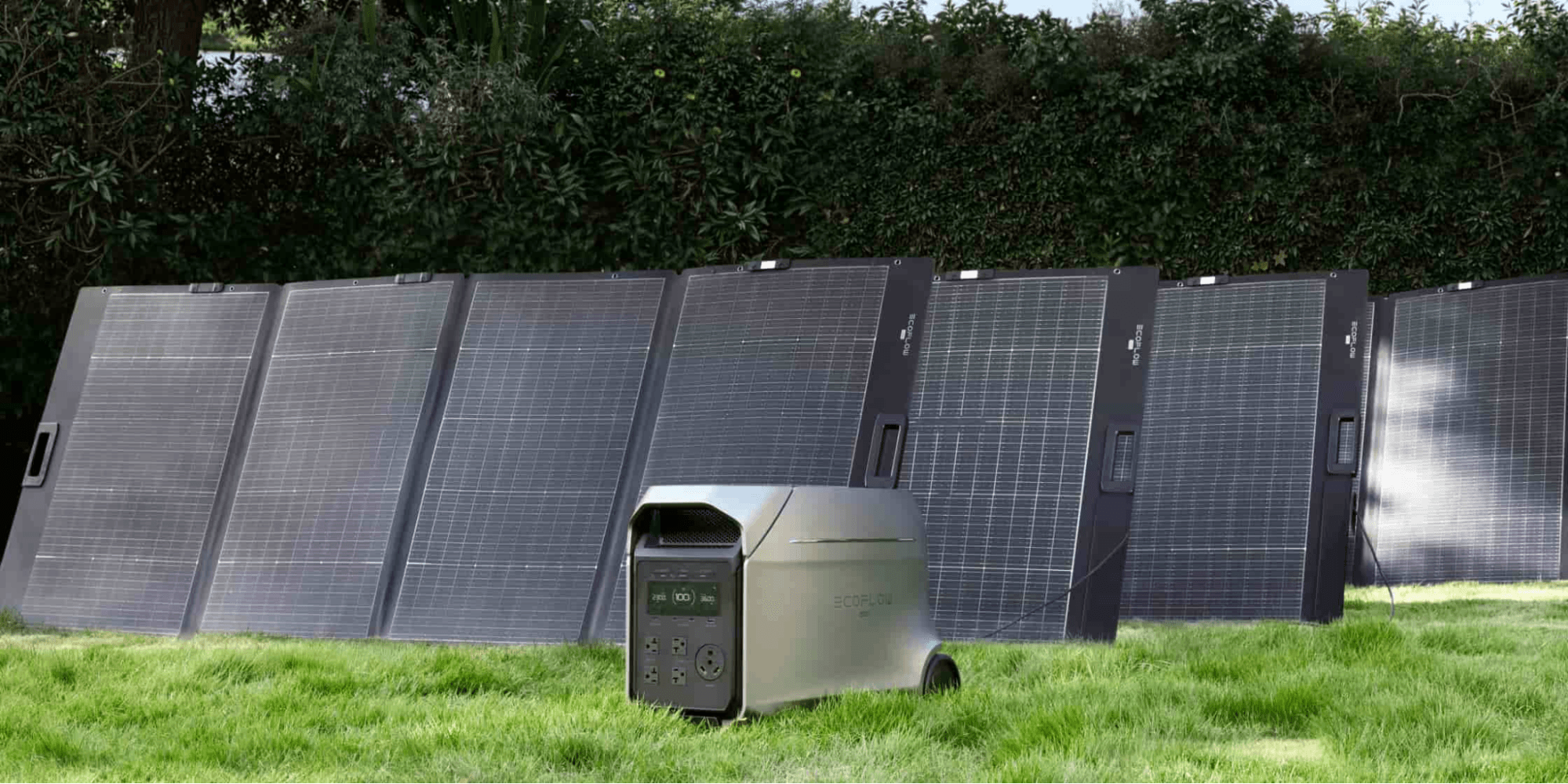
Then seek products like the EcoFlow DELTA 3 Ultra Plus + 400W Solar Panel, which offers a high output of 3600W and a surge output of 7200W to handle the additional starting watts that appliances like well pumps and fridges need to get started. It also has a built-in MPPT charge controller, battery management system, and inverter. And with expandable capacity up to 11kWh, it can run most cabins.
3. Calculate Your Solar Panel Requirements
Next, let’s calculate how many solar watts you need.
Total Solar Watts = (Daily Energy Needs ÷ 0.8) ÷ Peak Sun Hours.
We divide energy needs by 0.8 to account for real-world efficiency losses like shade or suboptimal angles.
In Canada, the average peak sun hours near most major cities is between 3.2 and 4.0, but higher in the summer and lower in the winter. Reduced winter output may require readjustment of the angle of your panels to optimize production or additional panels to ensure all-season comfort.
Now let’s say your cabin uses 10kWh (10,000Wh) per day, and you live near Toronto with 3.8 peak sun hours. Total solar watts = (10,000 ÷ 0.8) ÷ 3.8 = 3,289.5W.
If you use 400W panels, you need at least 9 panels (3,289.5W ÷ 400W = 8.22) to meet your average energy needs.
Now you can choose a battery-operated whole-home backup power solution with the right amount of solar panels to run your cabin off-grid.
Frequently Asked Questions
Can You Legally Live Off-Grid in Canada?
Yes, it’s fully legal to live off-grid in Canada on private land or Crown land with official authorization. While you’re not typically required to connect to public utilities, you must still obey local municipal zoning bylaws and provincial building codes.
What Are the Common Problems With Off-Grid Solar?
The most common problems with off-grid solar include low winter production in northern locations (which can be remedied with proper angles), complex systems that may be challenging for DIYers, shading by trees, and weather damage from hail or high winds.
Can You Run an Off-Grid Cabin Entirely on Battery Backup?
You can run an off-grid cabin entirely on battery power, as long as you correctly size the battery backup based on your energy needs. You also need a way to recharge it, which is usually done with solar because it’s the cheapest and most widely available energy source.
The Right EcoFlow Setup Powers Your Off-Grid Cabin Through Every Season
Transitioning your cabin to a self-sufficient homestand can be an incredibly rewarding journey, both personally and financially, provided you have a good power plan.
By properly calculating your daily energy needs, choosing a modular, expandable battery system, and pairing it with the right number of high-efficiency solar panels, you can enjoy modern comforts living completely off the grid.
Explore the EcoFlow DELTA 3 Ultra Plus + 400W Solar Panel to find the perfect all-in-one setup for your off-grid cabin.