Best Portable Solar Power Generator: The Ultimate 2026 Buying Guide
From unexpected power outages at home to remote adventures in the backcountry, reliable energy has become an essential part of modern life. Finding the right portable solar generator is about taking control of your energy. Whether you’re bracing for an ice storm in Ontario, camping along BC’s rugged coast, or stocking a remote cabin in northern Quebec, clean, portable power gives you the confidence to stay connected wherever you go.
This 2026 buying guide simplifies technical specifications to help you compare capacities, solar charging speeds, and battery life, allowing you to select a system tailored precisely to your specific energy requirements.
Why Do Canadians Need a Portable Solar Power Generator?
Canada’s diverse landscapes and unpredictable weather make reliable backup power a necessity. Gas generators have been the standard for years, but a new generation of clean, quiet solar generators is changing the way Canadians stay powered off-grid.
Backup Power During Grid Outages
Power outages can happen without warning, whether caused by winter blizzards, ice storms, or severe summer weather. A portable solar generator provides clean, dependable backup power for essential household devices, helping you keep food fresh, stay connected, and maintain critical services until the grid comes back online.
Reliable Energy for Camping Trips
Exploring Canada’s national parks doesn’t mean leaving every comfort behind. A solar generator gives you quiet, reliable power to charge camera gear, run a portable fridge, and keep navigation tools ready, so you can head deep into the backcountry with confidence.
Off-Grid Electricity for Cabins and Cottages
Many seasonal properties—in Muskoka, the Laurentians, or the Rocky Mountain foothills—sit well beyond municipal utility lines. Running power out to those areas is often prohibitively expensive, which makes independent solar setups the most practical choice for cottage life.
Cleaner Alternative to Fuel Generators
Traditional gas generators are loud, fuel-hungry, and pump out exhaust fumes. Solar alternatives are odorless and emissions-free, which means they keep the air clean and can be used indoors safely.
How to Choose the Best Portable Solar Power Generator
Choosing the right setup comes down to balancing your power needs against the physical limits of portable gear. Focus on these core criteria to narrow your options effectively.
Match Capacity to Your Energy Needs
Generator capacity is measured in Watt-hours (Wh), indicating how much total energy the unit can store. To find your target capacity, calculate the wattage of each device you intend to run and multiply it by the hours of expected use, adding a comfortable safety margin for unexpected demands.
Understand Power Output Requirements
Continuous output wattage determines which devices you can run at the same time, while surge wattage handles the brief power spike that many appliances need when they start up. Devices with motors or heating elements, such as refrigerators, sump pumps, and coffee makers, often require extra startup power. That’s why choosing a solar generator with a capable inverter is important, ensuring it can handle sudden demand without interruption.
Evaluate Solar Charging Performance
A high-capacity battery is rendered inefficient if its recharge timeline is excessively prolonged. Look for a generator with a high solar input rating, measured in watts. The higher the solar input, the more solar power it can accept from connected panels, allowing you to recharge faster and maximize energy production during Canada’s often limited daylight hours.
Compare Battery Technologies
Most premium portable power stations now feature LiFePO4 batteries, which are designed to last significantly longer than traditional lithium-ion alternatives. With over 3,000 charge cycles before reaching 80% capacity and improved thermal safety, LiFePO4 technology provides the durability and reliability needed for everything from emergency home backup to off-grid adventures.
Consider Portability and Durability
A good power station needs to handle rough transport and rugged use. Ergonomic handles, tough outer casings, and balanced weight distribution matter if you’re lifting it in and out of a truck bed or carrying it down to the dock.
How Much Capacity Do You Actually Need?
The table below provides typical estimates of common household and portable device energy consumption. Actual usage may vary depending on efficiency, usage patterns, and environmental conditions.
| Device | Nominal Running Power (Watts) | Estimated 8-Hour Energy Consumption (Wh) |
|---|---|---|
| Smartphone | 10W | 80Wh |
| Laptop | 60W | 480Wh |
| CPAP Machine | 40W | 320Wh |
| Portable Fridge | 60W | 480Wh |
| Full-size Refrigerator | 150W | 1200Wh |
Total Energy Calculation: Formulas are based on the standard electrical equation:
Total Energy (Wh) = Power (W) x Time (h)
Based on these estimates, a typical household powering essential devices such as a refrigerator, router, lighting, and phones during an outage will generally require 1,500Wh to 2,500Wh of battery capacity, depending on usage intensity and duration.
Which Features Matter Most in 2026?
The latest generation of solar generators introduces smart features that significantly optimize energy efficiency and overall user convenience.
Fast Solar and AC Recharging
Extended charging times have been largely superseded by modern engineering advancements. Cutting-edge units in 2026 feature dual-charging capabilities, combining AC wall power and solar input to top up your battery from zero to eighty percent in under an hour.
Expandable Battery Capacity
Your power needs might grow over time, and your hardware should be able to adapt. Top-tier systems allow you to connect external smart expansion batteries via dedicated ports, multiplying your available storage capacity without requiring you to purchase an entirely new base station.
Multiple Output Options
A versatile power station should easily support an array of connection types. Look for units equipped with multiple standard pure sine wave AC outlets, high-speed USB-C Power Delivery ports, 12V DC car outlets, and dedicated high-amperage Anderson ports for specialized gear.
Smart Energy Monitoring and Control
Managing your power footprint is simplified through dedicated mobile applications. Using Bluetooth or Wi-Fi connectivity, these apps let you track real-time solar input, monitor internal temperatures, and toggle specific output ports on or off to conserve power from a distance.
Reliable Performance in Canadian Weather
Sub-zero Canadian winters can cripple standard consumer electronics. Premium solar power stations designed for northern climates feature integrated smart thermal management systems that preheat internal components, ensuring stable battery discharge even when the temperature plummets.
Portable Solar Generators for Different Canadian Use Cases
Every off-grid scenario presents unique challenges. Matching your specific application to the right infrastructure, such as a portable power generator with solar panel, ensures you never find yourself caught in the dark. The comparison below highlights the best options for emergency preparedness, outdoor recreation, and off-grid living across Canada.
| Model | Battery Capacity | AC Output | Solar Input | Best For |
|---|---|---|---|---|
| EcoFlow DELTA 3 Classic | 1024Wh | 1800W (Surge 3600W) | 500W Max | Emergency home backup, refrigerators, routers, laptops |
| EcoFlow DELTA 3 Max | 2048Wh | 2400W (Surge 4800W) | 500W Max | Camping, RV trips, portable fridges, drones, power tools |
| EcoFlow DELTA 3 Max Plus | 2048Wh (Expandable to 10kWh) | 3000W (Surge 6000W) | 1000W Max | Cabins, cottages, high-draw appliances, multi-device operation |
Best for Emergency Home Backup
For most Canadian households, the biggest worry is losing power during extreme weather. When that happens, you need a backup that steps in quickly and runs the essentials—without complicated wiring or permanent installation.
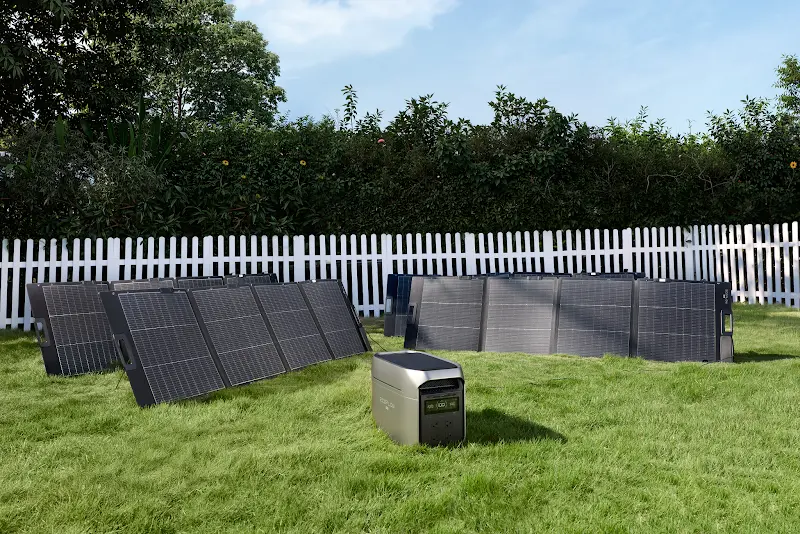
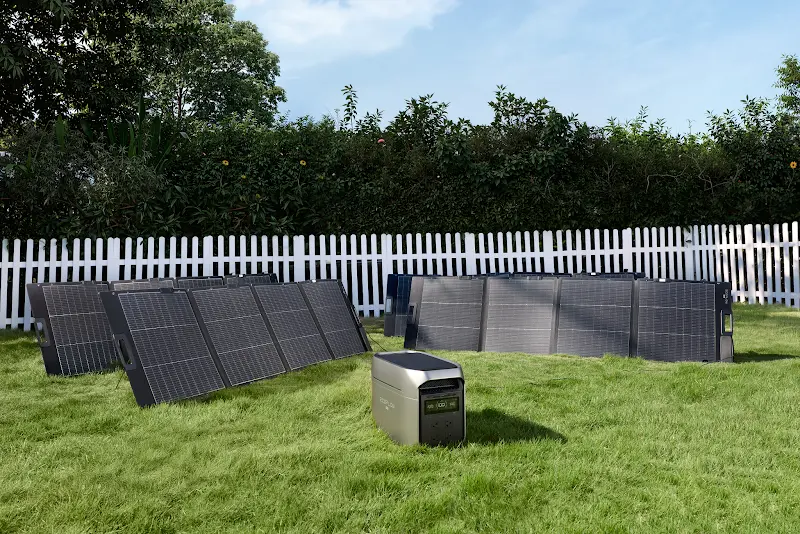
The EcoFlow DELTA 3 Classic + 220W Solar Panel serves as a straightforward option for these circumstances. Operating without the need for complex modifications or ongoing maintenance, this system utilizes clean solar energy to sustain critical household loads when the grid fails. It features sufficient output capacity to support appliances such as a refrigerator or microwave, while also keeping home Wi-Fi routers, essential lighting, and communication devices running continuously. Deploying this system creates a localized microgrid, maintaining household routines and ensuring food safety while utility crews work to restore power.
Best for Camping and Outdoor Adventures
In Canadian camping and RV travel, power use tends to follow a clear daily rhythm. During the day, it’s mostly quick device top‑ups and short‑term tool use. Evenings are when demand peaks—sustained lighting, fridge operation, and charging everything that got used during the day.
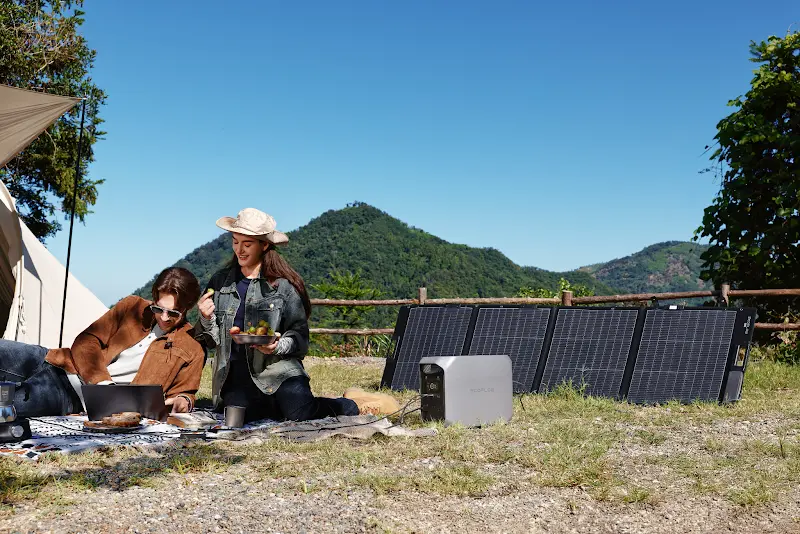
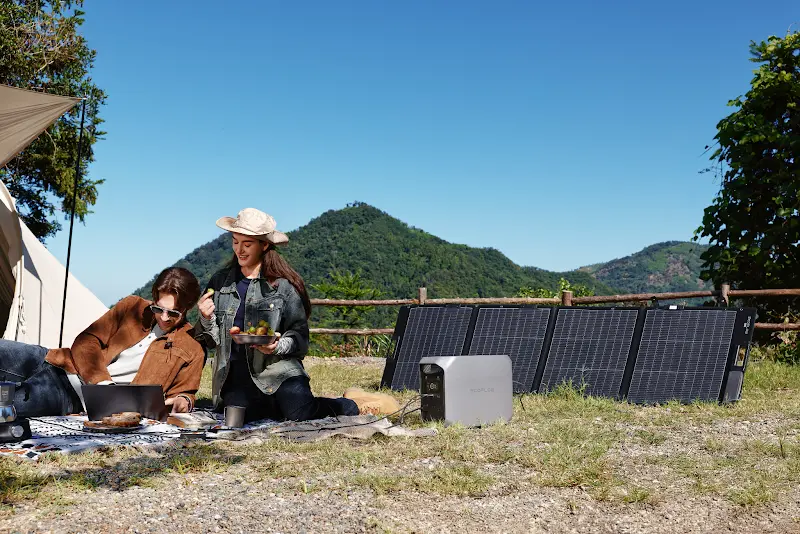
Under that pattern, the real value of a portable power station is how well it fits that schedule—charging efficiently during the day and delivering steady power when you need it most. A balanced setup like the EcoFlow DELTA 3 Max (2048Wh) + 400W Solar Panel does that well. It pulls in solar energy during peak daylight to recharge reserves, then provides stable output through the night. In real-world scenarios, this can keep a portable fridge, phones, drone batteries, and camp lighting running for extended periods, depending on load and conditions. It also reduces the need for electrical hookups and lets you stay out longer, more immersed in the experience.
Best for Cabins and Remote Properties
At remote Canadian cabins or seasonal properties, power needs are more demanding than a weekend campsite. You’re not just running one device at a time—it’s a continuous refrigerator, a cycling water pump, and communication gear that stays on around the clock.
For those conditions, your system needs steady output and the ability to manage multiple simultaneous loads. A scalable setup like the EcoFlow DELTA 3 Max Plus + 400W Solar Panel is designed to support these needs. During the day, it can power essential appliances while storing surplus solar energy when conditions allow, helping extend availability into the night or periods of low sunlight. With its expandable configuration, it is well suited for extended stays or seasonal properties where consistent power for essential loads is important.
How to Maximize Solar Generator Performance and Efficiency
Choosing a high-quality solar generator is just the first step. Proper use and maintenance are key to getting the best performance, efficiency, and lifespan from your system.
Position Solar Panels for Maximum Output
To get the most out of your panels, face them true south and tilt them to match your latitude. Adjust the angle as the seasons change, and make sure they stay clear of shadows from trees or buildings during peak sunlight hours.
Reduce Energy Waste During Use
The inverter inside your power station draws a small amount of power just by being on. To make the most of your battery, turn off the AC outlets if you’re only charging low‑draw USB devices, and unplug anything that still sips power even when it’s turned off.
Maintain Battery Health Over Time
If you’re storing your solar generator during the off‑season, don’t leave it fully drained or topped right up. Aim for about 50% to 70% charge, and keep it in a cool, dry, climate‑controlled space. That simple habit will significantly extend the battery’s overall lifespan.
Prepare for Seasonal Weather Changes
To maintain peak performance, keep solar panels free of snow, frost, and debris throughout the year. In colder months, store the power station in a warm, protected location while leaving the panels outside to harvest sunlight. Doing so helps safeguard battery health and ensures more reliable operation in harsh winter conditions.
Build a Reliable Backup Power Plan
A solid power plan treats your portable solar generator as the heart of a bigger system. Map out your priority appliances ahead of time, keep your cables organized, and run a practice blackout drill so everyone in the house knows how to get the system up and running when it counts.
Conclusion
A quality portable solar generator is an investment in energy independence, peace of mind, and the freedom to power your life wherever you go. By choosing the right battery capacity, opting for long-lasting LiFePO4 technology, and selecting a system that matches your needs whether for weekend camping trips, RV travel, or emergency home backup, you can count on reliable, clean power whenever and wherever you need it.
FAQ
Do Solar Generators Work on Cloudy Days?
Yes, solar generators work on cloudy days, but their charging efficiency will be noticeably reduced. Standard solar panels can still capture ambient, diffused sunlight through cloud cover, typically generating between 10% and 25% of their peak rated output depending on the thickness of the clouds.
Can a Portable Solar Generator Run a Refrigerator?
Yes, a portable solar generator can run a refrigerator, provided its inverter has enough continuous and surge output to handle the compressor’s startup demand. Most energy-efficient refrigerators draw around 100–200 watts during normal operation, but require a higher surge capacity for short startup spikes. Runtime will depend on the generator’s battery capacity and overall household load.
Is It Safe to Use a Solar-Powered Generator Indoors?
Yes, it is entirely safe to use a solar-powered generator indoors because it produces no toxic emissions or exhaust fumes. Unlike traditional gas generators that produce dangerous carbon monoxide, solar power stations operate silently and cleanly, making them perfectly safe for your living room or office.
Can You Leave a Solar Generator Plugged in All the Time?
Yes, you can leave most modern solar generators plugged in continuously thanks to integrated Battery Management Systems (BMS). The built-in BMS automatically stops the charging current once the battery reaches 100%, protecting the internal cells from overcharging and allowing the unit to serve as an instant backup power source.
How Many Hours Can a Solar Generator Last?
How long a solar generator lasts depends entirely on the total Watt-hour capacity of its battery and the power consumption of the connected appliances. For example, a 2000Wh generator can typically run a continuous 100-Watt device for roughly 20 hours under ideal conditions, but that runtime will decrease significantly if you plug in heavy-duty, high-wattage gear.