Inverter Battery: What It Is and How to Choose the Right One for Your Home
- What Is an Inverter Battery?
- How Does an Inverter Battery Work With a Home Inverter?
- What Types of Inverter Batteries Are Available?
- How Do You Calculate the Right Battery Capacity for Your Home?
- What Factors Should You Consider Before Buying?
- How Do All-in-One Battery Systems Compare to Separate Inverter and Battery Setups?
- Frequently Asked Questions
- The Right Battery Setup Keeps Your Home Powered Through Every Outage
Power outages and rising energy bills are pushing more homeowners toward backup power. An inverter battery stores energy and converts it into the AC electricity your appliances need, so you're covered when the grid goes down. With so many models and specs to compare, choosing the right one isn't always simple. This guide covers how inverter batteries work, how to size one, and what to look for before you buy.
What Is an Inverter Battery?
Inverter batteries are designed to both store energy and supply it to a specialized inverter, which converts the direct current (DC) energy stored by the battery into alternating current (AC) electricity that your household appliances can use.
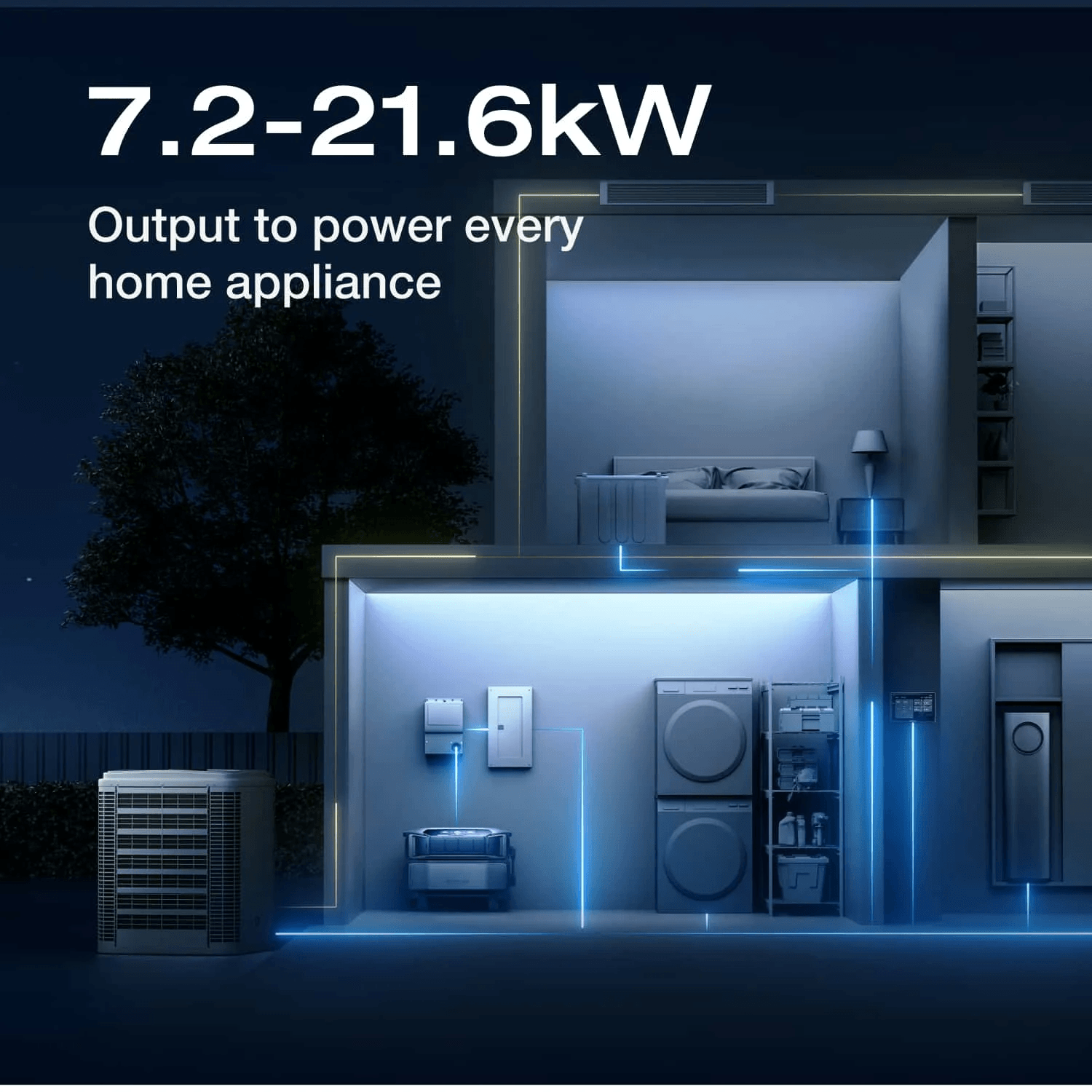
Many inverter batteries have the inverter built into the unit, such as the EcoFlow DELTA Pro Ultra, which is a high-capacity whole-home backup power system.
There are other types of home battery that only store DC electricity and require an external inverter to supply AC power.
Depending on the type, inverter batteries can be charged using a number of methods. You can charge some using a wall outlet, a vehicle, or a generator, and others integrate with solar panels and portable solar generators. Learn more about the cost of solar power to find out whether it’s a worthwhile investment.
How Does an Inverter Battery Work With a Home Inverter?
An inverter battery ensures you always have a source of power to keep your home up and running in the event of a power outage.
When you charge them using a standard wall outlet, battery inverters draw AC energy from the grid and store it as DC electricity.
If you have a power outage, the battery’s inverter automatically stops charging and converts its stored DC electricity into AC electricity for your household appliances.
What Types of Inverter Batteries Are Available?
Some of the most common inverter battery options include:
Lead-Acid Batteries: Lead-acid and AGM batteries are the most affordable option upfront, but they're heavier, need more frequent replacement, and lose capacity faster in cold weather, which is a drawback for Canadian winters.
All-in-One Lithium (LFP) Power Stations: These combine the battery and inverter in a single unit, like the EcoFlow DELTA 3 Classic (1024Wh), which can discharge in temperatures as low as 14°F (-10°C), recharge quickly, and need almost zero maintenance. They cost more upfront but usually offer better long-term value and a longer lifespan.
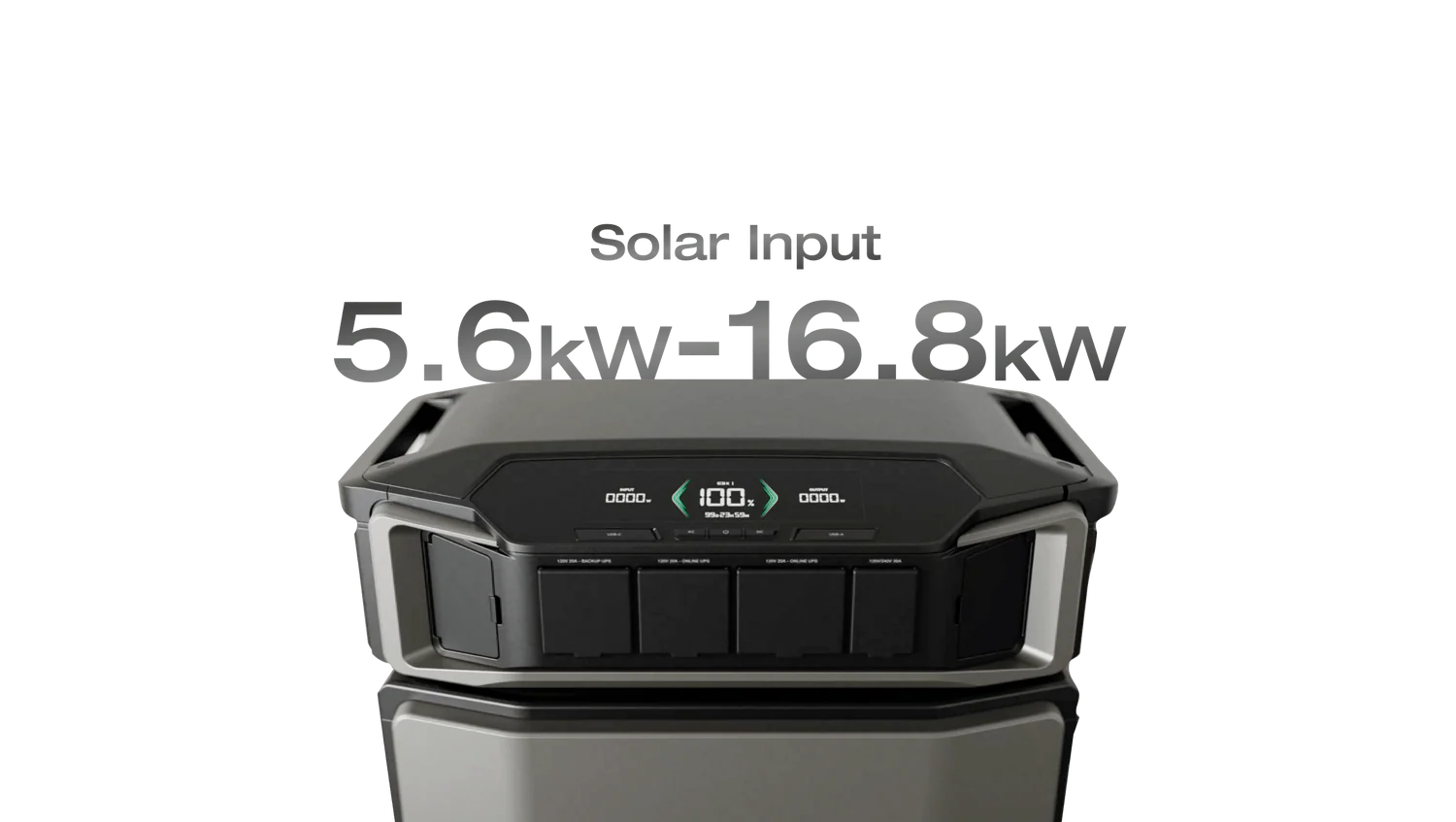
Modular Whole-Home Systems: For larger capacity needs, modular systems let you stack multiple battery units together, like the EcoFlow DELTA Pro Ultra, so you can scale your backup power as your household's needs grow.
How Do You Calculate the Right Battery Capacity for Your Home?
To calculate your battery capacity needs, you need to add up the total power output in watts of the household appliances, gadgets, and electrical equipment that you depend on.
You also need to consider how long you want to power them for if you lose access to the grid. For example, do you rarely suffer outages of more than a few hours, or do you frequently experience blackouts lasting several days? Then, you can choose a battery capacity that’s sufficient to meet your consumption habits.
If your essential appliances and lights run a 400W load, you'll need a 1600Wh solution to power them for four hours. For whole-home backup that includes an HVAC unit, plan for at least 6 kWh.
What Factors Should You Consider Before Buying?
Choosing a home battery system can be challenging, but here are the key factors you need to consider:
Battery capacity: You need enough capacity to power your appliances for the length of a typical outage.
Power output: Power output typically ranges from 1000W to 8kW and beyond, determining how many appliances you can run at once.
Type and chemistry: Inverter batteries are available in a range of chemistries, including lead acid and LFP, which affect efficiency, longevity, and climate resistance.
Inverter compatibility: If purchasing the battery and inverter separately, you must make sure they are compatible with each other.
Charging speed: Different batteries charge at different speeds, so it's worth checking how quickly a model recharges if you need fast turnaround during extended outages.
Warranty period: A long and generous warranty period gives you peace of mind regarding the quality of the battery’s components and durability.
How Do All-in-One Battery Systems Compare to Separate Inverter and Battery Setups?
All-in-one battery systems are typically compact, sleek plug-and-play units, with the battery and inverter built into a single stacked solution and no exposed wires. Separate systems, by contrast, need external cables and usually require mounting.
Buying the inverter and battery as separate components can lower the upfront cost, but takes up more space than all-in-one solutions.
Frequently Asked Questions
What Is the Difference Between an Inverter Battery and a Home Battery?
A home battery doesn't necessarily feature an in-built inverter: it can store DC energy generated by solar panels, but needs a separate inverter to convert it to AC. Inverter batteries are an all-in-one solution that feature both the battery and the inverter.
How Long Does an Inverter Battery Last During a Power Outage?
How long an inverter battery lasts during an outage depends on its battery capacity and your energy consumption habits. Small inverter batteries with capacities under 1 kWh might only power small appliances and essentials for a few hours, while larger units with over 6 kWh could power your entire home for the night.
Do You Need a Separate Inverter If You Have a Portable Power Station?
If your portable power station has a built-in inverter, you don't need an additional one. A standalone home battery without a built-in inverter still needs a separate one to supply AC power. This matters if you're pairing a battery with solar panels, since some setups require a compatible inverter to convert the energy correctly.
The Right Battery Setup Keeps Your Home Powered Through Every Outage
Weather-driven power outages are a growing concern in many parts of Canada, and if you live in a remote area, backup power is a necessity. A robust inverter battery helps you stay prepared and cut your utility bills. Explore the range of whole home backup power solutions by EcoFlow to learn about the benefits of our bundles, components, and all-in-one solutions.