Why Is Electricity Going Up in Houston?
- Key Takeaways
- Quick Decision Box:
- Current Trends in Houston Electricity Bills
- Factors Driving Houston Electricity Price Increases
- Comparing Electricity Providers in Houston
- Planning Your EV and High-Load Device Charging
- Effective Measures to Address Escalating Electricity Bills
- Smarter Bills With Battery Storage
- FAQs
Disclaimer: The information in this article is for educational purposes only and does not constitute financial, legal, or investment advice. All electricity installations must comply with NEC Article 625 and Texas local electrical codes (NFPA NEC 2023, PUC TX). Consult a licensed electrician and your utility provider before installing high-voltage systems.
Key Takeaways
Why Bills Are Rising: The average electric bill in Houston has increased due to ERCOT wholesale price fluctuations, extreme weather events, and infrastructure upgrades.
Provider Choice Matters: Texas’s deregulated market allows consumers to compare electricity providers in Houston and choose fixed-rate plans to reduce exposure to seasonal price spikes.
Shift Your Usage: High-load devices like HVAC systems, water heaters, and EV chargers contribute most to household electricity costs. Running them during off-peak hours can significantly reduce monthly bills.
Smart Tech Benefits: Integrating home battery storage like EcoFlow DELTA Pro Ultra X can store off-peak electricity or solar energy. Conditional Example: Assuming 1,000 kWh/month household usage, TOU peak $0.40/kWh, off-peak $0.11/kWh, and EV charging 30 kWh/day, monthly savings are estimated at $100–$180 (Manufacturer specs).
Quick Decision Box:
For households using ~800–1,500 kWh/month, fixed-rate plans are advisable if peak usage ≥25% of daily consumption. Homes with solar or battery systems may reduce costs further.
Next Steps: Compare electricity providers, review energy usage patterns, and consult a licensed electrician to integrate a home battery system or schedule EV charging during off-peak hours.
Current Trends in Houston Electricity Bills
Houston residents are observing higher electricity rates, reflected in average bills rising from ~$140–$150 to $180–$200/month for households consuming 1,000–1,200 kWh/month.
Calculation Assumptions:
Household consumption: 1,000–1,200 kWh/month
TOU peak price: $0.40/kWh (2–7 PM)
Off-peak price: $0.11/kWh (10 PM–6 AM)
EV daily charging: 30 kWh/day
Example: A family using central AC during a heatwave could see $40–$60/month extra from peak TOU hours alone. Daily EV charging adds $100–$120 under these assumptions. Using battery storage like EcoFlow DELTA Pro Ultra X to shift charging off-peak may lower peak usage and costs conditional on TOU schedules and battery capacity.
Factors Driving Houston Electricity Price Increases
The reasons for an increase in electricity prices in Houston must be analyzed comprehensively because a number of causes can be identified.
Fuel Costs and Generation Capacity
A considerable part of the electricity generated by Houston facilities is obtained through natural gas-fired power plants. As soon as gas prices increase, utilities need to cover generation costs and raise retail prices as well. For instance, during the spring period, natural gas spot prices started to grow due to planned shutdowns of facilities and increased worldwide demand. As a result, residents of Houston face price increases for their energy consumption.
Seasonal and Extreme Weather
Another factor that impacts the rate is connected to the Houston climate conditions. The area has long summer months that make people turn on air conditioners all the time. During August, Houston usually has temperatures higher than 95 degrees Fahrenheit; thus, demand grows. Utilities such as CenterPoint Energy may introduce peak rates that will cause an increase in the bills for residents who need to turn on the conditioner every hour. Thus, people can face a price increase in electricity bills up to 15-20%.
Winter cold snaps also affect bills. In February, cold fronts may cause higher natural gas consumption for power generation, increasing wholesale prices. This indirectly raises retail rates, even for households using primarily electricity for cooling.
Infrastructure Constraints and Grid Maintenance
Transmission and distribution maintenance also impacts rates. Houston’s growing population and industrial expansion create higher demand on existing infrastructure. Utility companies sometimes pass these costs onto consumers, reflecting in Houston electricity bill increases. For example, projects to upgrade substations or reinforce the grid for hurricane resilience can temporarily raise local electricity costs.
Comparing Electricity Providers in Houston
Houston has a deregulated electricity market, allowing consumers to compare electricity providers in Houston to find competitive rates, renewable energy options, and flexible plans. Understanding differences in plan structures is essential.
Plan Type | Pros | Cons |
|---|---|---|
Fixed | Locks in price per kWh (e.g., $0.11/kWh for 12 months), protects from spikes | May not benefit from wholesale price drops |
Variable | Can save if wholesale rates drop | Exposed to spikes during peak demand or extreme weather |
Fixed vs. Variable Rate Plans
Fixed Rate Plans: These plans lock in a price per kWh for the contract duration, typically 6–36 months. They offer stability against market fluctuations. For example, a 12-month fixed rate plan at $0.11/kWh protects the consumer from sudden spikes in natural gas prices.
Variable Rate Plans: Prices fluctuate based on wholesale market rates. Households on variable plans may benefit when fuel prices drop but are exposed to risk during extreme weather or global gas demand changes, contributing to a higher Houston electricity bill increase.
Renewable Options
Green energy plans are available in more than one company, with some offering partial offsets using credits in solar and wind energy production. The household using renewable energy will pay slightly higher prices per kWh, but the overall environmental impact will be less. For example, a household using small solar offset energy could potentially save around $20-$40 every month.
Real-Life Example
The recent move of an individual residing in West Houston into a fixed green energy credit provider resulted in lower monthly electricity bills, even during summer when the amount charged for electricity increased. By comparing electricity providers in Houston, they locked in a predictable cost and avoided peak rate spikes.
Planning Your EV and High-Load Device Charging
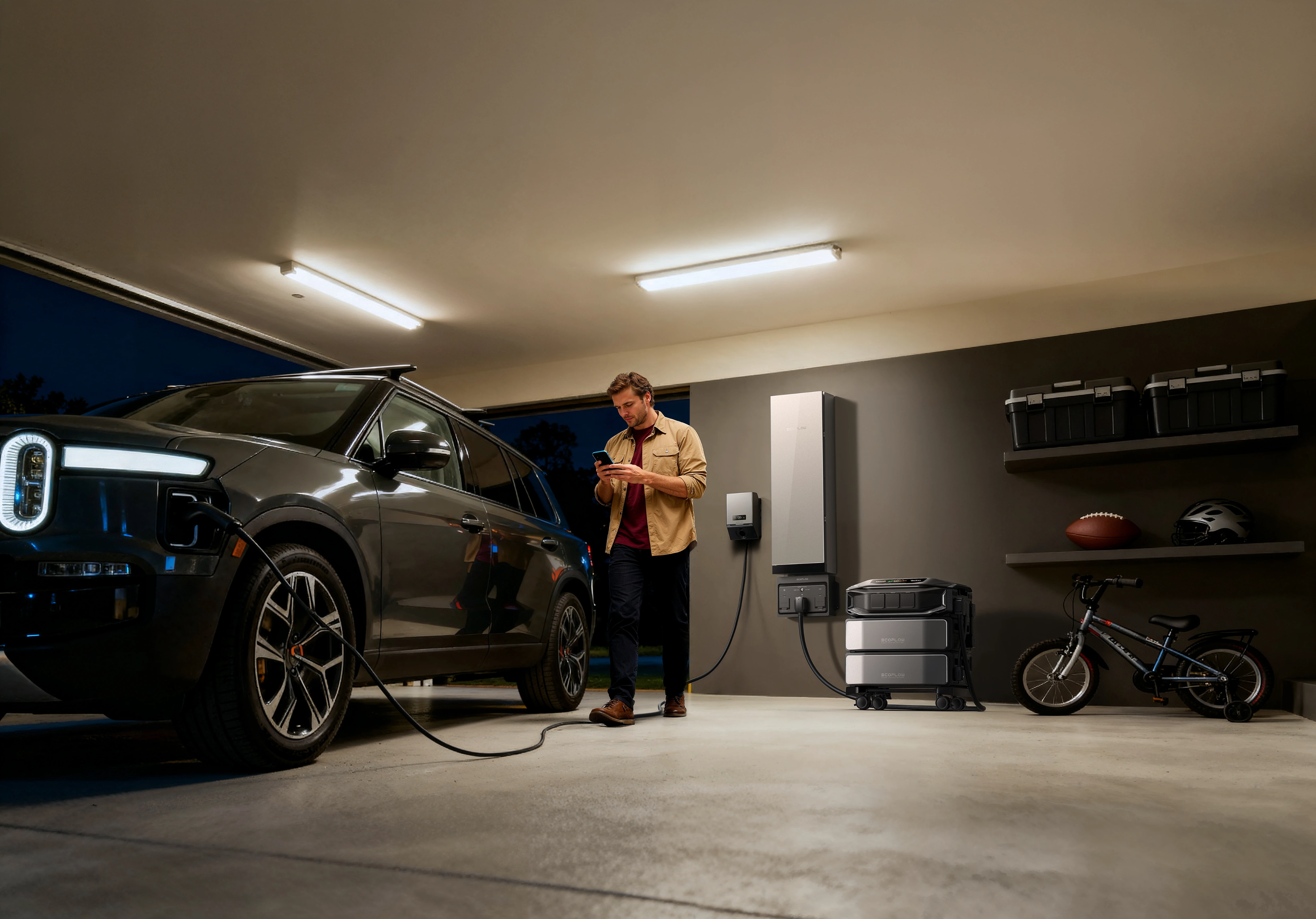
LA Level 2 EV charger draws 7–11 kW; daily charging may add 300–500 kWh/month. Charging during peak periods increases bills substantially. Without planning, this can be a substantial monthly cost.
Conditional Tip: Using smart battery storage such as EcoFlow DELTA Pro Ultra X allows charging from stored off-peak energy, potentially reducing costs if usage aligns with TOU rates and daily solar/battery availability.
In addition to EVs, HVAC, water heaters, and dryers contribute significantly to rising bills. Scheduling these during off-peak hours or leveraging battery storage can lower the average electric bill in Houston.
Effective Measures to Address Escalating Electricity Bills
With rising bills in Houston, proper energy management becomes an important aspect that residents have to take into account in their daily lives. In particular, utilizing solar energy, installing home batteries, and energy monitoring are good steps to start saving money on a monthly basis.
Combination of Solar Panel and Battery Storage System
The combination of a solar panel with a battery system allows you to produce and store energy. Using the EcoFlow DELTA Pro Ultra X battery system and the 10 kW solar array will supply daily household energy needs. This may help you save up to $500 per month, depending on your household consumption and TOU rates.
Home Energy Monitoring
The use of smart home energy management systems enables the user to identify the devices that contribute the most to the growth of the electricity bill in Houston. Alerts from home energy management allow the consumer to optimize their energy expenditure and reduce their monthly expenses. Over time, these small adjustments compound into substantial savings.
Benefits Beyond Cost Savings
Minimizes the impact of peak electricity consumption from the electric grid.
Allows consumers to get backup power during blackouts.
Helps manage expenses in advance, especially when taking into account the growth of electricity prices in Houston.
In addition, it does not matter whether the family owns electric cars or not; however, the smart energy monitor will help manage HVAC, lighting, and household appliance systems.
Smarter Bills With Battery Storage
Rising Houston electricity bills result from fuel costs, seasonal demand, and infrastructure investments. Homeowners can manage expenses by comparing providers, using smart energy strategies, and integrating home battery storage. Systems like the EcoFlow DELTA Pro Ultra X provide conditional cost-saving opportunities and enable better control over household energy usage.
FAQs
Q1: Who has the cheapest electricity in Houston?
The cost depends on your service provider, your plan, and how much energy you use at home. Finding the least expensive plan requires comparing Houston electricity providers, assessing different rates, evaluating fixed and variable plans, and considering renewable energy choices. Small changes in energy use may impact your monthly Houston electricity bill.
Q2: Can you negotiate electricity rates?
Yes, negotiations are possible. Certain providers have provisions for negotiating fixed-rate or long-term contracts. Providers usually offer different plans with various incentives, promotional rates, and discounts for high usage. You can review your plan and compare it to help lower the average electric bill in Houston over time.
Q3: What uses the most electricity at home?
HVAC systems, water heaters, and electric vehicle chargers consume the most energy. Be aware of such devices and make certain you adjust their usage as far as is reasonably possible to reduce your Houston electricity bill.
Q4: Does turning off lights really save energy?
Yes, it helps considerably since you do not use any unnecessary power and, thus, lower your Houston electricity bill. Installing energy-saving LED bulbs will reduce the cost further as they consume significantly less power. For families with multiple lights or long daily usage, these small actions can noticeably impact your average electric bill in Houston.
Q5: Can a normal electrician install an EV charger?
A licensed electrician can, but outdoor setups require experience with 240V circuits, GFCI protection, and weatherproofing to comply with NEC and TX codes.
For press requests or interview opportunities, reach out to our media team
media.na@ecoflow.com