How Many Watts Does an RV Air Conditioner Use?
- How Many Watts Does an RV Air Conditioner Use on Average?
- How Does BTU Rating Affect RV AC Wattage?
- What Is the Difference Between Starting and Running Watts?
- How Do 30-Amp and 50-Amp RV Systems Handle AC Power?
- How Do You Calculate Your RV AC's Total Power Usage?
- What Factors Increase RV Air Conditioner Power Consumption?
- How Can You Power an RV Air Conditioner Off-Grid?
- Frequently Asked Questions
- Reliable Portable Power Keeps Your RV Air Conditioner Running Wherever You Camp
Running an RV air conditioner takes more power than most other onboard systems combined, and knowing the real number matters whether you're sizing a generator, a battery bank, or your shore power hookup. The answer heavily depends on your unit's BTU rating and whether it's starting up or already running.
How Many Watts Does an RV Air Conditioner Use on Average?
Most rooftop RV air conditioners draw between 1,300 and 1,800 running watts once the compressor is running, with startup watts spiking two to three times higher. A 13,500 BTU unit, the most common size on travel trailers and mid-size motorhomes, typically pulls 1,300 to 1,600 running watts and 2,800 to 3,000 watts at startup. How watts vary across different RV AC sizes follows the same running-versus-startup pattern.
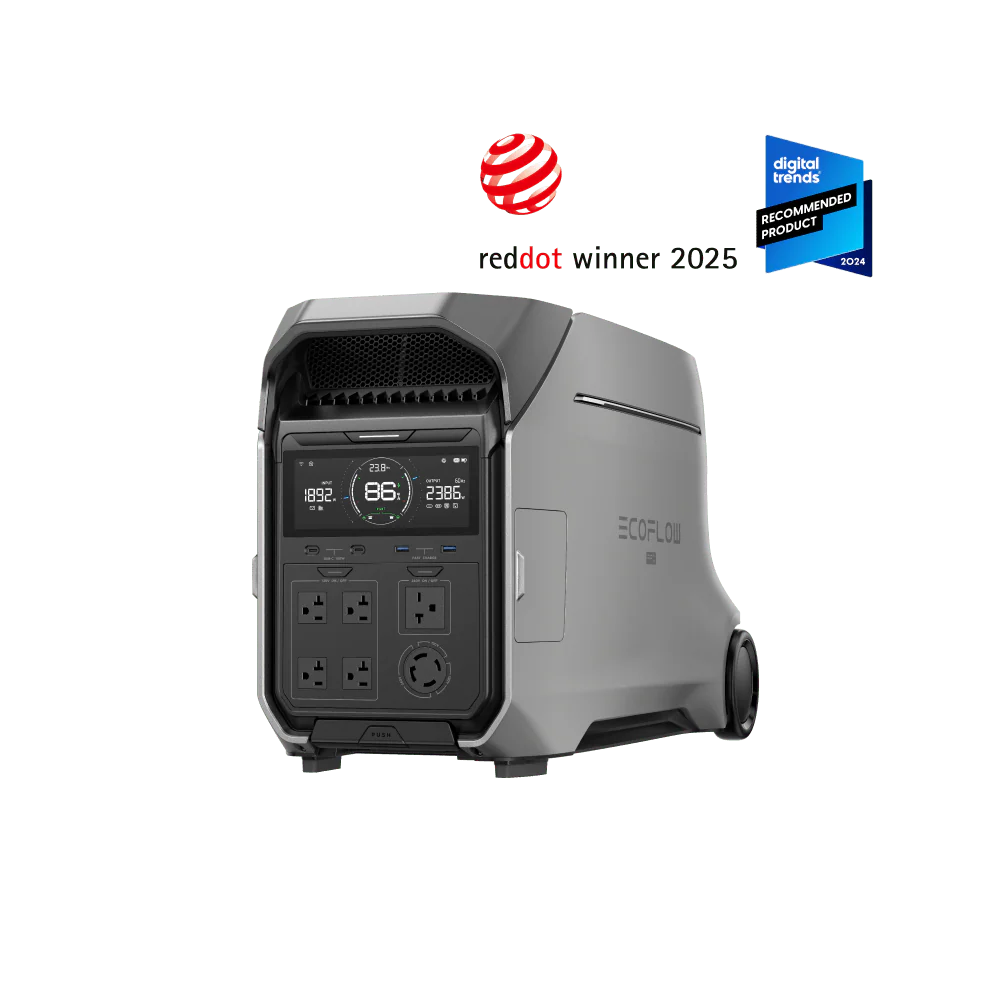
That startup number trips up a lot of RVers: a generator or power station rated for the running load alone can stall the instant the compressor kicks on. The EcoFlow DELTA Pro 3 Portable Power Station is built for that gap, with 4,000W of continuous output and an 8,000W surge capacity, giving a single 13,500 BTU AC unit room on both ends.
How Does BTU Rating Affect RV AC Wattage?
BTU (British Thermal Unit) rating measures how much heat an air conditioner removes per hour, and it scales closely with wattage. A bigger unit cools a bigger space, but it asks more of whatever's supplying its power.
5,000–8,000 BTU Units
Compact units common on smaller campers and teardrop trailers draw up to 900 running watts and 2,000 watts at startup for the largest units in this range (8,000 BTU). This is the easiest size to run off a smaller battery-based system.
10,000–13,500 BTU Units
The standard range for most travel trailers and Class C motorhomes: 1,100 to 1,600 running watts, with startup spikes reaching 2,200 to 3,200 watts.
15,000+ BTU Units
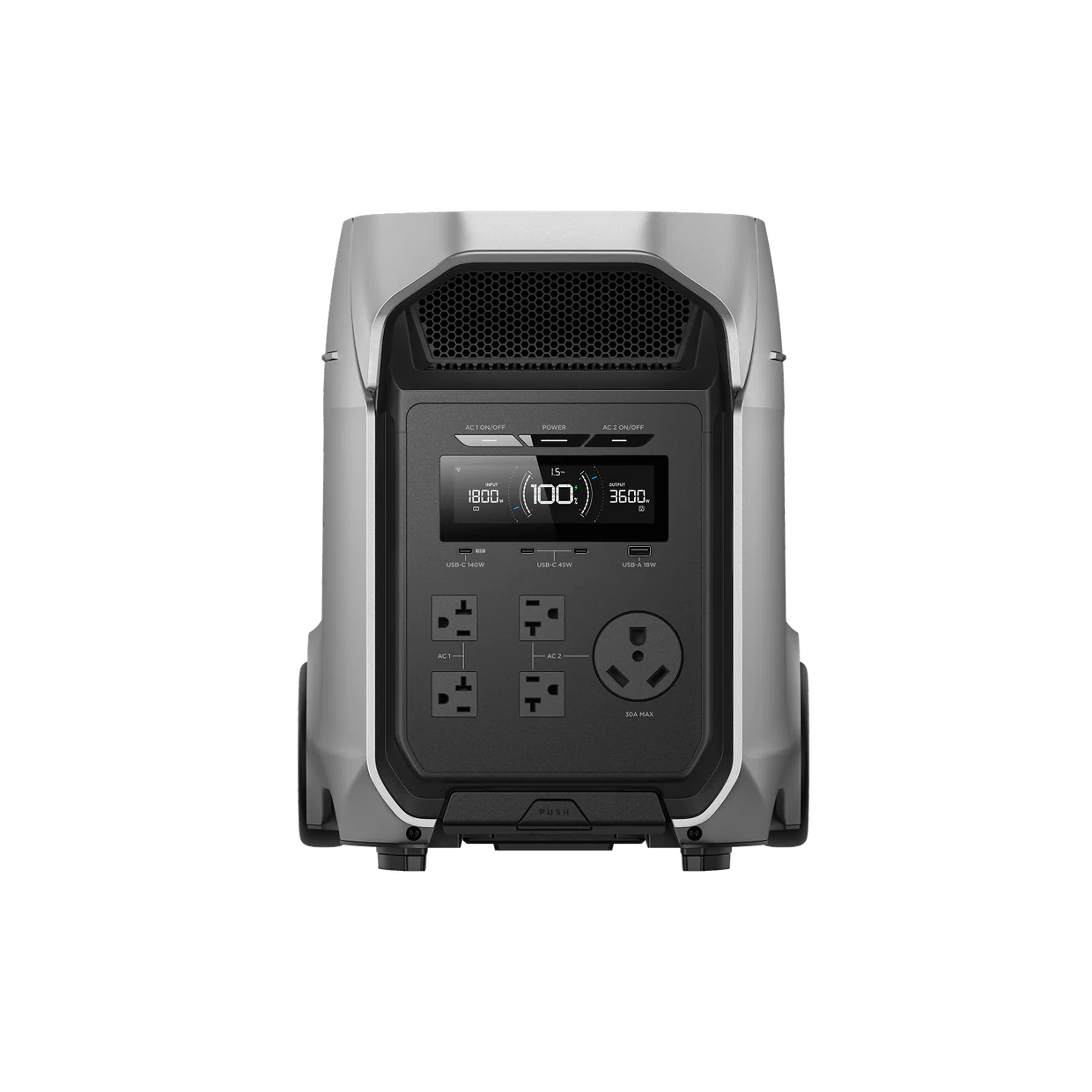
Larger Class A motorhomes often run 15,000 BTU units, pulling 1,500 to 1,800 running watts and hitting 3,500 to 4,000 watts on startup. Running one off-grid, especially alongside a second AC unit, is where a higher-capacity setup like the EcoFlow DELTA 3 Ultra Plus (3072Wh) helps, with 3,600W of rated output and a 7,200W surge rating.
What Is the Difference Between Starting and Running Watts?
Running watts are what the compressor draws at a steady state. Starting watts - also called surge or LRA (locked rotor amperage) watts - are the brief spike needed to get the compressor moving from a dead stop, and that number determines whether your power source can handle the AC at all.
A generator or battery system has to be sized around the starting wattage, not the running wattage. Soft-start devices, common as add-ons or built into newer units, can cut that startup spike by roughly half.
How Do 30-Amp and 50-Amp RV Systems Handle AC Power?
A 30-amp RV electrical system, running on a single 120-volt line, tops out around 3,600 watts total (30 amps × 120 volts). That's enough for one rooftop AC unit plus a few smaller appliances, but leaves little room for a second AC or other high-draw appliances running at once.
A 50-amp system uses two 120-volt lines (240 volts combined) and can handle up to 12,000 watts, which is why most rigs built for two air conditioners, like larger fifth wheels and Class A motorhomes, come wired for 50 amps.
How Do You Calculate Your RV AC's Total Power Usage?
Add up the running watts of everything you plan to use alongside the AC: lighting, a fridge, a water pump, and similar draws. Confirm your power source's continuous output covers that combined total, and separately that its surge rating covers the AC's starting watts on top of whatever else is running. The math for sizing a generator to an RV air conditioner comes down to matching both numbers.
What Factors Increase RV Air Conditioner Power Consumption?
A few conditions push AC power draw higher than the baseline numbers above: high outdoor temperatures and direct sun on the roof, poor insulation, and an aging unit with a dirty coil or low refrigerant. Each forces the compressor to work harder and run longer, and other high-draw appliances only add to that load.
How Can You Power an RV Air Conditioner Off-Grid?
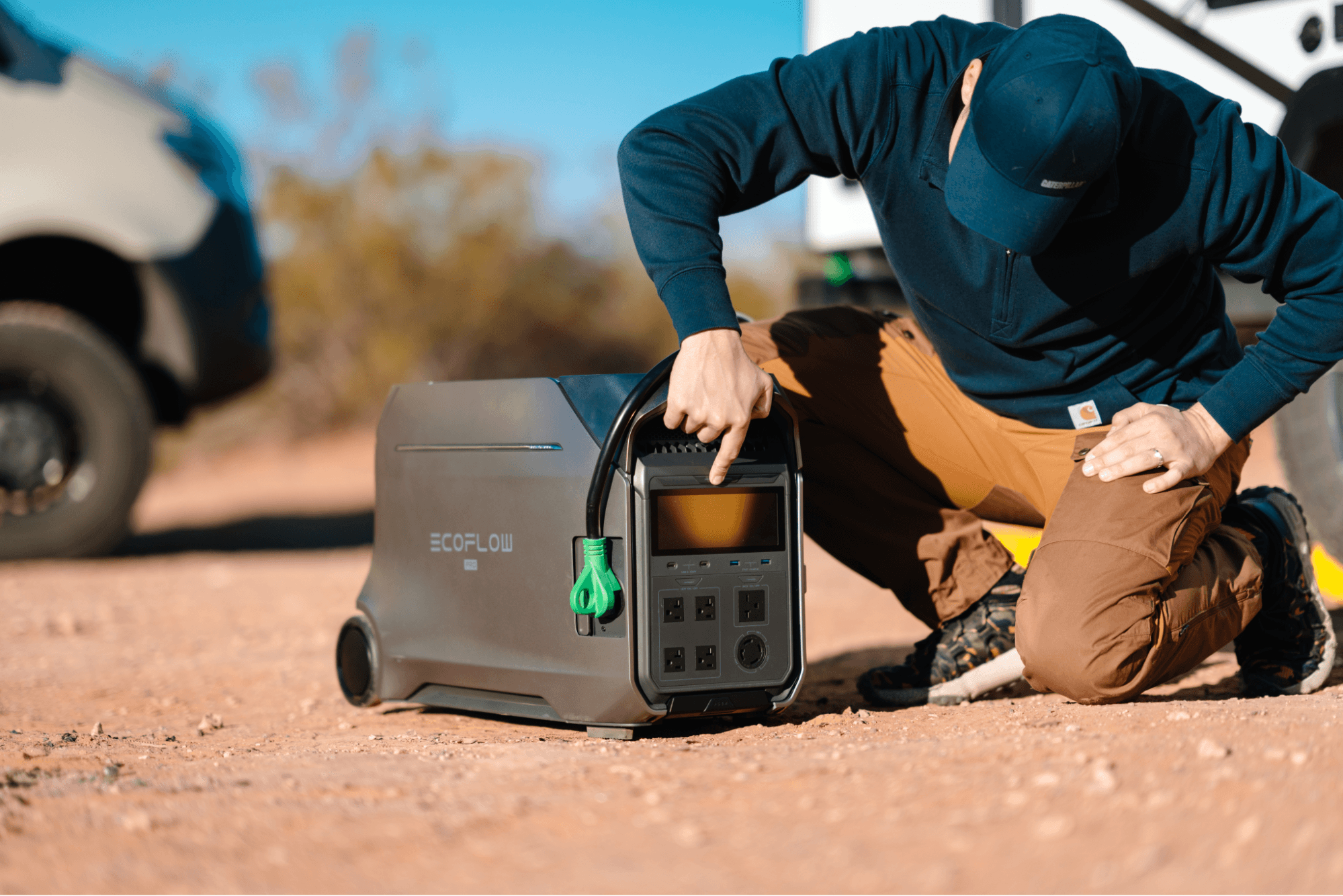
Away from shore power, your options are a generator, a large battery-based power station, or both paired with solar panels. A gas generator handles the surge fine but adds noise, fumes, and fuel logistics, while a battery-based power station runs silently and recharges from solar during the day - useful for longer boondocking stretches.
The key spec to check either way is surge output, not just rated wattage. The same power-matching logic applies at home base, where whole home backup power solutions cover a bigger footprint, and matching solar panel wattage to your AC's daily draw is its own calculation.
Frequently Asked Questions
How Many Watts Do You Need to Run a 13,500 BTU RV AC?
A 13,500 BTU RV AC typically needs 1,300 to 1,600 watts to run continuously, plus a startup surge of 2,200 to 3,200 watts. Your power source needs enough continuous output to sustain operation and enough surge capacity to get the compressor started without tripping a breaker.
Why Does an RV AC Need More Power to Start Than to Run?
The compressor motor needs a short burst of extra torque to overcome resistance and start spinning from a complete stop. That burst, lasting a second or two, can require two to three times the wattage of normal operation. Once the compressor reaches its regular speed, power draw drops back down to the standard running wattage.
Reliable Portable Power Keeps Your RV Air Conditioner Running Wherever You Camp
Sizing power for an RV AC comes down to two numbers: the running watts it needs to stay cool and the startup surge it needs to get there. Get either one wrong, and you're looking at a unit that cuts out mid-cycle or a generator that trips on startup.
Whether you're running a single 13,500 BTU unit off a 30-amp hookup or two units on a 50-amp rig, both the EcoFlow DELTA Pro 3 Portable Power Station and the EcoFlow DELTA 3 Ultra Plus (3072Wh) are built with that startup spike in mind. Match the numbers to your rig, and you can stop worrying about power and enjoy the campsite instead.
For press requests or interview opportunities, reach out to our media team
media.na@ecoflow.com