Rving During Hurricane 2026: What Full-Time Travelers Should Know and Do
- Understanding the Risks of Hurricane Season 2026
- What RV Type Are You Traveling In?
- Evacuation Planning for Full-Time RVers
- How to Prepare an RV for a Hurricane Evacuation
- How to Protect an RV from a Hurricane When Leaving It Behind
- Assembling an Emergency Kit for Hurricane Season
- Securing Reliable Power Before the Storm Hits
- Post-Storm Safety and RV Inspection
- Evacuate Early And Keep Essential RV Power Ready
- FAQs
RV living offers freedom, but extreme weather requires strict safety protocols. As we approach hurricane season 2026, full-time travelers must prioritize severe weather planning. RVs cannot withstand high winds or flooding. Knowing early evacuation routes, understanding rig security, and packing a comprehensive emergency kit for hurricane season are critical steps. This guide provides actionable, factual procedures to keep you, your family, and your rolling home safe during severe coastal storms.
Understanding the Risks of Hurricane Season 2026
Before making any safety plans, RVers must understand the timeline and geographical risks associated with severe coastal weather. Knowing what to expect allows you to plan your travel routes accordingly.
The Atlantic hurricane season runs from June 1 through November 30. During hurricane season 2026, meteorologists will release regular updates regarding storm formations in the Atlantic Ocean and Gulf of Mexico. RVers staying in coastal states like Florida, Texas, and the Carolinas must monitor the National Hurricane Center (NHC) website daily.
RVs are built for mobility, not for structural endurance against extreme weather. RVs are high-profile vehicles, and strong crosswinds can become dangerous well before hurricane-force conditions. Treat tropical-storm-force winds, exposed bridges, open highways, and gusty evacuation routes as serious hazards, especially for travel trailers and fifth wheels. Because RVs lack a deep foundation, they are highly susceptible to sudden storm surges and flash flooding. Understanding these physical limitations is the first step in making safe decisions.
What RV Type Are You Traveling In?
A motorhome, fifth wheel, travel trailer, truck camper, and camper van each have different risk factors. Before hurricane season, check your owner’s manual and note your rig’s height, gross vehicle weight rating, axle layout, hitch type, tire load rating, and roof-mounted equipment.
Travel trailers and fifth wheels are especially sensitive to crosswinds because of their side profile and tow connection. Motorhomes may feel more stable but still have large flat sides, roof equipment, and limited maneuverability in evacuation traffic. Camper vans are usually easier to move quickly, but they still should not be used as shelter during severe wind, surge, or flooding.
If you are unsure how your RV should be secured, towed, or stored before a storm, contact the manufacturer, dealer, campground manager, or a qualified RV service provider before hurricane season begins.
Evacuation Planning for Full-Time RVers
When a storm is approaching, deciding when to leave is critical. Authorities always advise RVers to evacuate rather than shelter in place.
Do not wait for a mandatory evacuation order. By the time a mandatory order is issued during hurricane season 2026, highways will be congested, and fuel stations may be empty. As a practical planning rule, aim to leave 48–72 hours before forecast landfall when local conditions suggest evacuation may become necessary. The exact timing should depend on official evacuation orders, fuel availability, road capacity, traffic conditions, and when tropical-storm-force winds are expected to arrive.
Always have a primary and secondary evacuation route. Coastal highways often convert to one-way traffic moving inland during a major storm. Use physical paper maps in addition to GPS, as cellular networks frequently fail during mass evacuations. Identify inland RV parks outside the flood zones and call ahead to secure a reservation.
How to Prepare an RV for a Hurricane Evacuation
Leaving an area quickly requires a systematic approach. You must secure your rig for highway travel under potentially high-wind conditions.
Retracting and Securing Exteriors
Knowing how to prepare an rv for a hurricane evacuation starts with the exterior. Retract all slide-outs and secure them with physical travel locks to prevent them from deploying during heavy crosswinds. Retract all awnings, stow your entry stairs, and disconnect all city water, sewer, and shore power cables.
Securing the Interior
When learning how to prepare an rv for a hurricane, you must account for items shifting violently while driving. Pack away all loose countertop appliances, secure refrigerator doors with heavy-duty latches, and close all roof vents tightly. Close all window blinds to prevent flying glass from spreading if a window breaks during transit.
Fuel and Weight Management
Proper weight distribution improves driving stability in heavy winds. Empty your black and grey water holding tanks to reduce sloshing weight. Fill your vehicle’s gas tank completely. Part of knowing how to prepare an rv for a hurricane is ensuring you have enough fuel to sit in stagnant evacuation traffic for 12 hours or more without running out.
How to Protect an RV from a Hurricane When Leaving It Behind
Sometimes, mechanical failures or sudden storm shifts mean you must evacuate in a passenger vehicle and leave your rig behind. If this happens, you must physically anchor your home.
Anchoring and Tie-Down Systems
If you must leave your rig, knowing how to protect an rv from a hurricane involves heavy-duty ground anchors. If you must leave an RV behind, ask the campground owner, RV manufacturer, or a qualified anchoring professional whether temporary tie-downs are appropriate for that site and rig. Soil type, anchor depth, strap rating, frame attachment points, and expected wind exposure all affect whether anchoring is safe or effective.
Managing Tank Weights
Another crucial step in how to protect an rv from a hurricane is increasing the rig's baseline weight. Fill your freshwater tank to its maximum capacity. Water weighs 8.3 pounds per gallon; a full 50-gallon tank adds over 400 pounds of low-center-of-gravity weight, making the RV harder for wind to lift.
Sealing Against Water Damage
Understanding how to protect an rv from a hurricane also requires flood prevention. Turn off the main propane valve at the cylinders. Cover roof vents and air conditioning units with heavy tarps, securing them with ratchet straps. Place sandbags around the tires and entry doors to divert rising ground water away from the undercarriage.
Assembling an Emergency Kit for Hurricane Season
Whether you evacuate in your RV or your passenger car, having a standalone survival bag is mandatory. This ensures you have supplies if you become stranded.
Food and Water Requirements
Your emergency kit for hurricane season must sustain you for a minimum of 72 hours. Pack one gallon of drinking water per person per day. Include non-perishable food items that require no cooking, such as protein bars, canned meats, and dried fruits. Pack a manual can opener and disposable utensils.
Medical and First Aid Supplies
Pharmacies will close during a storm. Ensure your emergency kit for hurricane season contains a 14-day supply of all prescription medications. Pack a comprehensive first-aid kit containing bandages, antiseptic wipes, tourniquets, and pain relievers.
Documentation and Communication Tools
Place physical copies of your RV insurance, registration, and medical records in a waterproof bag. Include a battery-powered or hand-crank NOAA weather radio to receive updates when cell towers go down. Keep physical cash in small denominations, as credit card machines will not work during widespread power grid failures.
Securing Reliable Power Before the Storm Hits
Grid power is the first utility to fail during extreme weather. RVers must have a standalone power source to run medical devices, refrigerators, and communication tools.
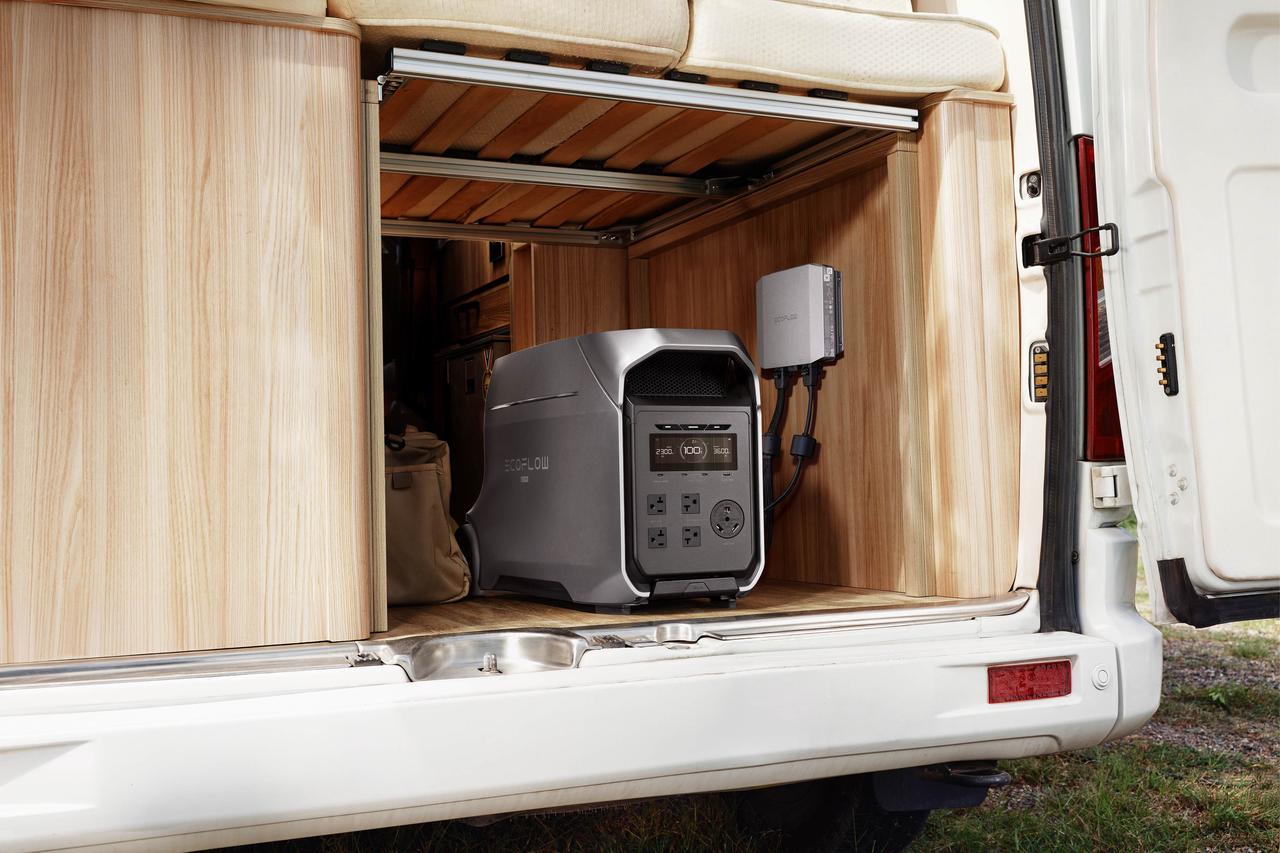
Power outages are inevitable. The EcoFlow DELTA 3 Ultra Plus (3072Wh) + 500W Solar Panel delivers 3600W output and features a Storm Guard App Mode that automatically stores backup power before extreme weather hits your campsite.
If you rely on portable solar panels, do not leave them outside during high winds. Bring them inside the RV before the storm makes landfall. Once the storm passes and the sky clears, set them up in a secure area free of overhead debris to recharge your battery banks.
Post-Storm Safety and RV Inspection
Returning to an RV after a hurricane requires caution. The physical environment remains dangerous long after the wind stops.
Do not return to the campsite until local authorities officially declare the roads safe. Avoid driving an RV through standing water. You cannot gauge the depth of a flooded road, and water can easily damage the engine or sweep a large vehicle away.
Before entering the RV, inspect the exterior. Look for downed power lines resting on the metal frame. Check the roof for puncture damage from fallen tree branches. Inspect the undercarriage for water lines to determine if the axles were submerged. If you smell gas, do not enter the RV; leave the area immediately and contact emergency services.
Evacuate Early And Keep Essential RV Power Ready
Never risk riding out a severe storm inside an RV. Evacuate early, secure your belongings, and maintain reliable backup power. Prepare early. Power your rig with the EcoFlow DELTA 3 Ultra Plus (3072Wh) + 500W Solar Panel. It charges in just 48 minutes via dual charging, offering a reliable 10-year battery life for all off-grid emergency needs.
FAQs
Q1: Is an RV safe during a hurricane?
No. RVs are not designed to withstand the extreme winds, flying debris, or sudden flooding associated with severe storms. Authorities strongly advise against sheltering inside an RV during a hurricane; you should always evacuate to a sturdy, permanent building or drive far inland.
Q2: What wind speed will flip an RV?
While it depends on the specific weight and height of your rig, sustained winds or sudden gusts of 60 miles per hour can easily tip or completely flip a motorhome or travel trailer. This is why you must evacuate before tropical-storm-force winds arrive.
Q3: Which month is worst for hurricanes?
In the Atlantic, September is historically the most active and dangerous month for hurricanes. However, the peak of the storm season generally runs from mid-August to late October, requiring full-time RVers in coastal states to be on high alert during this period.
Q4: What is in the emergency supply kit for a hurricane?
A comprehensive emergency kit for hurricane season should include one gallon of water per person per day, non-perishable food, a manual can opener, a 14-day supply of prescription medications, a fully stocked first-aid kit, physical copies of important documents, a NOAA weather radio, and physical cash.
Q5: How long should an emergency supply kit for a hurricane last?
Your emergency supplies should be able to independently sustain you and your family for a minimum of 72 hours (three days). However, if you are traveling in areas prone to severe infrastructure damage and long-term grid failures, carrying enough supplies for five to seven days is highly recommended.
Safety Disclaimer: This article provides general RV hurricane preparedness information for hurricane season 2026. It does not replace official evacuation orders, local emergency management guidance, RV manufacturer instructions, or advice from qualified engineers, mechanics, or emergency professionals. Always follow updates from the National Hurricane Center, FEMA, state emergency management agencies, county officials, and local law enforcement first.
For press requests or interview opportunities, reach out to our media team
media.na@ecoflow.com