Plug-In Solar with Battery Storage: Why Adding a Power Station Changes Everything
- What Is Plug-In Solar?
- Why Doesn't Plug-In Solar Alone Solve Your Power Needs?
- What Does a Power Station Add to a Plug-In Solar Setup?
- Plug-In Solar vs. Plug-In Solar with Battery Storage
- How Does Battery Storage Change What You Can Power?
- How Do You Set Up Plug-In Solar with a Power Station?
- What Should You Look for in a Power Station for Plug-In Solar?
- Frequently Asked Questions
- A Power Station Turns Plug-In Solar into a Reliable, Around-the-Clock Energy Source
Plug-in solar is becoming increasingly popular, and pairing it with battery storage makes it even more valuable. Battery storage lets you use the clean energy your panels already generate at night, during peak time-of-use rates, and during blackouts, instead of losing it the moment the sun goes down.
Learn what plug-in solar is, what battery storage adds, and how to set it up.
What Is Plug-In Solar?
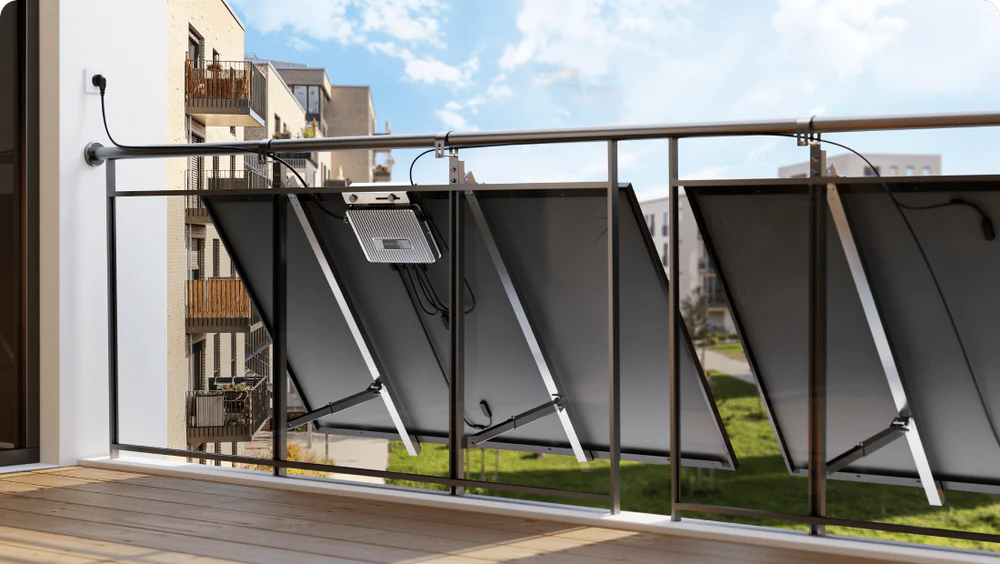
Plug-in, balcony, or apartment solar is an entry-level home solar system that typically uses 1–3 solar panels, also called photovoltaics, with a total size between 400W and 1200W.
A microinverter converts the panels’ output to AC power, feeding clean energy straight into your household electricity. Systems like the EcoFlow STREAM Microinverter handle this conversion. On its own, a microinverter setup only lets you use solar power as it’s generated, with no way to store what you don't use right away.
While it won’t be enough to power a whole home, this setup excels at offsetting your baseload usage and can significantly reduce your monthly electrical bills by reducing your draw from the grid.
The EcoFlow STREAM Microinverter is available in Maryland and Utah at the time of writing. Please check the EcoFlow website for updates on expansion to more states.
Why Doesn't Plug-In Solar Alone Solve Your Power Needs?
While plug-and-play systems will generate power and save you money, they’re typically limited to 1,200W, which cannot run an entire home.
They also don’t offer true energy independence. If the grid goes down, you still lose power, because plug-in inverters shut off automatically for safety reasons the moment they detect an outage.
Without stored power, there’s nothing left to draw on until the grid comes back, which is why pairing panels with a small solar panel kit and home battery closes that gap.
What Does a Power Station Add to a Plug-In Solar Setup?
A plug-in solar system without storage can only use energy the instant it’s produced. Adding battery storage changes that by capturing the energy you don’t use right away so you can draw on it later.
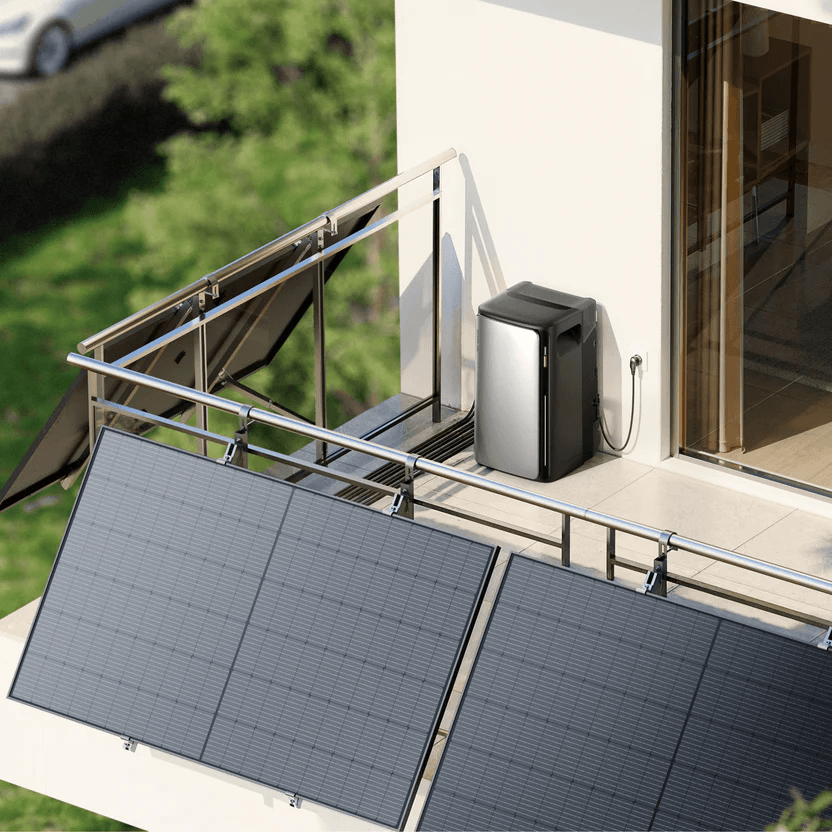
The EcoFlow STREAM Ultra is built for exactly this — it’s a microinverter and battery in a single plug-in unit, so instead of adding a separate battery to your existing setup, the storage is already built in. It also includes a built-in battery management system that governs how energy moves in and out of the battery, so charging and discharging stay efficient and safe.
(Like the EcoFlow STREAM Microinverter, it’s currently only available in Maryland and Utah.)
Plug-In Solar vs. Plug-In Solar with Battery Storage
The panels and the amount of power they generate stay the same either way. What changes is when and how you can use that power.
A plug-in-only setup sends every watt straight into your home the moment it's produced. If you're not using much electricity during the day, that energy goes to waste, and you get nothing from your panels at night or during an outage.
Add battery storage, and the same system banks your excess daytime production instead of losing it. You can then draw on it after sunset, during expensive peak-rate hours, or when the grid drops out, all without adding panels or increasing your system's generation capacity.
How Does Battery Storage Change What You Can Power?
Daytime Solar Use
With a plug-in system, your home uses the energy you produce as you produce it, reducing grid demand and lowering your bill during the day. But since panels only generate power in daylight, anything you don't use in the moment is lost unless it's stored.
Nighttime and Peak-Hour Use
If you're away from home during the day, you miss out on most of your own energy production. That’s where building a home battery backup system comes in, letting you hold onto that energy so you can run appliances at night instead.
Time-of-use (TOU) electricity rates also tend to peak in the early evening, right as the sun sets. Stored solar power lets you run appliances through those peak hours without paying peak rates.
Backup Power During an Outage
Battery storage keeps essential devices running when the grid goes down, since the stored energy doesn't depend on the panels producing power in real time. You can plug fridges, routers, and medical equipment into the battery's output ports and keep them running through a blackout.
For whole-home coverage during longer outages, a dedicated whole home backup power solution is a separate, larger-scale option worth considering alongside plug-in solar.
How Do You Set Up Plug-In Solar with a Power Station?
Setup is simple, just follow these steps:
Check your state's current interconnection and net-metering rules before you buy, as plug-in solar regulations vary widely, and some states require a permit or licensed electrician even for basic setups. Confirm the latest requirements with your state's public utility commission or energy office, since this article reflects the regulatory landscape at the time of writing and rules may change.
Position your photovoltaics where they will get direct sun.
Connect the panels to your microinverter-and-battery unit, which converts the output to AC power and stores any excess in its built-in battery.
Plug the unit into a standard 120V outdoor outlet to feed power into your home, and let the battery automatically hold onto anything you don't use right away.
Draw on the stored power at night, during peak rate hours, or during an outage using the unit's output ports. For deeper integration into your home's wiring, a transfer switch or smart home panel is an option, though it typically requires an electrician and a permit.
What Should You Look for in a Power Station for Plug-In Solar?
Not every power station is built to handle plug-in solar well, so a few specs matter more than others when you're comparing options:
Capacity: Decide how much power you want, ideally at least 2kWh to 4kWh, which can be used to run essential appliances during a blackout.
Inverter output: Ensure it can handle the “surge” or startup wattage of your appliances. For example, a fridge might need 600W to run but requires 1200W just to get started. Don’t forget to account for multiple appliances starting at once.
Expandability: Choose modular systems that you can expand with additional batteries without replacing the entire system.
Fast solar input: Ensure it accommodates rapid solar charging so you can utilize the full potential of your system.
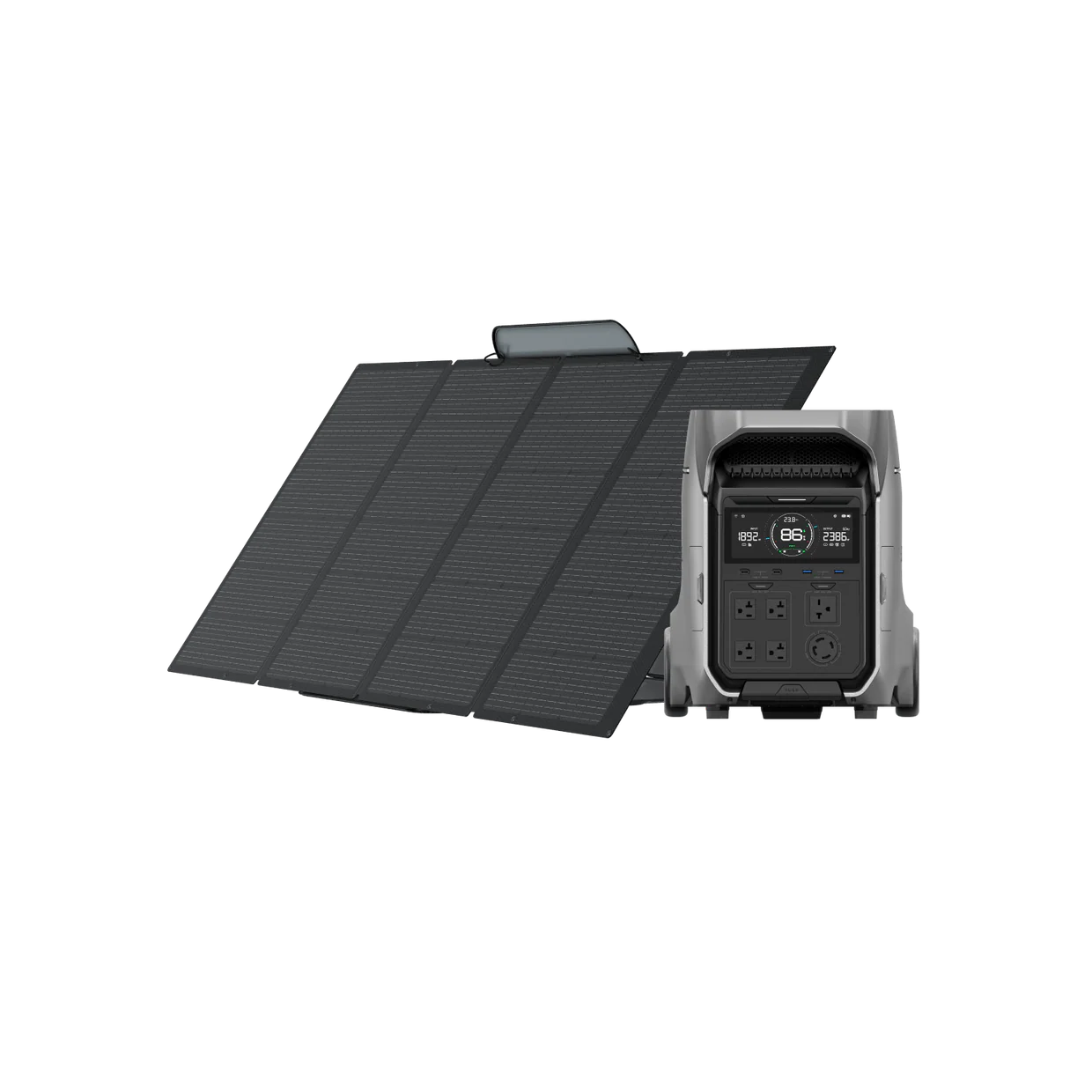
If you outgrow what a plug-in system can offer, or want a battery with a larger dedicated capacity from the start, a portable solar generator like the EcoFlow DELTA Pro 3 + 400W Solar Panel is worth considering.
It's a different category from plug-in solar, since the panel wires directly into the power station rather than through a wall outlet, but it offers a similar benefit: stored solar power you can draw on anytime, with room to expand capacity as your needs grow.
If you’d rather piece one together yourself, building your own solar generator is another way to get there.
Frequently Asked Questions
Can You Add a Battery to Existing Plug-In Solar Panels?
Yes. If your current setup uses a microinverter without a battery, you can pair it with a compatible battery unit, or replace it with an all-in-one option, which builds the battery directly into the same plug-in unit. Either way, you keep the panels you already own.
Do You Need an Electrician to Install Plug-In Solar with Battery Storage?
Generally speaking, no, but the legality of consumer-installed plug-in solar varies significantly by state, with some states requiring a licensed electrician and a permit even for basic setups. Adding battery storage generally doesn't require an electrician either, but tying it directly into your household electrical panel may require one, plus local permitting. Always check your state's current rules first.
How Much Power Can a Plug-In Solar and Battery System Provide?
It depends on the size of the system. They start around 400W, which can produce about 1.5–2 kWh per day with enough sun. Since they typically max out around 1,200W, depending on state legislation, that means you can produce a maximum of about 6kWh per day.
Is Plug-In Solar with Battery Storage Worth It for Renters?
Plug-in solar is often the only clean energy option available to renters, since it doesn't require permanent installation or roof modifications. When you pair it with a battery storage device, you can use stored battery power to run appliances at night, during peak electricity rates, and during electrical outages, even without owning the property.
A Power Station Turns Plug-In Solar into a Reliable, Around-the-Clock Energy Source
Plug-in solar is a solid option for homeowners and renters looking to cut their monthly electrical bill, but on its own, it only puts power to work the moment it's generated.
Adding battery storage changes that. Whether you're away during the day, trying to avoid peak utility rates, or want the reassurance of backup power, an all-in-one option like the EcoFlow STREAM Ultra lets your existing plug-in setup work for you around the clock.
And if you eventually want more dedicated capacity, the EcoFlow DELTA Pro 3 + 400W Solar Panel offers a path to expand beyond what a plug-in system alone can provide.
This article reflects plug-in solar regulations and product availability as of the time of writing. Rules and availability vary by state and may change, so confirm current requirements with your local utility or energy office before installing a system.
For press requests or interview opportunities, reach out to our media team
media.na@ecoflow.com