Plug-and-Play Solar Virginia 2026 New Law Signed: What It Means for Virginia Homeowners
- What Is Plug‑and‑Play Solar, and Why Does It Matter for Virginia Homeowners?
- How Does Virginia’s Balcony Solar Bill Change Access to Plug‑In Solar?
- Regulatory Framework: Interconnection Waivers, Notification, and Safety Standards
- Costs, Savings, and Practical Energy Impact for Virginia Homes
- Frequently Asked Questions
- Power. Savings. Independence: Why Balcony Plug‑In Solar Works for Virginia Homeowners
Virginia's electricity demand is rising faster than almost anywhere else in the country. With increased electricity demand leading to high utility costs, it’s no surprise residents are looking for ways to take control of their energy bills.
At the same time, Virginia has passed HB 395, a new law expanding legislation around plug-and-play solar technology. Here’s what plug-in solar is, what the new law allows, and what it could mean for your electric bill.
What Is Plug‑and‑Play Solar, and Why Does It Matter for Virginia Homeowners?
Plug-and-play solar is a small-scale solar system designed to be simple, portable, and accessible.
Unlike traditional rooftop panels, which require professional installation and electrical work, plug-in systems can be placed on a balcony, patio, yard, or other sunny location and connected to a standard electrical outlet.
The electricity generated by the panel helps offset a portion of a household’s energy use from the grid.
Because these systems require little installation and a much smaller upfront investment, they offer a practical way for more people to access solar energy.
The timing couldn’t be better. Electricity demand in Virginia is growing rapidly, driven by population growth, electrification, and high numbers of data centres.
According to the Virginia Joint Legislative Audit and Review Commission (JLARC), Northern Virginia is home to the world’s largest concentration of data centres, accounting for 13% of all reported global data centre operational capacity and 25% of all capacity across the Americas.
JLARC projects that Virginia’s electricity demand could double over the next decade if all proposed projects move forward.
Solar energy is often one of the most effective ways to reduce long-term utility bills, but rooftop panels are not an option for many Virginia residents. Plug-and-play solar offers a convenient solution.
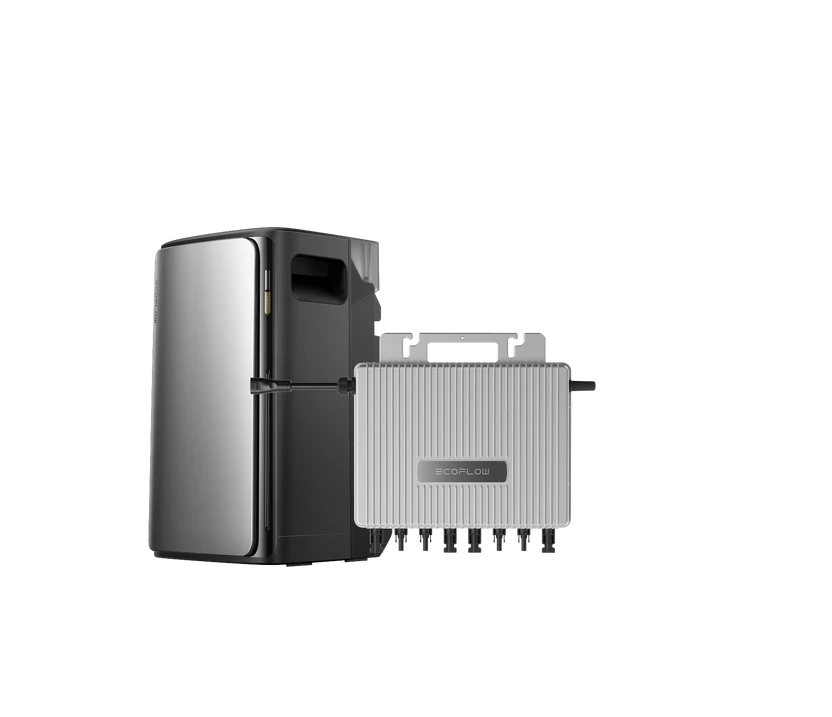
For those who want to go beyond daytime offset, systems like the EcoFlow STREAM Ultra + Microinverter pair plug-in panels with a built-in battery, so the energy you generate during the day keeps working after the sun goes down. (As of June 2026, EcoFlow STREAM is available in Maryland and Utah, with EcoFlow expanding to more states as regulations allow.)
How Does Virginia’s Balcony Solar Bill Change Access to Plug‑In Solar?
On April 22, 2026, Virginia’s governor signed HB 395 into law, legalizing plug-in solar systems and establishing a streamlined approval process for their use.
Before HB 395, residents interested in plug-and-play systems often faced restrictions from utilities, landlords, homeowners associations, and local regulations. These obstacles made installing a system difficult or impractical.
The new law replaces much of that uncertainty with a standardized framework. It established safety requirements and a simple notification process that can be completed at no cost. Once those requirements are met, residents can purchase an approved system, install it, and plug it into a standard household outlet.
By lowering administrative barriers, HB 395 expands access to solar energy for renters, apartment residents, condo owners, and others who may not be able to install traditional rooftop panels.
Regulatory Framework: Interconnection Waivers, Notification, and Safety Standards
Previously, small balcony systems were subject to many of the same requirements as traditional rooftop panel installations, including utility interconnection agreements and additional approval processes. Under HB 395, systems with a capacity of 1,200 W or less qualify for a streamlined process.
Interconnection Waivers
HB 395 exempts plug-in systems from interconnection waivers. Previously, any grid-connected generation system required utility approval, which could add to the cost and cause delays.
Notification
Residents must submit a notification form to their utility company and, if applicable, to their landlord. The form, which will be provided by the State Corporation Commission (SCC), is more like an informal notification rather than an approval request.
Safety Standards
To comply with electrical safety limits, plug-in solar systems are capped at 1,200 W per dedicated circuit. That’s typically three to four panels.
Systems must also use nationally certified equipment that meets certain safety standards, including automatic shutdown during a power outage and back-feed protection. That shutdown is a safety feature, not a flaw: it prevents your panels from sending power back into a de-energized grid, which protects utility line workers making repairs.
It also means a plug-in system alone won't power your home during an outage. That's a separate category of product, typically a stand-alone battery like the EcoFlow DELTA Pro 3, or a larger whole-home backup power solution like the EcoFlow DELTA Pro Ultra X for complete-home coverage, rather than something plug-in solar is designed to do.

Costs, Savings, and Practical Energy Impact for Virginia Homes
The cost of plug-in solar is significantly less than traditional rooftop panels because it doesn't require professional installation, and the systems are smaller in size.
HB 395's core protections, including the ban on utility interconnection fees and approval requirements, take effect July 1, 2026, while the notification process and finalized safety standards follow on January 1, 2027*. That gives residents time to compare solar solutions and determine the best placement before the framework is fully in place.
Plug-in solar won't fully replace grid electricity, but it can meaningfully reduce your electricity costs over time. A whole-home generator serves a different purpose in that, rather than lowering your day-to-day bill, it's designed to keep your home running during a power outage.
HB 395 does not allow plug-in solar systems to receive net metering credits, meaning excess electricity poured into the grid provides no financial benefit. But pairing them with battery storage can help you capture surplus energy for use after sunset.
Plug-in solar and whole-home backup solve different problems, but they can work together. If outage protection is a priority alongside your day-to-day savings, EcoFlow's home solar systems range from compact plug-and-play kits to larger battery setups, so you can start small and scale up as your needs change.
*This reflects HB 395's provisions at the time of writing and may be updated as implementation details are finalized.
Frequently Asked Questions
What Devices Are Covered Under the New Balcony Solar Bill?
The law created a new legal category in the state code called ‘small portable solar generation devices’. These devices must follow certain criteria: the whole setup cannot exceed a maximum power output of 1,200 W at a given time; it must be moveable; and it must have built-in anti-islanding protection.
Can Landlords Legally Prohibit Plug‑In Solar for Renters?
Landlords can’t ban plug-in panels outright, but there are two exceptions. If the landlord owns less than 4 rental units, they have the right to ban plug-in solar. They can enforce reasonable rules for safety, aesthetics, and structural integrity. They can also require insurance.
Power. Savings. Independence: Why Balcony Plug‑In Solar Works for Virginia Homeowners
With the new law signed on April 22, 2026, Virginia residents can take advantage of plug-in solar without the restrictions and barriers that once stood in the way. HB 395's main protections take effect July 1, 2026, with the remaining notification and safety-standard provisions following on January 1, 2027, giving residents time to plan ahead.
Plug-in solar offers flexibility in how you generate energy, and with rising electricity costs, the timing for this bill could not be better.
If you're ready to take advantage of plug-in systems, EcoFlow's home solar systems are easy to install and can start providing reliable solar electricity to your home as soon as the law takes effect, with availability expanding as more states adopt similar legislation.
Note: This article reflects the status of plug-in solar regulations as of the time of writing. Effective dates, implementation details, and product availability may change as the law develops and additional guidance is published. Readers should confirm current requirements with their utility, local authority, or the Virginia State Corporation Commission before installing a system.
For press requests or interview opportunities, reach out to our media team
media.na@ecoflow.com