Plug-In Solar Panels Explained: The Easiest Way to Start Saving Energy at Home
- What Plug-In Solar Panels Are and Why They’re Growing in Popularity
- How Plug-In Solar Works in a Typical US Home
- What Plug-In Solar Can Realistically Power and How Much You Can Save
- Safety, Legality, and Setup Basics to Get Right Before You Plug In
- How to Build a Flexible System With Batteries and Expand Over Time
- Frequently Asked Questions
- Start Saving Faster With a Simple Solar Setup You Can Take With You
Solar panels have long been regarded as worthwhile investments for reducing energy costs, but they have typically been limited to people who own their own rooftop or can afford the high initial cost. Plug-in panels make clean energy more accessible. Learn all about the plug-in systems: what they are, how they work, and how they can save you money.
What Plug-In Solar Panels Are and Why They’re Growing in Popularity
Plug- in solar panels, also known as balcony solar, generate electricity by connecting to a standard power outlet. They are a simple and affordable way to harness clean energy, and are especially convenient for renters. They don’t require complicated installation, making small-scale energy more accessible.
They can be placed on any accessible flat surface, such as balconies or backyards, and are generally used to power specific appliances, reducing the household’s overall energy consumption.
How Plug-In Solar Works in a Typical US Home
Plug-in solar panels are mounted on a flat surface or railing with access to sunlight and plugged into a socket to begin generating electricity. They typically consist of one or two photovoltaic solar panels, which capture energy from the sun and convert it into electricity.
A built-in microinverter converts the direct current into alternating current that can be used by household appliances. The electricity is fed into the household grid to power devices, and any excess electricity is fed into the public grid.
What Plug-In Solar Can Realistically Power and How Much You Can Save
Plug-in panels aren’t designed for whole-home power, but they can still offset electric bill costs. Most consumer plug-in systems have an output range of 200 to 800 watts. In comparison, rooftop installations have an output of 3,000 to 12,000 watts. For reference, plug-in solar delivers enough electricity to power a small air conditioner.
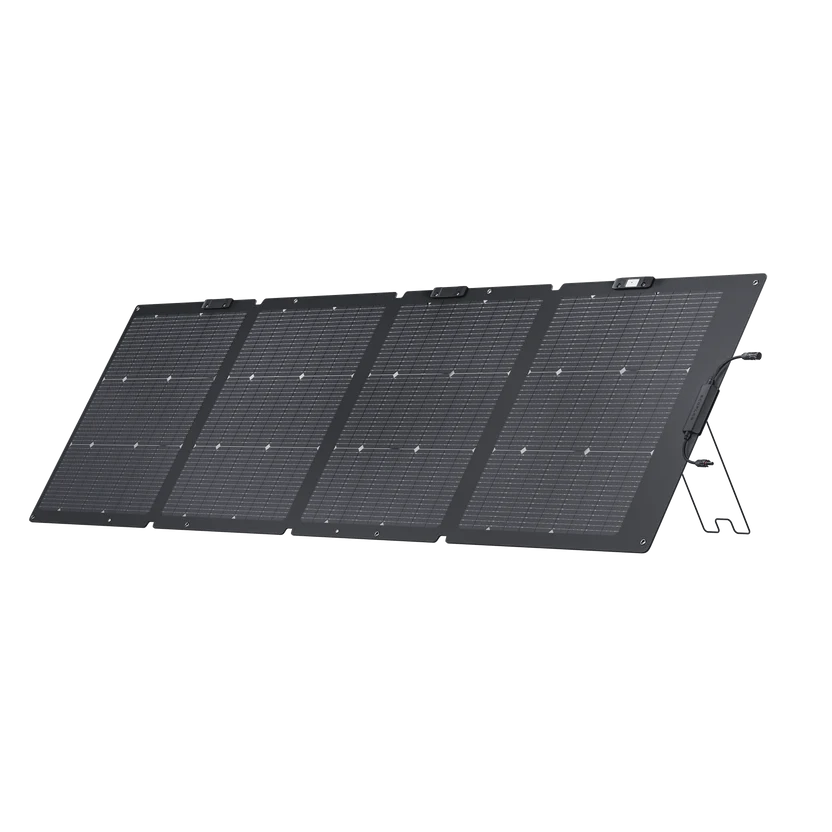
Plug-in power can lower utility bills anywhere from $15 to $50 per month, depending on where you live and the amount of sun exposure. Plug-in systems are typically used to offset the power consumption of appliances that are always on, such as a Wi-Fi router, refrigerator, and standby electronics. Solar panels such as EcoFlow NextGen 220W Bifacial Portable Solar Panel are a great way to capture the power of the sun and reduce your dependency on traditional energy.
Safety, Legality, and Setup Basics to Get Right Before You Plug In
The two greatest concerns with solar power systems are circuit overloading and backfeeding. Circuit overloading occurs when the energy system feeds more electricity into a circuit than it was designed to carry. Backfeeding refers to electricity flowing from the solar panels back into the utility grid when the grid is offline.
Backfeeding poses safety risks to utility workers fixing power lines because they assume the lines are de-energized. Anti-islanding technology on solar energy systems detects grid outages and automatically stops generating electricity to prevent backfeeding.
UL Solutions established a certification framework for plug-in solar panel systems. UL 3700 defines how these systems must be constructed and evaluated for safety. It requires systems to protect against shock and fire hazards, prevent circuit overloads, and include safeguards against current flowing in the wrong direction. UL 1741 is the safety standard for microinverters found in plug-in systems.
It ensures they can safely convert direct current to alternating current and connect to the utility grid.
Ensure the solar panels have enough sun exposure. Avoid facing them to the north and avoid shaded areas. While south-facing panels tend to produce the most electricity, east- and west-facing panels can still be effective, particularly if they align with the time of day your home tends to use the most electricity.
Panels mounted on a balcony must be secure enough to withstand wind and bad weather. Cables should be routed carefully so they’re not damaged and don’t create tripping hazards. Plug-in panels can be paired with battery storage to continue powering essential devices even when the grid is down.
How to Build a Flexible System With Batteries and Expand Over Time
Pairing solar panels with batteries is an effective way to store excess power and avoid backfeeding risks. When the grid fails, the panels won’t feed electricity into the grid but rather to the battery, ensuring your essential devices stay powered.
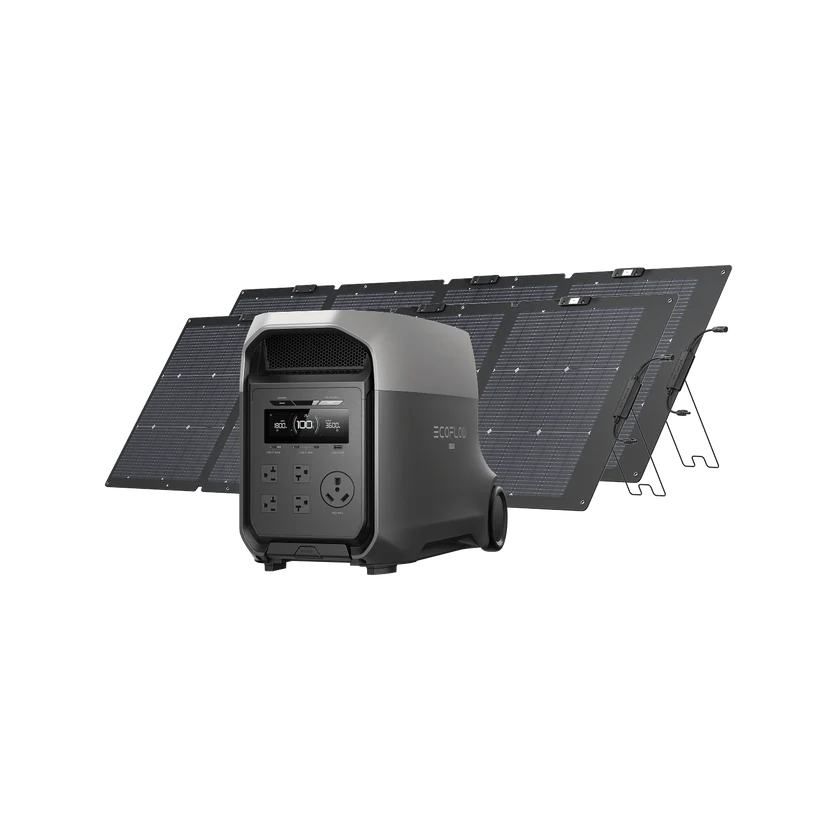
The EcoFlow DELTA 3 Ultra Solar Generator has a 3,072Wh capacity that is expandable to up to 11kWh for massive storage. Its 3,600W-rated output can support several devices, further reducing energy costs. EcoFlow offers small-scale backup solutions that can gradually be expanded to whole-home backup generators.
Frequently Asked Questions
How much power do plug-in solar panels produce?
Plug-in solar panels typically produce somewhere from 200 to 800 watts, which is roughly the amount of power needed to run a small air conditioning unit. By providing 200 to 500 kWh of energy per year, these systems offset utility bills by several hundred dollars a year.
Can I plug a solar panel directly into a home outlet?
Traditional solar panels require professional wiring and cannot be plugged directly into a home outlet. However, plug-in panels are designed to be connected directly to outlets for a simple and affordable way to harness energy from the sun.
Will plug-in solar panels reduce my electric bill?
Yes, plug-in solar panels can reduce your electric bill anywhere from $15 to $50 per month, depending on where you live and how much sun the panels are exposed to.
Are plug-in solar panels legal where I live?
Only Utah and Maine have passed legislation allowing plug-in systems without utility approval. Plug-in solar panels aren’t necessarily illegal in other states, but they are treated like rooftop arrays, requiring applications and fees.
Start Saving Faster With a Simple Solar Setup You Can Take With You
Plug-in solar panels are changing how people generate clean energy. The small-scale setups are much more affordable and accessible than traditional rooftop installations. Pair your solar panel setup with battery storage for reliable backup power.
EcoFlow DELTA 3 Ultra + 2 × 220W solar panel acts as a portable system that captures and converts sunlight into energy to reduce household utility costs and power outdoor adventures.
For press requests or interview opportunities, reach out to our media team
media.na@ecoflow.com