Photovoltaic Panels Benefits: Why Choose Solar Energy for Your Home?
As electricity rates continue to climb across the United States, from the sunny suburbs of Arizona to the dense, fast-paced neighborhoods of the Northeast, more homeowners are starting to look upward for long-term answers. Solar energy is no longer a futuristic idea reserved for early adopters or tech enthusiasts. Today, it has become a practical, financially smart, and environmentally responsible choice that fits naturally into everyday American home life. In this comprehensive guide, we’ll explore how photovoltaic (PV) technology works, the real financial and lifestyle benefits of going solar, and how modern backup solutions like EcoFlow can help ensure your home remains powered and resilient around the clock.
What Are Photovoltaic Panels?
Before diving into the benefits of solar energy, it’s helpful to understand what those sleek blue and black panels on your neighbor’s roof actually do and why they’ve become increasingly common across American neighborhoods in recent years.
1. Definition and Basic Principles
Photovoltaic panels, more commonly referred to as solar panels, are devices designed to convert sunlight directly into usable electricity for your home. The term “photovoltaic” comes from the combination of “photo,” meaning light, and “voltaic,” which relates to electricity. Together, the name describes the physical process in which sunlight triggers the generation of electrical voltage, allowing homes to harness energy straight from the sun.
2. How Photovoltaic Panels Work
The process happens inside solar cells, which are typically made from silicon, a durable and widely used semiconductor material. When sunlight strikes these cells, it dislodges electrons and creates an electrical flow. This energy is produced as Direct Current (DC), which is then routed through an inverter. The inverter converts DC into Alternating Current (AC), the standard electricity used to power American household essentials such as HVAC systems, kitchen appliances, lighting, and home entertainment setups.
3. Types of Residential Photovoltaic Panels
Most homeowners choose from three main types of photovoltaic panels, depending on roof space, budget, and design preferences. Each type has its place, and the right choice depends on how your home is built and how you plan to use solar energy day to day.
Monocrystalline panels offer high efficiency and a clean, modern appearance, making them well-suited for smaller roofs where maximizing output matters most.
Polycrystalline panels are generally more affordable and widely available, providing solid performance with slightly lower efficiency compared to monocrystalline options.
Thin film panels are lightweight and flexible, often used for unconventional roof designs, modern architecture, or portable and supplemental solar applications.
Benefits of Photovoltaic Panels for Residential Homes
Transitioning to solar power represents a meaningful shift in how homeowners manage, consume, and think about energy daily. Beyond the environmental appeal, photovoltaic panels deliver practical advantages that directly affect household budgets, long-term stability, and overall home value.
1. Reduce Electricity Bills
One of the most immediate and noticeable benefits is the reduction in monthly electricity costs. By generating your own power on-site, you rely less on your local utility provider, which can significantly soften the impact of rising energy rates, especially during peak usage periods like hot summer months or cold winter evenings.
2. Renewable and Sustainable Energy Source
Unlike coal, natural gas, or oil, solar energy is renewable and essentially limitless. Installing photovoltaic panels allows your home to tap into a clean energy source that produces no emissions during operation, helping reduce your carbon footprint while supporting a healthier environment for future generations.
3. Energy Independence and Reliability
Solar power gives homeowners greater control over where their electricity comes from. By producing energy at home, you become less exposed to market-driven price increases and power disruptions tied to an aging national grid, which can be particularly valuable during extreme weather events.
4. Increase Property Value
In the competitive US housing market, energy-efficient features are increasingly attractive to buyers. Homes with solar installations often stand out, selling faster and at higher prices, as prospective buyers factor long-term energy savings into their purchasing decisions.
5. Low Maintenance Requirements
Photovoltaic panels are built for longevity and durability. With no moving parts, they require minimal upkeep, and routine cleaning a few times a year is usually enough to keep the system operating efficiently for decades without significant maintenance costs.
6. Government Incentives and Tax Credits
Federal and state incentives make solar more accessible than ever. The Federal Investment Tax Credit (ITC) allows US homeowners to deduct a substantial portion of installation costs from their federal taxes, helping reduce upfront expenses and accelerating the return on investment for home solar systems.
Things to Consider Before Installing Photovoltaic Panels at Home
While the advantages of solar energy are compelling, making the transition successfully requires some upfront planning. Taking the time to evaluate your home, location, and energy goals helps ensure your system performs efficiently and delivers long-term value.
1. Roof Condition and Orientation
Your roof plays a critical role in how effective a solar installation will be. It should be structurally sound and have enough remaining lifespan to support panels for decades. In most parts of the US, south-facing roofs receive the most consistent sunlight throughout the day, although east and west-facing roofs can still produce strong energy output depending on local conditions.
2. Local Climate and Sunlight Availability
Solar panels generate electricity in every state, but the amount of sunlight your region receives affects overall performance. Areas with higher “peak sun hours,” such as California, Arizona, and Florida, tend to see faster returns on investment compared to cloudier regions, where production remains reliable but accumulates more gradually over time.
3. Initial Costs Vs Long-Term Savings
The upfront cost of installing photovoltaic panels can seem substantial at first. Many homeowners naturally wonder, “How much do photovoltaic panels cost?” While the total price depends on system size. However, when federal tax credits, potential state incentives, and decades of reduced electricity bills are taken into account, most systems reach their payback period within six to ten years and continue generating low-cost power well beyond that point.
4. Grid-Tied Vs Off-Grid Systems
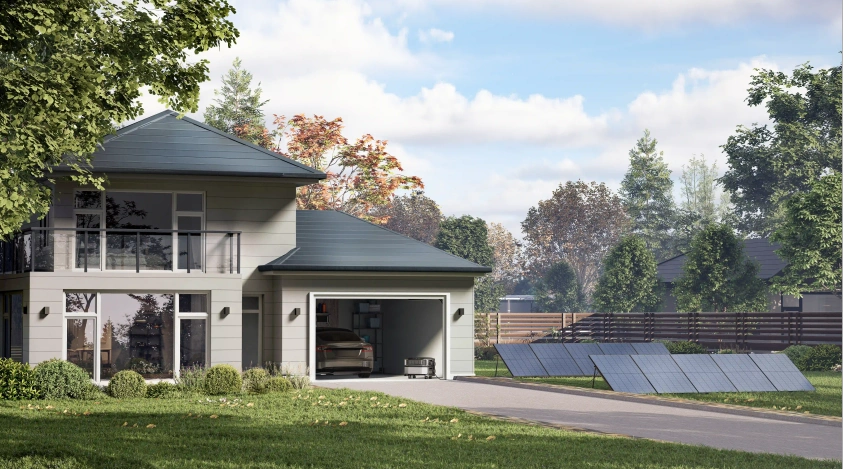
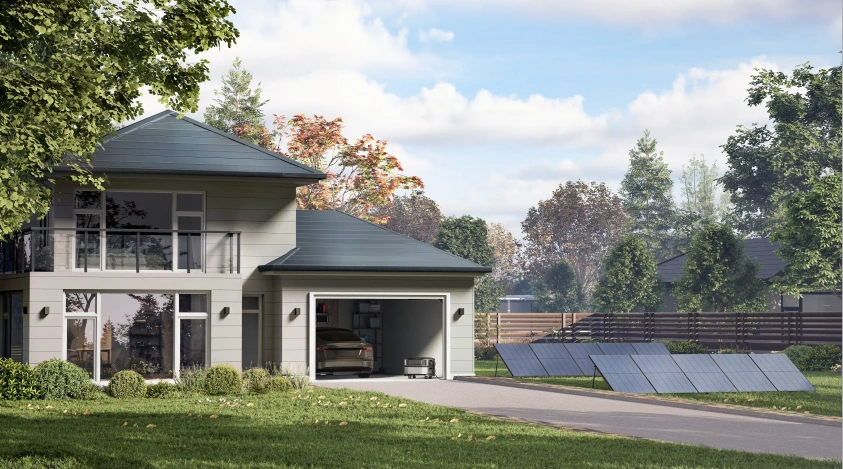
Most US homeowners opt for grid-tied solar systems because they offer reliability and lower initial costs. Adding a battery backup enhances this setup by storing excess energy for later use, allowing you to benefit from solar power even during outages while still staying connected to the grid.
How to Improve Photovoltaic Panel Efficiency at Home
Installing photovoltaic panels is an important first step, but long-term performance depends on how well the system is optimized and maintained. With the right adjustments and daily habits, homeowners can increase energy output, shorten the payback period, and keep their solar setup operating efficiently for decades.
1. Optimize Placement and Tilt Angle
Your home’s geographic location plays a major role in finding the ideal “sweet spot” for solar energy production. In the Northern Hemisphere, photovoltaic panels generally perform best when they face true south, allowing them to capture consistent, direct sunlight from morning through late afternoon as the sun moves across the sky.
For fixed installations, aligning the panel tilt with your local latitude helps maximize year-round exposure and keeps production balanced across seasons. If your mounting system allows for manual or seasonal adjustments, tilting the panels slightly flatter during the summer and steeper in the winter can further improve performance. This small recalibration helps keep the panels more perpendicular to the sun’s changing angle and can increase annual energy output by roughly 5% to 10% over time.
2. Eliminate Shading and the "Hot Spot" Effect
Shading is one of the biggest threats to solar efficiency, even when it affects only a small portion of your system. Because many solar cells are connected in series, shade covering just part of a single panel can reduce the power output of the entire array, leading to losses that are much larger than most homeowners expect.
Ongoing vegetation management is especially important. Trees grow gradually, and branches that didn’t cast shadows during installation may become significant obstructions a year or two later. Regular trimming helps preserve consistent sunlight exposure and protects long-term performance.
It’s also important to watch for physical obstructions on or near the roof. Vent pipes, chimneys, and satellite dishes can create what’s known as “soft shade.” Even these lighter, diffused shadows can trigger hot spots, where shaded cells behave like resistors, generating excess heat that may damage the panel’s internal components over time.
3. Establish a Routine Cleaning Schedule
Although rain can rinse off loose debris, it’s rarely enough to remove stubborn buildup like dust, pollen, bird droppings, or salt residue in coastal environments. Even a thin layer of grime can block sunlight from reaching the cells, and in dry or desert regions, this buildup can reduce overall efficiency by as much as 15% to 25% over time.
When cleaning your panels, use a soft brush or a squeegee with plain water to gently remove residue. Avoid harsh chemicals, soaps, or abrasive tools, as these can damage the panels’ anti-reflective coating and permanently reduce performance.
Timing also matters for safety and longevity. Cleaning panels in the early morning or late evening, when they are cool, helps prevent thermal shock. Spraying cold water on panels that have been heating under direct midday sun can cause the tempered glass to expand or contract too quickly, increasing the risk of cracks.
4. Practice Strategic "Load Shifting."
Solar efficiency isn’t only about how much electricity your panels generate; it also depends on how and when that power is used. To get the most value from your system, it helps to align your household’s highest energy demands with the hours when solar production is at its peak.
Running high-draw appliances during the middle of the day makes a noticeable difference. Scheduling dishwashers, washing machines, dryers, or pool pumps when the sun is strongest allows your home to use “live” solar power directly, rather than pulling electricity from the grid or cycling energy through batteries, where small losses can occur.
Upgrading to Energy Star-rated appliances further improves results. These more efficient devices use less electricity overall, allowing each watt your solar panels produce to go farther and effectively increasing the real-world efficiency and payoff of your solar setup.
5. Active Performance Monitoring
Solar performance is easiest to improve when you can clearly see how your system is behaving day to day. Modern photovoltaic setups include monitoring tools that provide real-time data, making it much easier to identify inefficiencies that might otherwise go unnoticed.
By regularly checking production logs through a monitoring app, homeowners can quickly spot sudden drops in output. These changes may point to simple issues such as a tripped breaker, a malfunctioning inverter component, or a specific panel that needs cleaning or inspection before performance is affected long-term.
Monitoring also helps guide everyday energy habits. Seeing exactly when your home reaches zero reliance on the grid allows you to adjust routines, such as running appliances or charging devices, to better align with peak solar production and the natural rhythm of the sun.
6. Integrate Battery Storage Systems
To get the most out of a home photovoltaic system, adding battery storage is essential. Batteries store excess solar energy produced during peak sunlight hours, allowing it to be used at night or during cloudy periods instead of being sent back to the grid, which improves overall system efficiency.
For many households, modular solutions like the EcoFlow DELTA 3 Max Series Portable Power Station offer a flexible, non-permanent way to store surplus energy. In addition to maximizing self-generated electricity, battery storage provides dependable backup power during outages, helping homeowners maintain essential functions while increasing long-term energy independence.
Common Myths About Photovoltaic Panels
Misinformation still holds many homeowners back from considering solar, even as the technology has matured and become more accessible. Clearing up a few of the most common myths can make it easier to evaluate whether photovoltaic panels are a good fit for your home.
1. Solar Panels Don’t Work in Cloudy Weather


While solar panels produce less electricity on overcast days, they don’t stop working altogether. PV panels can generate power from diffused sunlight, which is why solar remains effective in places with frequent cloud cover. Even cities like Seattle successfully use solar energy year-round, just with slightly lower daily output.
2. Solar Panels Are Too Expensive
The cost of solar has dropped significantly over the past decade. Lower hardware prices, combined with financing options such as solar leases and power purchase agreements (PPAs), have reduced the upfront barrier, making solar more attainable for a wide range of US homeowners.
3. Solar Panels Can’t Power an Entire Home
Some homeowners worry that solar panels alone aren’t enough to support an entire household, particularly at night or during extended periods of cloudy weather. While panels generate electricity only when the sun is available, pairing a PV system with a whole-home backup solution dramatically expands what solar can do.
An expandable energy system like the EcoFlow DELTA Pro Ultra Whole-Home Backup Power is designed to work seamlessly with solar panels, storing excess energy and delivering consistent power when generation drops. With high continuous output and scalable battery capacity, it can support demanding appliances such as central air conditioning, refrigerators, and washing machines, helping keep the entire home running during outages or low-production periods.
4. Maintenance Is Complicated
In reality, solar systems are low-maintenance. With no moving parts and durable construction, most setups require only occasional cleaning and basic monitoring. Long-term warranties, often lasting 20 to 25 years, provide added reassurance that the system is built to perform reliably over time.
Conclusion
Choosing solar energy is a practical way for homeowners to lower their environmental footprint while building long-term financial stability. By understanding how photovoltaic panels work and pairing them with smart storage solutions like EcoFlow, it’s possible to turn a home into a more self-sufficient and resilient energy system. Whether the goal is reducing monthly utility bills or staying prepared for the next major storm, solar power remains a smart, forward-looking choice for modern American households.
FAQ
1. What's the Difference Between Solar Panels and Photovoltaic Panels?
Although the terms are often used interchangeably, whether in online forums or casual backyard conversations, there is a technical distinction worth understanding. “Solar panels” is a broad umbrella term that includes both photovoltaic (PV) panels and solar thermal panels. PV panels convert sunlight directly into electricity that powers everyday household needs like lighting, TVs, Wi-Fi routers, and even electric vehicle chargers. Solar thermal systems, on the other hand, use sunlight to heat water or air and are commonly used for swimming pools or domestic hot water. In most modern residential settings, when people refer to solar panels, they are almost always talking about photovoltaic technology.
2. Do Solar Panels Really Save Money in the Long Run?
Yes, and for many homeowners, the savings are substantial. In states such as California, New York, or Massachusetts, where electricity rates are well above the national average, solar can significantly reduce long-term energy costs. Homeowners typically see immediate savings as monthly utility bills drop, sometimes to little more than a basic grid connection fee. In many states, net metering programs allow utilities to credit you for excess power your system sends back to the grid during the day, offsetting nighttime usage. Over time, solar also acts as a hedge against inflation, since utility rates tend to rise annually while sunlight remains free.
3. How Exactly Is Energy Produced from Solar Power?
The journey from sunlight to usable household electricity happens through a smooth, three-step process that works quietly in the background of your home. It begins with the photovoltaic effect, where sunlight strikes the silicon cells inside the panels and knocks electrons loose, creating an electric field and producing Direct Current (DC) electricity. Because American homes run on 120V/240V Alternating Current (AC), this raw DC power is then sent to an inverter, which converts it into the form of electricity your appliances can use. From there, the converted power flows through your home’s electrical breaker panel, where it is immediately used to run everyday items, such as lights, computers, or kitchen appliances, or stored in a battery system for later use when sunlight isn’t available.
4. What Appliances Cannot Be Used with Solar Power?
In practice, there’s no household appliance that solar power can’t run, as long as the system is properly sized. The main challenge comes from high surge appliances like central air conditioners, well pumps, or electric dryers, which require a large burst of power to start. Older or undersized systems may struggle with these demands, but modern high-output backup solutions have changed that. Systems like the EcoFlow DELTA Pro Ultra are built to handle heavy 240V loads, allowing homeowners to confidently run energy-intensive appliances without interruptions.
5. How Long Will My Solar Panels Last?
Solar panels are designed to be durable and long-lasting. Most manufacturers offer 25 year performance warranties, guaranteeing that panels will still produce around 80-90% of their original output at the end of that period. Panels don’t suddenly stop working after 25 years; they simply become slightly less efficient over time. In fact, many systems installed in the 1990s are still generating electricity today. That said, supporting components such as inverters and batteries typically have shorter lifespans, often around 10 to 15 years. Choosing reliable, well-supported energy storage and power management equipment is key to ensuring your entire solar setup continues performing smoothly for decades.
For press requests or interview opportunities, reach out to our media team
media.na@ecoflow.com