What is Pass-Through Charging and Why Does Your Power Bank Need It?
Pass-through charging is an innovative feature of high-quality power banks and portable power stations that allows the unit to act as a charging hub for multiple devices. When plugged into a standard household electrical outlet, like a wall plug, it can charge the power bank and your connected devices simultaneously while managing the performance and lifespan of the rechargeable battery.
If you're a digital nomad or content creator, you undoubtedly know the pain of finding yourself in a coffee shop or airport where it's almost impossible to find a single wall plug let alone several for charging multiple devices at once.
EcoFlow's power banks offer the maximum lithium-ion rechargeable battery capacity allowed on passenger flights, allowing you to keep all devices like Android or iPhones, ultralight laptops, and mobile workstations up and running in the air and on the ground.
If you need more powerful solutions closer to home, portable power stations like EcoFlow RIVER 3 Plus offer <10 millisecond auto-switchover to an uninterruptible power supply (UPS) that protects desktop computers and other sensitive electronics like external hard drives from permanent damage and catastrophic data loss.
How Pass-Through Charging Works in a Power Bank
Pass-through charging routes electricity from an AC outlet to charge a power station's lithium iron phosphate battery (LiFePO4/LFP) while simultaneously delivering power directly to connected devices.
Power path management from an advanced battery management system (BMS) routes electricity intelligently to maximize longevity and performance.
EcoFlow's power banks split incoming current and route it directly to connected devices while trickle charging the battery at the same time, leading to extended cycle life and minimized downtime.
Intelligent charging means the battery stays optimally charged at all times while acting as a power hub that allows you to connect multiple devices simultaneously to the built-in USB and AC outlets with only a single wall plug.
Why Pass-Through Charging Matters for Daily Use
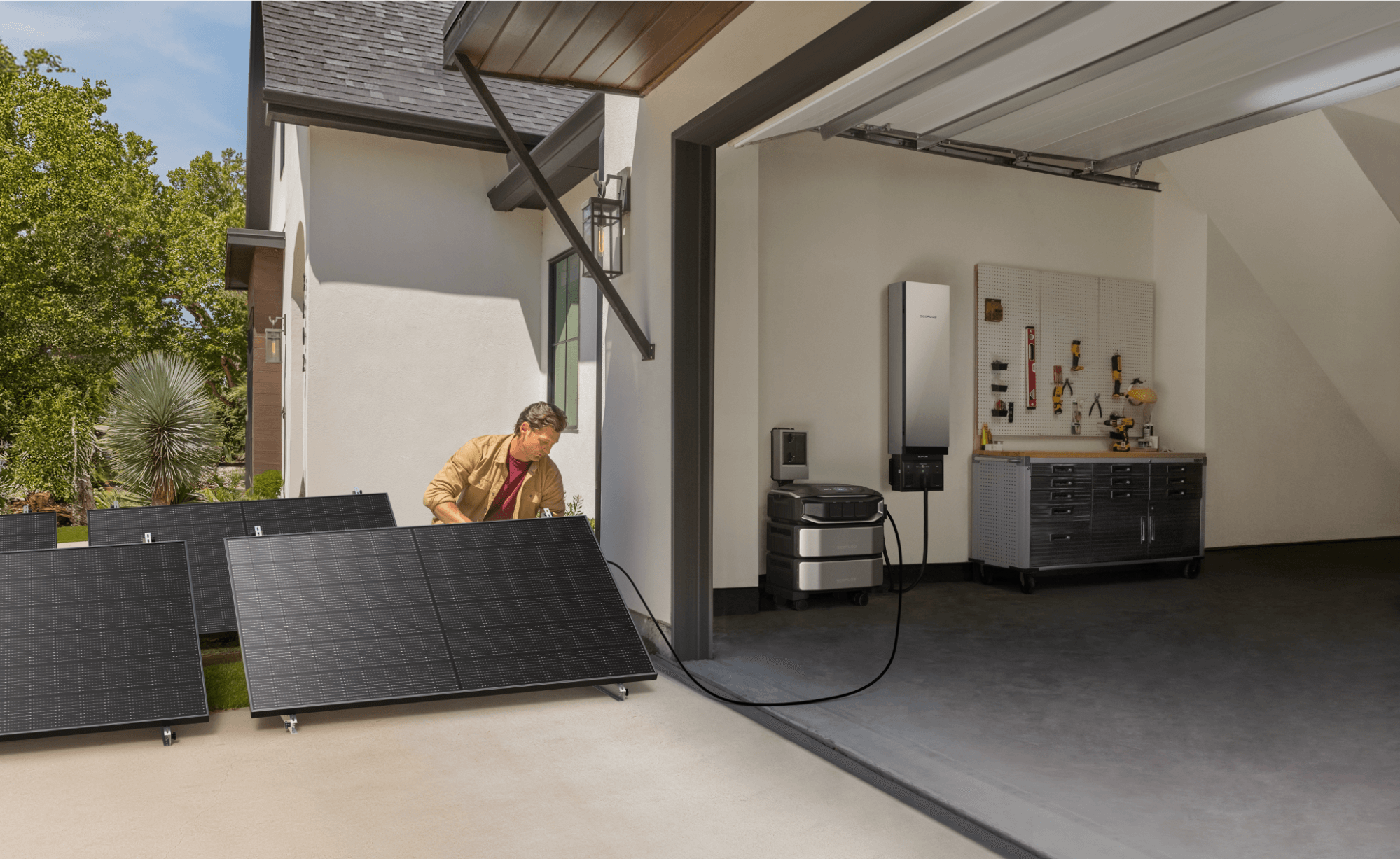
Pass-through connection to utility electricity offers many opportunities to reduce reliance on grid power and save money on bills when using a whole-home generator system like EcoFlow DELTA Pro Ultra X.
However, pass-through charging is arguably even more valuable on-the-go.
A shortage of electrical outlets is rarely a problem at home, particularly when you can easily augment built-in wall outlets with surge protector power strips.
However, outlets are often at a premium on the road. Even hotel rooms often have only one or two plugs, forget about airports and coffee shops.
With a power bank like EcoFlow RAPID Pro X Power Bank (27650mAh, 300W), you get the maximum battery storage capacity allowed on commercial airlines. 27,650mAh is 99.54 watt-hours (Wh), which is safely under the 100Wh airline limit.
If you're not taking your power bank on a flight, a more robust portable power solution like EcoFlow Trail SERIES DC, RIVER 3, or DELTA 3 series portable power station may better suit your off-grid charging needs.
Pass-through charging is a premium feature that maximizes battery lifespan and optimizes performance in a wide variety of applications.
Power Banks and Passenger Airplanes
It's essential to note that airlines are imposing additional restrictions on rechargeable battery use on passenger aircraft, especially in Asia, but also on carriers like Southwest in the US.
In rare circumstances, a damaged lithium-ion rechargeable battery can experience a phenomenon known as thermal runaway, leading to a fire or small explosion.
A power bank stored in the overhead compartment on an Air Busan flight on January 28, 2025, was found by investigators to be the likely cause of a cabin fire on an Airbus A321 passenger plane on the runway, leading to minor injuries.
Thankfully, the plane was on the ground when the fire occurred.
Lithium-ion (Li-ion) rechargeable batteries have been banned from checked baggage for many years as fire-suppression systems in storage holds may be insufficient to put out a fire before it's too late.
More and more airlines are insisting that power banks not be kept in overhead storage bins. Instead, they must be kept in plain sight at all times, even when not in use.
Pass-Through Charging and Battery Lifespan: What to Expect
Is there a downside to pass-through charging? The reality is, it depends on the device.
Heavy use of pass-through charging in low-end power banks can actually shorten rechargeable battery cycle life.
Cycle life is the most accurate measure of lifespan for advanced lithium-ion battery chemistries like LFP and Nickel Cobalt Manganese (NCM) rechargeable batteries.
Unlike older technologies like sealed lead acid (SLA/VRLA) "deep cycle" batteries, Li-ion based batteries don't significantly diminish in performance with time, but rather with use.
A "cycle" represents a full charge/discharge of a rechargeable battery.
Industry-leading LFP batteries like those used in EcoFlow portable power stations and solar generators can last up to 4,000 cycles before noticeably diminishing in performance, that's over a decade of routine daily use.
In lower-grade devices, the lack of advanced battery management technology means that extensive use of pass-through charging can significantly shorten cycle life.
With EcoFlow power banks and portable power stations, intelligent battery management systems ensure pass-through charging has minimal impact on lifespan or performance.
Frequently Asked Questions
Do Power Banks Have Pass-through Charging?
No, not all of them. It is a premium feature. Cheaper, generic power banks often disable output when the input is connected to prevent overheating. Check the technical specifications for pass-through or UPS/EPS functionality before purchasing a power bank if pass-through charging is a priority.
Is Passthrough Charging Bad for the Battery?
It depends on the quality of the power bank or portable power station. In low-end devices with poor heat dissipation, pass-through charging is either unavailable or can significantly shorten battery life. In high-end units with LFP chemistry and active cooling, the impact is negligible and the feature is intended for regular use.
Is It Okay to Use a Power Bank Every Day?
Yes, provided the battery chemistry (for example, lithium iron phosphate also known as LFP or LiFePO4) is rated for high cycle life. Modern portable power stations are designed to be used frequently to reduce grid reliance and save on electricity bills, not just stored waiting for a blackout. Keeping the battery's depth of discharge between 20% to 80% is recommended to maximize lifespan during daily use.
For press requests or interview opportunities, reach out to our media team
media.na@ecoflow.com