What Does mAh Mean on a Battery? A Simple Guide for 2026
If you’ve ever shopped for a new iPhone, a portable power bank, or even a cordless drill, you’ve definitely seen “mAh” slapped across the box. Usually, it’s paired with a big, impressive number like 5,000 or 10,000, leaving most of us to assume “bigger is better.” But what are you actually paying for? Let’s be real, nothing kills the vibe of a Great American Road Trip faster than that 10% battery warning when you’re still three hours from the Airbnb. To avoid that “Low Battery” anxiety, you need to know what milliampere-hours actually measure and, more importantly, how they impact your daily life. Here’s the bottom line: mAh isn’t just a spec; it’s your tech’s “fuel tank.”
What Does mAh Mean on a Battery?
Before we get into the weeds with the technical stuff, just think of mAh as the size of the “fuel tank” for your electronics. It’s the simplest way to visualize how much energy the battery can hold before it hits empty. For those venturing far from a wall outlet, a high-capacity solar battery can extend that runtime even further by capturing energy from the sun.
The "Need to Know" Definition of mAh (Milliampere-Hour)
To keep it simple, mAh stands for milliampere-hour. It’s a unit that describes the electric charge a battery can spit out over a specific amount of time. Here is the quick math: One ampere is 1,000 milliamperes. So, if you have a battery rated at 1,000 mAh, it can technically provide 1,000 milliamperes of current for exactly one hour before it dies. It’s a pretty straightforward ratio, though real world use is rarely that “perfect.”
How mAh Relates to Your Daily Battery Life
Generally speaking, a higher mAh means your gear stays powered longer on a single charge. But it’s always a game of consumption versus capacity. If you’re pushing your phone hard, maybe you’re gaming on 5G or streaming 4K video, that “huge” battery is going to drain a lot faster than you’d expect. It’s like driving a truck with a 30 gallon tank; if you’re flooring it the whole way, that gas isn’t going to last as long as the sticker promised.
How mAh Works in Real Life
To get a feel for how these numbers actually play out during a long flight or a busy afternoon at the coffee shop, let’s look at the gear most of us are carrying right now.
Example: Smartphone Battery
Most modern smartphones, like the latest iPhone or Galaxy models, pack batteries between 3,500 mAh and 5,000 mAh. For the average person, that’s usually enough for a full day of scrolling, texting, and using Google Maps to find that new brunch spot. But let’s be honest, if you’re recording 4K video all day, that “big” battery starts feeling small pretty fast.
Example: Power Banks and External Batteries
Portable chargers usually start around 5,000 mAh (enough for one emergency phone top-off) and go up to 20,000 mAh. Finding the perfect power bank for your needs often comes down to how many devices you need to carry. For a typical American lifestyle, though, our power needs often outgrow these pocket-sized bricks. When you move from just charging a phone to trying to keep your home office running during a Gulf Coast storm, or powering a three-day camping trip in the Rockies, “mAh” becomes a bit of a tiny scale to measure by.
That’s where heavy-hitters like the EcoFlow DELTA Pro Portable Power Station come in. Instead of just counting mAh, these units use Watt-hours (Wh) to measure total energy. The DELTA Pro is a massive jump, it’s not about “charging a gadget,” it’s about powering your whole life. We’re talking about a unit capable of backing up your home or running heavy duty appliances during a blackout. It’s the difference between a flashlight battery and a whole home generator.
Why Higher mAh Doesn’t Always Mean Better
Here’s a common trap: assuming a higher mAh automatically makes a device “better.” That’s not always the case. If a battery has a massive capacity but the device it’s powering is a total energy hog, you’re still going to be hunting for an outlet by noon. Plus, there’s the weight factor, more mAh usually means a heavier, bulkier battery. You don’t want to be lugging a five-pound brick in your backpack just to charge your AirPods.
mAh vs. Other Battery Terms You Should Know
It’s easy to get buried in the “alphabet soup” of battery specs. But if you want to know what you’re actually buying, you really only need to clear up the confusion between these three.
mAh vs. Voltage (V): The "Push" vs. The "Tank"
Think of a garden hose. Voltage is the water pressure, the “push” behind the electricity that makes things actually work. mAh is the size of the bucket you’re filling. Bottom line? You need the right voltage to power the device (you can’t run a 110V blender on a 5V phone battery), but the mAh determines how many times you can fill that bucket before the tap runs dry.
mAh vs. Watt-Hours (Wh): The Real Truth
While mAh measures the charge, Watt-hours (Wh) measures the total energy. This is a big deal in 2026 because Wh is a much more honest way to compare different types of batteries. This measurement is standard for a portable power station, which often needs to run larger electronics for extended periods. If you want to do the math yourself, here’s the key: multiply mAh by Voltage and divide by 1,000.
Wh = (mAh × V) ÷ 1000
Honestly, when you’re comparing a tiny phone power bank to a serious power station, always look at the Wh. It tells you the full story of the energy “payload” without the marketing fluff.


How to Choose the Right mAh for Your Needs
Picking the right capacity depends entirely on your “loadout” and how far you’re going to be from a wall outlet. Here is the quick breakdown of what to look for:
For Smartphones: Aim for 4,000-5,000 mAh. That’s the “sweet spot” for a reliable, all day experience without your phone feeling like a brick in your pocket.
For Laptops and Tablets: These are power hogs. You’ll want an external battery with at least 20,000 mAh, and it’s gotta support USB-C PD (Power Delivery) or it’ll charge at a snail’s pace.
For Power Banks: A 10,000 mAh bank is my personal favorite for portability, it’ll usually top off a dead iPhone twice and still fits in a jacket pocket.
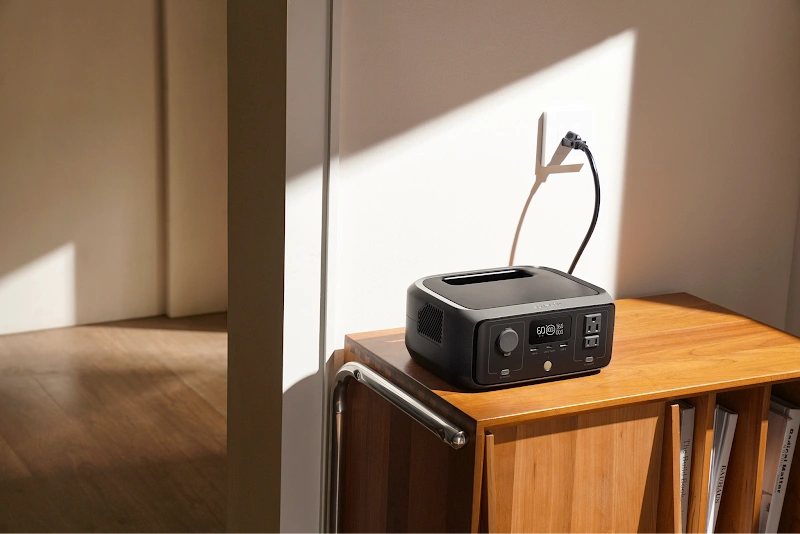
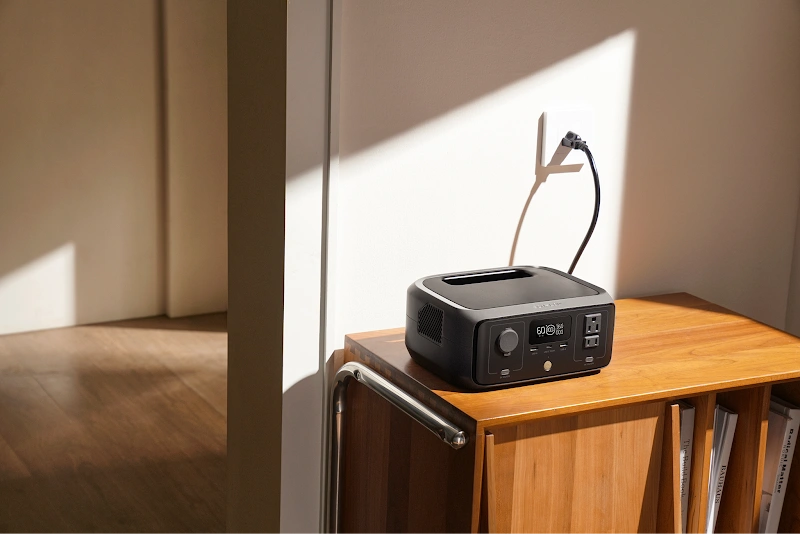
If your needs sit somewhere between a pocket charger and a massive home backup, the EcoFlow RIVER 3 Portable Power Station is the perfect middle ground. It’s tailor-made for those 48 hour road trips or when the power blinks out for an afternoon. Unlike a standard power bank, you can actually plug in AC appliances (like a laptop or a small fan). It offers way more utility than a pocket battery while staying light enough to toss in a backpack or the trunk.
How to Actually Calculate Your Battery Life
Look, you don’t need a PhD in electrical engineering to figure out how long your gear will last. It’s actually pretty simple if you follow one basic rule of thumb.
The "Back of the Napkin" Formula
Here is the core concept: Capacity ÷ Consumption = Time. Let’s say you have a 4,000 mAh battery and your phone is pulling about 400 mA per hour. In a perfect world, you’ve got 10 hours of life.
Why the Math Usually "Lies"
In the real world, these numbers are never 100% spot on. Batteries are basically chemical engines, and they’re sensitive. If you’re out in a Minnesota winter or a humid Florida summer, the temperature alone can tank your performance. Toss in high screen brightness or a weak 5G signal (where your phone has to work twice as hard just to stay connected), and that “theoretical” 10 hours might turn into six.
Pro Tips to Squeeze Every Drop of Power Out of Your Gear
Regardless of your mAh rating, your battery is wearing down every time you use it. To keep your hardware from turning into a paperweight, follow these “rules of the road”:
Dim the Lights (and Go Dark)
Your screen is the biggest power hog, period. Lowering the brightness helps, but Dark Mode is the real MVP. On OLED screens, black pixels are literally turned off. That means zero power draw for those parts of the screen.
Kill the Background "Vampires"
Plenty of apps stay awake just to “phone home,” draining your juice while the phone is in your pocket. Toggle off Background App Refresh for stuff you don’t need. Also, if you’re in a dead zone with zero bars, just flip on Airplane Mode. Your phone wastes a ton of energy hunting for a signal that isn’t there.
Avoid the "Red Zone"
Batteries hate the extremes. Leaving your phone on a hot dashboard in the sun or a frozen porch overnight can permanently shrink your total mAh capacity. Aim for the “Goldilocks zone”, somewhere between 60°F and 80°F to keep the chemistry stable.
Master the 20-80 Rule
Most of us are guilty of leaving our phones plugged in all night, but staying pinned at 100% actually creates unnecessary heat. Modern Lithium-ion cells are happiest between 20% and 80%. Most 2026 devices have a setting to cap charging at 80%, make sure to turn this function on. It can literally double your battery’s lifespan.
Conclusion
At the end of the day, understanding mAh is really about one thing: killing that “range anxiety” we all feel when our screen hits 15%. Whether you’re just trying to keep your iPhone alive through a double shift or looking for a serious backup like the EcoFlow series to keep the lights on during a summer storm, the logic is the same. More capacity isn’t just a bigger number on a box, it’s more freedom to go off grid, stay productive, and keep your life running when the grid decides to take a nap. Once you know your “fuel tank” size, you can finally stop worrying about the nearest wall outlet and start focusing on the road ahead.
FAQs
1. Is the higher the mAh the better?
Not necessarily. It’s a trade off between “juice” and “bulk.” While a massive mAh rating gives you more runtime, it also makes the battery physically bigger and heavier. If you’re looking for something to carry in your pocket while jogging, a giant 20,000 mAh brick is going to be a literal drag. It’s all about finding the right balance for how you actually move through the day.
2. Does higher mAh mean faster charging?
Nope. This is a common myth. mAh measures capacity (the size of the tank), not speed. Think of it like a swimming pool: a bigger pool holds more water, but it actually takes longer to fill up if you’re using the same garden hose. Charging speed is all about the Wattage (W) your charger and device can handle.
3. What mAh should I choose for a power bank?
For most people, 10,000 mAh is the magic number. It’s the perfect middle ground, slim enough to slide into a pocket or a small bag, but beefy enough to top off a dead iPhone or Galaxy twice. If you’re going off grid for a long weekend, then you might want to scale up, but for daily commuting, 10k is the way to go. If you want to be better than sorry, “which is better, 10000mAh or 20000mAh?” may be your question to ask.
4. What is a good mAh for an iPhone?
Anything over 3,500 mAh is generally solid for an iPhone. Here’s the key: Apple is famous for being incredibly efficient with their software. They often squeeze more “life” out of a smaller battery than their competitors do with much larger ones. Don’t get too hung up on the raw number; Apple’s optimization does a lot of the heavy lifting.
5. Can I use a higher mAh battery than recommended?
Yes, absolutely, as long as the Voltage matches. Think of it like putting a larger gas tank in your car; it won’t make the car blow up, it’ll just let you drive further between gas stations. Just double check that the output voltage is identical to your original battery so you don’t fry your electronics.
For press requests or interview opportunities, reach out to our media team
media.na@ecoflow.com