How to Go Off Grid with Solar Power: Complete System Design Guide 2026
- What Does It Mean to Go Off Grid with Solar?
- What Are the Core Components of an Off-Grid Solar System?
- How Much Power Does an Off-Grid Home Actually Need?
- How Do You Size an Off-Grid Solar System?
- How Do You Design an Off-Grid Solar System Step by Step?
- What Are the Biggest Mistakes People Make Going Off Grid?
- Frequently Asked Questions
- Reliable, Scalable, Resilient Off-Grid Power
Going off-grid with solar is becoming increasingly appealing as electricity bills and power outages continue to rise all across the country. Fortunately, it’s not nearly as daunting as it might first seem. This guide explains the basics you need to know, from what it means to go off-grid to the core components of your system, calculating your energy needs, and factors to consider when sizing an off-grid system.
What Does It Mean to Go Off Grid with Solar?
Going “off-grid” with solar means your home operates completely independently of the utility grid and isn’t connected to it in any way, as opposed to grid-tied solar, where your home remains connected to public utilities.
With off-grid, you generate, store, and manage 100% of your electricity yourself. This means when planning the off-grid lifestyle, your focus needs to shift from merely consuming and paying for electricity to actively balancing your energy production and storage with your consumption.
A complete system allows you to capture energy during the day with solar panels to power your daily energy needs, but it also stores energy for use at night or during severe weather when the panels may not produce enough.
What Are the Core Components of an Off-Grid Solar System?
Solar Panels
Solar panels, also called photovoltaics, are what generate your power, typically using multiple panels to form a larger array. They use semiconductors that interact with sunlight to release electrons that flow as one-way DC electricity.
Battery Storage
Off-grid systems require battery storage so that you still have electricity for use at night after the sun goes down. Choose a scalable system so that if your energy needs increase, you can expand your capacity without replacing your entire system.
Inverter
Another critical component is a solar inverter. Your photovoltaics produce DC electricity, which is also what your batteries store.
However, most homes and appliances, like your wall plugs and your refrigerator, need alternating current (AC) electricity. The inverter converts that DC electricity into the AC that your appliances need to run.
Charge Controller
The charge controller is another essential component that sits between your photovoltaic panels and your battery bank. Advanced charge controllers use Maximum Power Point Tracking (MPPT) to maximize the energy extracted and improve system efficiency.
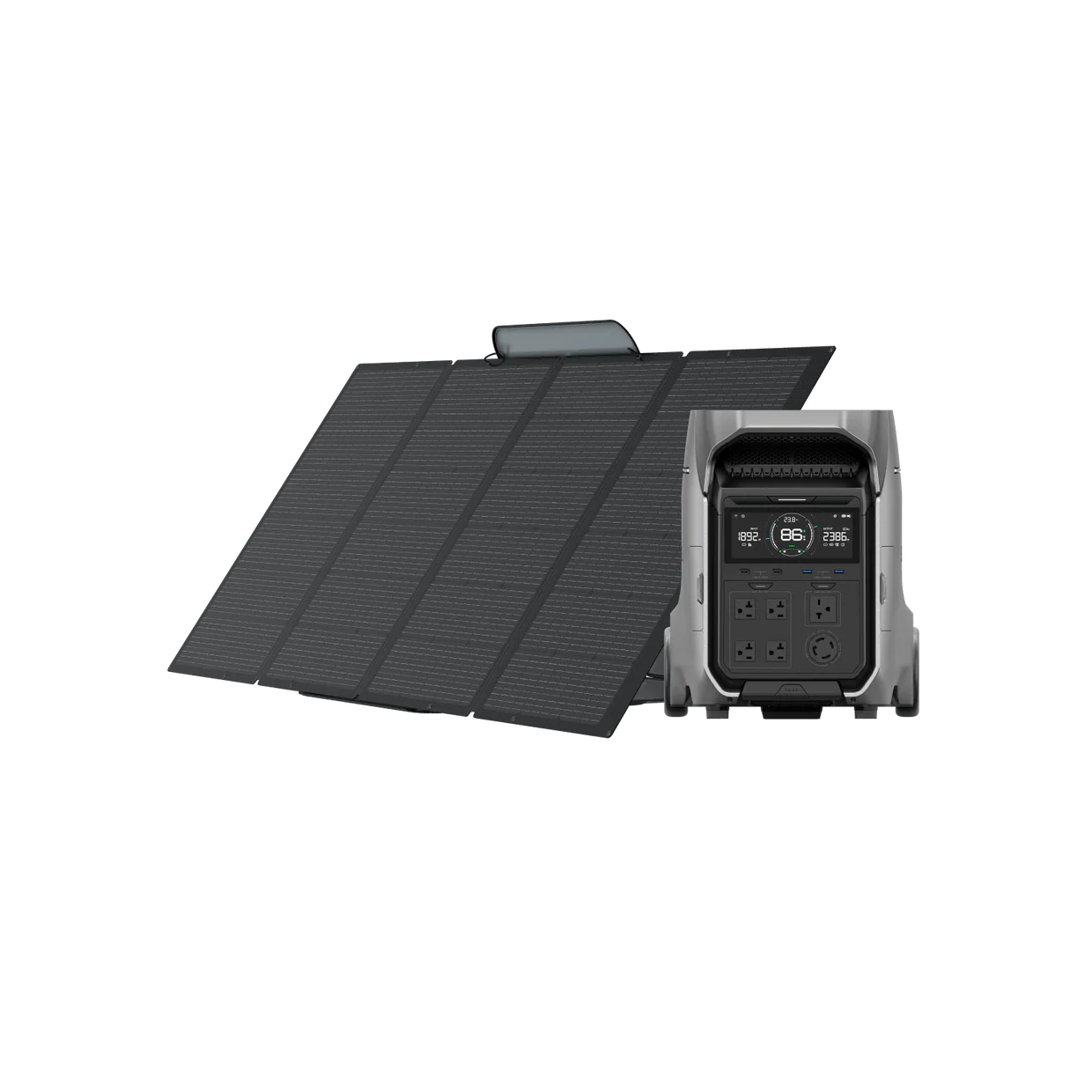
Modern all-in-one systems like the EcoFlow DELTA Pro 3 Solar Generator + 400W Solar Panel integrate solar input, battery storage, MPPT charge controller, and inverter in a single unit, with no separate wiring or components required.
How Much Power Does an Off-Grid Home Actually Need?
How much power an off-grid home needs depends on your energy needs.
To calculate your needs, list every electrical device and appliance you have along with the watts they need to run. Then multiply the wattage of each device by the number of hours it runs per day to get its energy needs in watt-hours (Wh). After that, total up all those watt-hours to get your total minimum daily load.
How Do You Size an Off-Grid Solar System?
In addition to calculating your daily energy needs, there are several factors to consider when sizing your off-grid solar kit.
Solar array sizing should account for system losses, unpredictable weather, and shade. This is why you should always choose an array that can produce more than your daily needs. Use this formula to calculate your potential solar output: Daily Wh = panel wattage x peak sun hours x 0.8, where multiplying by 0.8 accounts for system losses, and peak sun hours depend on your location.
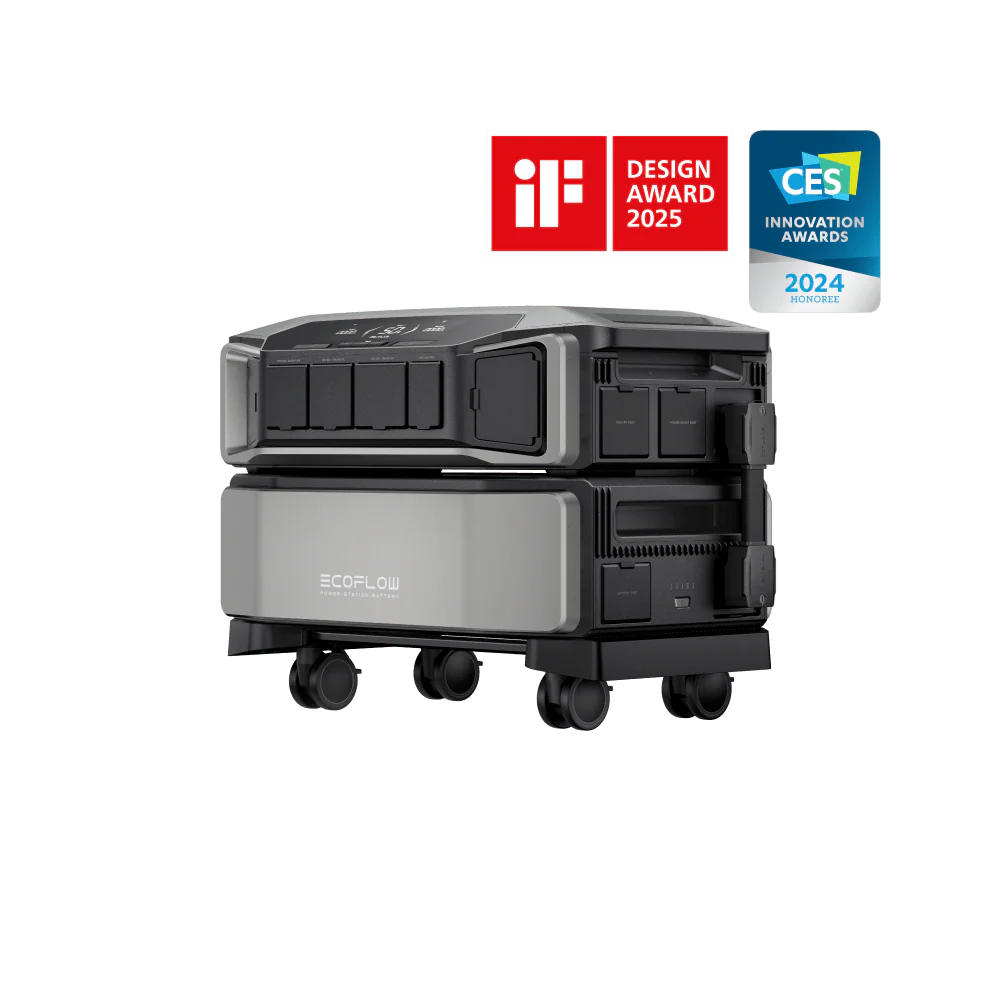
For modern households with air conditioners, electric ranges, and dryers, investing in a robust whole-home backup power solution is necessary to handle energy demands and high surge loads.
How Do You Design an Off-Grid Solar System Step by Step?
Conduct an energy load calculation to determine your daily Wh or kWh (where 1kWh = 1000Wh). Then add 20% to your daily needs as a starting point for battery capacity.
Select a battery storage device with a built-in inverter and MPPT tracking, ideally with enough capacity to run your home for 2–3 days. Choosing scalable models is strongly recommended so you can increase your capacity without changing your entire system.
Size the photovoltaic array by calculating your solar potential to determine how many panel watts you need to fully recharge your battery each day, being sure to factor in your peak sun hours and system losses.
What Are the Biggest Mistakes People Make Going Off Grid?
Underestimating your daily energy needs: Most people calculate based on their current usage, then forget to account for seasonal changes, new appliances, or guests. Always add at least 20% on top of your baseline load calculation.
Undersizing battery storage: Your battery bank needs to cover not just one night, but potentially several cloudy days in a row. Aim for a system that can run your home for 2–3 days without solar input, especially if you live somewhere with unpredictable weather.
Buying a non-expandable system: A system that can't grow with you is a liability. If your energy needs increase (e.g., an EV, a new appliance, an addition to your home), a rigid system forces a costly full replacement. Choose modular, scalable storage from the start.
Ignoring peak sun hours for your location: Solar output isn't the same everywhere. A panel rated at 400W in Arizona will produce significantly less in the Pacific Northwest. Always factor your local peak sun hours into your array sizing calculation, not just the panel's rated output.
Frequently Asked Questions
How Much Does an Off-Grid Solar System Cost in 2026?
The cost depends on your home's size, energy needs, and whether you opt for a portable system versus a fixed professional installation. Portable and modular solar generators — like EcoFlow's range, which starts from around $1,248 and scales up from there depending on your capacity needs — offer a lower entry point with no installation costs. Fixed whole-home installations can run significantly higher once you factor in equipment, labour, and permitting.
Can You Go Completely Off Grid with Solar Panels Alone?
Solar panels alone aren't enough for most homeowners. They only generate energy when the sun is shining, so you’ll only have power during the daytime hours. For most homeowners, that isn’t an option, which is why most off-grid users purchase storage batteries.
Reliable, Scalable, Resilient Off-Grid Power
Going off-grid takes planning, but the payoff (true energy independence from an unreliable grid and volatile utility prices) is worth the effort. Calculate your daily energy needs accurately, add that 20% buffer, and prioritize a system that can grow with you.
For whole-home off-grid setups, the EcoFlow DELTA Pro Ultra X Whole-Home Backup Power delivers the scalable capacity and built-in inverter you need to run a full household reliably, with room to expand as your needs change.
For smaller properties or a more portable setup, the EcoFlow DELTA Pro 3 Solar Generator + 400W Solar Panel combines solar input, storage, and inverter in a single integrated system.
For press requests or interview opportunities, reach out to our media team
media.na@ecoflow.com