How Many Watts Does a Dishwasher Use? (And Whether a Power Station Can Run It)
- How Many Watts Does a Dishwasher Use?
- What Affects a Dishwasher's Power Draw?
- How Much Does It Cost to Run a Dishwasher?
- Can a Portable Power Station Run a Dishwasher?
- How Long Can a Power Station Run a Dishwasher?
- Frequently Asked Questions
- Faster Recovery, Lower Risk, Smarter Dishwasher Power Management
Some home appliances use more power than others. But how much does a dishwasher use? It may not be that important to know this most of the time, but during a power outage when you’re relying on backup power, these things matter.
This guide covers how many watts a dishwasher uses, what affects its power draw, the costs involved, and whether you can use a portable power station to run yours during a power outage.
How Many Watts Does a Dishwasher Use?
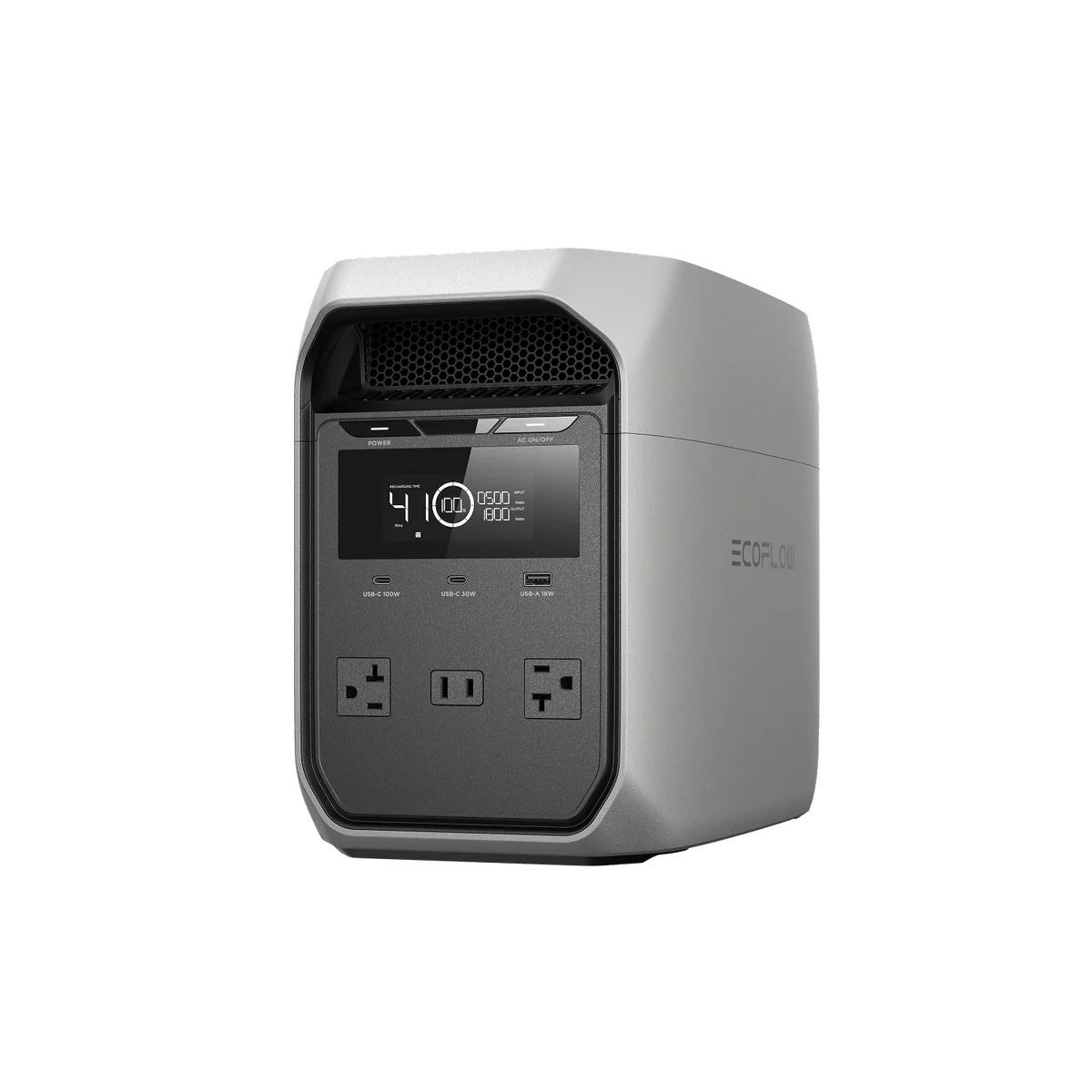
If you’re planning to power your dishwasher with a device like the EcoFlow DELTA 3 Classic during a power outage, it’s important to know how many watts it uses.
The unit power for dishwashers is measured in watts. Fortunately, you don’t need to know the formula for watts to figure this out, because the number of watts used should be listed on the device.
In general, a standard modern dishwasher has a rated power draw of between 1,200 and 1,800 watts. But this doesn’t tell the full story.
A dishwasher is not like a lightbulb in that it doesn’t pull a constant stream of electricity. It’s a dynamic appliance, and it cycles through different mechanisms over a couple of hours.
When it first starts up, its electrical demand is low at about 200 to 400 watts. This is the power needed to spin the spray arms and move water through the basin.
The large wattage surge only happens intermittently when it activates the internal heating element. During this stage, the power draw instantly spikes to the maximum rating, usually 1,500 to 1,800 watts, to heat the water and dry the dishes.
What Affects a Dishwasher's Power Draw?
Not all dishwashers require the same amount of power, and individual appliances can also draw more or less power depending on several factors:
Internal Heating Element: Heating the water uses the most energy, accounting for up to 90% of the overall electricity consumption. Most dishwashers have an internal resistance heating element, also called a booster heater. This is rated about 900 to 1,200 watts, and is used to increase temperatures to 140°F (60°C) or higher, which activates detergent enzymes and helps clean the dishes properly.
Heated Dry vs. Air Dry: Traditional dishwashers activate a thermal element to generate dry heat and evaporate moisture. This can add up to 0.5 kWh of energy to a load. However, a model that uses Air Dry does not have this power spike.
Water Temperature: If the water entering the dishwasher from the main water line is already close to 120°F, the internal booster only runs for a short time. But if it’s using cold inlet water, it has to heat it up for longer.
Cycle Settings: Dishwashers often have specialized settings like “Heavy Duty” or “Sanitize.” These extend the cycle, using up more energy. On the other hand, “Eco” cycles or “Quick Wash” reduce the runtime and heating intervals, reducing net energy demand.
How Much Does It Cost to Run a Dishwasher?
The cost of running a dishwasher involves looking at the total energy consumption measured in kilowatt-hours (kWh) rather than calculating the watts used.
Because the heating element only fires intermittently, a typical Energy Star-rated dishwasher consumes between 0.8 kWh and 1.5 kWh per full cycle.
The current average rate of electricity in the United States is about 16 to 17 cents per kWh. So, a standard cycle costs between $0.13 and $0.25 for electricity. That’s between $4 and $7.50 per month for one cycle a day, or $50 to $90 annually.
Under normal conditions, tracking this consumption might not matter much, but it's critical when you're running on emergency backup power.
Can a Portable Power Station Run a Dishwasher?
A portable power station can run a standard dishwasher, but that doesn’t mean you can just plug your dishwasher into a power bank or basic backup and expect it to work.
The internal heating element requires up to 1,800 watts of continuous power, so you will need a heavy-duty power station with a high-capacity inverter and surge capabilities.
Two metrics will help you decide whether a portable power station is up to the task:
Continuous AC Output: The pure sine wave inverter must be rated higher than the dishwasher’s peak draw. A continuous output of 2,000W or more is highly recommended to prevent the system from tripping a breaker when the booster heater activates.
Surge Wattage: There is a brief millisecond burst of power when the electric motors start spinning, and the power station must have appropriate surge capacity to deal with this spike.
How Long Can a Power Station Run a Dishwasher?
The runtime of a dishwasher on battery backup is determined by a simple formula:
Battery Capacity in Watt-hours (Wh) × Inverter Efficiency
Divide the result by the Total Energy Per Cycle (Wh)
The inverter efficiency must be taken into account because a high-quality inverter operates at about 85% efficiency due to the heat generated by converting DC power into AC electricity.
This equation will give you the number of cycles the battery backup provides.
As an example, let’s assume a dishwasher consumes 1.0 kWh (1,000 Wh) on a standard cycle.
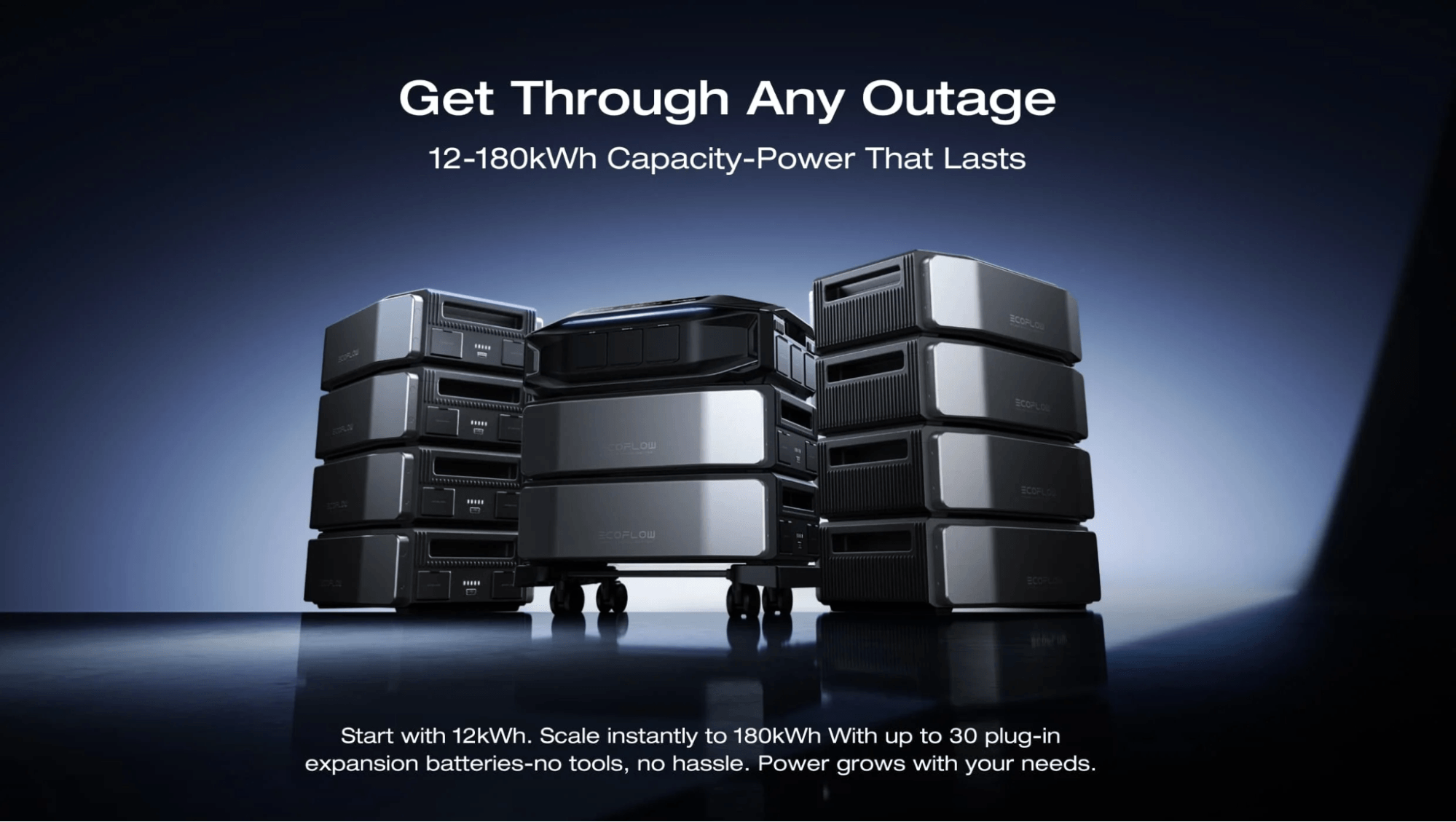
The EcoFlow DELTA Pro Ultra X has a base battery capacity of 12 kWh (12,000 Wh). Accounting for an 85% inverter efficiency rate, that gives you around 10,200 Wh of usable energy, which is enough to run approximately 10 full dishwasher cycles on a single charge. And because it's expandable up to 180 kWh, it can keep far more than just your dishwasher running during an extended outage.
Frequently Asked Questions
How Many Watts Does a Dishwasher Use Per Cycle?
A standard dishwasher uses about 0.8 to 1.5 kWh (800 to 1,500 watt-hours) per cycle, but it briefly draws between 1,200 and 1,800 watts when it’s heating the water.
What Size Power Station Do You Need to Run a Dishwasher?
For a typical household dishwasher, you will need a power station with an AC inverter that delivers at least 1,800W of continuous output. For an Eco or Quick cycle, you need a battery capacity of at least 1,000Wh, but a capacity of 1,500Wh or more is recommended for running heavy-duty cycles.
Faster Recovery, Lower Risk, Smarter Dishwasher Power Management
Knowing your dishwasher's wattage, and how a power station handles intermittent peak draws, puts you in a much better position when the grid goes down. For a single appliance, a portable power station like the EcoFlow DELTA 3 Classic can handle the load comfortably.
But if you want continuous coverage for your dishwasher, refrigerator, and everything else in your home, a whole home generator is worth considering, as it removes the guesswork entirely.
For press requests or interview opportunities, reach out to our media team
media.na@ecoflow.com