Flood Emergency Kit: What to Pack and How to Build One
Flash flooding can turn dangerous fast. A watch can become a warning in less than an hour, leaving little time to gather supplies. If your flood emergency kit is still sitting half-packed when the water starts rising, you're already behind. A good flood kit needs more than bottled water and a flashlight. It should cover food, first aid, important documents, sanitation supplies, and a way to stay connected when the power goes out. This guide walks through what to pack, how a flood kit differs from a general disaster bag, and where backup power fits in. It also covers what to keep on hand if you stay home, what to grab if you need to evacuate, and where to store your kit so you can reach it quickly.
Why a Flood Emergency Kit Is Different From a General Go-Bag
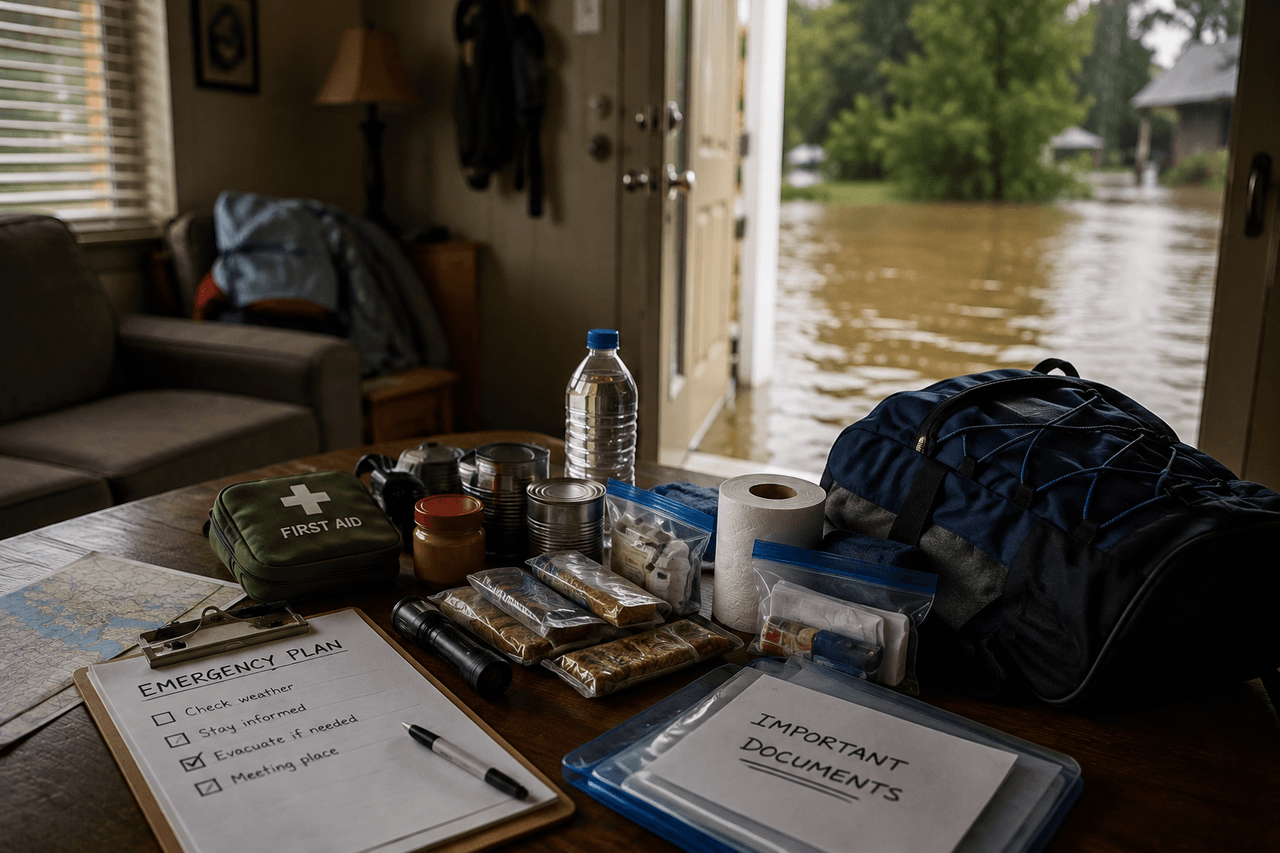

A flood can turn from a watch into a warning quickly. That may leave you with little time to gather what you need. A flood kit should be packed and ready before the weather gets worse.
Flooding also creates problems that a general emergency bag may not cover. Important papers need to stay dry, and some supplies can be damaged or contaminated by floodwater. Where you keep the kit matters, too. A basement or garage may not be the safest place if water starts coming in.
Clean drinking water, dry storage, and basic sanitation supplies are especially important during a flood. You may also need supplies that can be moved quickly if you have to leave. It also helps to know whether a flood watch or warning has been issued, since the two alerts call for different levels of response. Flash flood warning vs. watch: what's the difference explains what each alert means. Once you know what makes a flood kit different, the next step is putting together the supplies you'll actually need.
The Core Flood Emergency Kit Checklist


Once you know what makes a flood kit different from a general emergency bag, you can start with the supplies your household is most likely to need. The basics are simple, but they can make a big difference when you're dealing with high water, an evacuation, or an extended outage.
Water and food: Keep at least a 3-day supply of food and drinking water for each person. A way to purify additional water is useful, too, since flooding can contaminate wells and affect local water supplies.
First aid and medications: Pack a stocked first aid kit and several days of any prescription medications your household uses. Pharmacies may be closed or hard to reach during a flood.
Important documents and sanitation supplies: Keep copies of IDs, insurance information, and medical records in a waterproof container. Add basic sanitation supplies such as wipes, toilet paper, trash bags, and hand sanitizer.
Kids and infants: Families with young children may need extra supplies, including formula, diapers, wipes, and a comfort item. Having those items packed ahead of time can make an evacuation much less stressful.
Your kit should match the needs of your household. A family with pets may want to keep pet food and medications nearby. Someone who depends on medical equipment may need extra supplies. The important thing is to think through what you'd reach for first if you had to leave home or stay without normal household services.
A flood kit is only one part of getting ready. You can also prepare your home for flooding by thinking about where water could enter and what needs to be moved to a safer place before a storm arrives. Once the basics are covered, there's still one important thing to plan for: keeping essential devices and equipment running when the power goes out.
Backup Power: The Item Most Flood Kits Miss
Flooding can knock out power for days, not just a few hours. That can make it harder to charge phones, run medical equipment, or keep a sump pump working when you're dealing with rising water.
A small battery can handle phones and other essentials, but larger appliances need more capacity. A refrigerator or sump pump may require a bigger system, especially during a longer outage. Home battery backup for flood protection explains how to plan for those power needs during a flood.
Your setup also depends on what you need to power. A portable unit like the EcoFlow DELTA Pro 3 can go with you during an evacuation. A whole-home system like the EcoFlow DELTA Pro Ultra X can stay in place and support larger household loads when you remain at home.
With power covered, the next step is to think about what you'll do if flooding starts. A kit for staying home looks different from one you can grab on the way out.
Building a Kit for Different Scenarios: Shelter-in-Place vs. Evacuation

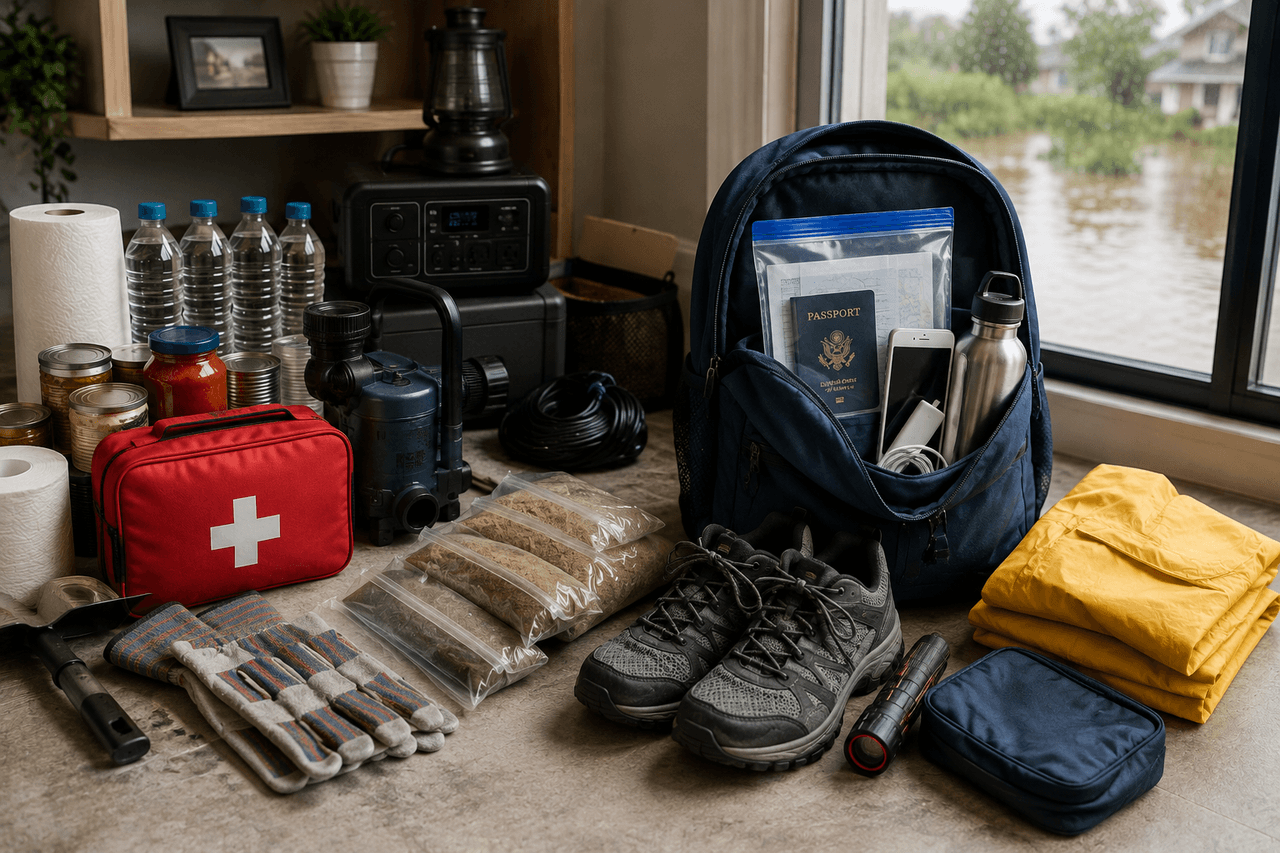
If it's safe to stay home, keep more food and water on hand for a longer stretch. You may also want a way to power a sump pump, along with supplies such as sandbags, if they're appropriate for your property.
An evacuation kit needs to be lighter. Keep important documents in a waterproof pouch, have a portable charger ready, and set aside sturdy footwear that you can grab quickly. You shouldn't have to dig through the house looking for these things when it's time to leave.
The two kits serve different purposes. One is built to help you stay put for longer. The other is meant to get out the door with you. And if floodwater is rising, getting to higher ground comes first. How to survive a flash flood covers when to evacuate and how to respond as flooding gets worse.
Where to Store Your Kit and How Often to Check It
Where you keep your flood emergency kit matters almost as much as what you put in it. Store it above any area that could flood, and choose a spot you can reach quickly. You don't want to hunt for supplies while water is rising or when you're trying to get out the door.
Check the kit regularly so the contents are still usable when you need them. Spring snowmelt and hurricane season are good reminders to check food, water, and medications for expiration dates. After you use anything during a storm, replace it soon after. That way, the kit is ready the next time you need it.
Conclusion
A flood emergency kit should be ready before the next warning, with the supplies your household would actually use during an evacuation or an extended outage. Keep it stocked, check it regularly, and make sure you have a plan for losing power. For households that want more backup capacity, the EcoFlow DELTA Pro Ultra X and DELTA Pro 3 are two options to consider.
FAQs
What should be in a flood emergency kit?
A flood emergency kit should include drinking water, food, first aid supplies, prescription medications, important documents, sanitation items, and supplies for children or infants. Keep everything in a place where it can be reached quickly.
How is a flood emergency kit different from a regular disaster kit?
A flood kit needs to account for risks that come with water. Important documents should stay dry, some supplies may need extra protection from contamination, and the kit should be easy to move if you have to evacuate.
How much water and food do I need in a flood kit?
Plan for at least three days of food and drinking water for each person in your household. It's also helpful to have a way to purify additional water in case flooding affects a well or local water supply.
Do I need backup power in my flood emergency kit?
Backup power helps during flood outages, it keeps phones charged for emergency alerts and runs essential equipment. Larger battery systems can handle bigger loads like a refrigerator or sump pump.
How often should I check and restock my flood kit?
Check your kit a couple of times a year and look at expiration dates on food, water, and medications. After using supplies during a storm, replace them as soon as you can, so the kit is ready for the next emergency.
For press requests or interview opportunities, reach out to our media team
media.na@ecoflow.com