Do Electric Garage Heaters Use a Lot of Electricity? (Cost & Wattage Guide)
- Quick Answer
- Introduction
- How Much Electricity Do Garage Heaters Actually Use?
- Choosing the Right Wattage for Your Garage Size
- 120V vs 240V Electric Heaters: Power and Cost Differences
- Backup Power Options for Your Garage
- 8 Ways to Cut Your Heating Costs
- Making Electric Heaters for Garage Work for Your Budget
- FAQs for Electric Garage Heater
Quick Answer
It depends on the heater wattage and how you use it. A small garage heater electric 120v (1,500W) costs about $23/month running 4 hours daily, which isn't much. Larger 240v heaters (5,000W+) can cost $75-100 monthly if used heavily, but that's for heating big spaces. Most people find electric garage heaters affordable when properly sized—the key is matching wattage to your garage size and insulation.
Introduction
Electric garage heaters get a bad reputation for eating up electricity, but the reality isn't quite that simple. Your actual costs depend on the heater wattage, whether you need a garage heater electric 120v or a more powerful 240v heater, plus how often you actually run it. A 1,500W unit heating a small workshop for 3-4 hours costs around 60-80 cents per session, which adds up differently than running a 5,000W heater all day in a drafty two-car garage. The key is matching the right electric heaters for garage to your actual space and habits.
How Much Electricity Do Garage Heaters Actually Use?
The best way to understand your heating costs is to look at wattage, which is basically how much power your heater pulls from the wall. Think of it like a car's fuel consumption—higher wattage means more electricity used per hour.
What to expect from different heater types:
Most electric garage heaters fall into two camps. Smaller plug-in models that run on standard 120V outlets typically use 1,000-1,500 watts. These are the ones you can just plug in and go. On the other hand, those beefier 240v heater units that need special wiring usually consume 3,000-7,500 watts, sometimes even more for commercial-grade models.
The simple cost formula:
Here's how to figure out what you'll actually pay: take your heater's wattage, divide by 1,000, then multiply by how many hours you run it and your electricity rate.
(Wattage ÷ 1,000) × Hours Used × Electricity Rate = Daily Cost
Example:
If you're running a standard 1,500W heater for 4 hours a day and your power costs $0.13 per kilowatt-hour (pretty typical in the US), you're looking at about 78 cents per day. That works out to roughly $23 per month if you use it daily.
Not too scary, right? Of course, a 5,000W unit running the same hours would cost you about $2.60 daily, or around $78 monthly. That's why matching heater wattage to your actual needs matters so much.
Choosing the Right Wattage for Your Garage Size
Getting the wattage right from the start saves you money and keeps you comfortable. Too small, and you'll shiver while the garage heater runs nonstop. Too large, and you're wasting electricity heating air faster than necessary.
For a well-insulated garage, plan on about 10 watts per square foot. If your garage has minimal or no insulation, bump that up to 15-20 watts per square foot.
Wattage by Garage Size
Here's what you'll need for different garage sizes:
| Garage Type | Square Footage | Required Wattage | Best Heater Option |
| 1-car garage | 200-250 sq ft | 2,000-3,750W | Garage heater electric 120v (1,500W) works for insulated spaces; small 240v heater for uninsulated |
| 2-car garage | 400-500 sq ft | 4,000-7,500W | 240v heater required |
| 3-car garage/workshop | 600-750 sq ft | 6,000-12,000W | High-wattage 240V unit with dedicated circuit |
What Else Affects Your Wattage Needs
Beyond square footage, several factors can increase or decrease how much heating power you actually need:
1. Ceiling height matters. If your ceiling is over 10 feet tall, add another 25% to your wattage calculation. That extra air volume takes more energy to heat.
2. Insulation makes a huge difference. A poorly insulated garage can need twice the wattage of an insulated one. We're talking about the difference between a 3,000W heater and a 6,000W heater for the same space.
3. Your climate zone counts too. Heating a garage in Minnesota requires more power than the same garage in Georgia, even with identical insulation.
Matching Wattage to How You Use Your Space
Your heating needs also depend on how you actually use your garage:
Hobby workshop: If you pop in for an hour here and there, you can get away with lower wattage since you're not maintaining constant temperature. Intermittent use means the heater doesn't need to run continuously.
Home gym: You'll want steady, moderate heat since you'll be there for longer sessions and need consistent comfort. Plan for mid-range wattage that can maintain temperature without cycling on and off constantly.
Full-time workspace: If you're spending 4-8 hours working in your garage, you'll probably want higher wattage to stay comfortable during long hours, especially if you're sitting still rather than moving around.
120V vs 240V Electric Heaters: Power and Cost Differences
The voltage debate really comes down to your garage size and how much power you need. Both types have their place, but they work very differently.
Quick Comparison: 120V vs 240V Heaters
| Feature | 120V Heaters | 240V Heaters |
| Power Output | 1,000-1,800W | 3,000-7,500W+ |
| Installation | Plug into standard outlet | Requires dedicated circuit & electrician |
| Portability | Fully portable | Fixed installation |
| Upfront Cost | $50-$200 | $150-$500+ (plus installation) |
| Circuit Required | Standard 15A household circuit | Dedicated 30-50A circuit |
| Best For | Small garages (<300 sq ft) | Large garages (400+ sq ft) |
| Heating Speed | Slower in large spaces | Heats faster |
Garage Heater Electric 120V: The Plug-and-Play Option
What makes them convenient:
120V garage heaters plug directly into your standard wall outlets, just like any other appliance. They're portable, so you can move them around or take them to different locations. The upfront cost is usually lower too, with decent models starting around $50-150.
Where they fall short:
These units max out at 1,500-1,800 watts because of circuit limitations. A standard 15-amp household circuit can safely handle one 1,500W heater, but that's about it. Try to run anything else on the same circuit, and you'll likely trip the breaker.
When they make sense:
Small garages under 300 square feet, supplemental heating in specific work zones, or temporary use when you only need heat occasionally. If you're just warming up a corner of your garage for a weekend project, a 120V unit does the job fine.
240V Heater: The Heavy-Duty Choice
The power advantage:
240V units deliver 3,000-7,500 watts or more, which means they can heat larger spaces much faster. If you've got a two-car garage or bigger, this is what you need.
What's required:
You'll need a dedicated circuit installed, which almost always means hiring an electrician. These garage heaters typically require 30-50 amp circuits depending on their wattage. This isn't a DIY project unless you're a licensed electrician.
Best applications:
Large garages, year-round workshops, or any space over 400 square feet. If you're serious about keeping your garage warm all winter, a 240V heater is the realistic choice.
Cost Efficiency: What Actually Matters
Here's something important: neither 120V nor 240V is automatically more efficient. A watt is a watt regardless of voltage. What matters is the garage heater type—ceramic, infrared, or forced air—and how well it matches your space.
The one advantage of 240V heaters in large spaces is speed. They reach your target temperature faster, which can actually reduce overall runtime. Instead of a small heater struggling for hours, a powerful unit gets the job done quicker and shuts off.
Daily Running Cost Comparison
| Heater Type | Wattage | Hours Run | Daily Cost* | Monthly Cost* |
| 120V heater | 1,500W | 8 hours | $1.56 | $46.80 |
| 240V heater | 5,000W | 3 hours | $1.95 | $58.50 |
*Based on $0.13/kWh electricity rate
The smaller garage heater costs less per day, but it also runs more than twice as long and might not even get your garage as warm as you want it. The 240V heater uses more electricity per hour but completes the job faster.
Backup Power Options for Your Garage
Sometimes your garage's electrical setup isn't ideal, or you need backup options when the power goes out. That's where portable power stations come in.
When Backup Power Makes Sense
Portable power stations solve several common problems. During winter power outages, you can run a garage heater for a few hours to keep pipes from freezing. Detached garages without dedicated circuits can use them for temporary heating. You can also pre-heat your workspace for 30-60 minutes before switching to your main heater, or add warmth in specific work zones without heating the entire space.
What They Can Handle
Most portable power stations can run electric heaters for garage up to 1,500 watts, which covers standard 120V units. They work well for emergency heating or short-term use.
Beyond heating, you can charge power tools, keep lights on, and run small appliances at the same time. If you have essential garage equipment, a power station keeps it running during outages.
The Reality Check
Portable power stations aren't built for primary heating over long periods. Battery capacity limits runtime to about 2-4 hours with a 1,500W heater, depending on battery size.
Use them for pre-heating (30-60 minutes before you start working) or zone heating right where you're standing during a project. They're a supplement, not a replacement for proper electrical heating.
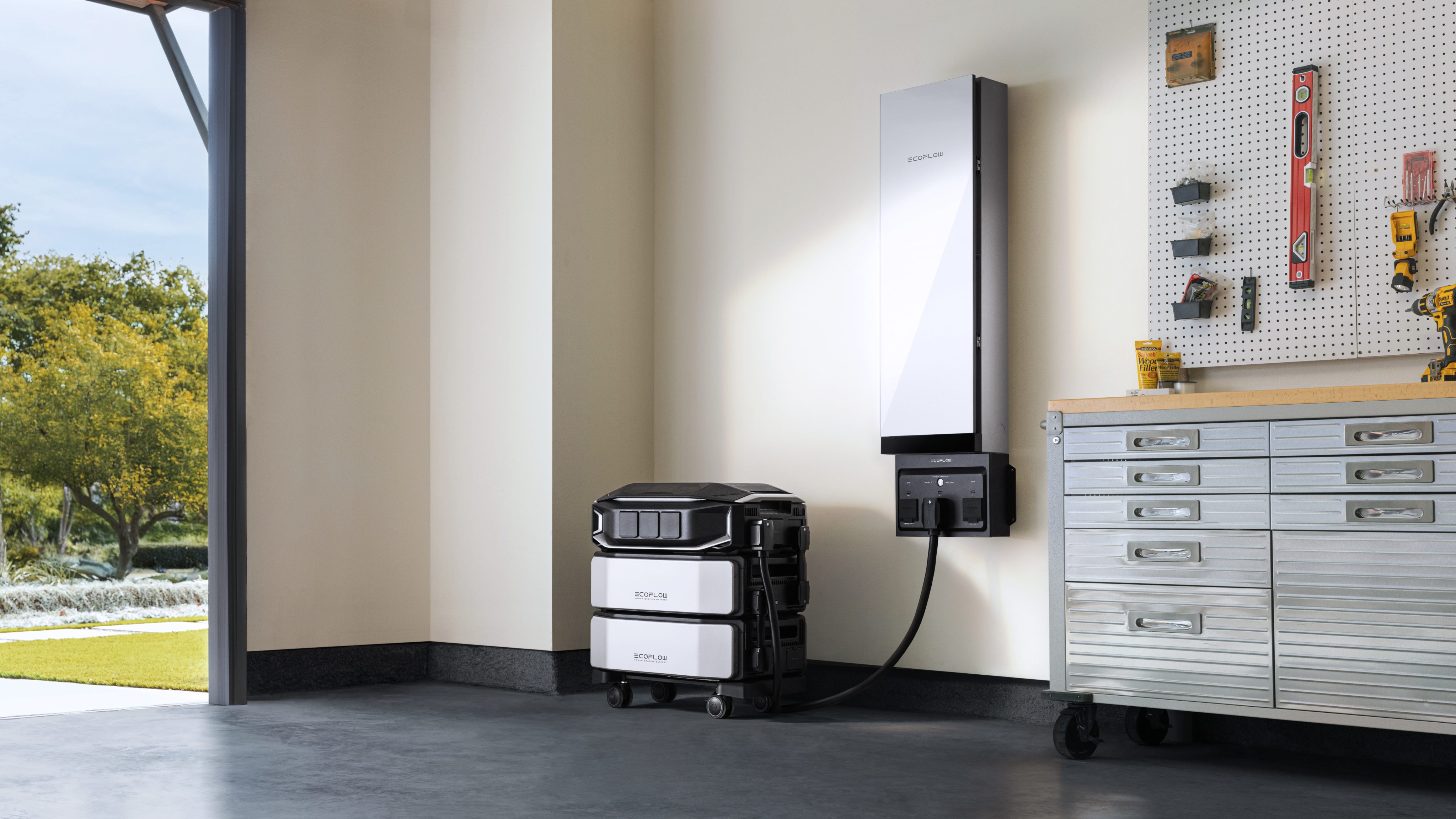
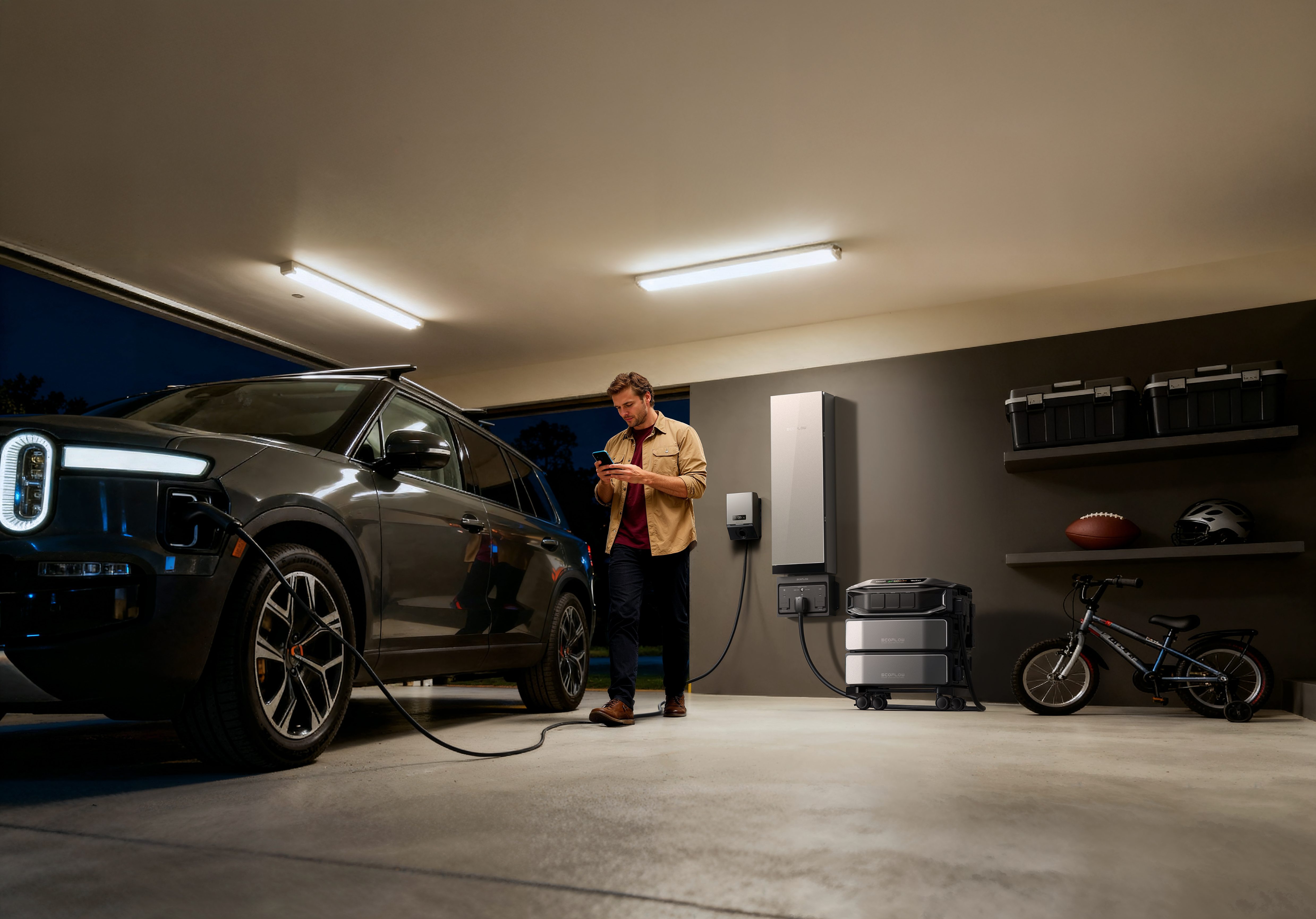
If you need more reliable backup heating, whole-home battery systems like the EcoFlow DELTA Pro Ultra X whole-home backup system can run even high-wattage 240v heaters during extended outages. With 12-36kW output and up to 180kWh storage, these systems handle your entire garage plus the rest of your home, with automatic switchover in under 20 milliseconds. It's a bigger investment than portable stations, but there's no runtime limit when the power goes out.
8 Ways to Cut Your Heating Costs
Even with the right garage heater, you can still waste electricity if you're not using it efficiently. Here are practical steps that actually make a difference on your power bill:
1. Insulate your garage better. Weatherstrip your garage door and caulk around any windows and doors. If possible, also insulate your walls and ceiling. This will reduce your heating bill by as much as half.
2. Install a programmable thermostat. Program it to heat only when you’re actively using your garage. What’s the point of heating it up at 3:00 AM when no one will be out there?
3. Zone heating. Instead of trying to heat your entire garage, you can put a portable electric garage heater in the spot you're working on. A great idea for a bigger garage.
4. Regular maintenance. Your heater needs to be cleaned periodically, and your filters need to be changed. An unclean heater runs harder and uses more power for the same amount of heat.
5. Heat on a timer. Heat your garage 30 to 60 minutes prior to needing it, and then turn the temperature down once you are working. Your body will warm the garage too.
6. Utilize free heat. During sunny days in winter, open windows or doors facing south, allowing solar heat into your home, then supplement with your electric garage heater if needed.
7. Think about using infrared heaters in your workshop. Infrared heaters heat objects and people directly and not the air. If you are working in one place, then infrared would be more effective compared to heaters that use forced air to heat the room.
8. Store power during off-peak hours if you heat regularly. Whole-home battery systems like the EcoFlow DELTA Pro Ultra X let you charge when electricity is cheap and use that stored power during expensive peak hours, which can cut your overall energy costs significantly.
Making Electric Heaters for Garage Work for Your Budget
The bottom line is this: electric garage heaters only cost a lot if you're using the wrong heater wattage for your space. Small garages do fine with a garage heater electric 120v at $20-25 monthly, while bigger spaces need a 240v garage heater that typically runs $50-80 depending on insulation and usage. Run the numbers for your specific garage, pick the right unit, and follow the efficiency tips we covered. Your garage will be comfortable, and your electricity bill will stay manageable.
FAQs for Electric Garage Heater
Q1: Can I run an electric garage heater and other tools on the same circuit?
Not recommended. A 1,500W heater already maxes out a standard 15-amp household circuit. Running power tools simultaneously will trip your breaker. Use a separate circuit for your heater, or unplug it before using high-draw tools like table saws or air compressors.
Q2: Do electric garage heaters work in extremely cold climates like Canada or Alaska?
Yes, but you'll need higher wattage and excellent insulation. In sub-zero temperatures, budget for 20-25 watts per square foot instead of the standard 10-15. A well-insulated 400 sq ft garage in very cold climates might need a 7,500-10,000W unit to maintain comfortable temperatures.
Q3: Is it cheaper to leave my garage heater running all day or turn it on and off?
Turn it off when not in use. The "leaving it on saves money" myth doesn't apply to electric resistance heaters—they convert electricity to heat at the same efficiency regardless. Running a 5,000W heater for 24 hours costs about $15.60 daily versus $3.90 for 6 hours of actual use.
Q4: Will a ceiling-mounted heater cost less to run than a floor model?
No, the mounting location doesn't change electricity consumption. However, ceiling heaters can feel more efficient because heat rises naturally, so you're not fighting against basic physics. Both use the same wattage, but ceiling units may cycle off sooner once the space warms up.
Q5: How long does it take a 240V heater to warm up a cold garage?
Expect 15-30 minutes for a properly sized unit. A 5,000W heater can raise a 400 sq ft insulated garage from 35°F to 65°F in about 20 minutes. Uninsulated spaces or undersized heaters may take 45-60 minutes or longer.
Q6: Should I worry about carbon monoxide with electric garage heaters?
Absolutely not. Electric heaters produce zero carbon monoxide because they don't burn fuel. Unlike propane or natural gas heaters, you don't need ventilation for safety reasons. This makes electric units ideal for enclosed spaces where you're working for extended periods.
For press requests or interview opportunities, reach out to our media team
media.na@ecoflow.com