EcoFlow DELTA Pro Ultra X Outperforms DELTA Pro Ultra
EcoFlow recently launched DELTA Pro Ultra X, an upgrade on the portable power company's award-winning EcoFlow DELTA Pro Ultra. It offers more power output and battery storage capacity expandability.
And that's not all.
EcoFlow DELTA Pro Ultra X is the ultimate portable whole-home backup generator for mid-to-large sized homes and recreational vehicles in the United States.
EcoFlow DELTA Pro Ultra remains a powerful solution for many applications, but it offers less headroom to operate multiple high-wattage appliances in addition to HVAC systems like a 5-ton central air conditioner (AC).
Read on to find out which model DELTA Pro Ultra is the right whole-home backup power solution for you.
EcoFlow DELTA Pro Ultra X and DELTA Pro Ultra — What's the Difference?
Both EcoFlow DELTA Pro Ultra models feature industry-leading lithium iron phosphate (LiFePO4/LFP) battery technology, high output inverters, and scalable modular capacity.
However, EcoFlow DELTA Pro Ultra X is the superior choice for mid-to-large sized households in the United States, particularly in locations that experience extreme heat and cold.
Heat waves, in particular, are becoming more frequent and deadly across much of the country, sending wet-bulb temperatures soaring and turning air conditioning from a luxury into a matter of life and death.
Because the vast majority of portable air conditioners and HVAC systems rely on electricity from the utility grid to operate, heat waves put massive additional pressure on aging power infrastructure, often helping to trigger voluntary and involuntary blackouts and extended power outages.
EcoFlow DELTA Pro Ultra vs. DELTA Pro Ultra X Head-to-Head Comparison Tabl
Feature | EcoFlow DELTA Pro Ultra | EcoFlow DELTA Pro Ultra X |
AC Output (Continuous Power per Inverter) | 7,200W (120/240V) | 12,000W (120/240V) |
Max PV (Solar Charge) Input (Per Inverter) | 5.6kW Total *(1x High-PV 4kW + 1x Low-PV 1.6kW)* | 10kW Total *(2x High-PV ports @ 5kW each)* |
Solar Input Voltage | High-PV: 80-450V Low-PV: 30-150V | PV Ports (x2): 80-500V |
Battery Scalability (Per Inverter) | Supports up to 5 Battery Packs *(Total 30kWh per inverter)* | Supports up to 10 Battery Packs *(Total 60kWh per inverter)* |
Max System Capacity (3 Inverters) | 90kWh | 180kWh |
AC Output Sockets (On Unit) | • 4x 120V 20A • 1x 120V 30A (TT-30) • 1x 240V 30A (L14-30) | • 2x 120V 20A (NEMA 5-20) • 1x 120/240V 30A (NEMA L14-30) • **1x 120/240V 50A (NEMA 14-50)** |
AC Charging Input | Max 7,200W (via 240V) | Max 12,000W (via 240V 50A) |
Inverter Weight | Approx. 70.8 lb (32.1 kg) | Approx. 76.06 lb (34.5 kg) |
Inverter Dimensions | 27.2 × 18.9 × 8.4 in (690 × 481 × 214 mm) | 26.6 × 18.7 × 9.0 in (675 × 475 × 230 mm) |
Dust/Water Resistance | IP54 | IP54 |
UPS Switchover Time (With Smart Home Panel Integration) | Backup UPS: <20ms | Backup UPS:<20ms |
UPS Switchover Time (Direct Input) | True Online UPS (0ms auto-switchover) | Server Level UPS:<10ms |
EcoFlow DELTA Pro Ultra X vs. DELTA Pro Ultra: Key Differences and Benefits Explained
Unlike many head-to-head comparisons, there's no clear winner here. It's more of a case of how much off-grid backup or portable power you need right now — or might need in the future.
EcoFlow DELTA Pro Ultra is more than powerful enough to run most 2-4 person households and motorhomes off-grid for extended periods.
Whether you need the extra power output and expandability offered by EcoFlow DELTA Pro Ultra X depends mostly on the following factors.
How Many High-Wattage Appliances and HVAC Units Do You Want to Back Up?
A portable power station's continuous AC output directly determines how many devices, appliances, and home systems you can operate simultaneously without overloading the system.
kilowatt-hoursDetermining your household AC consumption in wattskilowatts is essential when choosing what power station or solar generator is right for you.
Learn how to calculate your continuous AC output requirements here.
Advantage: EcoFlow DELTA Pro Ultra X
How Long Do You Want Your Home to Run During Blackouts?
How long EcoFlow DELTA Pro Ultra, DELTA Pro Ultra X, or any other backup battery power source can operate connected appliances between charges is determined by two things.
How much electricity do appliances connected to your backup generator consume (in watts or kilowatts)?
How long do you want to run each appliance between charges (in watt-hours/kilowatt-hours)?
Watt-hours (Wh/kWh) measures how much power a device consumes over a unit of time — in this case, one hour.
Here's a quick guide to estimating an appliance's electricity consumption in watt-hours based on its rated continuous power requirements, typically found on manufacturer's labels and in product manuals.
1. If you know the watts (W)
Most home appliances list their continuous rated power consumption in watts.
Formula: Kilowatt-hours (kWh) = (Watts × Hours) / 1,000
Multiply the Power (Watts) by the Time (Hours) the device runs.
Divide the result by 1,000.
For example, if you run a 500-watt space heater for 4 hours: [(500 × 4) / 1,000 = 2 kWh].
The electricity consumption of the space heater is 2kWh or 2000Wh.
2. If you know the Kilowatts (kW)
If the device is large (like an EV charger or Central AC) and listed in kW:
Formula: Kilowatt-hours (kWh) = (Kilo-Watts × Hours)
Multiply the Power (Kilo-Watts) by the Time (Hours) the device runs.
For example, if you run a 5-ton Central Air Conditioner (approx. 5,000 watts) for 3 hours: (5kW × 3) = 15 kWh
Advantage: EcoFlow DELTA Pro Ultra X
How Many Watt-Hours/Kilowatt-Hours (Wh/kWh) of Battery Storage Do You Need for Your Whole House?
If you're relying solely on battery storage capacity to power you through an outage, it's essential to determine which appliances you want to run and for how long.
You're probably familiar with kilowatt-hours from your electricity bill, it's how the power companies charge you for electricity consumption.
Most home battery and solar generator systems also measure capacity in watt-hours (Wh) or kilowatt-hours (kWh).
Learn how to calculate total kWh consumption for your home.
For true home energy security, it's unwise to rely on storage capacity alone.
Fortunately, both EcoFlow DELTA Pro Ultra models offer multiple charging options that don't require grid power like solar panels and traditional gas or inverter generators.
What Are Your Surge Power (Starting Wattage) Requirements?
High-wattage home appliances and HVAC systems that rely on motors and compressors like refrigerators and air conditioners require considerably more starting wattage (surge power) than running wattage (continuous power) delivered in a short burst to start the motor or compressor.
Most manufacturers don't list starting wattage requirements on their product labels because surge power is rarely an issue when you're connected to the grid through a household electricity outlet like a wall plug.
However, understanding surge power requirements is essential for home backup and whole-home generator applications.
Both EcoFlow DELTA Pro Ultra and Pro Ultra X offer sufficient amperage to start and run high-wattage 120V/240V appliances and systems, including 3 to 5-ton central air conditioning systems.
Advantage: EcoFlow DELTA Pro Ultra X
Do You Want to Recharge an Electric Vehicle (EV) with EcoFlow DELTA Pro Ultra?
If you drive an electric vehicle and want to charge your EV at home, EcoFlow DELTA Pro Ultra X offers a distinct advantage over the standard Ultra.
It comes with a native NEMA 14-50 (50A) outlet directly on the inverter, so you can plug a standard EV charging cable directly into the unit and charge your car at Level 2 speeds (up to 12,000W or ~12kW).
EcoFlow DELTA Pro Ultra taps out at 30A with a NEMA L14-30 outlet.
Technically, a NEMA L14-30 outlet is considered Level 2 with 30 amps of current and 240V voltage.
In the real world, a NEMA L14-30 outlet requires an adapter to fit most EV chargers, and the charging speed is capped significantly lower at ~7200W (7.2kW).
With two-thirds more charging power, your EV will be topped up and ready to go in significantly less time if you plug it into the EcoFlow DELTA Pro Ultra X instead of the standard model.
Advantage: EcoFlow DELTA Pro Ultra X for plug-and-play EV Level 2 fast-charging without adapters or a transfer switch.
How Much Electricity Do You Want to Generate with Solar Panels?
Setting electricity generation goals for residential solar panel systems is crucial to making sure you take full advantage of the potential benefits at your location and maximize your return on investment.
Many factors go into determining how many solar panels you need for your home and you will never know EXACTLY how much power you'll generate on a daily basis.
Solar power is intermittent by nature and generating electricity with the photovoltaic cells in PV modules like solar panels and shingles is inherently unpredictable.
But by taking the following into consideration, you can make an educated guess.
Historic levels of solar irradiance
Average hours of peak sunlight
Seasonal weather and global horizontal irradiance patterns
Rated power of the solar panels
Number of solar panels connected to the inverter or solar charge controller
The last two bullets in that list are capped by the maximum solar charge input of the inverter or for systems with battery storage, the maximum capacity of the charge controller.
EcoFlow's whole-home solar generators have industry-leading MPPT charge controllers and advanced battery management systems built directly into the inverter unit.
The combined solar charge input of the inverter(s) directly determines how many solar panels can be connected to the unit and at what rated power wattage.
If you exceed the maximum solar charge input and battery storage capacity any additional power your solar panel array generates will go to waste.
There's also the added danger of causing overvoltage conditions which can short-circuit and permanently damage the entire system.
EcoFlow DELTA Pro Ultra X provides 4,400W more solar charging capacity than the standard unit (per inverter), meaning it has roughly 79% more solar capacity.
Technically, that means you could connect 11 more EcoFlow 400W rigid solar panels per inverter to the Pro Ultra X model.
But PV arrays require expertise and solar panel wiring diagrams to ensure the viability of the installation.
That's why the vast majority of homeowners choose to work with a professional installer for photovoltaic arrays with more than 4 solar panels.
Not everyone needs or wants that many solar panels for their house, but if you do, EcoFlow DELTA Pro Ultra X is the clear winner.
Advantage: EcoFlow DELTA Pro Ultra X
How Much Can Solar Panels + Battery Storage Save You on Electricity Bills?
The mid-to-long term return on investment in residential solar panel + storage solutions is determined primarily by how much money you save through self-consumption of electricity generated by the system versus paying for it from your power company or utility provider.
How much money you can save depends on various factors, including:
Amount you currently spend on electricity bills
Retail electricity prices in cents per kilowatt-hour (¢/kWh) at your location
Electricity pricing plan availability from your utility provider
Ability to choose a different power company that offers dynamic pricing (on-peak/off-peak billing)
If you have a mid-to-large sized home or a household that consumes a significant amount of electricity, EcoFlow DELTA Pro Ultra X offers you additional expandable capacity which COULD help you save more on electricity bills.
However, it's essential to size your generator and battery storage to ensure you're not paying for more capacity than you need to maximize your ROI.
Purchasing more capacity than you need can significantly lengthen your solar payback period and reduce your overall electricity bill saving over the lifetime of the system.
Advantage: That requires more research. Energy bill savings from residential solar + storage kits come from increasing self-consumption of the electricity your system generates and taking advantage of dynamic pricing (the difference in cents per kilowatt-hour (¢/kWh) your power company charges during peak demand hours and off-peak time-of-use rates.)
Can You Get Paid for Electricity from EcoFlow DELTA Pro Ultra or DELTA Pro Ultra X?
No, at least not by selling electricity to your utility company, but that doesn't mean you can't make money through decreased electricity grid power consumption and savings on energy bills.
Grid-tied solar panel systems without storage may be eligible to participate in net metering programs, which pay homeowners a ¢/kW rate for electricity their PV array generates in excess of consumption and "sells back" to the grid.
However, grid-tied solar panel + inverter systems DO NOT work during blackouts.
Only hybrid solar + storage systems and solar generators that don't connect bidirectionally to the power grid offer reliable home backup power during outages.
EcoFlow DELTA Pro Ultra and Ultra X connect to the grid, but it's a one-way connection.
Advantage: Not applicable.
Do You Need an Uninterruptible Power Supply During Blackouts?
During a blackout, the system auto-switches to battery power and disconnects from the grid within milliseconds, offering virtually seamless home backup power.
Despite being over in the blink of an eye, EcoFlow DELTA Pro Ultra X requires <20ms to fully switch over to battery backup power if it is integrated into your home circuitry using EcoFlow Smart Home Panel 3.
When plugging devices directly into the unit, the DELTA Pro Ultra X offers a switchover time of <10ms, which is sufficient to protect desktop computers, hard drives, and most servers from data corruption or crashes.
However, if you need True Online UPS backup with 0ms auto-switching for extremely sensitive electronics, the standard EcoFlow DELTA Pro Ultra actually comes out on top. It is the only model to offer 0ms Online UPS (on specific ports) when plugging devices directly into the inverter.
Advantage: EcoFlow DELTA Pro Ultra offers True Online UPS (0ms) with direct connection to the unit. With EcoFlow Smart Home Panel 2 (DELTA Pro Ultra) or Smart Home Panel 3 (DELTA Pro Ultra X) home wiring integration, both units provide <20ms auto-switch for backup UPS applications.
What's Your Budget for Whole-Home Battery Backup Power?
If money is no object, EcoFlow DELTA Pro Ultra X is hands down the best portable power solution for whole-home backup available today.
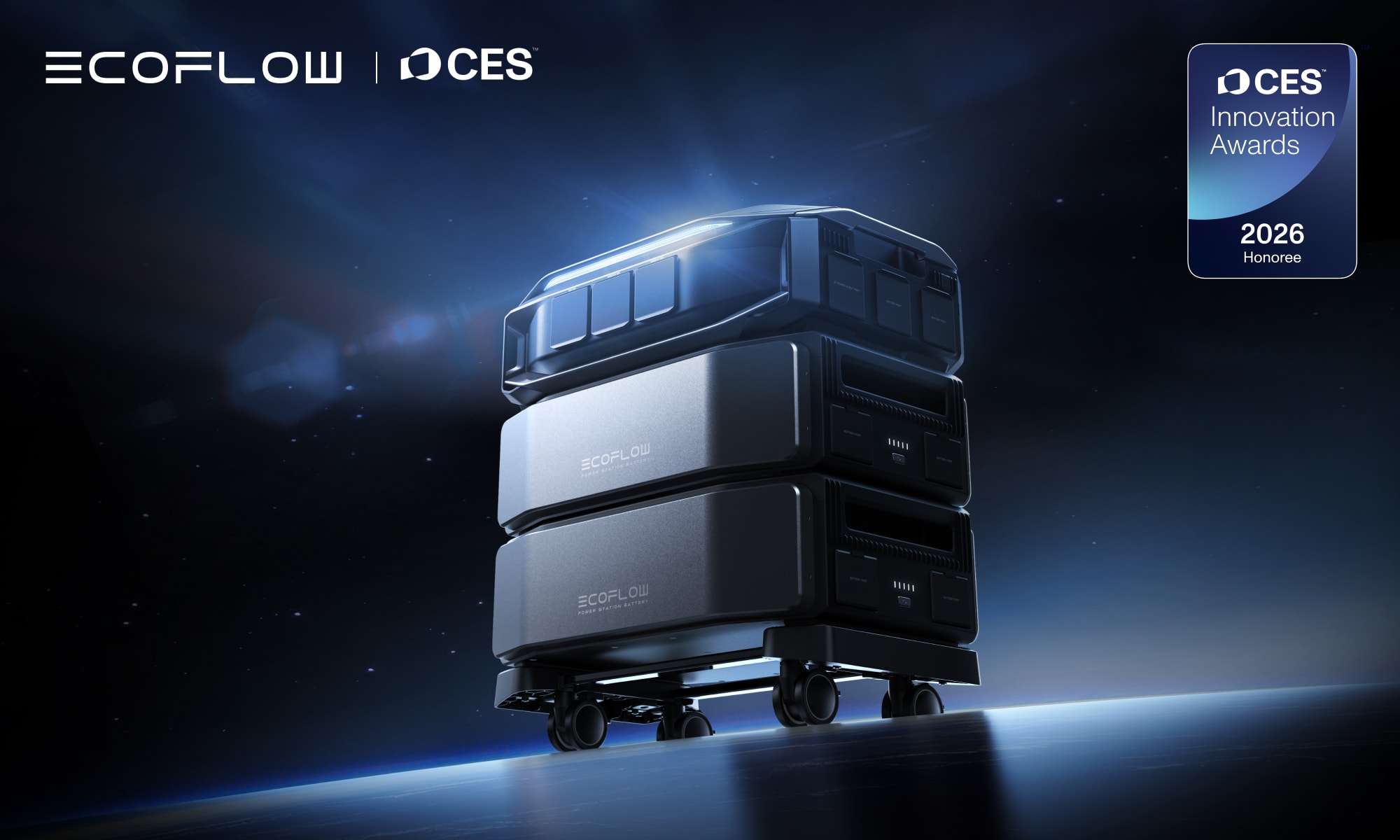
EcoFlow DELTA Pro and DELTA Pro Ultra have won multiple awards, and there's every reason to think the newly released DELTA Pro Ultra X will carry on this tradition of excellence.
It was recently named the CES 2026 Innovation Award Honoree in Sustainability & Energy Transition.
But not everyone needs that much off-grid power to meet their home backup needs.
EcoFlow offers a wide variety of whole-home and essential home backup solutions including the new DELTA 3 Series.
As of December 2025, the direct-to-consumer ecommerce price for EcoFlow DELTA Pro Ultra is $3,999.
EcoFlow DELTA Pro Ultra X currently retails for $7,999 for the base model.
Keep in mind that right out of the box, Ultra X offers 12 kWh of storage capacity with 2 x EcoFlow DELTA Pro Ultra X LFP Batteries (6000Wh) and is expandable up to 180kWh.
EcoFlow DELTA Pro Ultra's base model has 1 x EcoFlow DELTA Pro Ultra Home Backup Battery (LFP) scalable to 90kWh.
Advantage: There's no clear winner here. It depends on your household's unique requirements for a whole-home backup power solution that fits your budget and meets your needs.
For press requests or interview opportunities, reach out to our media team
media.na@ecoflow.com