Dorm Room Essentials for Surviving the Freshman Year
Nobody tells you that the hardest part of move-in day isn't the emotion of leaving home. It's the moment you walk into a room the size of a parking spot, watch your parents squeeze past each other trying to help, and realize that everything you packed somehow has to fit in here for the next nine months.
The school's packing list covers sheets and a shower caddy and not much else. It doesn't cover the storage system that keeps two people's stuff from bleeding into each other's space, or the desk setup that makes 11 p.m. studying bearable, or the fact that older dorm buildings lose power more often than anyone mentions during the campus tour.
For the power side of things, something like the EcoFlow DELTA 3 Classic handles basic backup, while the DELTA 3 Plus gives more runtime if you're running several devices at once.
Here's what's actually worth buying, what to skip until you've seen the room, and how to split the shared stuff with a roommate before anyone shows up with duplicates.
Bedding and Storage: Get These Right First
These two categories cause more freshman regret than anything else on the list. People either underpack storage and spend the year tripping over their own stuff, or they bring standard twin bedding and spend the first night fighting a fitted sheet that won't stay on a Twin XL mattress.
Twin XL Bedding - Not the Same as Twin
Dorm beds are almost universally Twin XL, which runs about five inches longer than a standard twin. Regular twin sheets technically fit, in the sense that you can force them on, but they'll pop off the corners constantly. Buy the right size before you leave.
A mattress topper is also worth adding to the list. Dorm mattresses have been slept on by a lot of people before you, and a 2-inch foam topper makes a genuine difference across a full semester. It's not glamorous, but neither is sleeping badly for nine months.
Storage: Under the Bed Is the Whole Game
Bed risers plus flat under-bed storage bins are the most valuable square footage in any dorm room. That gap holds off-season clothes, extra supplies, anything that doesn't need to be accessed every day. Without it, that space is just dead air.
Beyond the bed, closet organizers and drawer dividers matter when closet space is shared or limited - which it almost always is. A hanging door organizer on the back of the closet door adds usable space without claiming any floor. Stackable bins on a shelf keep things findable. The goal is to make everything have a place, because when things don't have places in a small room, the room feels like chaos within a week.
Desk and Study Setup
The desk is where a lot of the year happens. A setup that actually functions makes late nights less miserable. A setup that doesn't makes every study session a small act of suffering.
Desk Organization
A good desk lamp is more important than it sounds. Overhead dorm lighting is fluorescent and flat, and when a roommate goes to sleep at 10 p.m. and you have three more hours of reading to do, you need a focused light that doesn't flood the whole room. A small lamp plus a power bank to run it works well - our dorm room energy-saving hacks guide covers how to run one efficiently without eating into wall outlet space.
One small organizer for pens, chargers, and current notebooks keeps the desk surface usable. Desk space disappears fast without a system, and once it's gone, you end up doing homework on your bed, which is a habit that kills productivity surprisingly quickly.
Noise Management for Studying
Shared rooms are loud in ways that are hard to predict until you're in one. Noise-canceling headphones are the most effective tool for blocking a roommate's video calls, the hallway traffic at midnight, and whatever the people above you are doing at 11 p.m. on a Tuesday.
A white noise machine or app handles the residual sound that headphones don't fully cover. It sounds like a small thing. It's not.
Bathroom and Shower Caddy Basics
Communal bathrooms are one of those things that everyone adjusts to eventually. The right gear makes that adjustment happen in days instead of weeks.
Shower Caddy and Daily Toiletries
A waterproof hanging caddy is the standard solution for communal bathrooms, and the standard exists because it works. Everything in one place, grab it off the hook, walk down the hall, done. Mesh or plastic drains and dries between uses; fabric does neither.
Shower flip-flops on a shared floor aren't optional. Quick-dry towels are worth the few extra dollars given how often they get washed - thin ones that dry fast are better than thick ones that stay damp for two days.
Keeping Toiletries Organized
Everything in one portable bag rather than spread across the desk, the dresser, and the windowsill. The room is small. Toiletries scattered around make it feel smaller.
A small mirror at the desk saves a trip to the communal bathroom every time you need a quick check. Minor, but the time adds up over a semester.
Snacks and Mini Kitchen Setup
The dining hall closes. Sometimes at 8 p.m. Sometimes when you're three hours into a paper and haven't eaten since noon. A small in-room food setup is not about avoiding the dining hall - it's about not being stranded when it's unavailable.
Mini Fridge and Microwave: Check the Rules First
Before buying either one, pull up the school's housing policy. Most schools cap fridge size at 3.2 cubic feet or less and set wattage limits on microwaves. These rules exist because an entire dorm floor of unrestricted appliances would trip breakers constantly - which, in older buildings, happens anyway.
Some schools require specific energy-efficient models. The housing office website has the specifics. It takes ten minutes to check and saves a lot of hassle on move-in day.
Non-Perishables Worth Keeping Around
A shelf with granola bars, nut butter, instant oatmeal, and dried fruit covers most late-night hunger situations without refrigeration or cooking. A few easy microwave meals handle the nights when the dining hall is closed, and there's no bandwidth for anything more complicated than pressing two buttons.
One week's worth of backup food is plenty. More than that takes up space the room doesn't have.
Keeping Devices Charged and Powered
Older dorm buildings have electrical infrastructure that wasn't designed for the number of devices a floor of college students runs simultaneously. Circuits trip. Outlets are scarce. Power flickers happen, usually at the worst possible moment - mid-essay, 1 a.m., auto-save not enabled.
Why Backup Power Is More Useful Than It Sounds
A power bank keeps a laptop and phone going through a library session or common room study block without needing to find a wall outlet. It's also the thing that saves your work when the building's power does something weird.
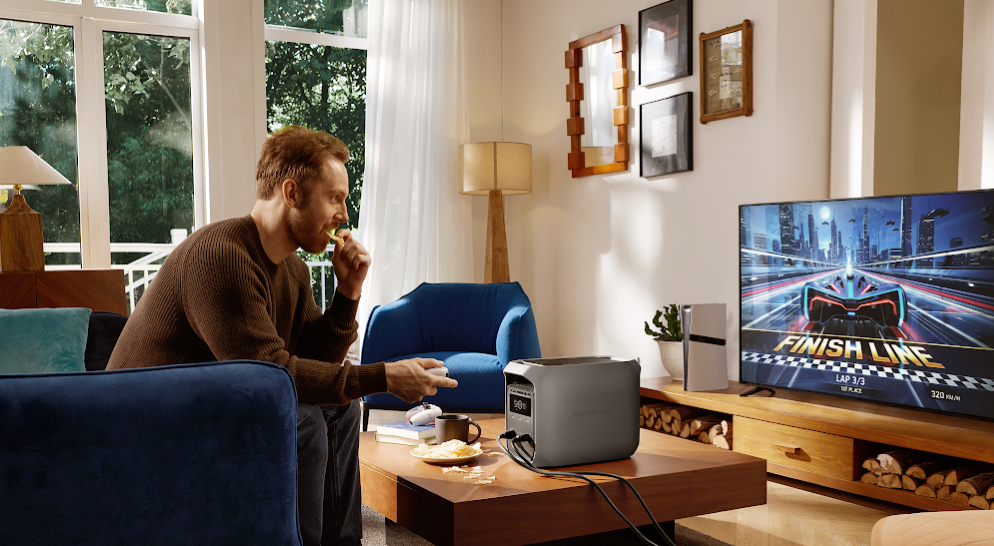
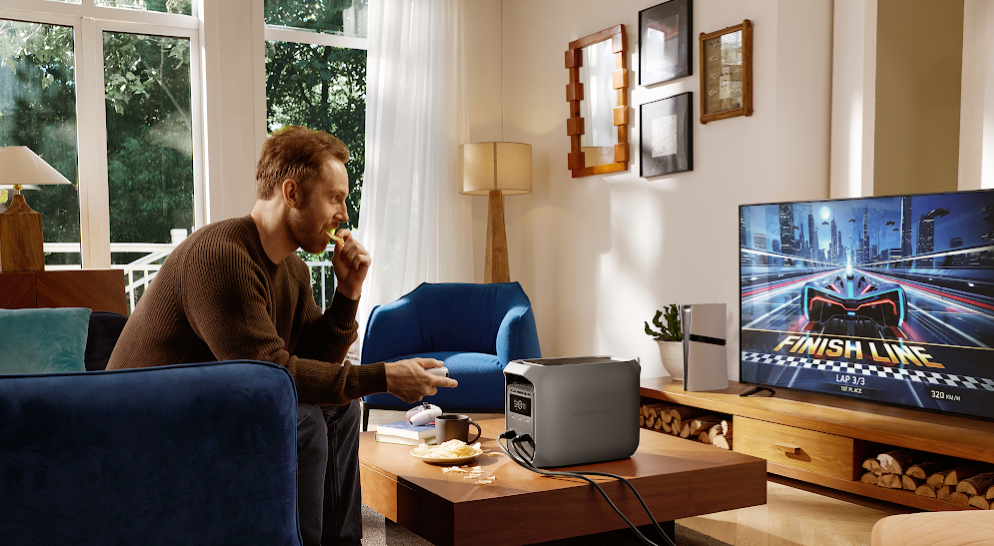
For students who want more than that, enough capacity to run a laptop, a fan, and a phone charger at once for several hours, or enough to cover an actual outage, a compact portable power station handles it without taking up much desk space. EcoFlow's back-to-school power guide covers how to size one for a dorm or apartment setup.
What Can You Actually Run on One?
Laptops, phones, a desk fan, and string lights all draw comfortably on a compact unit. The DELTA 3 Classic covers basic backup - devices charged, lights on, fan running - without getting into serious capacity. The DELTA 3 Plus steps up for students running more devices, longer sessions, or who want something that can also handle a small appliance during an outage.
Comfort and Personalization
A room that only functions as a study space and a place to sleep gets depressing around week three. Small things that make it feel like yours matter more than most people expect before they arrive.
Lighting and Decor
Overhead dorm lighting is fluorescent and unflattering, and nobody wants to spend their evenings in it. String lights fix that for about $15. Command strips go up clean and come down clean, which matters when the housing office does the move-out inspection, and you'd like your deposit back.
Keep decor simple. A few things on the wall and a plant on the desk go a longer way than trying to fill every surface.
Comfort Items From Home
A familiar blanket. A few photos. Something that connects space to somewhere else, especially in the first few weeks when everything is unfamiliar and the adjustment is harder than expected. Don't overpack this category. The room is small, and three boxes of sentimental items are too many.
Packing and Budgeting for Move-In Day
What to Buy Before Arriving vs. After
Big items make sense to sort out ahead of time: Twin XL bedding, storage bins, a mini fridge if the school allows one. A basic dorm emergency kit is also easier to put together at home than to piece together once the semester is already running.
Smaller organizational items are better bought after seeing the actual room. Shelf dimensions, closet layouts, and desk configurations vary more than photos suggest. Buying organizers before arriving means a lot of things that don't fit.
Split Shared Items With a Roommate Before Arriving
A five-minute conversation before move-in day about who's bringing the mini fridge, the microwave, and the fan saves money and avoids the specific frustration of unpacking two of something into a room that barely fits one.
A group chat a few weeks before move-in handles this in one exchange. Worth doing before anyone buys anything.
Conclusion
The best dorm rooms aren't the ones with the most stuff. They're the ones where everything has a reason to be there and a place to go.
Get the storage right, build a desk setup that actually works, and have a plan for power before the building's wiring reminds you that it's from 1987. The rest fills in around those three things.
Explore EcoFlow's compact power lineup for dorm living to find what could fit your room.
Frequently Asked Questions
What are the most important dorm room essentials?
Twin XL bedding, under-bed storage bins with risers, a desk lamp, a shower caddy with flip-flops, and some form of backup power. Those five categories cover most of what makes a dorm room work day-to-day. Everything else fills in around them.
Can I have a mini fridge in my dorm room?
Usually, but check the school's housing policy first. Most schools cap fridge size at around 3.2 cubic feet and set wattage limits on microwaves. Some require specific energy-efficient models. It's posted on the housing office website and takes ten minutes to confirm.
What bedding size do I need for a dorm bed?
Twin XL. Almost every dorm mattress is about five inches longer than a standard twin. Standard twin sheets will fit in theory but won't stay on properly. Confirm with the school before buying since a small number of programs use different configurations.
What should I bring for a shared dorm bathroom?
A waterproof hanging shower caddy, shower flip-flops, and quick-dry towels. Everything portable enough to grab in one trip. A small mirror at the desk cuts down on unnecessary bathroom visits during the day.
Do I need a backup power source for a dorm room?
More useful than most people expect before they arrive. Older buildings trip circuits and flicker more than newer ones; outlets are scarce, and losing unsaved work at midnight because the power hiccupped is a real and avoidable problem. A compact power bank handles library sessions and minor flickers. A portable power station covers longer outages and lets you run multiple devices at once without a wall outlet.
How do I organize a small dorm room with a roommate?
Bed risers with under-bed bins, a hanging door organizer, and a closet divider system are the three moves that create the most usable space. Talk to the roommate before move-in about who's bringing shared items - mini fridge, microwave, fan - so nothing gets duplicated.
For press requests or interview opportunities, reach out to our media team
media.na@ecoflow.com