Does a Fan Use a Lot of Electricity?
- How Much Electricity Does a Fan Use?
- What Factors Affect Fan Energy Consumption?
- How Do Ceiling Fans, Box Fans, and Tower Fans Compare?
- How Much Does It Cost To Run a Fan?
- Are Fans More Efficient Than Air Conditioning?
- Frequently Asked Questions
- Fans Use Relatively Little Electricity Compared to Most Cooling Appliances
Fans draw only a modest amount of energy, a fraction of the energy that a window AC unit or a central HVAC system pulls.
Their low operating costs make fans one of the most cost-effective cooling options, but understanding fan wattage by type and the formula for calculating cost can help you make smarter decisions about when and how to run them in your home.
How Much Electricity Does a Fan Use?
The unit of power that fans are measured in is watts. Most fans use anywhere from 15 to 100 watts, with desk fans sitting at the lower end of this range at 5 to 20 watts, ceiling fans averaging about 35 to 75 watts, and box fans reaching up to 100 watts at full speed.
To calculate fan energy consumption, multiply its wattage by the hours of use, and then divide it by 1,000 to get kWh, kilowatt-hours. For example, a 75W fan that runs for eight hours would use 0.6 kWh.
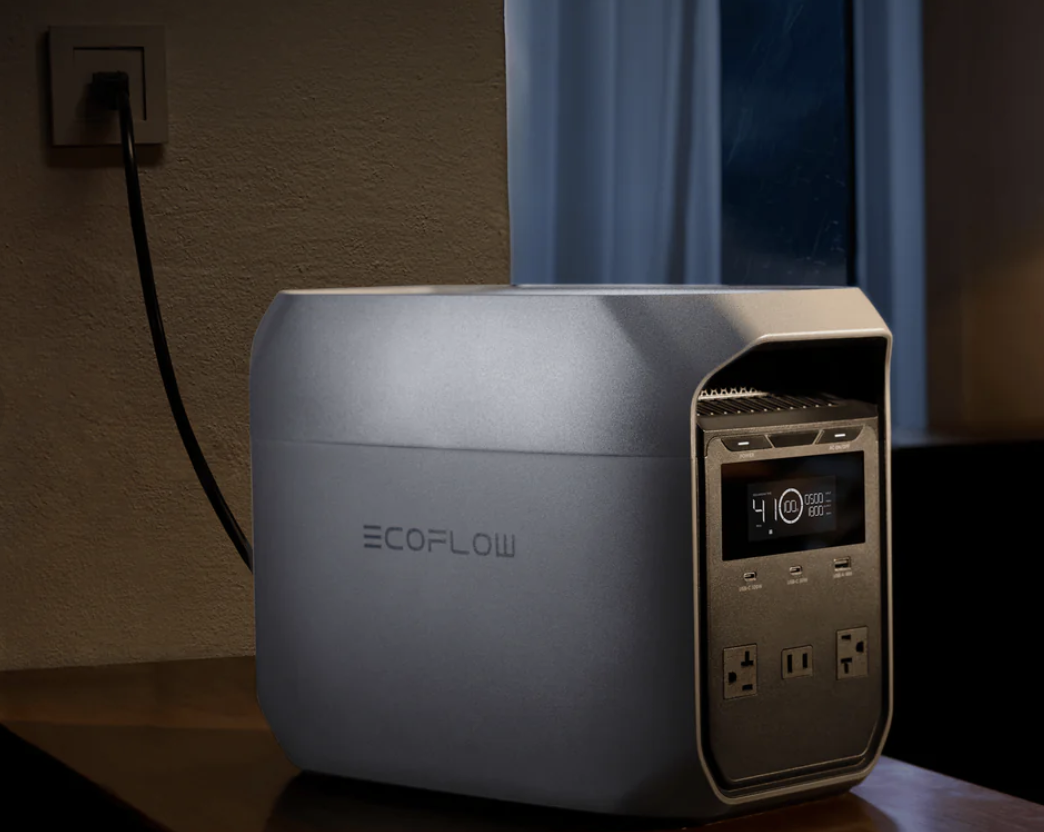
This wattage is totally manageable for a power solution like the EcoFlow DELTA 3 Classic Portable Power Station (1024Wh), which can run a 75W fan for roughly 10+ hours on a single charge. You can confirm this by using the formula and factoring in about 85% efficiency for the PPS:
1024Wh / 75W x ~0.85 efficiency
If you're looking for a specific fan's rated wattage, check the label or the owner's manual. If you see it listed in amps, you can calculate the watts by using the formula Amps x 120V = watts.
What Factors Affect Fan Energy Consumption?
The factors that most impact fan energy consumption are speed, motor type, blade size, and duration of use.
Speed Setting: This is the single biggest variable. Running a fan on low uses 30–40% of its maximum wattage, but high speed can draw 90–100% of its total wattage.
Motor Type: A DC motor uses up to 70% less energy than a traditional AC motor, but it still produces the same airflow.
Blade Size: Larger, well-designed blades are more efficient at delivering airflow with less energy than smaller blades.
Duration of Use: This compounds all other factors, because even a low-draw fan left on overnight can add meaningful energy usage across a full season or year of daily use.
How Do Ceiling Fans, Box Fans, and Tower Fans Compare?
The wattage range of fans tends to be similar between models with slight variations.
Ceiling fans typically draw 15 to 90W, but ENERGY STAR certified ceiling fans are up to 44% more efficient than conventional models, thanks to improved blade designs and motors.
Box fans generally use 40 to 100W at full speed, and tower fans typically use 30 to 100W, but more energy-efficient models that use DC brushless motors fall in the 40 to 60W range, and are also quieter than traditional AC motor versions.
A small desk or USB fan only uses about 5 to 20W, making them the most economical option for personal cooling.
How Much Does It Cost To Run a Fan?
The cost to run a fan varies from case to case based on duration of use, fan type, motor type, and size. To calculate the cost for a specific fan, use this formula:
Cost = (Wattage/1,000) x hours of use x local kWh rate
The national average rate of electricity is approximately $0.17 per kWh as of 2024. If you had a 100W fan that you used 8 hours per day, that would be:
(100/1,000) x 8 x $0.17 = ~$0.13 or about $3.84 per month if you run it daily.
Running a fan for eight to 12 hours a day typically costs a homeowner about 2 to 5 dollars a month, but it depends on the fan type and local rates. Those who live in high-rate states like California or Hawaii can pay considerably more. But still, the cost of power for one fan is far less than the wattage needed to run a house.
Are Fans More Efficient Than Air Conditioning?
Fans are significantly more efficient than air conditioning when you compare the 3,000 to 3,500W that a typical central AC unit draws to the 15 to 100W that a fan uses. Both accomplish roughly the same goal of personal comfort in occupied rooms. But because fans don't actively cool the air and rather create a windchill effect, it wastes much less energy.
But when central AC is necessary, you can still pair ceiling fans with AC to adjust the thermostat, with less power required, while maintaining the same perceived comfort level.
During a power outage, a whole home generator can keep your central AC running. But if you have a smaller backup power solution or are prioritizing a lower draw, powering fans alone is a much more efficient use of stored energy, and can extend your runtime significantly.
Frequently Asked Questions
Do Fans Use a Lot of Electricity Overnight?
An eight-hour overnight fan session adds roughly 0.25-1 kWh, depending on the fan type, with ceiling fans on the low end and box fans on the high end. At the national average electricity rate, overnight use costs about $0.13 per night, or just a few dollars per month if it is run nightly.
Are Ceiling Fans Energy Efficient?
Ceiling fans are one of the most efficient cooling options, and you can save even more energy with an ENERGY STAR certified model. Other features to look for to push efficiency further include DC motors and efficient design that can deliver more airflow per unit of electricity than other fan types.
Fans Use Relatively Little Electricity Compared to Most Cooling Appliances
Most fans have a wattage that falls into the range of 15 to 100W, whether it's a ceiling fan, tower fan, box fan, or desk fan. At typical usage levels, fans cost about $2 to $5 per month to run, making them one of the lowest-cost appliances you can operate in your home.
If you want to run fans or other essentials during an outage without a traditional generator, the EcoFlow DELTA 3 Classic Portable Power Station (1024Wh) can provide power for a typical ceiling fan for up to 10 hours on a single charge.
For press requests or interview opportunities, reach out to our media team
media.na@ecoflow.com