How Many Watts Does a Hair Dryer Use?
- What Is the Typical Hair Dryer Wattage?
- The Basics: What Watts Mean for Hair Dryers
- Typical Wattage Ranges and Amp Draw
- How Wattage Affects Drying Time and Heat Settings
- Hair Dryer Energy Costs and Consumption
- Frequently Asked Questions
- Hair Dryer Wattage Varies but Requires High Power for Short Durations
Hair dryers seem like they shouldn’t use a lot of power since you only use them for a few minutes each day. But they actually draw a surprising amount of power, typically between 800W and 2,000W. That can quickly add up if you’re managing limited power.
This guide explains wattage, amps, and costs to help you avoid overloaded circuits and run your setup more efficiently.
What Is the Typical Hair Dryer Wattage?
While hair dryers only run for a few minutes at a time, they’re one of the higher-wattage small appliances people use, so it’s important to understand how much they use so you can manage your energy consumption.
Most use between 800W and 2,000W, depending on the make, model, and setting.
The Basics: What Watts Mean for Hair Dryers
Wattage (W) is a measure of power, so higher wattage means more power.
In this case, wattage is the rate at which electrical energy is being transformed into heat. Additionally, most models have low, medium, and high power settings.
Low settings use between 800W and 1,200W and are great for fine, thin hair or when you’re not in a hurry.
Medium settings use between 1,200W and 1,800W, offering a balance between power and drying time, which is great for everyday use.
High settings are anything over 1,800W. This will dry the fastest with the highest heat, which works for those with limited time or for thick or long hair.
How Do Voltage and Current Determine Wattage?
Volts (V) measure the electrical potential difference. You can think of it like the pressure that pushes the electric current in amps. In the USA, most homes use 120V circuits. Voltage and current determine wattage since volts drive the current, and when you multiply them, you get power:
Watts = Volts x Amps.
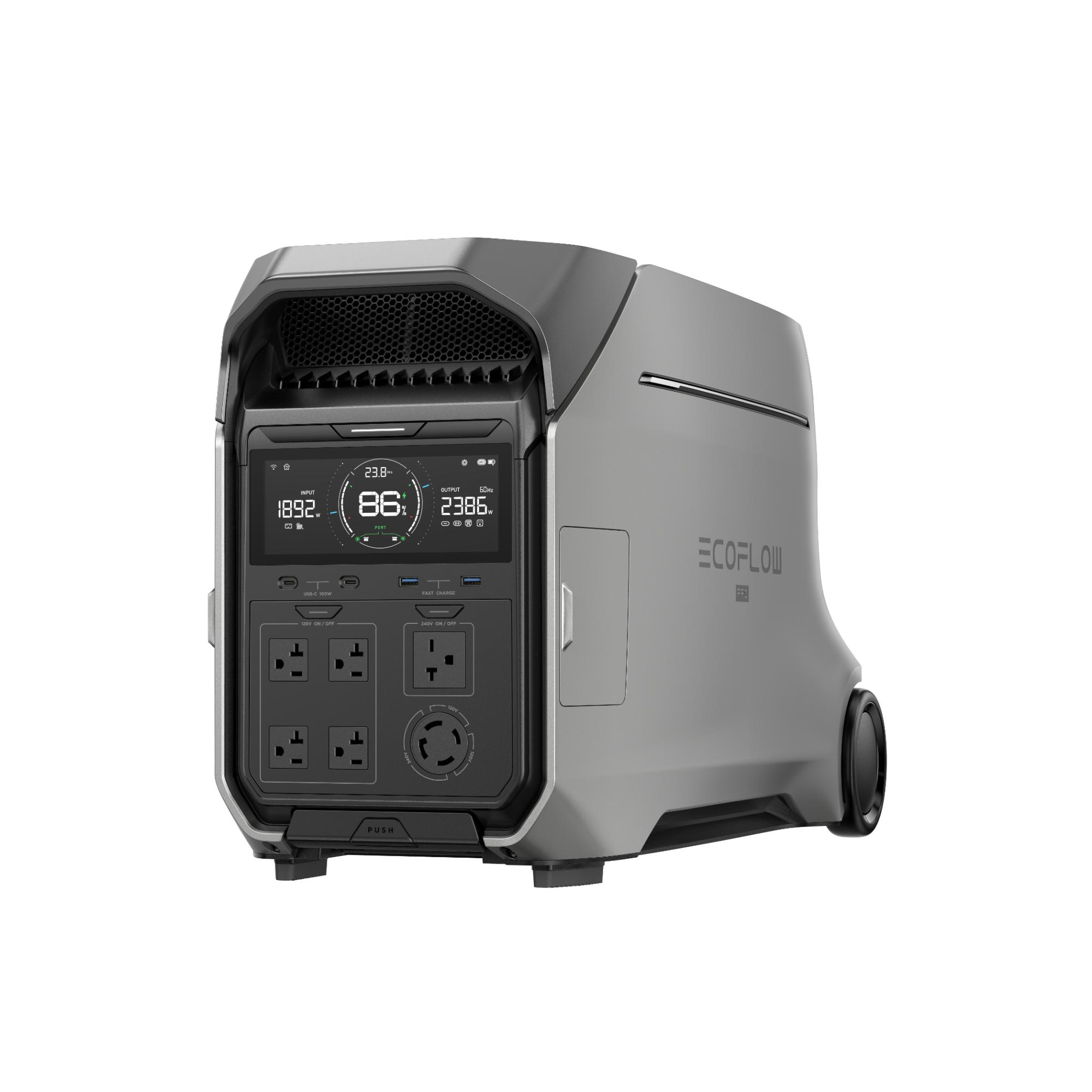
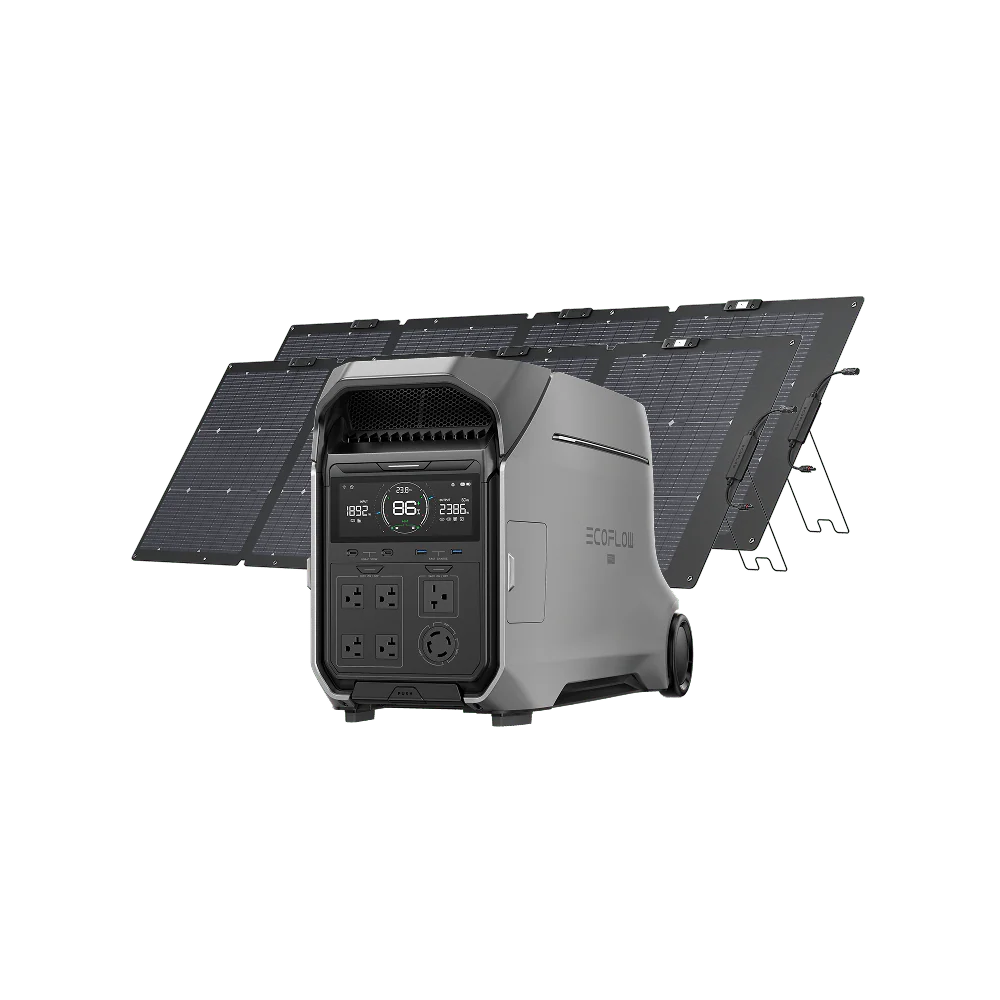
If you have limited power or are prone to electrical outages, you can keep your essential appliances running with the EcoFlow DELTA Pro 3 + 220W Solar Panel bundle. With 4000W of output, it can handle hair dryers and support multiple devices. And the solar panel means you can stay looking your best even through extended outages.
Typical Wattage Ranges and Amp Draw
Amperes, or amps (A), measure the electric current or flow of electricity. Understanding hair dryer amp usage is important because our household circuits are designed to handle a certain amperage, often 15A or 20A.
If you have a 1800W dryer on a 120V circuit, using the formula above, you can calculate the amp draw as 1800W/120V = 15A.
If you have a 15A circuit, you might be fine, but if your dryer uses 2,000W, it would likely trip your breaker, especially if it requires a temporary power surge to get started or if other devices are on the same circuit.
This can increase the risk of overheating and electrical fires, which is why putting a high-power model on a 20-amp circuit is much safer.
How Wattage Affects Drying Time and Heat Settings
Hair dryer wattages are designed to suit the user. This includes things like their hair type, how fast (or slow) they want to dry, how much heat and airflow they want, and its intended use. For instance, travel models are smaller and use less power than those used at home.
The higher the wattage, the more power, the more heat it can produce, and the more air it can push out. This means higher wattages produce more heat and faster drying times, while lower wattages mean lower heat and longer drying times.
If you use your dryer regularly, you can avoid getting caught with flat, wet hair during a power outage with a whole-home generator.
Hair Dryer Energy Costs and Consumption
To determine the cost of using your hair dryer, working at home, or anything else you need to power, you can use this formula:
Cost = Power (kW) x Time (hours) x Electricity Rate ($/kWh)
Where 1000W = 1kW. We use kW and kWh instead of W or Wh because electricity rates are always given in $/kWh, where 1kWh is 1 kW of power used continuously for 1 hour.
Say you have a 1800W model and you use it 10 minutes each day. According to the US Energy Information Administration, the average cost of electricity has jumped to 17.55 cents per kWh so far in 2026. So, let’s calculate:
Cost = (1800W/1000W/kW = 1.8kW) x (10min/60min/hour = 0.167 hours) x $0.1755/kWh = $0.053 per day.
If you use it every day, that’s $1.59 per month, or $19.35 per year.
To enhance energy efficiency and save money, you could use solar panels and whole-home backup power solutions and run your hair dryer with clean, free energy from the sun.
Frequently Asked Questions
Can a Portable Power Station Run a Hair Dryer?
Yes, portable power stations come in a wide range of sizes and can easily run a hair dryer, provided it’s sized correctly with enough output (watts) and capacity (watt-hours) to handle it.
Is 2000 Watts a Lot for a Hair Dryer?
Not really, since the average hair dryer uses between 800 and 2,000 watts. That means 2,000W is on the high side of average.
Hair Dryer Wattage Varies but Requires High Power for Short Durations
Hair dryers may only run for a few minutes each day, but their high wattages make them one of the more power-demanding small appliances. Understanding how wattage affects performance, circuit load, and energy use helps you avoid overloaded circuits. Most models fall between 800W and 2,000W, with higher wattages delivering more heat and faster drying times.
To keep costs down and ensure you always have electricity when you need it, the EcoFlow DELTA Pro 3 + 220W Solar Panels will keep you looking great no matter what the grid is doing.
For press requests or interview opportunities, reach out to our media team
media.na@ecoflow.com