How Many Amps Is a Car Battery? Typical Capacity Explained
- What Is the Difference Between Amps, Amp-Hours, and Cold Cranking Amps?
- What Is the Typical Capacity of a Car Battery?
- How Do You Calculate Amp Capacity in a Car Battery?
- How Many Amps Does a Car Battery Provide When Starting?
- What Factors Affect Car Battery Performance?
- Frequently Asked Questions
- Reliable Starts, Longer Life, Flexible Power
You’ll often hear that car batteries are 12V, but volts only tell us the electrical potential difference — think of it like water pressure in a pipe. What really matters is how much electrical current it can deliver when starting your engine. For that, you need amps and, more importantly, cold-cranking amps (CCA), with most standard car batteries delivering between 400 and 600 CCA.
This guide will explain what all of these terms mean to help you keep your vehicle starting reliably.
What Is the Difference Between Amps, Amp-Hours, and Cold Cranking Amps?
When asking about how many amps batteries have, it’s important to be clear about what’s being asked since there are amps (A), amp-hours (Ah), and cold cranking amps (CCA).
Amps, or amperage, measure the electric current strength flowing from a battery at an instantaneous moment. It sounds fairly simple, but on its own, it doesn't tell you much about a battery's real-world starting ability.
Sometimes people refer to cranking amps (CA), which is the starting current at moderate temperatures. But performance in ideal conditions isn’t all that helpful either.
Since car batteries are mostly used for starting, when people talk about amps, they’re usually referring to CCA because it indicates the battery's real-world starting ability.
Technically speaking, CCA is a measure of the current a battery can deliver at 0° F (-17.8° C) for 30 seconds while maintaining at least 7.2V. Understanding CCA is crucial because engine oil thickens in cold weather, forcing the battery to work harder to crank the motor.
Amp-hours (Ah) is a different measure altogether. It measures capacity or amps over time (hours = h), telling you how long it can provide power.
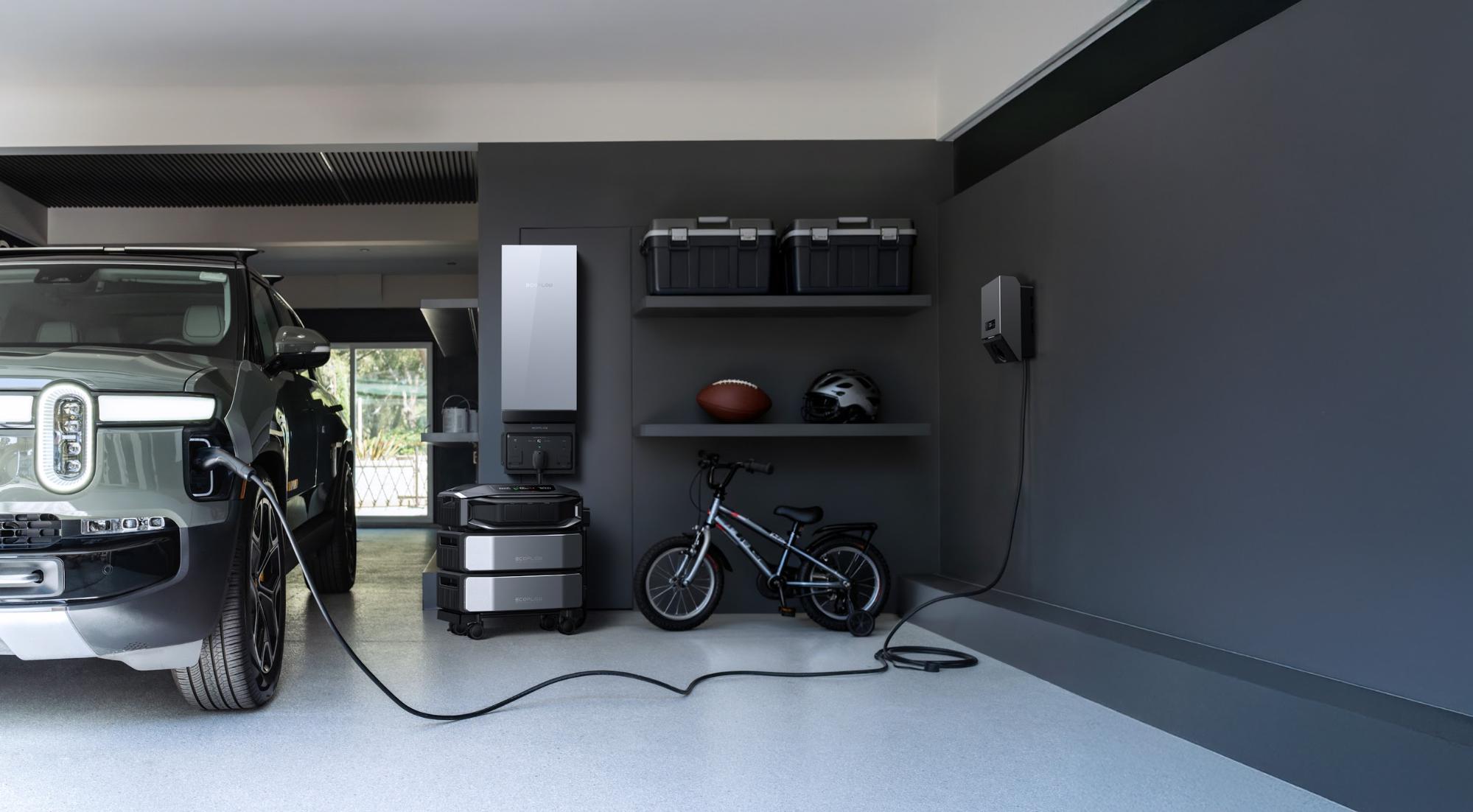
If starting your battery is an issue, you can charge batteries at home using a whole-home power station like the EcoFlow DELTA Pro Ultra X and a 12V AC battery charger.
What Is the Typical Capacity of a Car Battery?
The typical capacity of most car batteries is between 40Ah and 50Ah, or up to 75Ah for oversized vehicles.
Since manufacturers rate capacity over a 20-hour period, that means a 50Ah model can deliver 2.5A continuously for 20 hours under ideal conditions. But, since car batteries are for starting, not continuous use, this is why most people refer to CCA instead.
The problem with capacity is that it only tells part of the story. You also need to factor in the Depth of Discharge (DoD), or how much of that capacity can safely be used (discharged) without causing permanent damage.
People sometimes think they can use their starter battery to run appliances while camping or at home during power outages, only to find it dead an hour later. That’s because lead-acid starter batteries have a poor depth of discharge (DoD), generally 20-30%, meaning they die after you use 20-30% of their capacity.
Instead of draining your car batteries during an outage, you can keep your entire home running with indoor-safe, battery-operated whole-home generators.
How Do You Calculate Amp Capacity in a Car Battery?
You can’t easily measure amp-hours directly with a multimeter, as you can with amps, but there are a couple of ways to calculate your capacity in amp-hours (Ah).
The first is using the formula Ah = Wh/V if you know the watt-hours (Wh) and the voltage (most car batteries are 12V).
If you know the cold cranking amps, you can also estimate the amp-hour rating using the formula Ah ~ CCA/7.25. However, this one is only an estimate.
How Many Amps Does a Car Battery Provide When Starting?
Car batteries can draw anywhere between about 150 and 300 amps while starting. However, there’s an initial surge of 300–600+ amps needed to get the starter motor going so it can crank the engine.
This is why the typical CCA of a car battery is between 400 and 600CCA, or up to 1,000CCA for larger trucks and SUVs. That way, it’ll still start in cold weather when it needs the most power.
If you want to use clean, free energy to get your car on the road again, consider using a solar charger for car batteries.
What Factors Affect Car Battery Performance?
Lead-acid batteries, which most cars still use, require maintenance to perform optimally. Corrosion on terminals reduces electrical conductivity, reducing the CCA.
You’ll also need to top up fluids periodically to ensure levels don’t drop too low. And, if your battery isn’t secure, vibrations can damage it and reduce its capacity. If you have a flooded lead-acid battery, you'll also need to top up the electrolyte fluid periodically.
Finally, if you have a vehicle that’s only driven occasionally, you should still drive it for 20–30 minutes once a week. Driving will charge it much more efficiently than if it sits idling.
Alternatively, you can remove the battery from the car and put it on a trickle charger so you don’t have to waste fuel charging it. And if the power goes out, you can keep on charging when you have a whole-home generator, like the EcoFlow DELTA Pro Ultra X, so your home stays powered even when the grid goes down — automatically.

Frequently Asked Questions
How Many Amps Is My 12 Volt Car Battery?
Most 12V car batteries have between 400 and 600 cold cranking amps and a capacity of between 40Ah and 50Ah, depending on the manufacturer and model. If you’re unsure, you can usually read it on the label on your battery.
Is a Car Battery 6 Amp or 12 Amp?
A standard car battery is 12V, not 12 amps or 6 amps. Think of it like water pressure: 12V is the pressure that drives the electric current (amps) through the circuit. Standard car batteries generally have between 400 and 600 cold cranking amps.
Reliable Starts, Longer Life, Flexible Power
Car batteries aren’t defined by a single “amp” rating. Instead, understanding real-world performance relies on a combination of cold cranking amps for starting power and amp-hours for capacity. Understanding these differences helps you choose the right battery, avoid draining it, and get more reliable performance all year round.
And if you want added flexibility for power outages and emergencies, a portable power solution like the EcoFlow DELTA Pro Ultra X can give you backup power whenever you need it.
For press requests or interview opportunities, reach out to our media team
media.na@ecoflow.com