Dispersed Camping: How to Power a Site with No Hookups
- Why Do Campers Choose Dispersed Sites with No Hookups?
- What Power Challenges Come with Camping Off the Grid?
- What Devices Need Power at a Dispersed Campsite?
- How Does a Portable Power Station Replace Campground Hookups?
- How Can Solar Panels Extend Power for Longer Stays?
- How Do You Size a Power Setup for a Multi-Day Dispersed Trip?
- What Are the Stay Limits on BLM and National Forest Land?
- Frequently Asked Questions
- A Portable Power Station Keeps Dispersed Campsites Running without Hookups
- Quiet. Clean. Reliable: Power Solutions for Off-Grid Camping
Dispersed camping on BLM or National Forest land without hookups has become more popular as of late, with off-grid camping nights nearly doubling in a single year from 2024 to 2025. Without hookups, there's no shore power for devices like lights, fridges, phone charging, or medical equipment, so backup power becomes an integrated part of trip planning.
A portable power station, with or without solar panels, can solve the problem and give campers the convenience of a grid, without an outlet or a traditional generator.
Why Do Campers Choose Dispersed Sites with No Hookups?
The primary draws of dispersed camping are the low costs, peace and solitude, fewer crowds, and flexibility to set up camp almost anywhere on public land. There's a certain draw to an option that allows you to escape reservation systems and campground fees.
However, the trade-off of that freedom is self-sufficiency. Without water, sewer, or electrical hookups, you must bring your own power source and figure out the rest.
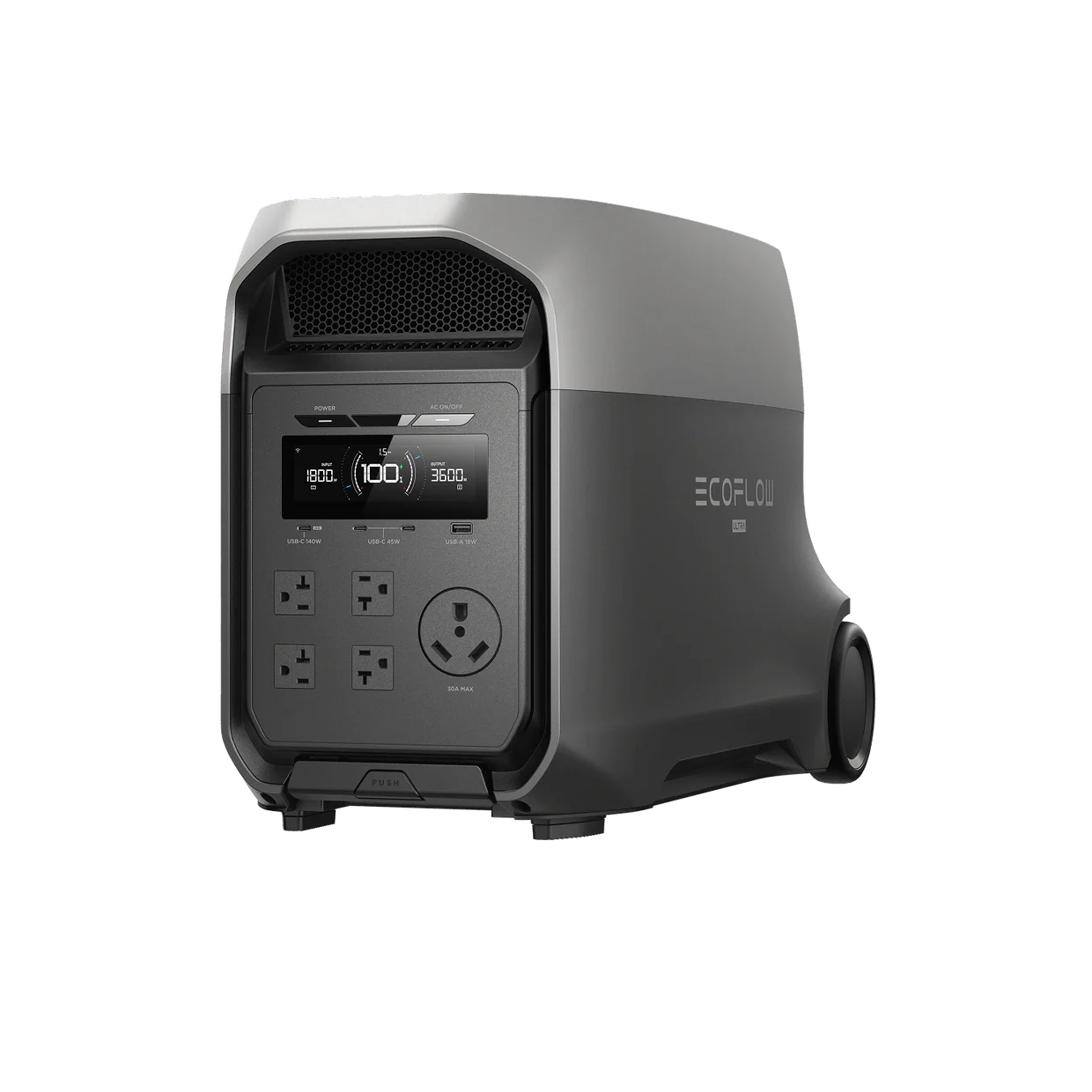
Packing along the EcoFlow DELTA 3 Ultra Series Portable Power Station (3072Wh) is the perfect kind of self-contained power source that makes camping on dispersed sites livable for the length of your stay.
What Power Challenges Come with Camping Off the Grid?
Boondocking is different than staying at campgrounds. The biggest challenge of camping off the grid is a lack of access to shore power. Every device that you bring, from lighting to communications and a portable fridge, must draw power from a generator, battery, car, or solar setup.
Gas generators are noisy and require fuel storage. They can also be restricted or banned in some off-the-grid camping areas during fire season, so they’re not an ideal all-season solution.
You need something that won’t disturb nature or threaten the ecosystem, doesn’t require refueling, and is reliable enough for the extent of your trip.
What Devices Need Power at a Dispersed Campsite?
Your power needs when dispersed camping generally fall into four categories: lighting/charging, refrigeration, connectivity, and potentially, medical equipment.
Calculating the total daily draw across these devices helps you determine what power station and solar sizing you need.
Lights and Phone Charging
The lowest-draw category includes LED lanterns and phone charging.
12V and Portable Fridges
12V compressor fridges typically draw 40–80W while running, cycling on and off. Daily consumption usually lands around 320-640Wh depending on insulation and ambient temperature.
Laptops, Starlink, and Communication Devices
A standard Starlink dish and router draws about 50–75W active, but drops to about 20W when idle. Laptops add another 30–65 watts, and phones draw anywhere from 5–50W depending on the model.
CPAP and Medical Equipment
CPAP machines provide air pressure to keep the airways open overnight, drawing about 30–60W without a heated humidifier (more if you have one), requiring reliable overnight power.
How Does a Portable Power Station Replace Campground Hookups?
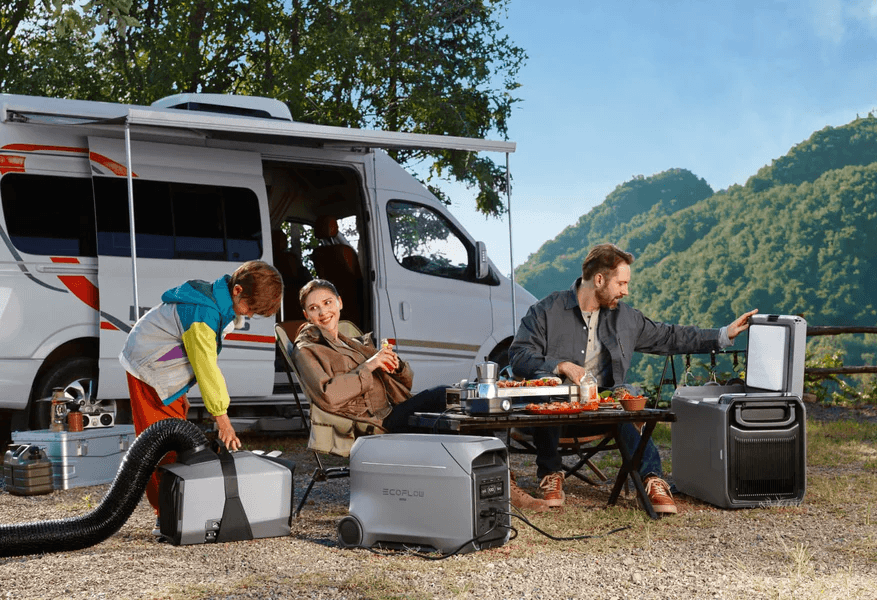
A portable power station functions as a self-contained electrical hub, including AC outlets, DC cords, and USB output to cover what a typical campground pedestal would provide. It's also silent and fumeless, avoiding any noise restrictions and the fire danger concerns tied to gas generators on public land.
How Can Solar Panels Extend Power for Longer Stays?
Solar recharging turns your fixed battery budget into a renewable one, allowing you to stay much longer than what a single charge would support when dry camping.
The output still depends on the weather and shade, so you'd want to find sites with ample sunlight, and pay attention to weather forecasts, as cloudy days can cut daily solar yield significantly.
How Do You Size a Power Setup for a Multi-Day Dispersed Trip?
Size your power setup accurately by taking into account all the devices you're bringing. A minimal amount of gear for a short trip will need less power than an RV boondocking extended stay.
Add up each device's daily watt-hour draw, then multiply by your trip length. Next, add a 20–30% buffer to that total to account for real-world power losses. With the right weather, solar input can extend your power runway indefinitely and reduce how much battery capacity you need to bring.
What Are the Stay Limits on BLM and National Forest Land?
The rules between the Bureau of Land Management and U.S. Forest Service land vary:
BLM land: Generally allows dispersed camping for up to 14 days within any 28-day period. At that point, campers must relocate about 25 miles away.
National Forest Land: The limit is also typically 14 days, but the exact window and relocation distance vary by forest and the ranger district. So, do your research ahead of time.
Frequently Asked Questions
Can You Run a Fridge at a Dispersed Campsite without Hookups?
Yes, you can run a 12V compressor fridge, which needs about 40 to 80 W, comfortably off of a portable power station's DC or AC output. If you bring a 3,072 Wh unit, you can typically run a fridge for several days on a single charge before needing to recharge.
How Long Will a Portable Power Station Last While Boondocking?
Your portable power station's runtime depends on the total daily draw versus your battery capacity. However, if you add solar input, you can extend your PPS's runtime indefinitely on sunny days, extending your multi-day limit into an open-ended one.
Is It Legal to Camp Long-Term on BLM or National Forest Land?
Both agencies allow dispersed camping for up to 14 days within a set window, then require relocation before returning to the same spot. Exceptions exist, so check local regulations before you camp, but standard dispersed sites don't allow indefinite stays.
Do You Need a Generator for Dispersed Camping?
Not necessarily. A portable power station paired with solar covers most trip lengths without the fueling needs and noise of a traditional generator. Gas generators are also restricted or may be banned in fire-prone BLM and national forest areas during fire season.
A Portable Power Station Keeps Dispersed Campsites Running without Hookups
Dispersed camping trades easy hookups for freedom and flexibility. That freedom depends on bringing your own reliable power.
Size your setup to your actual devices, add a buffer, and bring solar if you're staying more than a few days. Get that right, and a dead battery is one of the few problems dispersed camping won't hand you.
Quiet. Clean. Reliable: Power Solutions for Off-Grid Camping
No fuel to haul, no engine noise to manage, no fire-season restrictions to check before you leave. A portable power station handles the parts of dispersed camping that used to require a generator, without the tradeoffs that come with one.
The EcoFlow DELTA 3 Ultra Series Portable Power Station (3072Wh) is built for exactly this kind of stay: enough capacity for a multi-day trip, with solar input ready if you want to push past that.
For press requests or interview opportunities, reach out to our media team
media.na@ecoflow.com