Tent Camping Essentials: The Complete Checklist
Successful tent camping comes down to four things: a good place to sleep, enough food and water, basic safety gear and a few comforts to make camp a little easier to deal with. This tent camping essentials checklist covers what to pack, from shelter and sleeping gear to cooking supplies, navigation tools, and backup power for your devices.
Shelter and Sleep Essentials
Your shelter and sleeping setup will have the biggest effect on how comfortable you are at night. Choose a tent with enough room for your group, then match your sleeping bag and pad to the overnight conditions you expect.
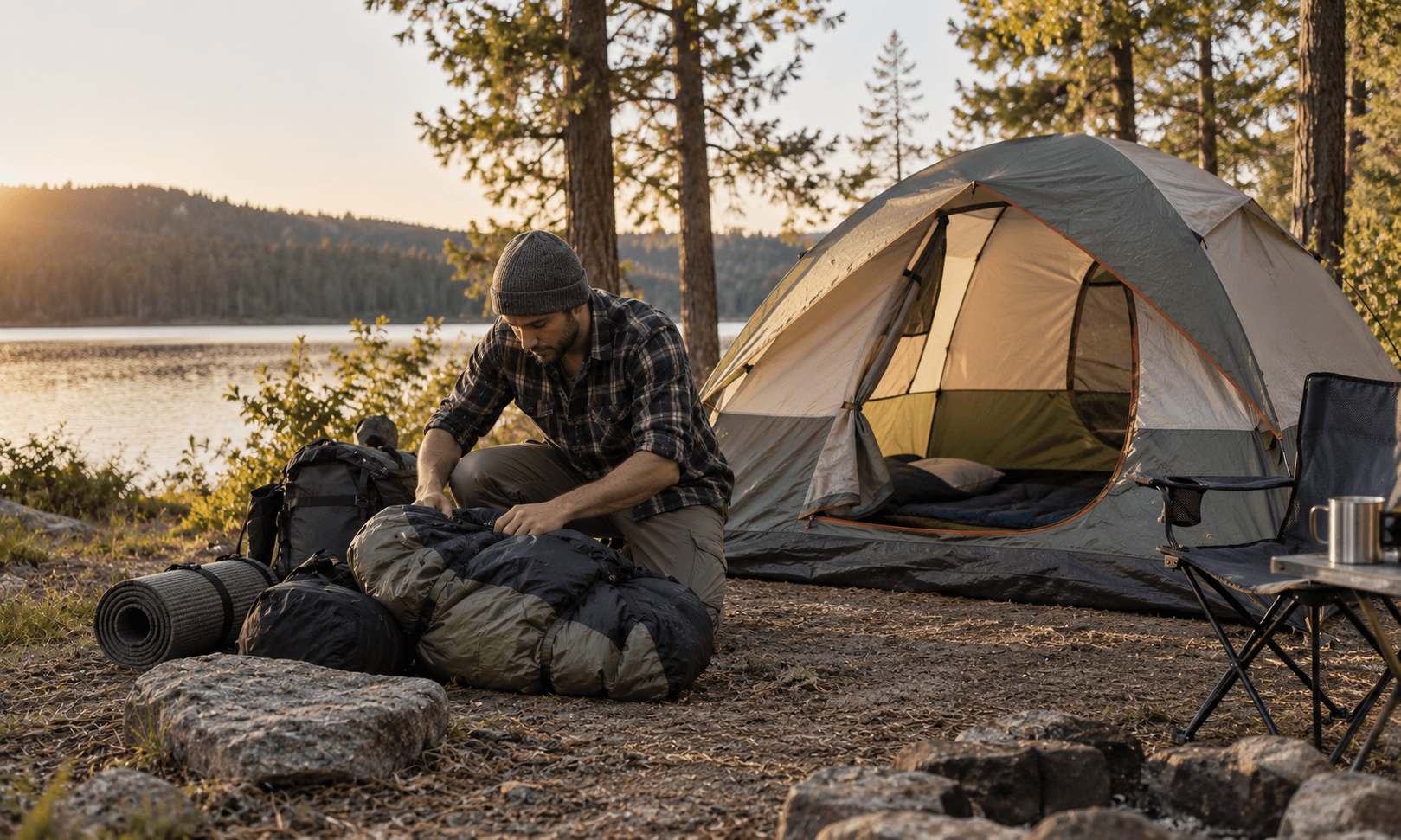
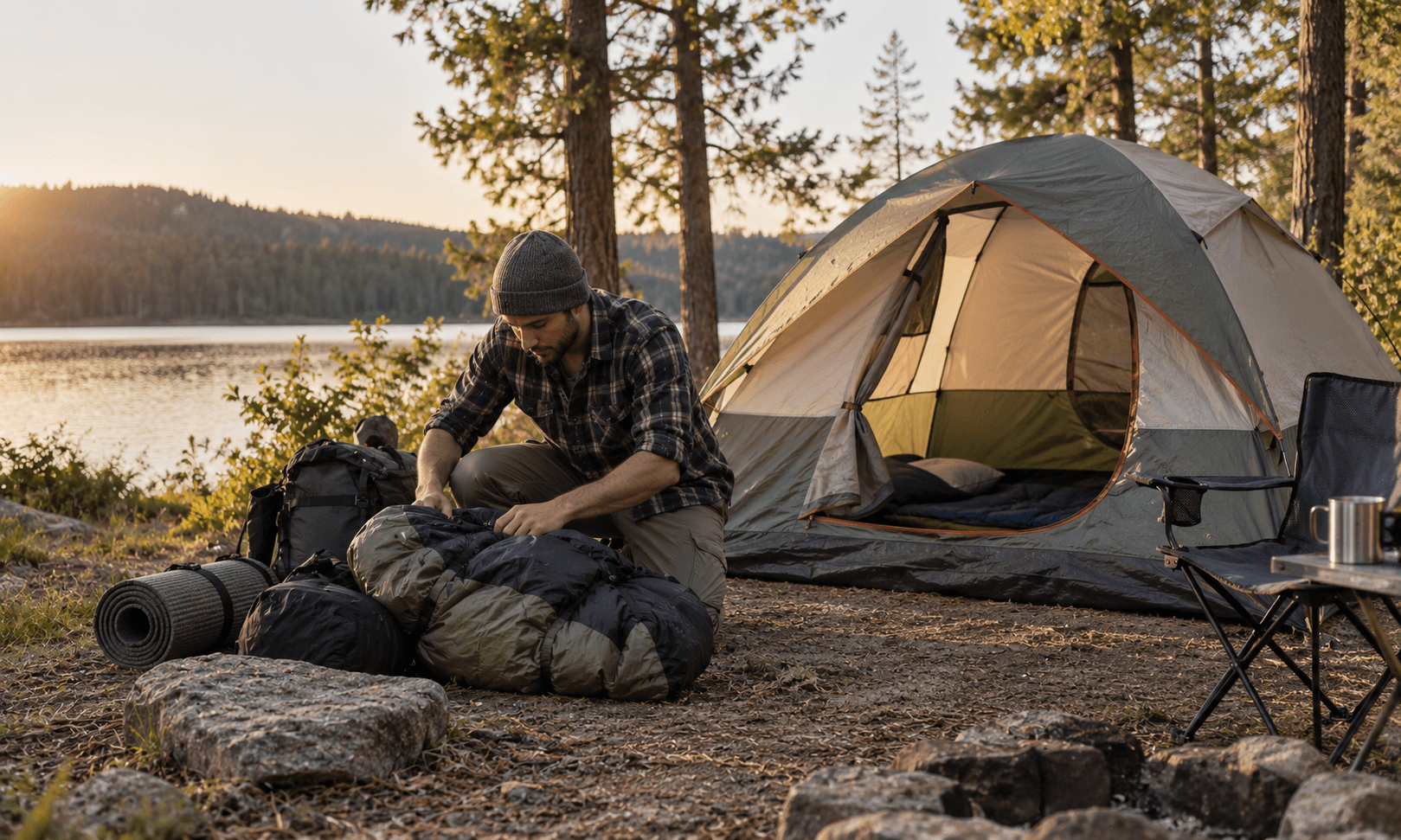
Choose a tent with some extra room
A tent should fit everyone in your group, but a little extra space can make a big difference. If you're camping with two people, a three-person tent gives you more room for backpacks and other gear instead of forcing everything into the sleeping area. Check the tent's capacity, floor dimensions, and peak height before you pack. You'll also want a rainfly, stakes, and guylines if the forecast calls for rain or wind.
Match your sleeping bag to the weather
Check the sleeping bag's temperature rating against the coldest temperature expected overnight, not the daytime forecast. Nights can get much colder than the afternoon, especially in higher elevations or during spring and fall camping trips. If temperatures could drop near the bag's rating, bring extra layers or a blanket. It's easier to adjust your insulation at camp than to deal with a cold night without enough warmth.
Don't skip the sleeping pad
A sleeping pad does more than make the ground softer. It also insulates you against the cold ground which can make a big difference on cold nights. Pick a pad that suits your sleeping style and is easy to pack with your other gear. A pillow, or small camp pillow, can also add a lot of comfort to a basic tent setup. If you're deciding between tent camping and a more comfortable RV setup, tent vs. RV camping can help you compare what each option involves.
Cooking and Food Storage Gear
Camping meals don't have to be complicated. A simple cooking setup, a way to keep food cold, and enough drinking water can cover most weekend trips without filling your car with kitchen gear.
Keep your camp kitchen simple
A camp stove and fuel canister can handle most basic meals without requiring a campfire every time you want to cook. Pack a pot or pan, utensils, a lighter, and only the cookware you expect to use. For a short trip, plan a few easy meals before you leave. That keeps your grocery list, cooler, and cleanup manageable.
Keep food cold and away from your tent
A cooler with enough ice or ice packs can keep perishable food cold throughout the trip. Pack foods that can be stored together and don't open the cooler more than necessary to keep it cold longer. Keep food, garbage and other items with strong odors away from your tent at night. Follow the campground's food-storage rules, especially if you're camping in an area with bears or other wildlife.
Bring enough water
Don't assume your campsite will have a convenient drinking-water source. Bring reusable water containers, or pack a suitable filtration or purification method if you'll be getting water from a natural source. Your water needs will also depend on the weather, the length of the trip, and how much activity you have planned. If you're going out in cooler weather, winter camping gear can get you prepared for conditions that require more than your usual summer setup. With food, water, and shelter covered, the next question is how you'll keep your essential devices powered at camp.
Keeping Devices Charged at the Campsite
Your phone may handle navigation, weather updates, and photos, while a headlamp, lantern, or small fan can also need a recharge during a longer trip. Campground outlets aren't always available, especially at more remote sites. A compact power station gives you a convenient way to keep those essentials charged without relying on a campsite hookup.
With your power needs covered, it's time to round out the checklist with the safety and navigation gear you'll want close at hand.
Safety and Navigation Essentials
A little preparation can go a long way once you're out of the campground. Cell service may be spotty in remote areas, and even a familiar path may be harder to follow after dark. Pack a few basic safety and navigation tools before you leave.
Have a backup way to navigate
Download an offline map before you leave, especially if you're camping somewhere with limited cell service. If your phone dies or loses reception, another way to know your location is by using a physical map and compass. If you're hiking away from camp, check the route beforehand and make sure everyone in your group knows the general plan.
Pack basic first aid
Pack a first aid kit that is appropriate for the size of your group and the activities you have planned. It should have common problems like small cuts, blisters, scrapes or minor injuries you may need to treat in camp or on the trail. Add any personal medications and other items specific to your group's needs, and keep the kit somewhere that's easy to reach.
Keep a reliable light nearby
A headlamp keeps both hands free when you're setting up camp, cooking, or walking around after dark. Pack extra batteries or a backup light so you're not left without illumination if the main battery runs out. Before heading out in colder weather, check how cold is too cold for tent camping so you can make sure your gear matches the conditions. With the core safety and navigation gear packed, a few comfort items can make your time at camp much easier.
Comfort Extras Worth Packing
Once the basic camping gear is packed, a few small additions can make long evenings at the campsite much more enjoyable. These items don't take up much space, but they can make eating, relaxing, and dealing with changing temperatures easier.
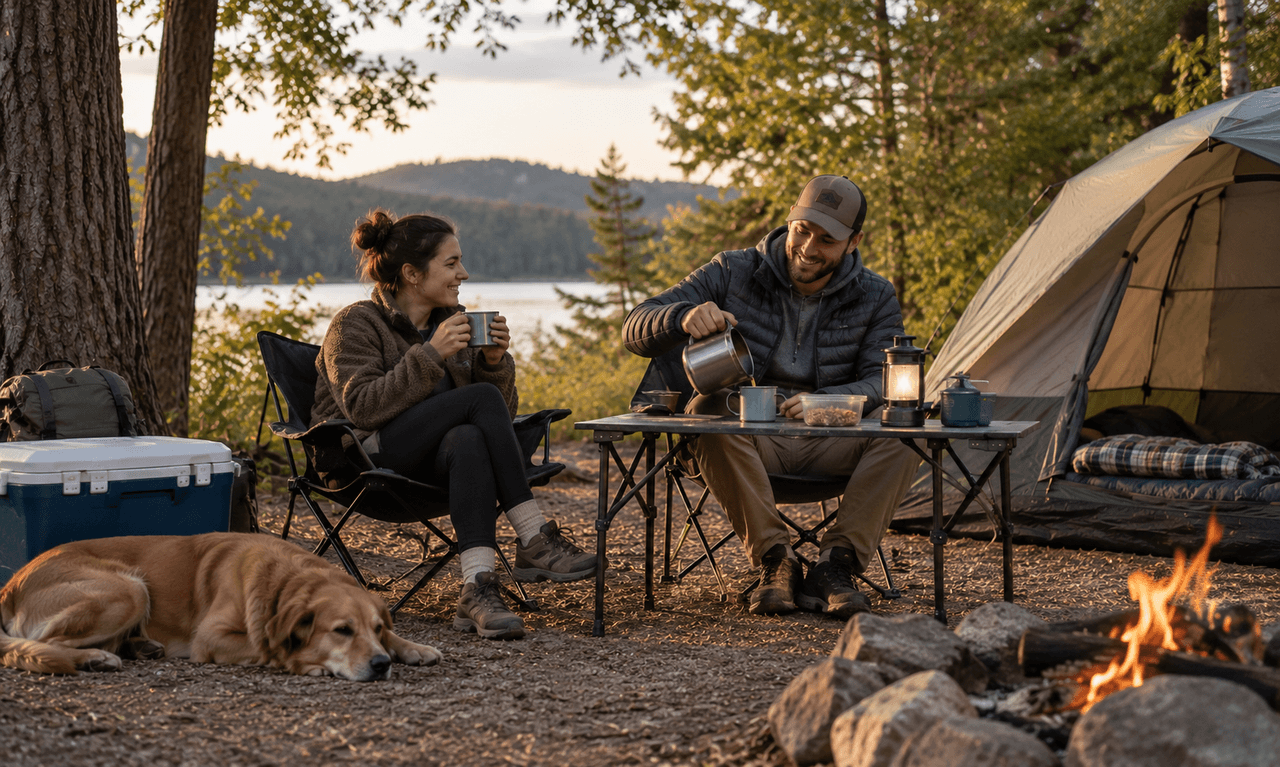

Bring a comfortable place to sit
A camp chair provides a spot to sit and eat, read or just relax after a day of being out. A small folding table also comes in handy to keep food, drinks and other items off the ground. Choose lightweight options that fold down easily if you're working with limited space in your vehicle.
Pack protection from sun and bugs
Bug spray and sunscreen are easy to overlook when you're focused on the bigger pieces of your camping setup. Keep both within reach during the day, and reapply them as needed based on the product instructions and your time outdoors.
Prepare for changing temperatures
Temperatures can shift quickly between daytime and nighttime, especially during spring and fall. A small fan can make warm nights more comfortable. In colder weather, a portable heater may help when it's suitable for your setup and used according to its safety instructions. If you're bringing cooling equipment, see how running AC while tent camping can work with a portable power setup before you leave. With these comfort items packed, your checklist covers the main gear for sleeping, cooking, safety, device charging, and relaxing around camp.
Conclusion
Good tent camping doesn't require a huge pile of gear. Start with a tent and sleeping system that match the weather. Then cover food, water, cooking, safety, and navigation. Add comfort items based on the trip. You don't need to carry things you're unlikely to use. For first-time campers, check the forecast before you leave. Confirm what the campsite provides, then build your tent camping essentials list around those conditions. This keeps your load manageable. It also helps you prepare for the parts of the trip that matter most.
FAQs
What are the most important items for tent camping?
Some of the most important tent camping essentials include a good tent, sleeping bag, sleeping pad, food and water, basic cooking gear, first aid supplies, and a good way to navigate. Add clothing for the expected weather and a light source you can use after dark.
Do I need a power station for tent camping?
Not every camping trip needs a power station, especially if you're camping somewhere with electrical hookups, or planning to keep the trip completely off-grid. It can be useful for longer trips when you need to recharge phones, headlamps, fans, cameras, or other small electronics.
How do I choose the right tent size for my group?
Check the manufacturer's capacity, then think about how much gear you'll keep inside. A tent rated for one more person than your group can give you extra floor space for bags and other equipment, which can make rainy nights more comfortable.
What temperature sleeping bag do I need for tent camping?
Choose a sleeping bag based on the lowest temperature you will experience on your trip, not the daytime high. Check the forecast before leaving, and bring additional layers if temperatures could drop or conditions are uncertain.
What should I pack for a first-time tent camping trip?
The essentials include the basics (tent, sleep system, food, water, cooking equipment, first aid kit, navigation, lighting, clothing appropriate for the weather, and personal items). Once those are covered, add comfort gear such as a chair, table, power station, or fan based on the campsite and forecast.
For press requests or interview opportunities, reach out to our media team
media.na@ecoflow.com