How Much Does It Cost to Install and Power Christmas Lights?
- Quick Answer
- Breakdown: DIY vs. Professional Installation Costs
- Key Things That Affect How Much It Costs to Install Christmas Lights
- How Much Does It Cost to Power Christmas Lights?
- How EcoFlow Can Help You Power Your Christmas Lights Efficiently
- How to Get the Most Out of Putting Up Christmas Lights
- Create Perfect Holiday Glow
- FAQs About Christmas Light Installation
As the holidays get closer, neighborhoods all over the United States start to shine with holiday spirit. You should know how much it will cost before you decide to turn your house into a winter wonderland. Depending on how much work, materials, and energy you use, costs can vary significantly whether you want a simple roofline display or a synchronized light show.
Quick Answer
For most US homes, having a professional put up their Christmas lights costs between $200 and $600 for a typical-sized home. If you want complex, custom plans for bigger homes, the costs can go from $1,000 to over $3,000.
When it comes to power, an average LED display (100-200 watts) will usually add less than $10 to $15 to your monthly bill for 45 days. A larger display (around 1,000 watts) would cost approximately $40-$45 for the season. Incandescent lights, on the other hand, can cost significantly more.
We'll break down every dollar below so you can make a good Christmas budget.
Breakdown: DIY vs. Professional Installation Costs
The biggest thing that changes your Christmas budget is whether you do the installation yourself or hire someone to do it for you. There are different prices and value propositions for each option.
Do It Yourself vs. Professional Installation
The cheapest way to put up Christmas lights is to do it yourself if you have the time, a ladder, and don't mind working at heights.
Costs for Do-It-Yourself Projects: You only pay for the supplies. You can buy lights, extension cords, clips, and timers for $50 to $300. Your time and safety are the real costs here.
Professional Costs: Hiring a professional to put up your Christmas lights saves time and ensures everyone's safety. Most professionals charge by the linear foot.
Simple Rooflines: $3 to $6 per linear foot
Lighting for the Ground or Trees: $3 to $5 per linear foot
Total Average: The price of a typical 1,500-square-foot home is around $300 to $600
Professional deals usually come with providing the lights, setting them up, fixing broken bulbs, taking them down, and storing them. When professionals use high-quality commercial lights, the cost over a few years is about the same as doing it yourself.
Key Things That Affect How Much It Costs to Install Christmas Lights
Not every installation is the same.
Incandescent vs. LED Light Type
The type of bulb you choose will affect both the cost of installing your Christmas lights and your energy bills in the long run.
Incandescent Bulbs: These are initially cheaper to buy, but they are fragile and use a lot of power. They're known for their warm glow, but they get hot.
LED Lights: LEDs cost more upfront (sometimes twice as much as incandescent), but they last longer, are made of plastic (so they can't break), and use up to 90% less energy. When professional Christmas lights are put up, LEDs are used because more strings can be connected without tripping the breakers.
How Big and Complex the Setup Is
The main thing that affects costs is the size of your job. It's easy and cheap to add a simple roofline to a ranch-style home. It takes much more work if you want lights around multiple trees, every window, and a two-story roof.
Roof Pitch: Safety belts and extra workers are needed for steep roofs, which raises the labor rate.
Landscape Design: It takes a lot of work to wrap tree trunks and branches. It can cost as much to light one big tree as the whole roof of a small house.
Location and How to Get There
Prices vary by location based on local cost of living. It will cost less to install in rural places than in big cities like New York or San Francisco. Accessibility affects pricing. If your house has hard-to-reach spots, not enough parking for the crew, or elevated areas that need a boom lift, the price will reflect these problems.
Some Extra Services
Check what's included in your quote:
Takedown: Make sure that taking down the lights is part of the price. This typically happens in January.
Storage: A lot of companies will store your lights in climate-controlled bins, which will free up room in your garage.
Smart Controls and Timers: These can be as simple as mechanical clocks or as advanced as Wi-Fi-enabled smart plugs that let you control your display from your phone.
How Much Does It Cost to Power Christmas Lights?
After installation, you'll need to consider power costs. A huge power bill is the "January Surprise" that many people worry about.
How Much Electricity Do Christmas Lights Need?
There is a huge difference between the types of bulbs.
Incandescent: Most strings of 100 mini-lights use about 40 watts of power. That's 800 watts of power if you have 20 strings.
LED: 100 LED mini-lights strung together use around 5 to 7 watts of power. It would only take 140 watts to power those 20 strings.
Calculating Your Power Costs
Calculate your costs with this formula:
Cost = (Total Watts ÷ 1,000) × Number of Hours Used Each Day × Number of Days in Season × kWh Rate
Example:
Your display is 1,000 watts (1 kW)
You run it for 270 hours total, or 6 hours a day for 45 days
You pay $0.16 per kWh for energy in the US
Calculation: 1 kW × 270 hours × $0.16 = $43.20 for the season
How to Cut Down on Power Use
To keep prices down:
Change Your Lights to LEDs. This is the best way to cut your energy costs by 80-90%.
Use Timers. Don't leave lights on all the time. You can set them to turn on at dusk and off at midnight.
Solar Options: Solar can work for small pathway lights, but they tend to be dim and depend on the weather.
How EcoFlow Can Help You Power Your Christmas Lights Efficiently
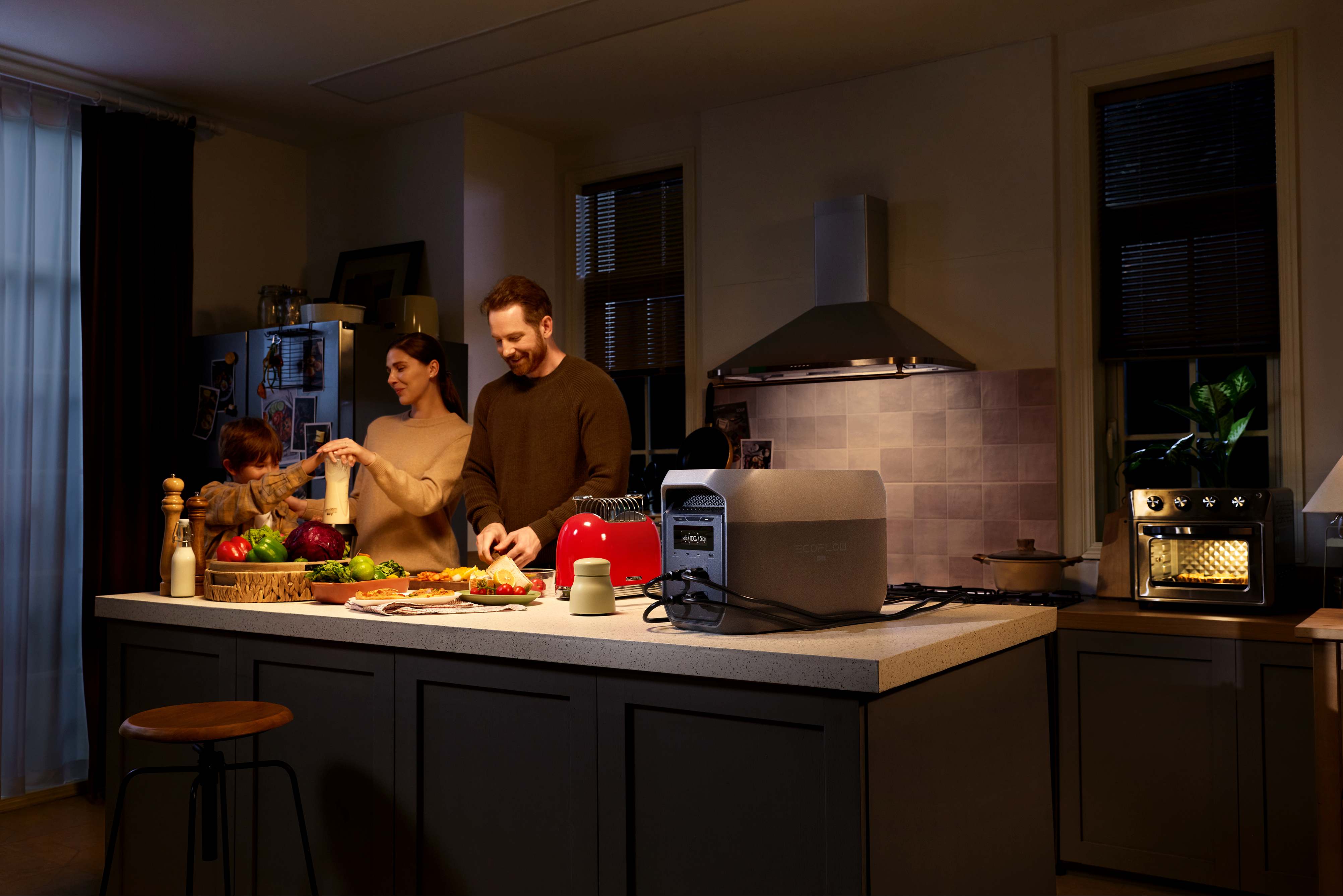
Finding a power source is one of the most annoying parts of putting up Christmas lights outside. Often, you want to light up a distant tree or a front gate where there are no outlets. Instead of running ugly orange extension cords across your yard that are easy to trip over, EcoFlow is a great way to solve this problem.
Why EcoFlow Is the Best Way to Hang Christmas Lights
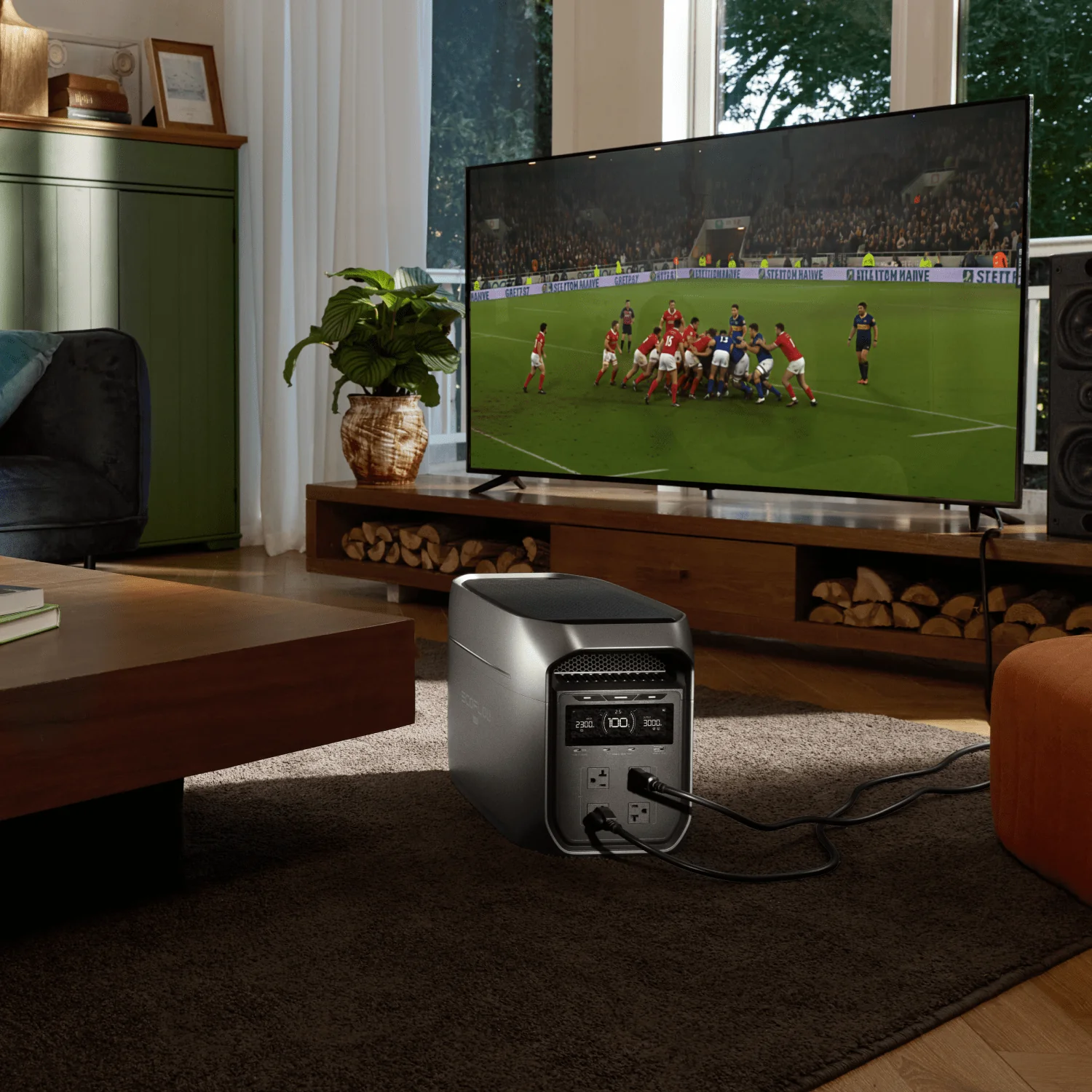
With the EcoFlow DELTA 3 Series portable power sources, you don't have to be hooked up to a wall outlet. As a portable power hub, you can put up a beautiful light show in the farthest corners of your yard or on a separate gazebo that doesn't have any outlets. It lets you create your lighting however you want without being limited by the length of your extension cord.
Advantages of Using EcoFlow for Holiday Lighting
Light Up Anywhere: Reach areas that standard cords can't, like the edge of your property or garden fences.
Safe and Beautiful: Get rid of the long cords that cross paths and could cause people to trip or create electrical hazards in the snow. It looks better and is safer for guests.
Power That Works in Any Weather: The DELTA 3 Series is built to last, so keep it in a dry location like a porch corner or a secure box. Its automotive-grade LFP cells are made to work reliably even when temperatures drop, so your lights will stay on during those cold December nights.
Smart Control: The EcoFlow app lets you see how much power your lights are using and check the battery level from the comfort of your living room.
How Long Will EcoFlow Keep Your Christmas Lights On?
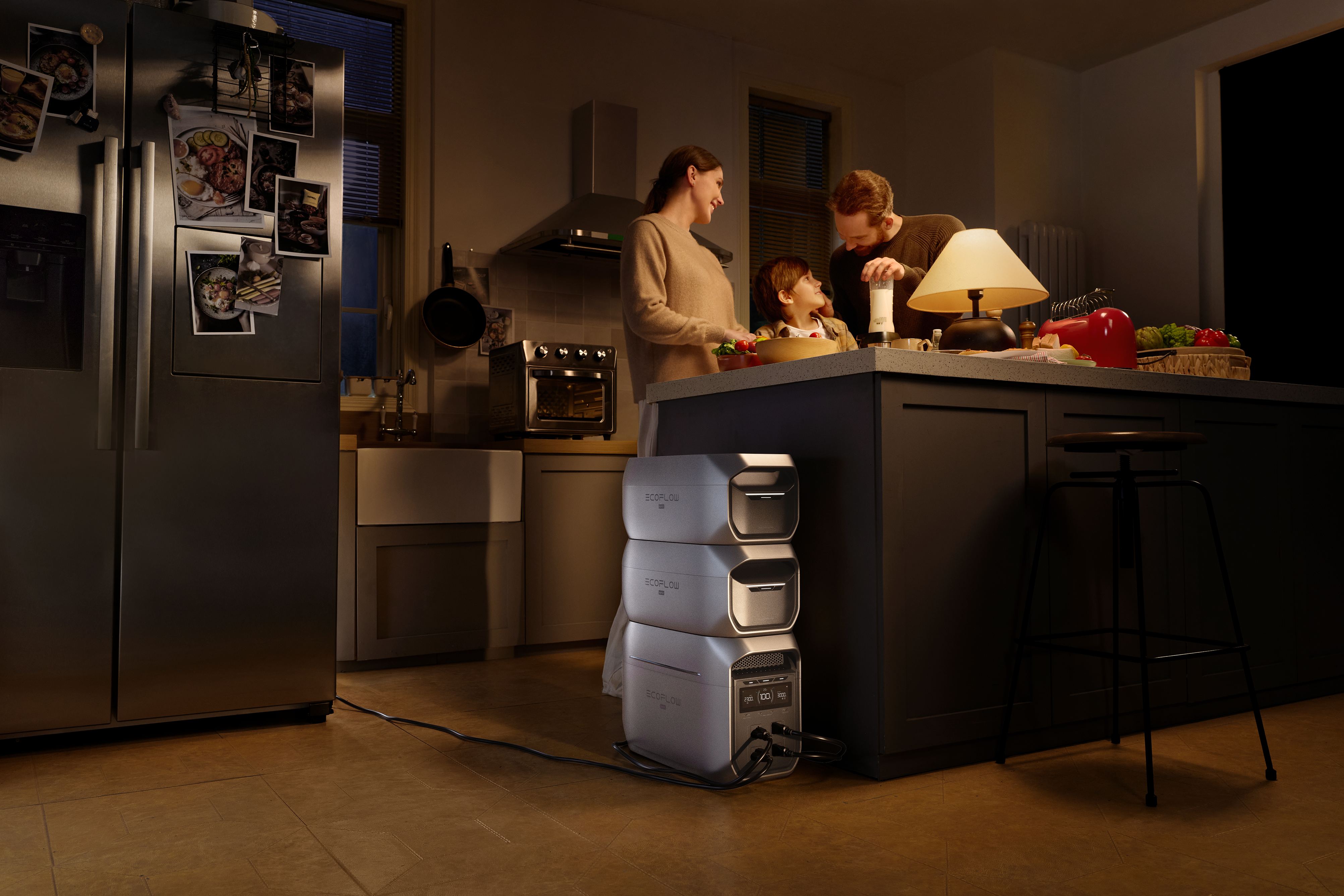
Think about using the EcoFlow DELTA 3 Max. It is a powerhouse for holiday displays thanks to its large 2,048Wh capacity. The DELTA 3 Max can power your display for about 20 hours if you have a substantial LED setup that uses 100 watts. This technology, called X-Boost™, allows high-demand devices, so even if you plug in additional decorations like an inflatable snowman along with your lights, the system can handle the load. Plus, it's very quiet, so it won't disturb the peaceful night environment.
How to Get the Most Out of Putting Up Christmas Lights
You don't have to have a lot of money to have an impressive display. You can cut the cost of installing your Christmas lights by a lot.
Ways to Save Money Without Giving Up Style
Focus on Areas with a Lot of Impact: There's no need to outline every window. Adding detailed lights to the front doorway and roof peaks makes the house look more expensive than it is.
Spotlights Are Your Friend: Instead of putting 50 lines of mini-lights around the base of a big tree, which is hard to do and costs a lot of money, use two RGB color-changing spotlights. This creates a color wash effect for much less.
Do-It-Yourself "Hacks": Instead of staples, use plastic clips that connect to gutters and shingles when you are learning how to put up Christmas lights. This makes the process go faster and keeps your home safe.
Making Plans for Next Year's Setup
Most of the time, December 26th is the best day to get deals on Christmas lights. Stores clear out their stock at 50-75% off. Make sure you have plenty of extra lights and clips. Also, be very careful with how you store them. Avoid tangling by wrapping lights around cardboard or plastic loops. If you hire a professional, call them in September or October and ask if they offer "early bird" savings.
Create Perfect Holiday Glow
You don't have to spend a lot of money to make a festive atmosphere. From the type of bulbs you choose to how complicated your roofline is, you can plan a display that fits your budget perfectly. It should be fun for everyone in the neighborhood, whether you do the job yourself or hire a professional crew.
The EcoFlow DELTA 3 Series is a powerful and adaptable option for people who want to simplify their setup, reach remote areas, and get rid of the hassle of extension cords. That way, you can safely and efficiently light up any part of your property. Make sure your holidays are happy, bright, and well-lit throughout the season.
FAQs About Christmas Light Installation
Q1: How much does professional installation usually cost per linear foot?
Professional installers usually charge around $3 to $6 per linear foot for simple lighting along the roof. This price generally covers providing commercial-grade lights, having someone set them up, keeping them in good shape during the season, and taking them down in January. Different prices may apply for ground lighting or wrapping trees. Prices are usually between $3 and $5 per foot, based on how complicated the job is.
Q2: Does leaving the Christmas lights on all day save money?
No, it doesn't save money. Even with LEDs that use less energy, keeping lights on during the day wastes power and shortens the bulbs' life. Use a timer or a smart plug to make sure that lights only turn on at night, which is usually for 6 to 8 hours a day. This will save you money on your power bill.
Q3: Can I use indoor lights outdoors?
No, lights designed for indoors should never be used outside. Indoor lights aren't weatherproofed enough to handle water, snow, rain, and UV rays. There is a high chance of electrical shorts, fires, and shocks when you use them outside. Always look at the box to see if it has an "Outdoor Only" or "Indoor/Outdoor" UL rating.
Q4: How much does it cost to run LED Christmas lights instead of other types of lights?
It costs a lot less to run LED lights. For example, powering a display of 1,000 watts using incandescent lighting for 45 days (6 hours daily) would cost approximately $15 to $20 in electricity. The same 1,000-watt display using LED lights would cost only about $2 to $3. LEDs use up to 90% less power than incandescent lights.
For press requests or interview opportunities, reach out to our media team
media.na@ecoflow.com