What to Look for in a Campervan Power Station
- What Is a Campervan Power Station?
- How Much Battery Capacity Do You Need for Van Life?
- What Power Output Should You Look For?
- How Do Weight and Portability Affect Life on the Road?
- What Charging Options Should You Consider?
- What Extra Features Are Worth Considering?
- Frequently Asked Questions
- The Right Power Station Keeps Your Campervan Comfortably Powered On and Off the Road
Van life runs on more than fuel. Your fridge, lights, laptop, and phone all need consistent power, whether you're parked at a trailhead or driving between stops. Choosing the right power station comes down to a handful of practical factors that determine how comfortably you can live off-grid.
What Is a Campervan Power Station?
A campervan power station is a portable battery system that stores electricity and delivers it through AC outlets, USB ports, and DC outputs, letting you run appliances without hookups or a generator.
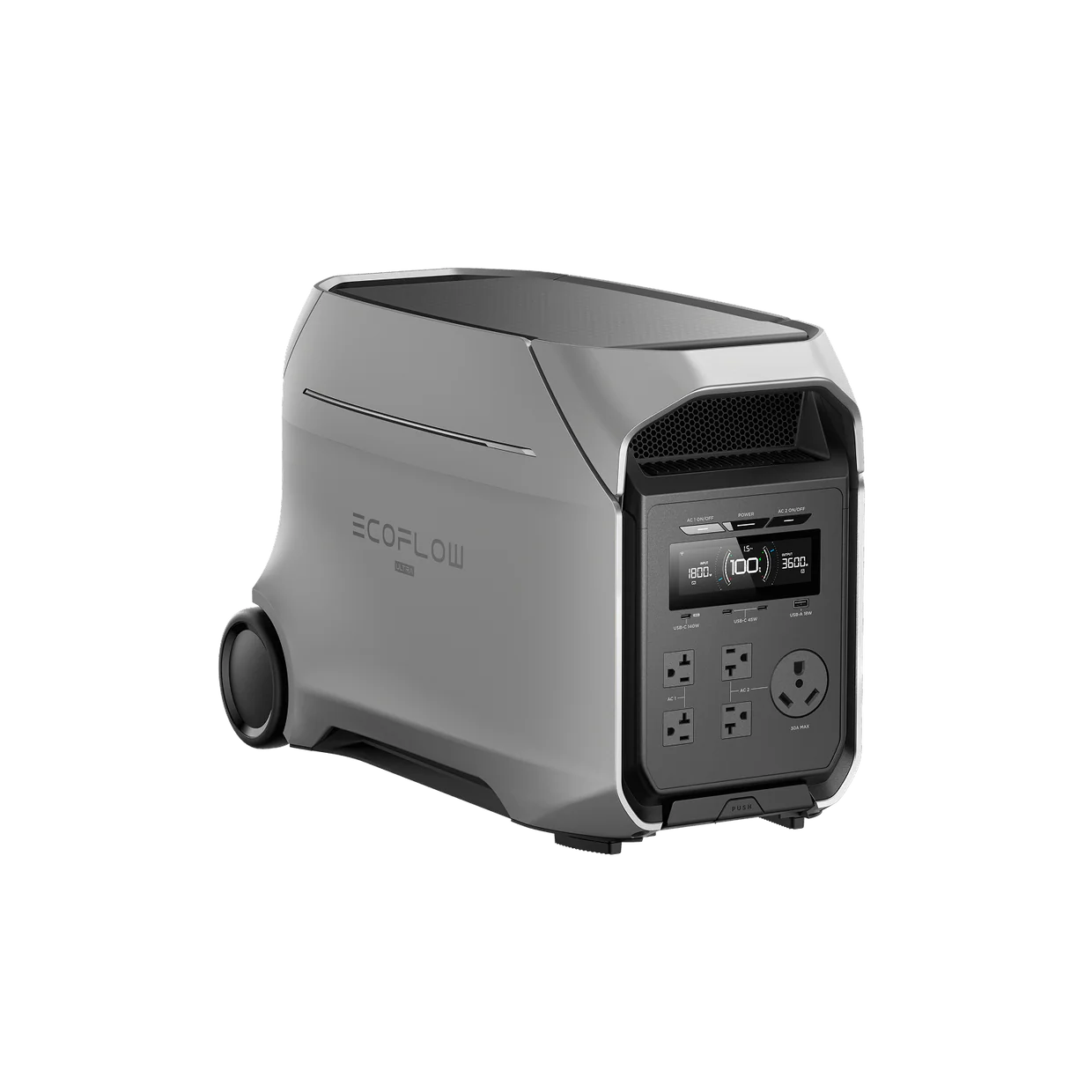
Most owners charge one with solar panels, a car's alternator, or a wall outlet. The EcoFlow DELTA 3 Ultra Plus (3072Wh) is built for exactly this kind of use, with enough capacity to support a fridge, lighting, and small appliances through a full day of driving and camping.
Unlike a built-in electrical system, a portable unit can move between the van, a campsite table, or a tent, so the same camping power station that covers a weekend trip can back up your van the rest of the time.
How Much Battery Capacity Do You Need for Van Life?
Battery capacity is measured in watt-hours (Wh), and it tells you how much energy is stored before a recharge is needed. To estimate what you need, add up the watt-hours each appliance draws per day. A compact fridge might use around 500–800Wh daily, while lighting, a laptop, and phone charging typically add another 200–400Wh.
For weekend trips with light appliance use, a smaller unit like the EcoFlow DELTA 3 Classic (1024Wh) can comfortably cover a fridge, lights, and device charging.
Full-time van dwellers running a fridge, fan, and electronics around the clock generally need something closer to 2,000–3,000Wh to avoid running dry before the next charge.
The EcoFlow DELTA 3 Ultra Plus (3072Wh) fits that heavier daily load, giving you a buffer for cloudy days or longer stretches without a plug-in charge.

What Power Output Should You Look For?
Capacity tells you how long your power lasts; output tells you what you can run at once. Output is measured in watts, and every appliance has a rated wattage plus a higher surge wattage it draws for a split second at startup, which matters most for compressor fridges and small AC units.
Add up the wattage of everything you'll run simultaneously: a power station rated for 1,800-2,000W of continuous output covers most van setups, including a fridge, induction cooktop, and electronics running at once.
How Do Weight and Portability Affect Life on the Road?
Space and weight are always at a premium in a van, so the physical footprint of your power station matters as much as its specs. A bulkier unit eats into storage you'd rather use for gear, food, or water, and heavier batteries are harder to reposition once they're wedged into a cabinet or under a bed.
Look for a unit with built-in handles and a footprint that fits your existing storage, and weigh that against how often you'll need to move it. If you also ride, the same weight-and-space trade-offs come up in motorcycle mobile power setups, where every pound has to earn its place.
What Charging Options Should You Consider?
How you recharge on the road shapes how self-sufficient your setup can be. Most campervan owners rely on a mix of the following:
Solar Charging
Solar panels let you top up your battery while parked, without running the engine or plugging into shore power. This works best for extended stays at a campsite or boondocking site with consistent daylight, and it pairs naturally with a power station that supports a fast solar input.
Car and Alternator Charging
Charging from your van's alternator while driving is one of the most efficient ways to recharge, since you're capturing power you're already generating. This suits people who move frequently between stops and want a full battery every time they park.
AC Wall Charging
A standard wall outlet is the fastest and most straightforward charging method, useful for topping up before a trip or when you're staying somewhere with hookups. Look for a power station that supports a quick full recharge from AC power so you're not waiting overnight.
What Extra Features Are Worth Considering?
Beyond capacity and charging, a few features make daily use easier. An LCD or app display that shows remaining charge and active output helps you plan your day without guessing. Pass-through charging, which lets you use the unit while it's plugged in, is useful if you're charging from solar during the day while still running the fridge.
A built-in light or lantern mode adds convenience for nighttime tasks outside the van, and quiet operation matters if you're parked near other campers or sleeping close to the unit. That same quiet output is what makes an outdoor movie night possible from a campsite, running a projector and speaker off the same battery you use for the fridge.
Frequently Asked Questions
What Size Power Station Do You Need for a Campervan?
It depends on your daily appliance load. Weekend trips with a fridge, lights, and device charging typically need 1,000-1,500Wh. Full-time van living with a fridge, fan, and electronics running continuously usually calls for 2,000-3,000Wh or more, especially if you want a buffer for cloudy days or reduced solar input.
Can You Charge a Campervan Power Station While Driving?
Yes, many power stations charge through your van's alternator using a car charging cable, drawing power while the engine runs. This is one of the most efficient charging methods since it uses energy you're already producing. Charging speed varies by model, so check the rated input wattage for alternator charging before relying on it as your main method.
Are Portable Power Stations Safe to Use Inside a Campervan?
Yes, when used as designed. Most portable power stations use lithium batteries with built-in safety features like temperature monitoring and overcharge protection, and they don't produce fumes like a gas generator. Keep the unit in a stable spot with some airflow around it, and avoid exposing it to extreme heat or direct sun for extended periods.
The Right Power Station Keeps Your Campervan Comfortably Powered On and Off the Road
Matching capacity, output, and charging options to your daily routine is what separates a power station that works for your setup from one that leaves you rationing electricity. Whether you need a compact option for weekend trips or a higher-capacity unit for full-time van life, choosing based on your actual appliance load makes the difference.
The EcoFlow DELTA 3 Ultra Plus (3072Wh) and EcoFlow DELTA 3 Classic (1024Wh) both offer a straightforward starting point depending on how much power your van life demands.
For press requests or interview opportunities, reach out to our media team
media.na@ecoflow.com