Boat Power: How to Run Electronics on Overnight Trips
- Why Do Overnight Boat Trips Need a Power Plan?
- What Electronics Do You Need to Power Overnight?
- How Does a Boat's Electrical System Work?
- What Power Challenges Come with Anchoring Overnight?
- How Can Portable Power Stations Support Boat Electronics?
- How Can Solar Charging Extend Your Time on the Water?
- How Do You Plan Power for a Multi-Day Boat Trip?
- Frequently Asked Questions
- Reliable Power Keeps Your Boat's Electronics Running Through Every Overnight Trip
Spending the night on the water means your boat's electronics have to work without a dock nearby. Navigation lights, a fridge full of food, and your phone charger all draw from the same limited supply, and running out mid-trip isn't an option. Here's how to plan boat power that lasts.
Why Do Overnight Boat Trips Need a Power Plan?
A day trip gives you room for error. If the battery runs low, you head back and plug in. An overnight trip removes that safety net: you're relying on stored power for navigation lights, a working fridge, and enough charge left for the next day's run.
Boaters often overestimate their available capacity and underestimate what their electronics draw once everything runs at once after dark. A portable power station gives you a dedicated power source that runs independently of your starter battery, so you're not choosing between the lights and starting the engine in the morning.

What Electronics Do You Need to Power Overnight?
Overnight trips put several categories of electronics to work at once, often for hours without a break.
Navigation and Safety Electronics: GPS chart plotters, VHF radios, and depth finders need to stay powered through the night, especially at anchor with boat traffic nearby. Recreational vessels are required to display navigation lights between sunset and sunrise, according to the U.S. Coast Guard, so this isn't equipment you can let run dry.
Refrigeration and Galley Devices: A 12V cooler or small fridge is one of the steadier draws overnight, since it cycles continuously to hold temperature. Add a coffee maker, and galley power adds up fast.
Lighting: Cabin, deck, and anchor lights all need to run for hours after dark. Fishing at night adds its own demands, since night fishing lights need to stay on for the whole session, not just a few hours.
Personal Electronics and Entertainment: Phones, tablets, and speakers aren't essential to safety, but they're what guests expect to charge without a fight over the one outlet.
How Does a Boat's Electrical System Work?
Most boats run on a 12V DC system with one or more batteries, charged by the engine's alternator while underway. A house battery typically handles electronics, while a separate starter battery is reserved for the engine.
Inverters convert that stored DC power into the AC power your devices need, but a boat's built-in inverter is often small and not built to run a fridge and a laptop charger at once.
What Power Challenges Come with Anchoring Overnight?
Once you drop anchor, your power supply becomes fixed. The alternator stops charging, there's no shore power, and there's no way to add capacity mid-trip: everything you packed is everything you get.
This is where boaters most often run into trouble. A fridge that ran fine during a few hours underway can quietly drain a house battery over an eight-hour night, especially in warm weather when it cycles more often. Add lighting and a couple of charging devices, and a battery that seemed adequate at the dock can leave you with a dead house bank, or worse, a starter battery too weak to turn the engine over.
How Can Portable Power Stations Support Boat Electronics?
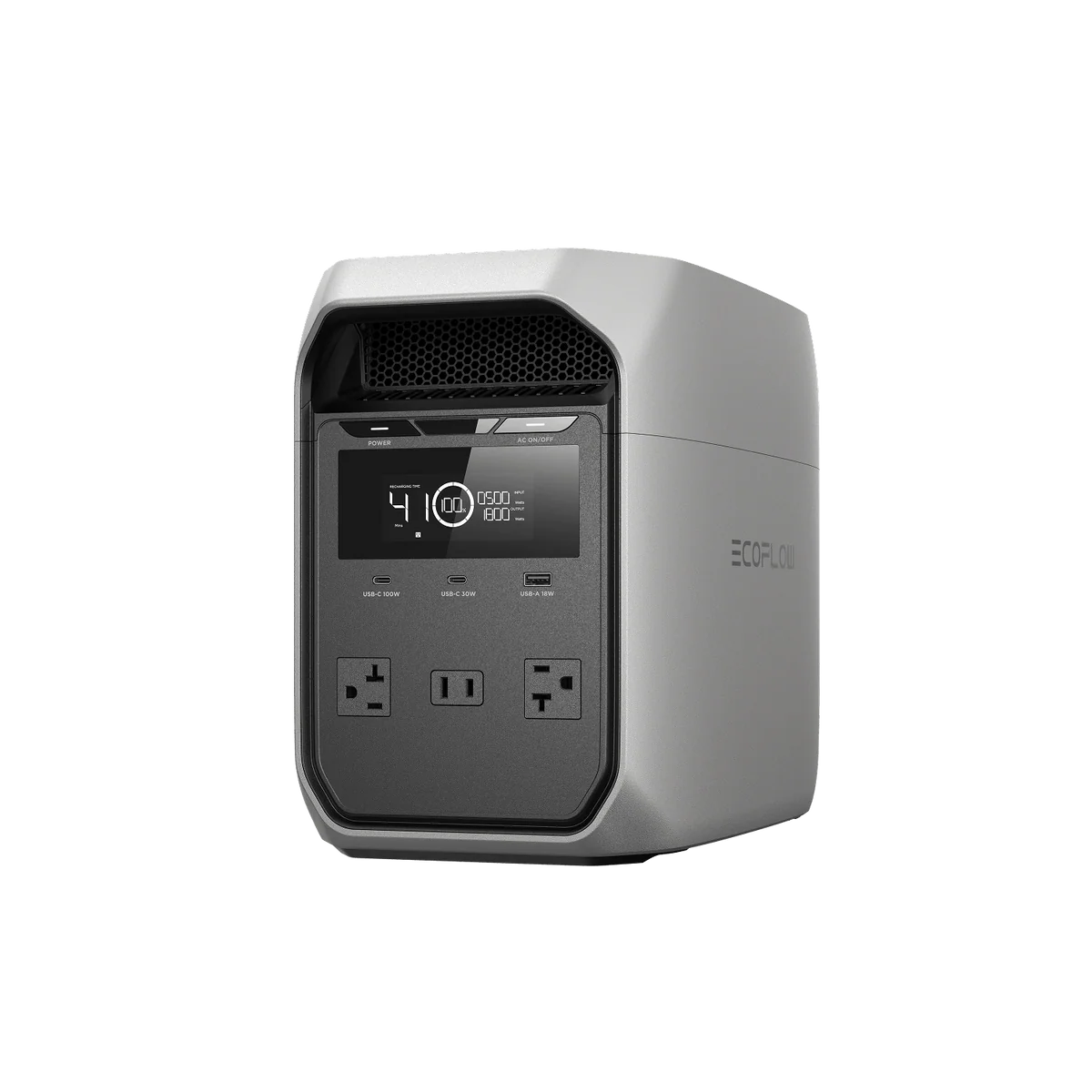
A dedicated power station takes pressure off your boat's built-in system by handling electronics separately from the battery your engine needs. The EcoFlow DELTA 3 Classic (1024Wh) is sized for overnight use, with enough capacity to run a cooler, charge navigation devices, and power cabin lighting without touching your starter battery.
Because it recharges from wall power, a car outlet, or solar panels, you can top it up before leaving the dock and keep charging through the day. Multiple output types, from AC outlets to USB ports, mean you're not juggling adapters for a fridge, a radio, and a phone at once.
How Can Solar Charging Extend Your Time on the Water?
Solar panels let you recover capacity during the day instead of arriving at anchor with only the charge you left the dock with. Even a few hours of midday sun can offset what your fridge and electronics draw overnight, which matters most on multi-day trips with no dock to return to.
The same math behind winter kayaking power planning applies just as well on a larger boat: know your daily draw, and build in margin for days solar doesn't fully deliver.
How Do You Plan Power for a Multi-Day Boat Trip?
Start by listing every device you'll run overnight and roughly how many watt-hours each draws per day. A cooler might use roughly 250–500Wh over 24 hours, and lighting might use another 100–200. Compare the total against your power station's capacity, leaving margin in case weather delays your return or solar underperforms.
It also helps to prioritize: decide in advance what stays on all night versus what only runs when needed. And, if you intend to do other activities like fishing, match your fishing gear checklist against this power plan before you leave the dock to catch gaps in both lists at once.
Frequently Asked Questions
Can You Run a Portable Power Station on a Boat?
Yes. Portable power stations are self-contained units that don't need to be wired into your boat's electrical system, making them a straightforward way to add capacity. Keep them in a dry, ventilated spot away from saltwater spray, and check the manufacturer's guidance on humidity and temperature exposure before marine use.
How Long Will a Battery Power Boat Electronics Overnight?
It depends on your total draw and battery capacity. A cooler, cabin lights, and a couple of charging devices might use 500–800Wh over an eight-hour night. A 1024Wh power station comfortably covers that with room to spare, while larger loads or longer nights call for more capacity or a solar top-up.
Do You Need a Marine Inverter for Regular Electronics?
Not necessarily. A boat's built-in marine inverter works for hardwired circuits, but a portable power station with a built-in inverter can run standard AC devices directly, without extra wiring. It's a simpler way to add capacity for a single trip rather than a permanent electrical upgrade.
Reliable Power Keeps Your Boat's Electronics Running Through Every Overnight Trip
Overnight boat trips ask a lot of a single battery bank, with navigation lights, refrigeration, and personal devices all pulling from the same limited supply once you drop anchor. Planning your daily draw, adding solar where you can, and keeping a dedicated power source on board all reduce the risk of running short before morning.
An EcoFlow DELTA 3 Classic (1024Wh) gives you that margin, so your electronics stay powered for the whole trip, not just the first few hours.
For press requests or interview opportunities, reach out to our media team
media.na@ecoflow.com